
Introduction to the Aquatic Labyrinth of Southern Tarragona
The Ebro Delta represents one of the most complex amphibious ecosystems in the western Mediterranean basin. In this territory where fresh water and marine salinity wage a millenary battle, traditional cabotage navigation and river transport have dictated the survival of local populations. Unlike other major European rivers, the Ebro is characterized not by a constant flow, but by a dense network of artificial and natural channels that demand absolute mastery of local hydrodynamics. From the earliest commercial incursions to the current management of rice paddies, the movement of flat-bottomed vessels has remained the sole means to connect communities isolated by impenetrable reed beds and shifting coastal lagoons.
Understanding the logistics of this network requires looking beyond the photogenic landscape of sunsets over the mudflats. Mobility across the delta relies on a delicate synergy between the mechanical dredging of historical channels, the engineering of irrigation gates, and the empirical knowledge accumulated by generations of rowers and river barge captains. This report examines the technical, economic, and human mechanisms that keep alive a web of water routes where time seems measured by the rhythm of tides and the flow of sediments.
The Hidden Engineering of Irrigation Canals and Locks
The network of main ditches, known locally as the Right Canal and the Left Canal, forms the backbone supporting both agriculture and the interior communication of the delta. Built systematically from the second half of the 19th century onwards, these artificial channels transformed an area of unhealthy marshes into an agricultural checkerboard of geometric precision. However, their original design pursued not only drainage or water distribution for rice cultivation, but also established an inland navigable waterway used for decades to transport heavy grain, farming tools, and construction materials.
Locks and regulatory gates now operate as the true hydraulic lungs of the region. Maintaining these structures requires millimeter-level control of the water table to prevent saltwater intrusion into underground aquifers, a phenomenon that threatens the viability of irrigated crops. Local operators, acting as guardians of the flow, manually or via automated systems adjust the discharge coming from the Riba-roja reservoir. This delicate balance ensures that tourist barges and small maintenance boats can navigate without running aground in shallow sections, where silt accumulation demands periodic cleaning with suction dredges.
The Pulse of Traditional Barges and Low-Draft Nautical Craft
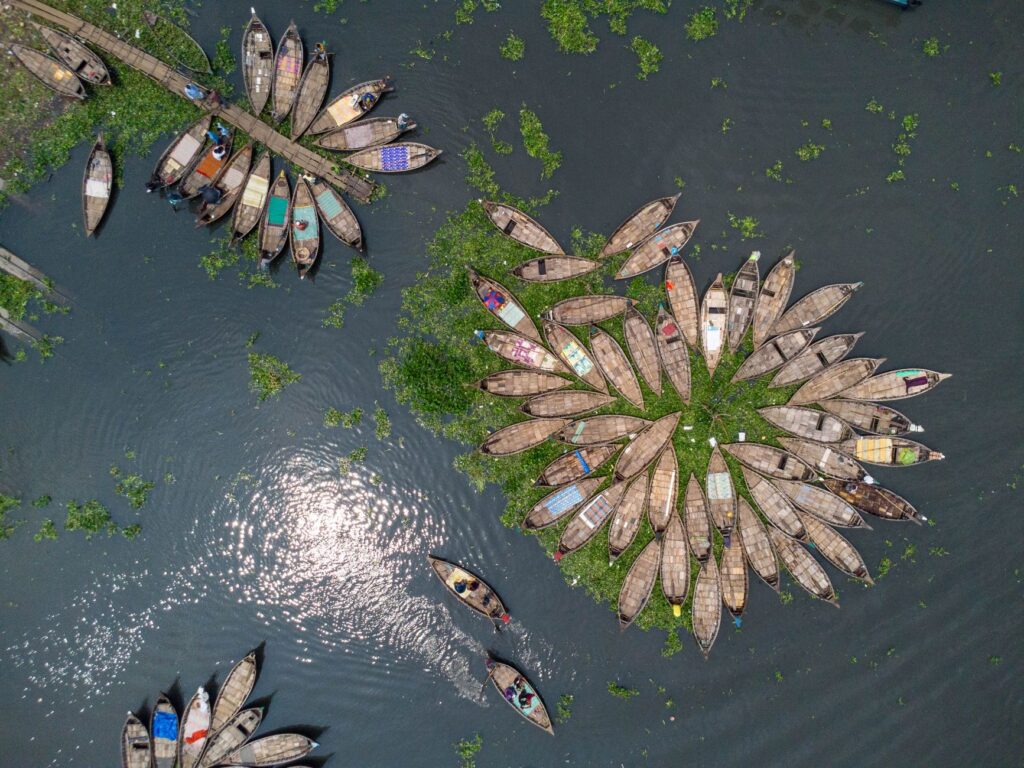
Unlike large ocean freighters, the fleet operating in the Ebro Delta is characterized by extreme morphological specialization. Traditional vessels, historically known as ‘llauts’, were designed with completely flat bottoms and shallow keels to bypass the shifting sandbars deposited by currents at the river mouth. This naval architecture allowed boats to travel upstream against the current using sturdy ropes hauled from the riverbank by draft animals or, more recently, by low-power diesel engines adapted for shallow-water navigation.
Today, although freight transport has migrated almost entirely to the terrestrial road network, the legacy of the ‘llauts’ survives, adapted to ecotourism and fishing activities. The rib-carpenters who still master the craft in towns like Sant Carles de la Ràpita or Deltebre preserve assembly techniques using treated pine and fir wood. These artisans recall that building a boat for the Ebro is not a matter of aesthetics, but of physical survival: the hull must withstand constant friction against rocky bottoms and the combined corrosive action of fresh water and marine salt in the Bay of Alfacs.
Sedimentary Dynamics and the Challenge of Delta Subsidence
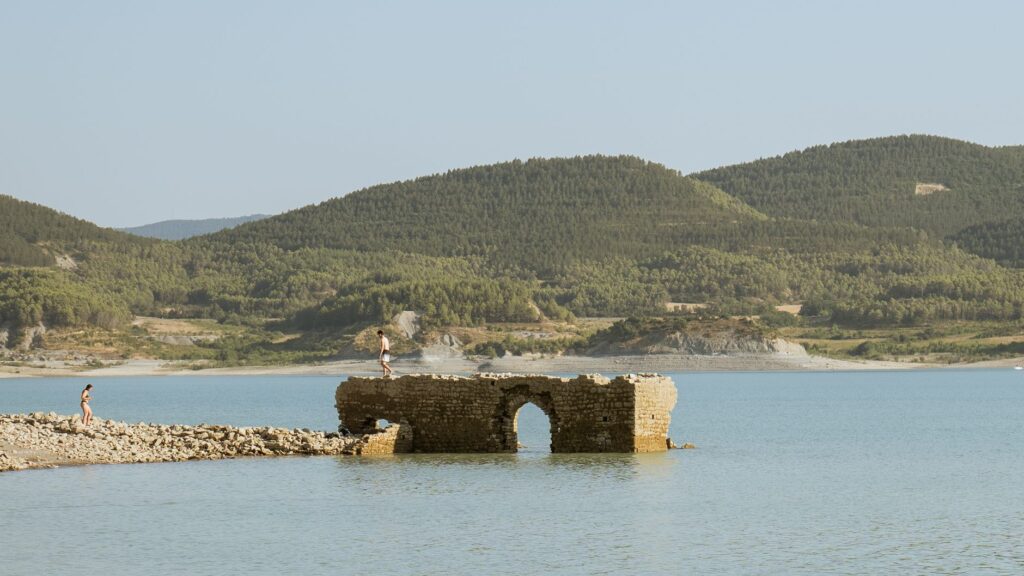
One of the greatest challenges facing the fluvial connectivity of the Ebro is the drastic reduction in solid sediment supply. The construction of major dams in the middle and upper course of the river during the 20th century trapped over ninety percent of the clay and sandy material that once reached the mouth naturally. As a direct consequence, the delta suffers from ongoing subsidence, while marine erosion gains ground against the traditional coastline, endangering maritime access to refuge ports.
To counter this phenomenon, local administrations and hydrographic agencies have implemented experimental sediment restitution strategies. These actions involve the controlled extraction of sand from upper reservoirs for subsequent transport and reintroduction into the final river section. However, logistical costs and the technical complexity of moving thousands of tons of material limit the efficacy of these measures. The survival of cabotage routes depends critically on human capacity to coexist with a territory that deforms and retreats under the combined pressure of climate change and human intervention.
The Human Ecosystem: Fishermen, Shellfish Harvesters, and River Navigators
Behind every lock and navigable channel lies a human community deeply rooted in water culture. Fishermen in the Encanyissada lagoon and shellfish gatherers in the Bay of Alfacs are not mere extractors of resources, but intimate observers of subtle shifts in currents and local winds such as the mistral. Their daily routine is dictated by tides and the necessity of keeping the ‘golas’—the natural openings connecting interior lagoons to the open sea—clear to allow water renewal and the entry of fish destined for sea bream and mussel aquaculture.
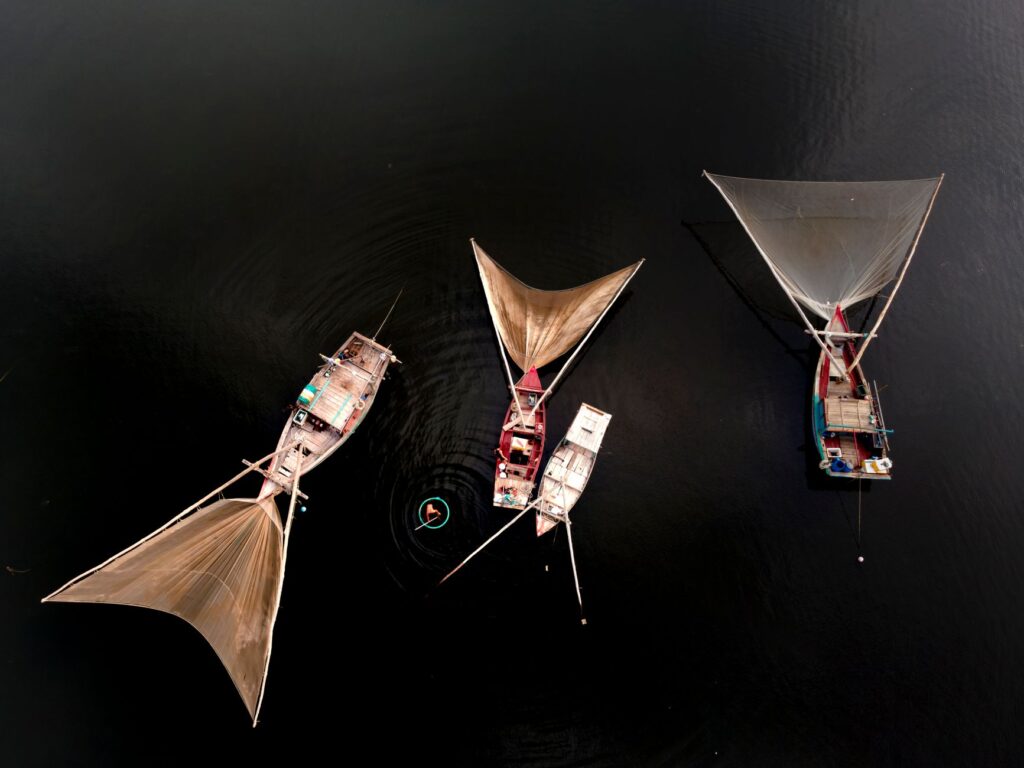
The delta is not a static landscape to be admired from a window; it is an amphibious organism demanding constant attention, where every freshwater channel is a fragile pact between human engineering and the untamed force of the sea.
The generational transmission of this trade faces threats from demographic pressure and the abandonment of primary activities by younger generations. Nevertheless, local environmental education initiatives and sustainable fishing cooperatives are successfully revaluing the role of the river navigator. These professionals act today as indispensable guides for scientists and travelers seeking to understand the ecological complexity of the natural park, proving that the future viability of the delta requires integrating maritime tradition into modern territorial management plans.
Refuge Infrastructure and Safety in Fangar Spit and Alfacs
Navigation in the two large peninsulas defining the delta—Fangar to the north and Alfacs to the south—presents considerable weather risks due to the sudden onset of easterly storms (‘llevantades’). In these open waters, shallow depths generate short, violent waves capable of capsizing small vessels within minutes. For this reason, the navigational beacon network, historic lighthouses like Fangar, and shelter ports play a critical role in coastal and cabotage safety throughout the Tarragona coastline.
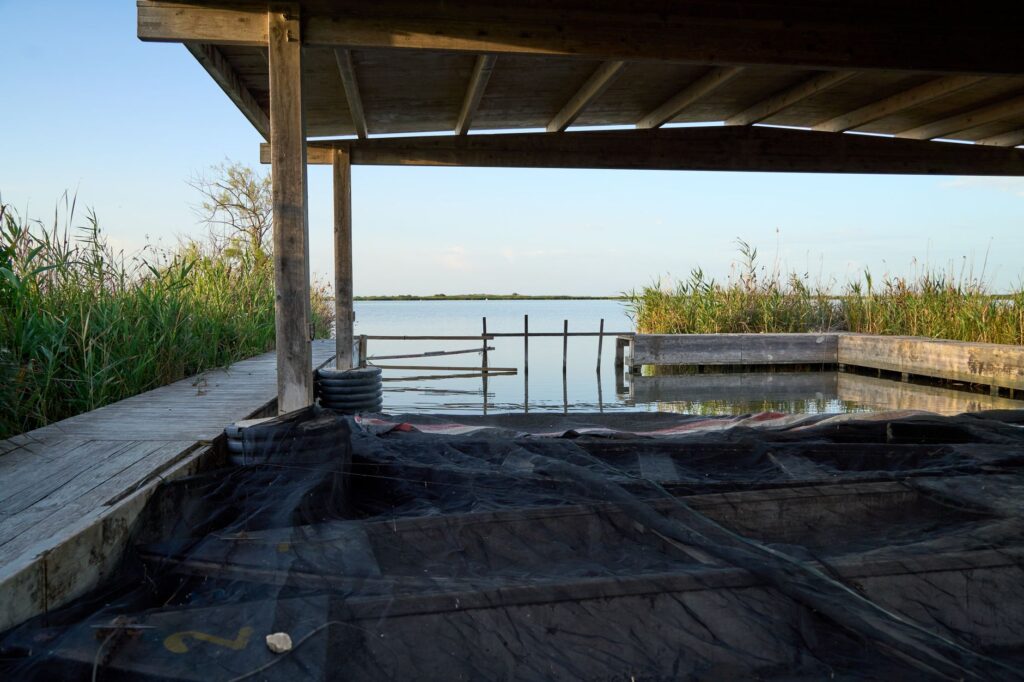
Maritime rescue services and fishermen’s guilds coordinate rapid response protocols based on VHF communication networks and high-precision weather stations located on breakwaters. Marking navigable channels with solar-powered luminous buoys has significantly improved nighttime visibility, reducing grounding accidents in critical passages. Nevertheless, local captains insist that the best technology remains direct visual experience to detect color changes on the water’s surface, which betray the presence of newly shifted sandbars driven by bottom currents.
Practical guide
How to get there: The main access to the Ebro Delta is by road via the AP-7 highway, taking exits for L’Aldea or Amposta. The L’Aldea-Amposta-Tortosa train station connects with regional services from Barcelona and Valencia. The nearest airport is Reus, located about 85 kilometers to the north.
When to visit: The spring months (April to June) and autumn (September to November) offer moderate temperatures and fewer crowds. This is the ideal period to observe migratory birdlife and navigate the canals without the intense summer heat.
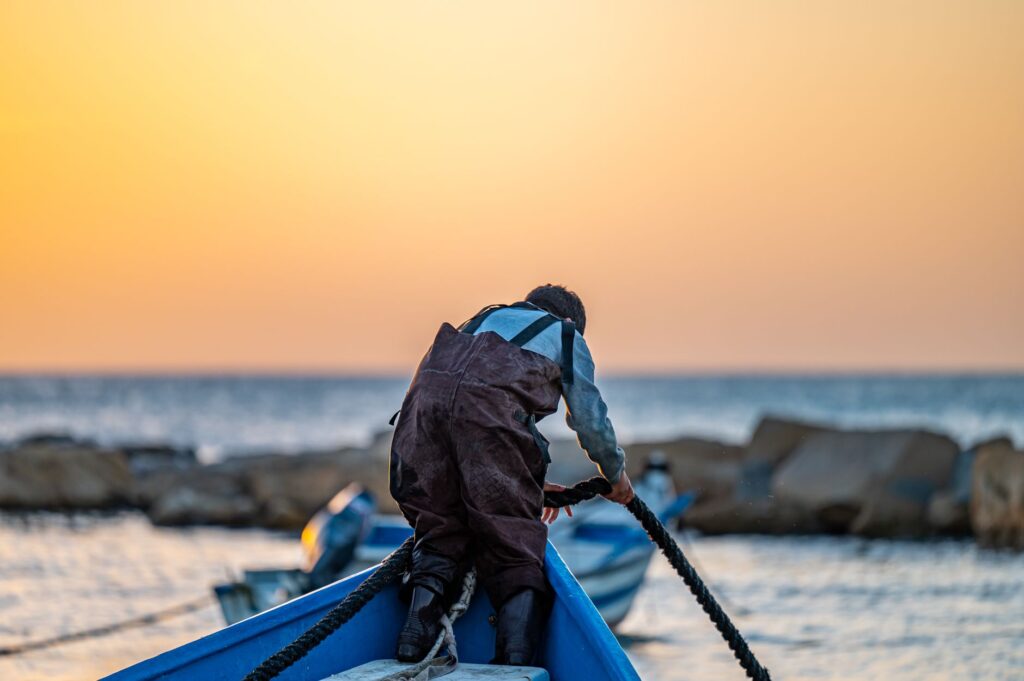
Navigation options: Several authorized local companies offer routes on traditional flat-bottomed boats from the docks of Deltebre and Sant Jaume d’Enveja. Advance booking is recommended, especially during weekends and national holidays.
Accommodation and gastronomy: The towns of Sant Carles de la Ràpita and Deltebre concentrate the best hospitality offerings linked to local produce. Trying the D.O.P. Delta de l’Ebre rice and bay seafood in certified sustainable traditional restaurants is unmissable.
Visual Epilogue on the Silence of the Marshes
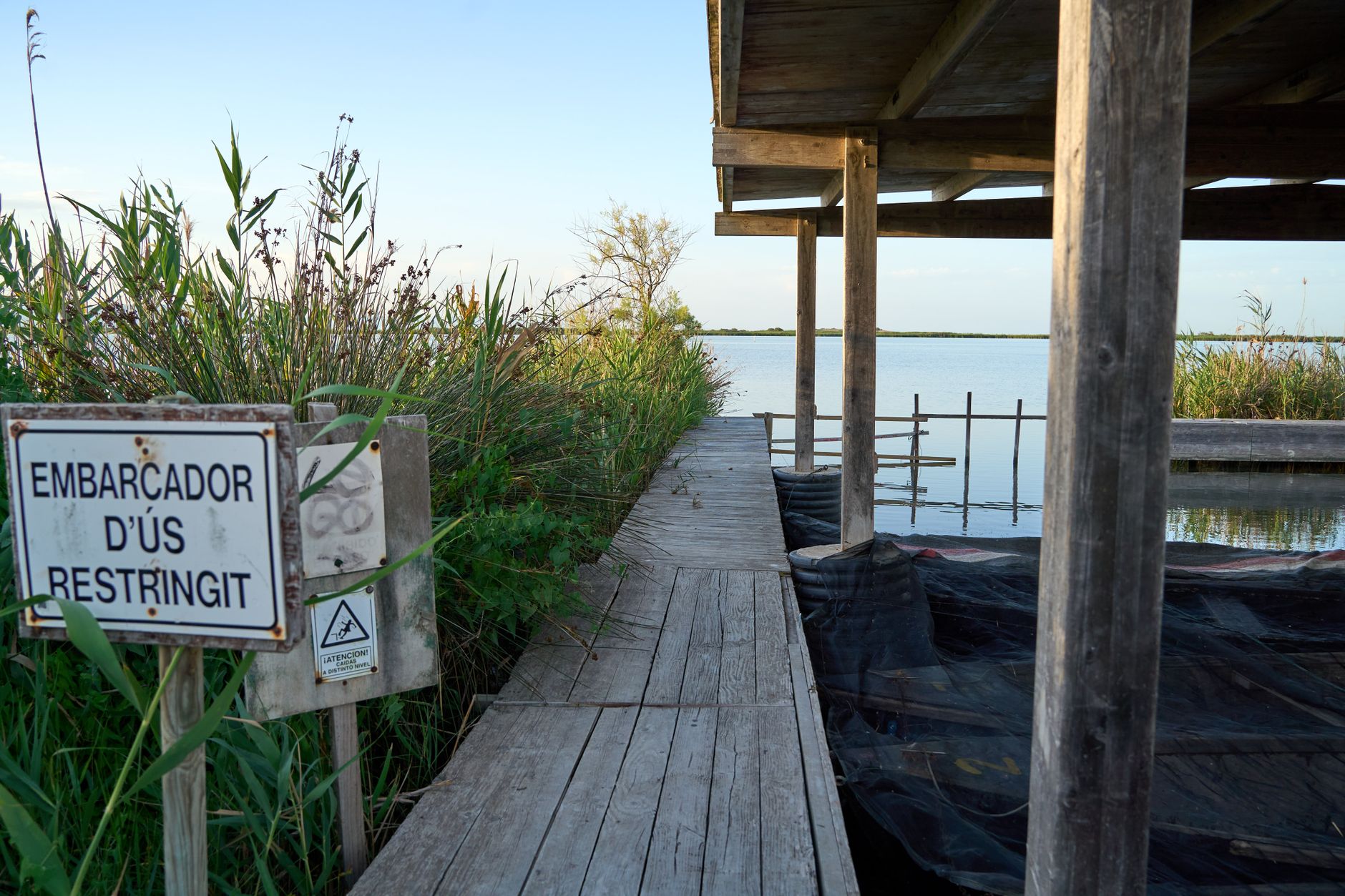
When the sun sets behind the mountain ranges guarding the western horizon of the Ebro, lagoon waters acquire a metallic, specular tone that erases the boundaries between solid earth and firmament. In that moment of absolute stillness, the only audible sound is the distant rustle of wind over reed beds and the gentle splash of a grey heron foraging in the muddy shallows. It is the most sincere reminder that this amphibious territory survives thanks to its own silent resilience, a fragile sanctuary where human engineering and fluvial nature continue to negotiate, day after day, their permanence on the map.