
Origins of a Port Between Two Tides
Huelva rises upon an amphibious territory where the Atlantic relentlessly laps against the marshes formed by the mouths of the Odiel and Tinto rivers. Since Tartessian times, this borderland condition has shaped the larder of a city that faces the sea with the devotion of those who owe their livelihood to it. The daily pulse of this Andalusian capital cannot be grasped without stepping into its commercial architecture, a space where noble stone and wrought iron safeguard the biological treasures that arrive each dawn from the bar and tidal channels. Walking through its streets at daybreak means feeling the saline aroma impregnating the atmosphere before the city finishes shaking off its sleep.
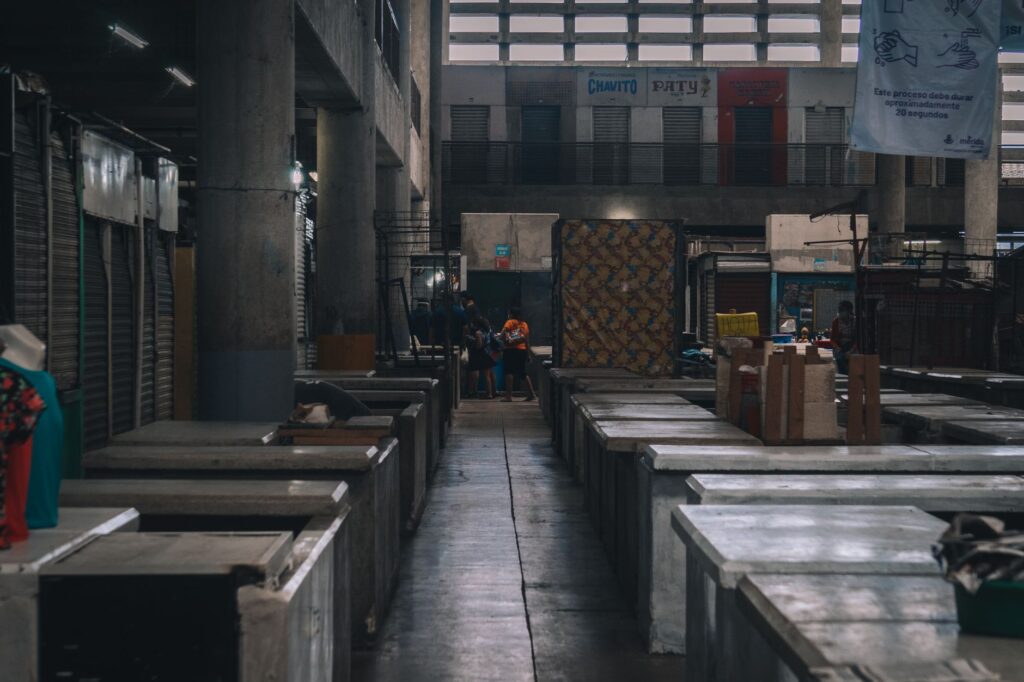
The Central Market building, inaugurated in the early last century under a functional and robust aesthetic, operates as the community’s great civil agora. Inside, zenithal light filtered through large skylights illuminates the stalls where fishmongers and market vendors display their produce with the precision of a liturgical ritual. There is no shrillness in this space; the steady murmur of transactions blends with the sound of cracking ice and the quiet calls of vendors offering the catch of the day. Here, time seems governed by the tides rather than the hands of a clock.
The relationship between the market and its surrounding natural environment is one of absolute interdependence. Fishermen setting sail from Punta Umbría and Ayamonte supply the wholesale fish markets and stalls where white prawns and wedge clams retain the pristine attributes of their habitat. Each product tells a geological and biological story tied to the nutrients carried by currents and the salinity washing Huelva’s coastline. Entering this temple of fresh produce is accepting an invitation to decipher the landscape through the palate, recognizing the human effort behind every displayed tray.
The Cathedral of Shellfish and Estuary Harvests
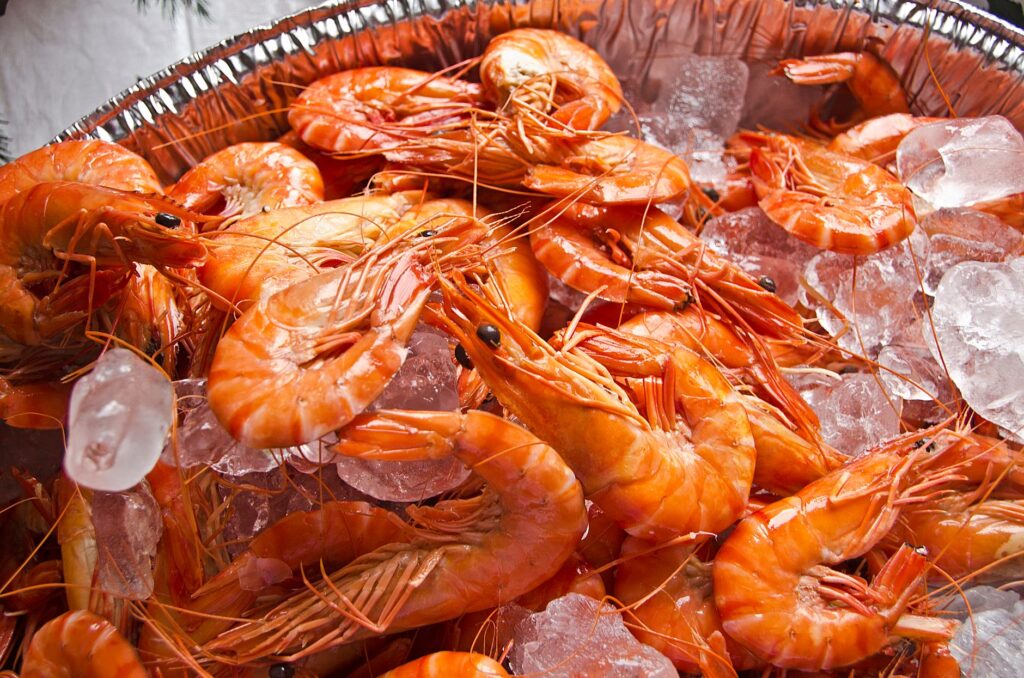
The physical and emotional heart of the market concentrates in the wing dedicated to crustaceans and mollusks, a true local pride. Huelva’s white prawn, with its characteristic pale tone and pearly reflections, reigns supreme over a bed of crushed ice that highlights its freshness. It is accompanied by wedge clams, harvested by hand during low tide by gatherers who comb the sand with traditional rakes, and fine clams thriving in the silty bottoms of the estuary. Popular wisdom insists these specimens brook no culinary excess; their excellence lies in a brief boil with seawater or a quick searing that respects their structure and briny flavor.
Yet marine heritage does not end with bivalves and crustaceans. The stalls offering blue and white fish present an exhaustive sample of Atlantic biodiversity: from aggressive rock seabream to delicate spiked picarel and magnificent bluefin tuna captured through sustainable trap-net arts on the coast. The vendors, true experts in marine anatomy, execute clean and precise cuts under the watchful eye of loyal clientele seeking expert advice to choose the ideal piece of the day. This constant dialogue between counter and buyer consolidates an irreplaceable chain of trust in times of anonymous mass distribution.
Huelva’s market is not simply a commercial exchange point; it is the living archive where recipes, popular species names, and the collective memory of a land turned toward the ocean are preserved.
Surrounding the main counters, the treasures of the interior garden also unfold. The clayey fields of the Andévalo and the fertile river vegas of the province provide early strawberries, wild asparagus, and citrus fruits of outstanding aromatic intensity. The combination of these agricultural goods with marine treasures configures a hybrid gastronomy where mountain and marsh meet harmoniously. Each season transforms the stalls, shifting colors and textures in a natural choreography that prevents monotony on the Huelva table.
The Invisible Art of the Marsh Gatherer
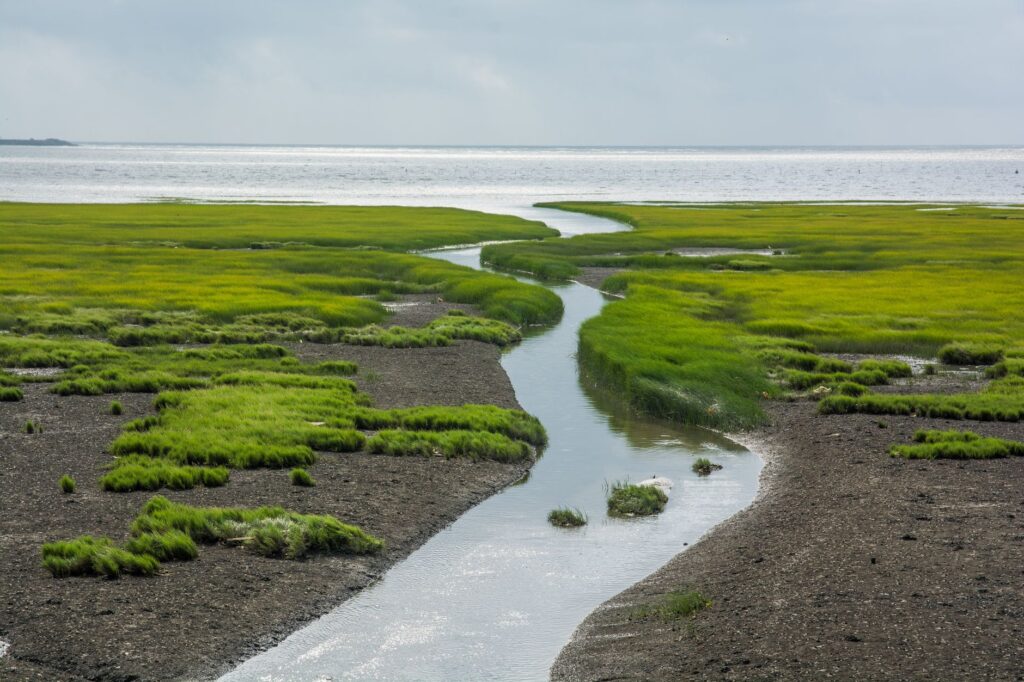
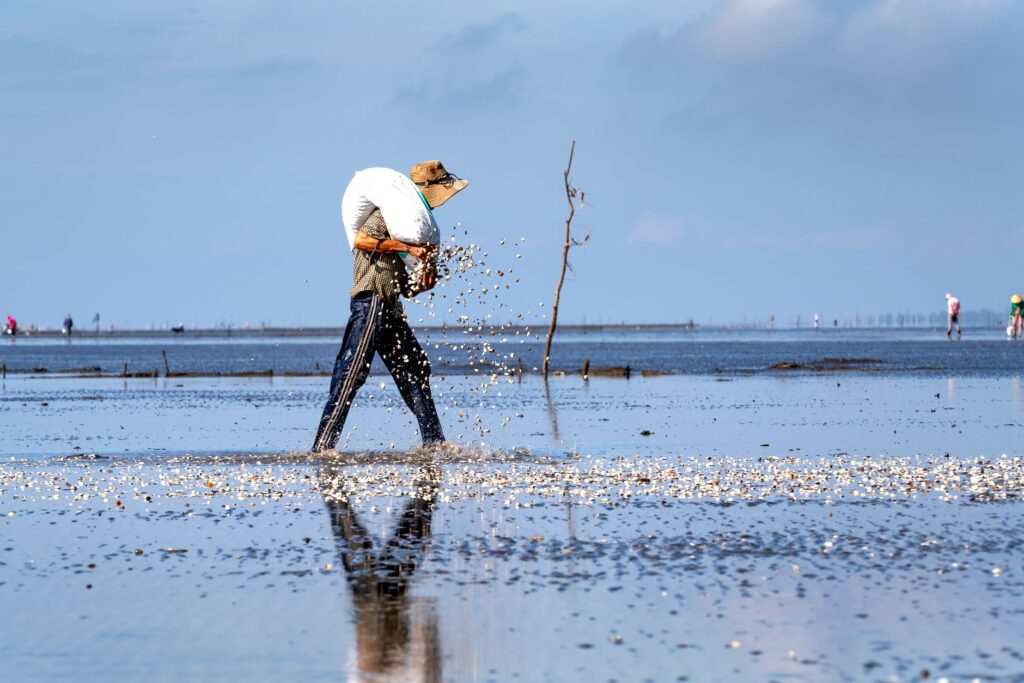
To comprehend the magnitude of what is displayed every morning in the central market, one must leave the asphalt behind and venture into the Marismas del Odiel Natural Park. It is within this labyrinth of channels, estuaries, and muddy flats that the culinary chain truly begins. Local gatherers, equipped with waders and artisanal tools, know every nook of the terrain and scrupulously respect the biological cycles of the species. Their labor, often performed under adverse weather conditions and waist-deep in water, constitutes a trade of endurance deeply rooted in tradition.
The harvesting of wedge clams or small carpet shells demands exceptional tactile sensitivity. The gatherer walks slowly over the submerged sand, interpreting the subtle bubbles betraying the bivalve’s presence beneath the surface. This ancient technique, passed down from generation to generation, guarantees respectful exploitation avoiding the exhaustion of natural banks. Local administration and fishermen’s guilds regulate catch quotas and closed seasons, well aware that ecosystem sustainability is the sole guarantee of survival for their economy and culture.
Following the catch, the produce undergoes a rigorous purification process before reaching the central market stalls. This sanitary control ensures consumers enjoy a safe food item without losing an ounce of its marine personality. Collaboration between marine scientists, guilds, and merchants has allowed the modernization of traceability protocols without altering the artisanal essence of the trade, proving that modernity and tradition can advance hand in hand for the benefit of gastronomic excellence.
The Liturgy of the Counter and Neighborhood Pulse
The experience of shopping at Huelva’s Central Market transcends mere provisioning, transforming into an irreplaceable ritual of socialization. Friday and Saturday mornings turn the aisles into a hub of buyers where it is customary to stop, chat, compare prices, and discuss the best way to cook fish freshly arrived from the estuary. Vendors know the tastes, families, and culinary demands of their regular customers, setting aside select pieces before they catch the general public’s eye.
This relational fabric contrasts sharply with the coldness of large supermarket aisles. In the traditional market, the consumer plays an active role: inquiring about the exact provenance of the goods, demanding explanations regarding fishing methods, and receiving personalized culinary advice that enriches gastronomic knowledge. Younger generations arrive drawn by the renaissance of local products, learning from their elders to value authenticity over the industrial standardization dominating global markets.
The food market counter functions as a protective barrier against the homogenization of taste, a space where local biodiversity is defended through conscious, daily consumption.

The market’s interior architecture facilitates this dynamic and intimate human flow. Low counters permit direct visual contact between seller and buyer, breaking down formal hierarchies. Laughter, effusive greetings among neighbors, and the constant shuffling of shopping carts compose a unique soundtrack defining Huelva’s urban vitality. It is within this microcosm that the city preserves its community identity against the depersonalizing inertias of modern life.
The Seafaring Recipe Book: Between Pan and Estuary
The cuisine springing from products acquired in Huelva’s market features apparent simplicity masking refined technique and absolute respect for raw materials. Emblematic dishes such as prawns boiled to their precise point of salt, wedge clams with garlic and a touch of Condado white wine, or cuttlefish with broad beans demonstrate that culinary excellence requires no unnecessary artifices. The secret lies in the unquestionable freshness of the ingredients and the measured use of extra virgin olive oil from the neighboring mountain range.
In homes and modest taverns of the working-class neighborhood of El Higueral or the historic center, spiced ray and marinated dogfish are prepared following formulas that have barely varied over the past century. Marination, for instance, demands precise soaking time where wine vinegar, oregano, cumin, and garlic penetrate the fish flesh before light flouring and frying in very hot oil. The result is a crispy exterior and juicy interior texture synthesizing the mastery of Andalusian seafood cooking.
Likewise, rockfish stews with potatoes and a mortar-pounded paste of almonds and garlic demonstrate the resourcefulness of utilizing available ingredients. These spoon dishes, born aboard old fishing boats during long journeys on the high seas, comfort body and spirit, connecting the diner with the history of a community hardened by exposure. The Huelva table thus confirms itself as a territory of liquid and terrestrial memory.
Practical guide
- How to get there: Huelva features excellent dual-carbohydrate highway connections from Seville and the Portuguese Algarve. The Adif railway station places the city just over an hour away from the Andalusian capital. To move around the center and access the market, walking is highly recommended as the old town is predominantly pedestrian.
- When to visit: The Central Market opens its doors Monday through Saturday from 7:00 AM to 3:00 PM. The optimal time to enjoy its full splendor and bustle is between 9:00 AM and 11:30 AM, when goods are freshly arranged and neighborhood turnout peaks.
- Recommended accommodation: Opt for small boutique hotels housed in rehabilitated historic buildings in the urban core, or resort establishments integrated near Punta Umbría if you prefer combining urban exploration with stays beside the estuary and beaches.
- Essential purchases: Do not leave the market without acquiring selected white prawns, artisanal virgin sea salt from the marshes, top-quality mojama from Barbate, and a bottle of white wine carrying the Condado de Huelva designation of origin.
- Gastronomic tips: Avoid masking seafood flavors with heavy sauces; taste the produce boiled or grilled accompanied strictly by a well-chilled white wine. Always consult the vendors regarding the seasonality of blue fish to ensure maximum sustainability.
- Etiquette and respect: The market is an intense working space; respect transit aisles, take a number before being served, and ask permission if you wish to photograph the stalls or merchants at work.
The Immaterial Legacy of an Amphibious Land
The journey through the entrails of Huelva’s Central Market and its adjacent marshes leaves an indelible mark on the traveler seeking anthropological truth beyond conventional tourist circuits. We are not faced with a mere gastronomic showcase, but rather the confirmation of a way of understanding human existence in close communion with natural cycles. The dignity with which gatherers, market vendors, and cooks defend their daily legacy constitutes a masterclass in cultural resistance within an increasingly standardized world.
At sunset, when the market’s metal shutters close and silence reclaims the centurial halls, Huelva’s spirit shifts toward the edge of the Odiel. There, the sun sinks slowly into the marshes, dyeing the water in copper and violet tones while the last boats tie up at the docks. It is in this moment of truce that the true dimension of this land is understood: a delicate balance between solid ground and ocean, sculpted by wind, salt, and the tireless effort of generations who have made the sea their eternal home.