
Introduction to the Prairie Arteries
The geography of rural Uruguay is defined by a constant rolling of low hills and fertile plains that, throughout the 19th and 20th centuries, demanded a transport solution capable of articulating agricultural production with export ports. In this context, the Dairy Basin Railway emerged not merely as a communication route, but as the true circulatory system of a booming economy. Through layouts winding between departments of intense dairy and livestock vocation, this infrastructure shaped towns, stations, and a travel culture rooted in punctuality and resilience.
Far from the romantic myth of steam locomotives traversing unaltered landscapes, the technical analysis of this network reveals a monumental effort of civil engineering adapted to soft soils, fast-flowing watercourses, and the imperative need to move heavy loads without damaging the fragile arable layer. Today, examining its layout and potential for reactivation provides insight into the keys of contemporary logistics in the Southern Cone, where intermodal efficiency and sustainability stand as new paradigms of regional development.
The Genesis of the Layout: Cutting Furrows Across Soft Earth
The construction of the railway system supplying and articulating the central zone of Uruguay responded not to political caprice, but to a strict economic equation. British-owned companies, which operated much of the network during its early decades, faced a seemingly docile terrain fraught with geotechnical challenges. Unlike Andean or Alpine lines where the obstacle is altitude and bare rock, the Uruguayan pampa presented the challenge of expansive clay and water saturation during periods of intense rainfall.
Engineers of the era had to design an infrastructure based on elevated embankments and a meticulous system of culverts and metal lattice bridges imported directly from workshops in Liverpool and Glasgow. Each station instantly became the epicenter of an economic microcosm where barrels, milk crates, and supplies were stockpiled before embarking on the long journey to urban consumption centers. The track did not merely unite geographical points; it structured the territorial sovereignty of a consolidating nation.
The Role of Centenarian Stations in the Social Fabric
Around each passenger building, the civic life of entire communities organized itself. The railway architecture of this basin is characterized by gabled roofs, wide eaves designed to shelter travelers from recurring Pampero storms, and storage warehouses with robust masonry stone foundations. These properties functioned as the official clock of the district, synchronizing agricultural activities with the punctual arrival of the mixed train.
The preservation of these enclaves represents a heritage challenge of the highest magnitude today. While some structures have been rescued and converted into local museums or community cultural centers, others languish in abandonment, awaiting the cargo and passenger reactivation plans that might return the metallic whistle to the tracks that once saw them born.
Fluvial Engineering and the Challenge of Historic Bridges
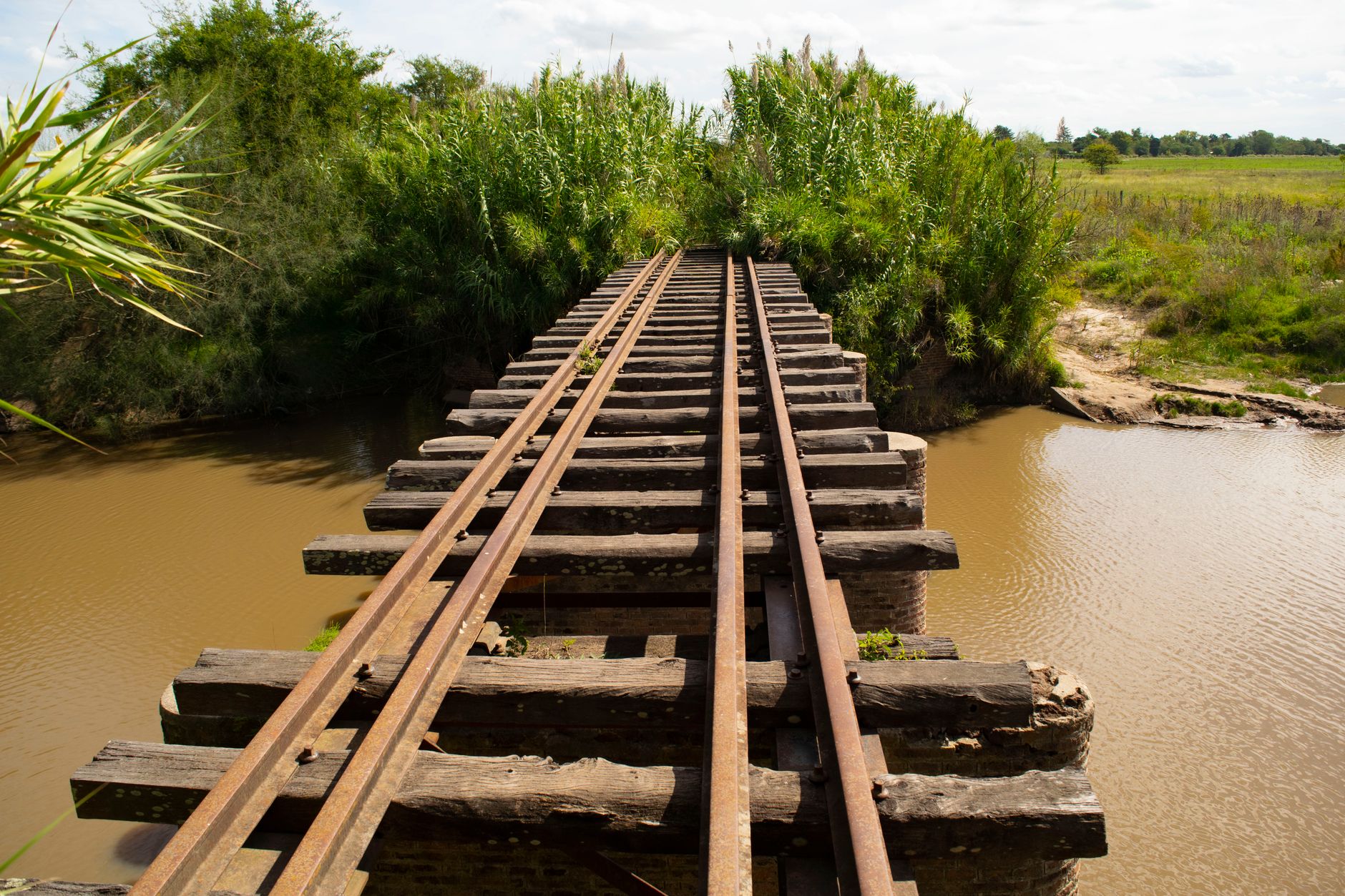
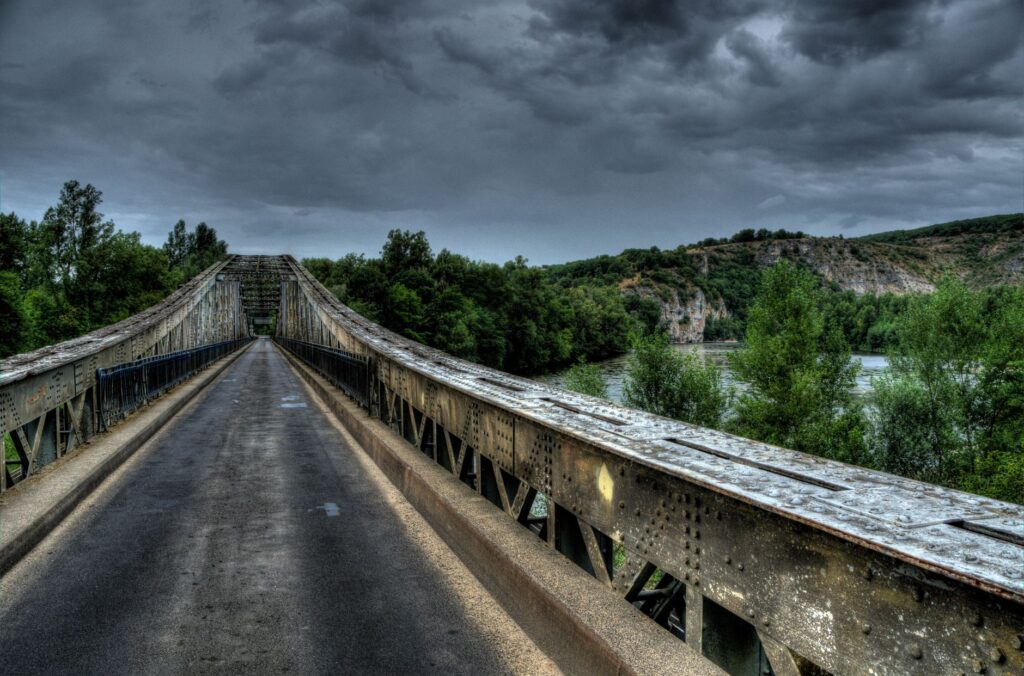
Crossing the tributaries of the Santa Lucía River and the multiple streams watering the prairie demanded bold structural solutions. Cast iron bridges and submerged masonry piers constitute true works of art of nineteenth-century engineering. Corrosion caused by ambient humidity and constant seasonal overflows forced the development of pioneering maintenance techniques in the region.
Calculating the spans of the bridges required exhaustive knowledge of the local hydrological regime, often unpredictable due to regional climate phenomena. British and local engineers had to adapt European standards to the sudden fury of floods, utilizing deeply driven piles to ensure the stability of the metallic superstructures that still resist the passage of time today.
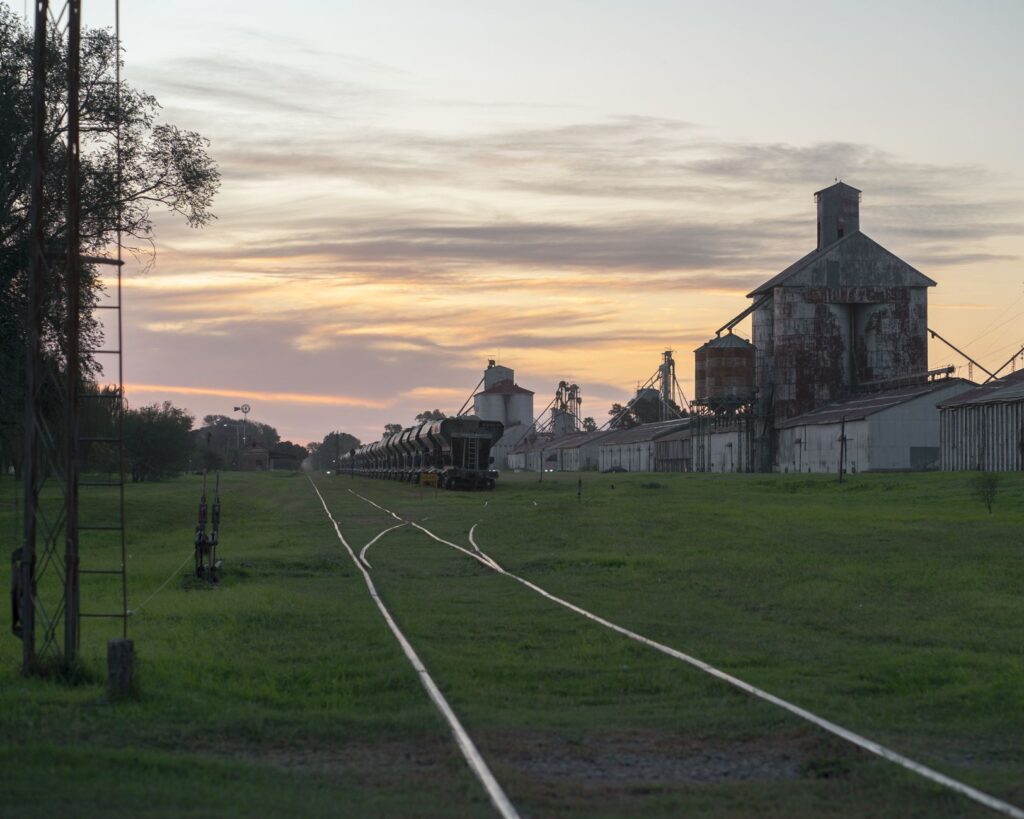
The Energy Transition: From Mineral Coal to Diesel Efficiency
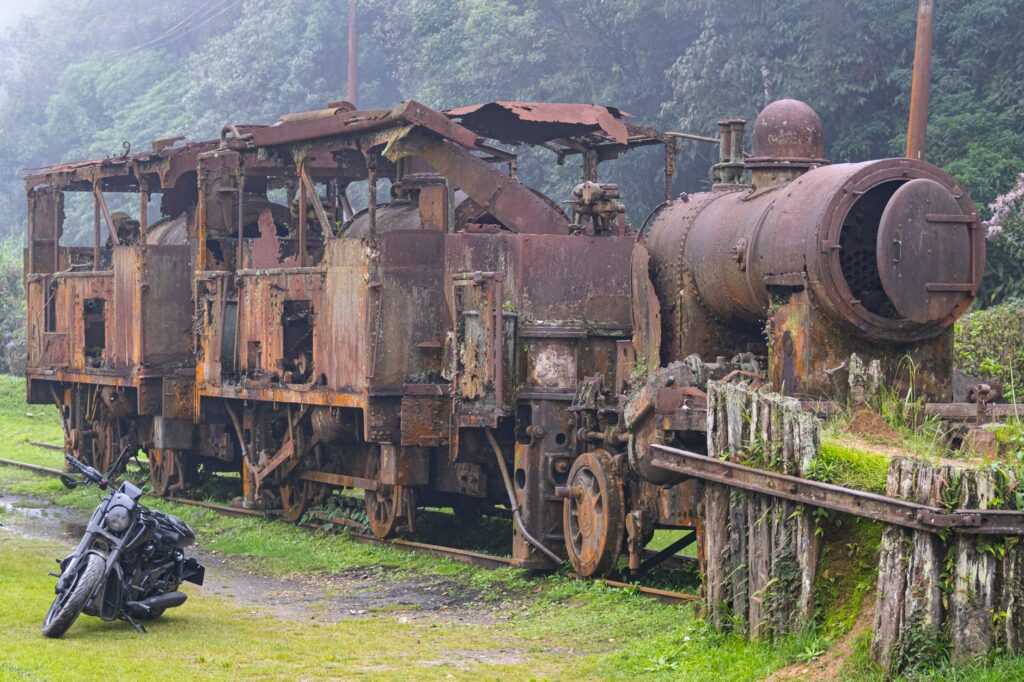
The technological evolution of rolling stock on this line reflects the energy transformations of the 20th century. Heavy steam locomotives, consuming large amounts of imported coal or native woodland timber, gave way to diesel-electric traction by mid-century. This modernization drastically reduced travel times and increased hauling capacity, optimizing the transport of perishable goods.
However, subsequent disinvestment in Latin American railway sectors relegated these machines to a secondary role facing the rise of automotive freight transport. Understanding this regression is fundamental for evaluating current logistical conversion strategies seeking to decongest national highways and reduce the carbon footprint of agroindustrial transport.
Agroindustrial Logistics: The Missing Link in the Production Chain
In the heart of the dairy basin, punctuality is not mere courtesy, but a biological necessity. Raw milk, a highly perishable commodity, demands uninterrupted cold chains and strict transit times to prevent spoilage before reaching pasteurization plants or cheese and derivative industries. Historically, the railway fulfilled this function through the incorporation of thermal cars equipped with special insulation.
Today, the reactivation of railway corridors dedicated to heavy cargo aims to alleviate pressure on the road network, drastically reducing highway maintenance costs and accident rates. Logistics experts agree that an intermodal transport system, where the train handles long-distance haulage and trucks perform capillary distribution, is the only viable path to sustain the country’s export growth in the long term.
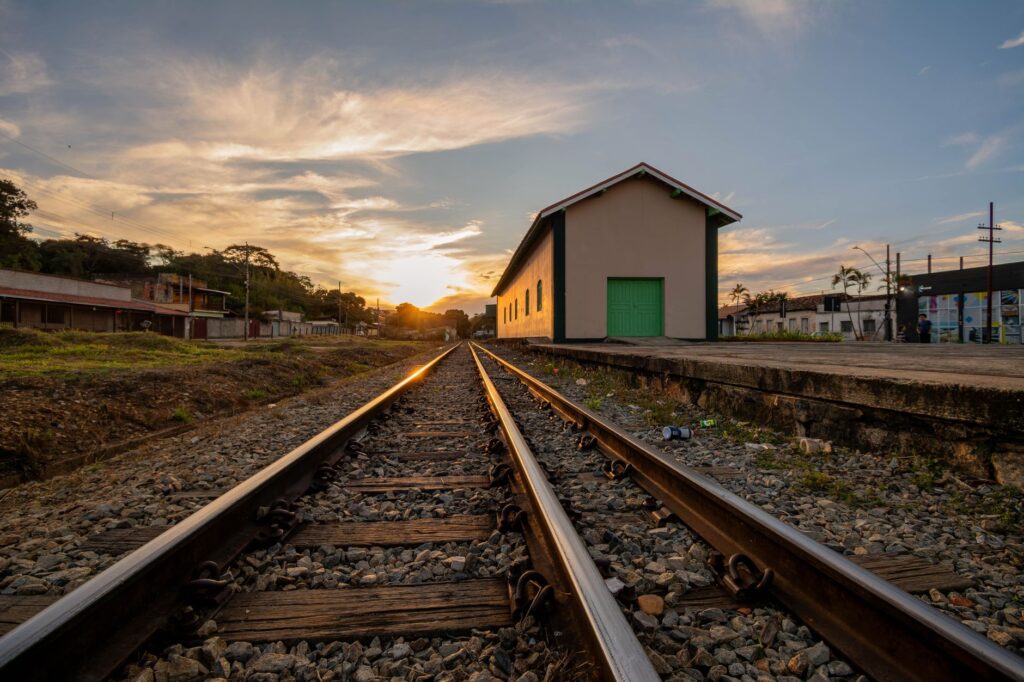
The railway track is not an industrial fossil, but the infrastructure upon which the logistical sovereignty of the next century must be structured.
Socioeconomic Impact on Small Rural Localties
The decline of the passenger railway service left a deep footprint of isolation in numerous localities that depended exclusively on the train to communicate with urban centers. Local businesses closed their doors, internal migration toward the capital accelerated, and vast rural zones lost demographic dynamism.
For this reason, railway rehabilitation projects are not evaluated solely under criteria of direct financial profitability, but through social cost-benefit analysis. Restoring railway connectivity promises to revitalize the local economy, facilitating access to health and education services while fostering sustainable rural tourism that values industrial heritage.
Road and Rail Infrastructure: Toward an Intermodal Model
Efficient integration between the rail mode and the highway system forms the core of modern transport policies in Uruguay. Recent investments in the modernization of primary tracks demonstrate state willingness to diversify the logistical matrix. Nonetheless, bottlenecks persist at transfer points and in the state of secondary branches connecting agricultural operations with the trunk line.
Sector analysts point out that the key to success lies in regulatory transparency and the attraction of public-private investments guaranteeing long-term infrastructure maintenance. Without professional and depoliticized network management, modernization efforts risk diluting amidst budgetary fluctuations.
Practical guide
Planning a journey through the railway heritage of the Uruguayan dairy basin requires understanding the distribution of ancient stations and the current state of access routes.
Getting There and Around
The ideal starting point is Montevideo, from where one accesses via rental car or regular bus services toward the departments of San José and Florida. Personal mobility is essential to tour the local dirt roads winding alongside dead or undergoing rehabilitation tracks.
When to Travel
Autumn months (March to May) and spring (September to November) offer the most favorable weather conditions, with mild temperatures ideal for photographic excursions and open-air exploration of ancient infrastructure.

Accommodation and Gastronomy
Regional tourism estates offer an unparalleled immersion into rural Uruguayan culture. It is imperative to taste local artisan cheeses and dairy products crafted in basins with long cooperative traditions.
Traveler Precautions
Much of the tracks and historic stations are located on private property or rehabilitation work zones. Prior authorization must be secured to access railway grounds, and extreme caution must be exercised when crossing level crossings lacking modern signage.
The Silent Beating of Wooden Sleepers
As the sun declines over the green immensity of the prairie, casting elongated shadows on oxidized steel rails, the landscape reveals its deep melancholy poetry. Hardwood sleepers, anchored in basaltic stone ballast, guard the memory of thousands of anonymous journeys that built the productive identity of a nation. This is not simply about iron and wood, but the tangible testimony of human will to shorten distances and weave community across the vastness of the land.
Observing this disused or slowly transforming transport corridor is recognizing that the journey does not conclude upon arrival at a destination, but resides in the ability to read the layers of history superimposed upon the territory. With each effort to breathe life back into these tracks, the country reaffirms its vocation for openness and its commitment to a future where engineering and landscape converse in perfect harmony.
The true value of a railway line is not measured by the tons it carries, but by the lives it connects across the horizon.