Introduction to the Craft of the Living Book
In an era dominated by planned obsolescence and the immediacy of backlit screens, a growing number of creators, conservators, and designers across Europe are turning their gaze back toward an ancient art: hand bookbinding. This craft, which for centuries combined the engineering of conservation with the highest aesthetic expression, is currently experiencing a profound renewal. Far from being a mere relic for collectors or a pastime for nostalgic bibliophiles, the bookbinding workshop has transformed into a contemporary laboratory for sustainability, material design, and cultural resistance.
The preservation of books and the creation of unique volumes respond not merely to an aesthetic whim, but to an urgent need to reclaim our tactile relationship with knowledge. In this report, we will examine how master binders in cities such as Florence, Paris, London, and Madrid are redefining the boundaries of their discipline. Through experimentation with ecological materials, the integration of traditional lead typography with digital techniques, and collaboration with contemporary artists, the hand-bound book reclaims its space as a total work of art.
The Materiality of Paper and Fiber
The foundation of any quality-bound work lies in its substrate. In recent years, artisan workshops have revived the use of handmade papers crafted in traditional vats, employing plant fibers such as linen, hemp, cotton, and even agricultural waste like rice straw or coffee fibers. These papers not only offer exceptional durability that far surpasses industrially bleached chemical pulps, but they also provide an unmistakable texture and weight.
The selection of paper determines the flexibility of the signatures and their behavior during sewing. Master artisans inspect the grain direction to ensure the book opens smoothly and lies flat on the reading table—a fundamental ergonomic detail that industrial editions often overlook in favor of cost reduction in milling and paperback binding.
The Anatomy of Sewing: Hidden Engineering
The soul of a fine binding is not found in its outer cover, but in the internal structure holding the pages together. Sewing on supports—whether linen tapes, hemp cords, or parchment—constitutes a true miniature engineering feat. Each stitch distributes tension evenly along the spine, allowing the volume to withstand centuries of opening and closing without falling apart.
There are multiple traditional variations, from classical greca stitching to complex Coptic and Byzantine interlacing. Contemporary binders study these historical techniques not only to restore incunables and medieval manuscripts, but to apply them in artists’ books and limited editions that require innovative structural solutions. Millimetric precision in the piercing of signatures is a discipline requiring years of practice and an unwavering hand.
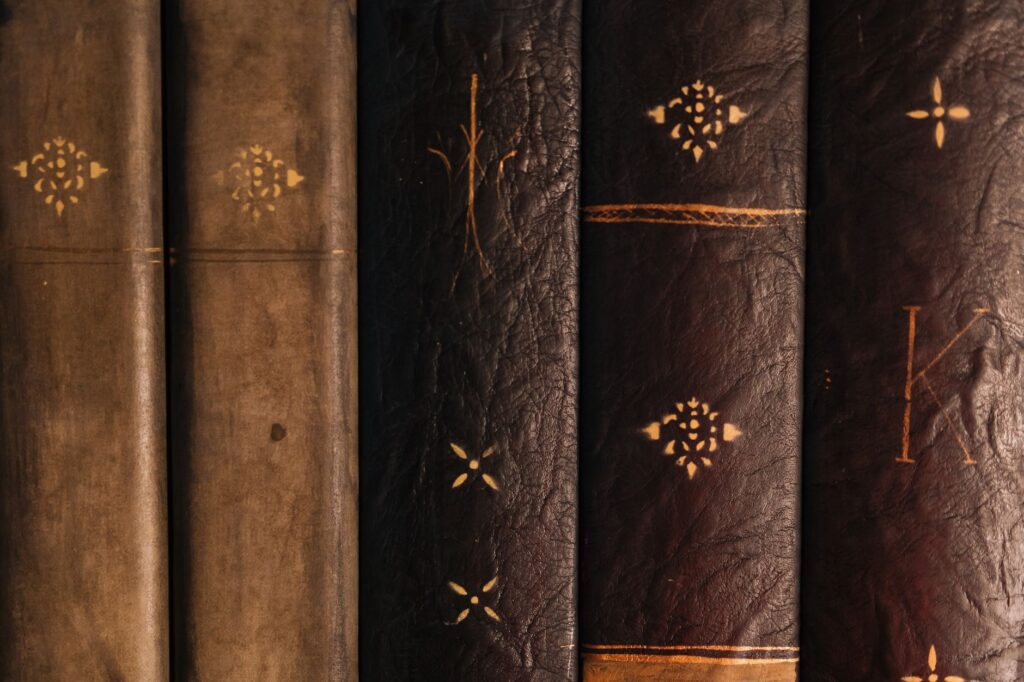
Bookbinding is the silent art that protects humanity’s memory; every stitch is a pact against oblivion.
The Role of Leather and Alternative Vegan Materials
Traditionally, calfskin, goatskin, and sheepskin have been the gold standard for high-end book coverings. However, the fine art book industry now faces profound ethical and environmental reflection. Contemporary workshops are championing the use of leathers tanned through vegetable and organic processes, free from highly polluting chromium salts and heavy metals, while also ensuring the ethical traceability of raw materials.
Simultaneously, the rise of contemporary demands has stimulated research into biomaterials and technical textiles. Unbleached linen fabrics, heavy-duty waxed cottons, and innovative bioplastics derived from plant waste are successfully utilized to mimic the protective properties of traditional parchment without compromising sustainability. This duality enriches the catalog of aesthetic options available to designers and independent publishers.
The Geometry of Gold: Decoration and Lettering
The final phase of the binding process, known as finition in the French tradition, is where patience and graphic virtuosity converge. Fire-gilding and hand-tooling through the application of genuine gold leaf onto leather or paper is a technique whose fundamentals have changed little since the Renaissance. It requires engraved brass stamps, composing sticks, and absolute mastery over the temperature control of heating tools.

Today, many studios combine this classical ornamentation with blind stamping and minimalist geometric embossing. This contemporary approach frequently dispenses with nineteenth-century ornamental excess in favor of clean lines, negative space, and absolute respect for the intrinsic beauty of natural materials.
Restoration and Preventive Conservation: Saving Heritage
The renaissance of this craft cannot be understood without its conservative branch. National libraries, historical archives, and private collections across Europe rely on specialized restorers to rescue volumes devoured by the acidity of nineteenth-century industrial paper, attacks by wood-boring insects, or the ravages of humidity. Modern restoration does not seek to return a book to a fictitious newly minted state, but rather to stabilize its original materials and document every intervention reversibly.
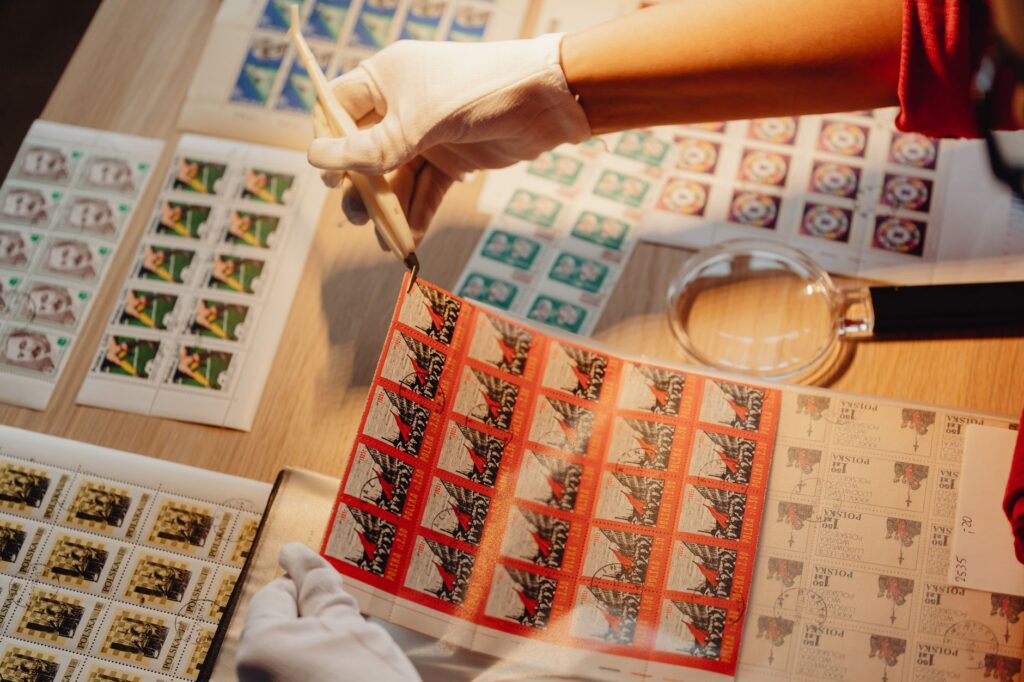
This scientific and artisanal work requires deep knowledge of applied chemistry, art history, and historical papermaking. Each treated volume is a unique document revealing secrets about ancient printing techniques, papermaking watermarks, and handwritten annotations by former owners.
Practical Information for Visiting Workshops and Training Centers
For those interested in delving deeper into the world of artisan bookbinding, Europe boasts an exceptional network of institutions and workshops open to the public:
- Scuola del Libro (Florence, Italy): Located in the heart of Tuscany, it offers specialized courses in artistic bookbinding and paper conservation. Advance appointments are recommended for guided tours of its historical workshops.
- Ateliers de Paris (Paris, France): A municipal center dedicated to applied arts and high-end craftsmanship, hosting and exhibiting top bookbinders from the French capital.
- The London Centre for Book Arts (London, United Kingdom): A pioneering space inspired by independent studios in the United States, focused on self-publishing, contemporary bookbinding, and the artist’s book culture. It offers weekend workshops for all skill levels.
- National Library of Spain (Madrid): Although its restoration workshop is not permanently open to the general public due to conservation protocols, it regularly organizes temporary exhibitions and open doors days explaining historical binding techniques.
The Workshop as a Space of Cultural Resistance
In major European cities, bookbinding workshops have become refuges against urban acceleration. The deliberate pace required to fold, sew, press, and gild contrasts sharply with digital urgency. Artisans act as guardians of a know-how that cannot be automated or summarized by an algorithm. Each hand-bound book is a tangible reminder that written culture possesses an irreplaceable physical dimension.

The new generations of creators entering the craft bring a fresh vision, connecting contemporary graphic design with centuries-old structures. This synergy ensures that artisan bookbinding is not a museum fossil, but a living and constantly evolving discipline.
Conclusion: The Future of the Handmade Book
Faced with doom-laden predictions about the imminent death of the printed book, the renaissance of artisan bookbinding proves that the printed object is experiencing a golden age in terms of quality, artistic value, and durability. Digitization has liberated the book from its purely utilitarian function as a mere container of mass information, allowing it to reclaim its primordial status as an object of worship and a work of art.
Investing in a hand-bound book is a commitment to slowness, enduring beauty, and the permanence of the written word against the ephemeral digital tide.
Supporting local workshops, acquiring editions curated by independent artisans, and appreciating the invisible labor behind every sewn spine is an act of cultural responsibility. It is in our hands to ensure that the rustle of pages when opening a good book continues to resonate into the future.