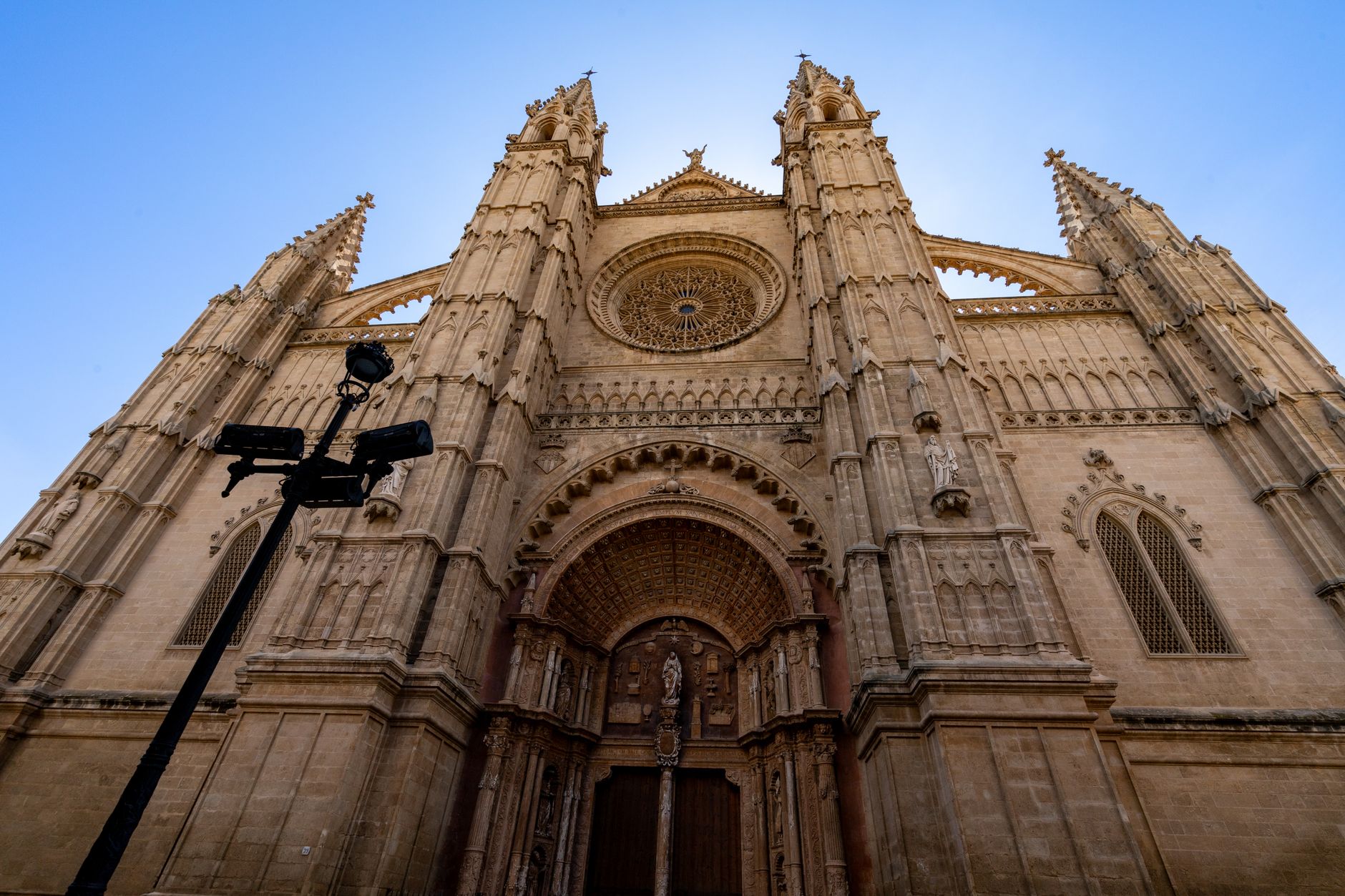

Introduction to Mallorca’s Inner Larder
There is a silent heartbeat that governs the rhythm of the Balearic Islands far beyond the azure horizon and the summer froth of their secluded coves. It hides away in the clay-rich interior of the island, in the terraced plots where water is measured with meticulous ancient care and the weathered hands of local farmers tend to indigenous crop varieties resisting the tide of global uniformity. This journey seeks not the artifice of the summer postcard, but the harsh, beautiful truth of a cuisine anchored in dry-stone walls, the northern Tramontana winds, and the unchanging compass of the seasons. Delving into contemporary Mallorcan gastronomy demands understanding its zero-kilometer philosophy right from the foundations: the earth, the market, and collective memory.
The starting point for this immersion is Palma’s historic food market, a civic temple where sea and mountain produce converge beneath an architecture of iron and filtered light. From there, the route traces an invisible line toward the agricultural heartland of the Pla, a territory marked by windmills, centuries-old fig trees, and small family holdings. It is here that raw ingredients acquire profound meaning, transforming into the vehicle for a culture that refuses to forget where it comes from in order to know precisely where it is heading within the current culinary landscape.
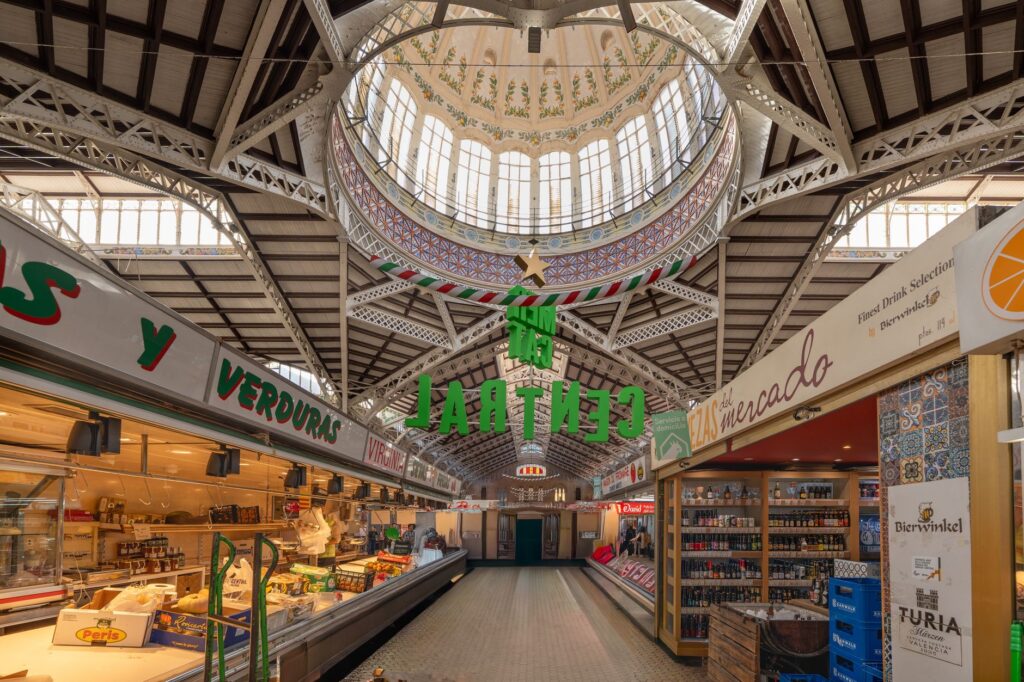
The Architecture of Dawn in the Halls of Pere Garau and Olivar Market
Palma’s awakening has a precise metallic sound: the lifting of steel shutters across its municipal markets. While the modernist building of Plaza Mayor and the iconic lines of the Olivar Market capture the casual traveler’s gaze, it is in spaces like the traditional neighborhood market that daily life unfolds without filters. Here, fruit and vegetable stalls proudly display the natural imperfections typical of organic, locally sourced produce, far removed from the aesthetic standards imposed by large food distribution chains.
In these corridors laden with marine humidity and the aromas of wild herbs, vendors act as true conservators of island agricultural biodiversity. Conversing with them reveals an invisible cartography based on local varieties of ramellet tomatoes, black pork, and nearly extinct legumes. Each stall stands as a small trench against oblivion, a space where commercial exchange recovers its most human and direct dimension, linking the diner with the farmer who rises well before dawn to harvest fruit at its exact moment of ripeness.
The Invisible Heritage of the Pla de Mallorca
Leaving the urban bustle of the capital leads inexorably toward the Pla, the central plain acting as the island’s great green belly. Here, dotted by marés stone villages like Sineu, Algaida, or Lloret de Vista Alegre, the agricultural landscape is organized around terraces enclosed by dry-stone walls, recognized as Intangible Cultural Heritage by UNESCO. This is no environment designed for aesthetic display, but an ecosystem of resilience where every square meter of arable soil has been won from the stony terrain through collective effort.
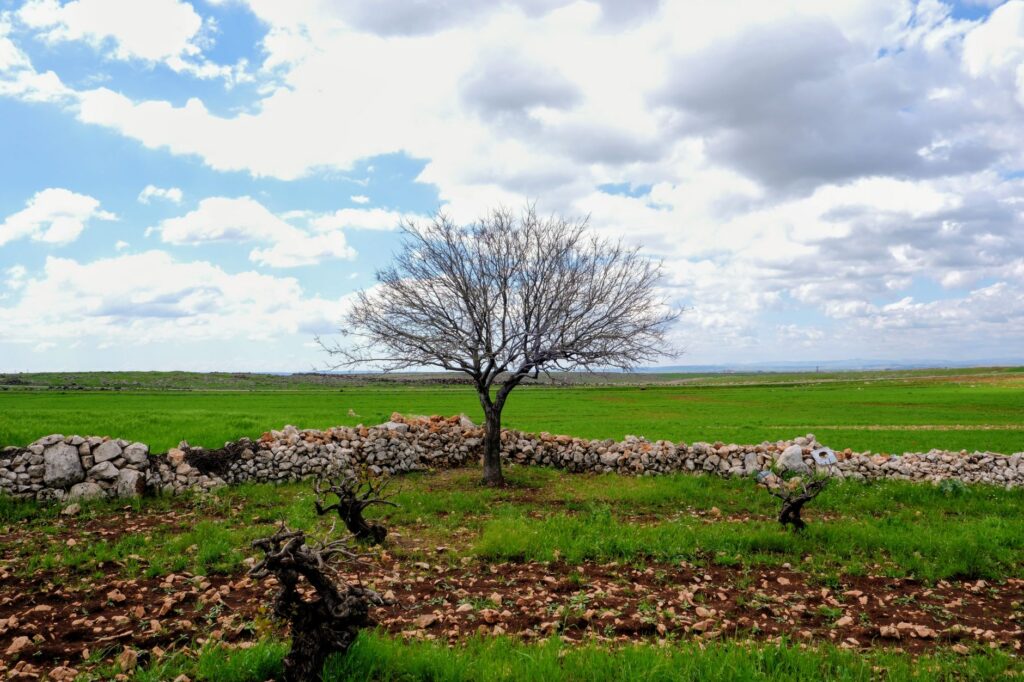
Across these dry-farmed lands, traditional crops such as almond trees, fig trees, and ancient cereals coexist with traditional irrigated orchards fed by ancestral Islamic irrigation channels. Water management in this insular territory has historically shaped the character of its inhabitants and the nature of their culinary preparations. Mallorcan soups, crafted with thin slices of ca Vici brown bread and seasonal vegetables, stand as clear proof of how scarcity is transformed, through gastronomic intelligence, into a comforting dish of deep identity.
The Liturgy of the Black Pig and Autochthonous Cured Meats
If the garden provides freshness and vegetal subtlety, it is in extensive livestock farming that the gastronomy of inland Mallorca finds its most robust counterpoint. The recovery of the indigenous Mallorcan black pig, a breed that stood on the brink of extinction late in the past century, represents one of the greatest triumphs of heritage conservation applied to the primary sector. Raised freely beneath oak groves, these animals feed on acorns and figs, granting their meat a unique fat infiltration and an unmistakable organoleptic profile.
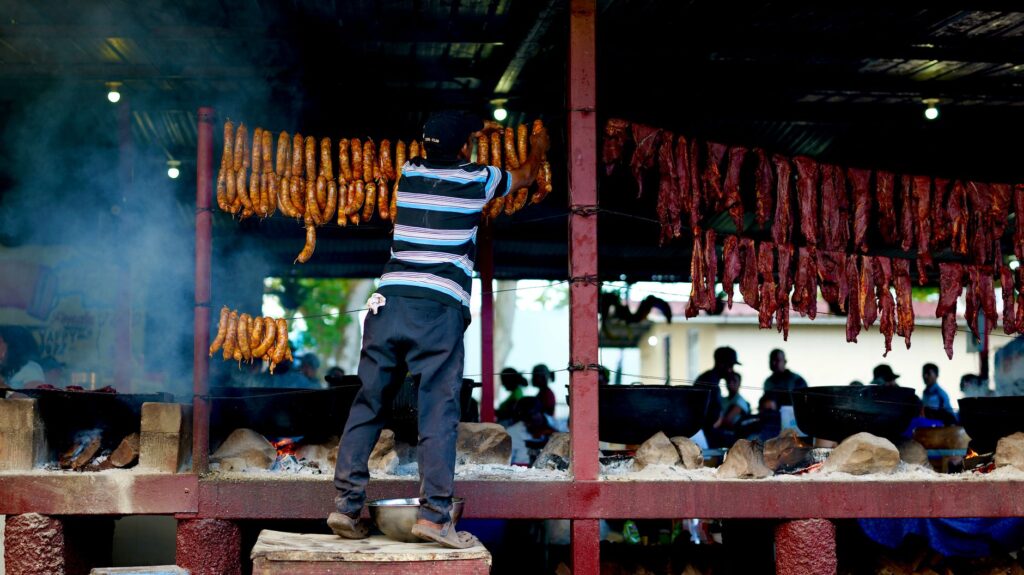
The crown jewel of this livestock sector is undoubtedly the sobrasada of Mallorca, a raw cured sausage protected by a Protected Designation of Origin establishing strict production rules. Its buttery texture and characteristic red color, provided by native sweet paprika, result from a slow maturation process conditioned by the island’s ambient humidity. In traditional kitchens, sobrasada is understood not merely as a spreadable sausage, but as an essential seasoning that brings depth and complexity to legume stews, savory pastries, and popular confectionery.
The Art of Brown Bread and Centuries-Old Wood-Fired Ovens
No analysis of the Balearic larder could be complete without examining bread, a central and sacred element at the Mallorcan table. Brown bread, crafted with indigenous wheat flours and characterized by its salt-free nature—a historical quirk shared with other Mediterranean regions—features a dense crumb and a rustic crust capable of supporting the most broth-heavy preparations without collapsing. Traditional wood-fired ovens, many operating for over a century, continue to keep alive a craft that requires mastering the timing of fire and natural fermentation.

«True luxury in contemporary dining lies not in the accumulation of exotic ingredients, but in a territory’s capacity to stay true to its memory through flavor.»
These artisan bakeries also produce the famous panades and crespells, savory and sweet pastries marking the rhythm of local festivities and fieldwork days. The dough, worked with lard instead of olive oil for reasons of preservation and texture, encloses combinations as singular as lamb with peas or pork loin with sobrasada. Every bite is an exercise in sensory archaeology connecting directly with the customs of the island’s ancient rural dwellers.
The Silent Revolution of Country Wines and Broths
For decades, the Mallorcan wine sector languished in the shadow of mass tourism, relegated to anonymous table wine production. However, recent years have witnessed a fascinating renaissance driven by a new generation of winemakers firmly committed to reviving native grape varieties such as Manto Negro, Callet, and Gorgollassa. Cultivated in clay and limestone soils, these vineyards yield wines of moderate alcohol, striking freshness, and a distinct character that is simultaneously Atlantic and Mediterranean.
Visiting family-run wineries in regions like Binissalem or Pla i Llevant reveals wine not as a mere accompaniment, but as a liquid territory. Modern winemakers operate under minimal intervention premises, respecting lunar cycles and applying regenerative agriculture techniques that breathe life back into soils battered by decades of intensive monoculture. This alliance between conscious viticulture and haute cuisine is placing Mallorca firmly on the global map of benchmark enogastronomic destinations, proving authenticity remains the sole viable path forward.
Practical Guide
Planning a gastronomic route through the interior and markets of Mallorca requires respecting local rhythms and ingredient seasonality. Below are the essential logistical keys to enjoying this experience with rigor and respect.
- Getting There: Palma de Mallorca Airport (PMI) features daily direct flights connecting with major European capitals. To explore the Pla de Mallorca and access local markets independently, renting a vehicle directly at the airport is essential.
- When to Go: The spring months (April to June) and autumn (September to November) offer optimal weather conditions while coinciding with the harvest seasons for new olive oil, grape picking, and wild mushroom foraging.
- Recommended Markets: Santa Catalina Market and the traditional Pere Garau Market in Palma open Monday through Saturday mornings. The weekly Sineu market, held every Wednesday, serves as an essential gathering to observe the island’s traditional agricultural trade.
- Historic Accommodations: Staying in converted rural hotels or rehabilitated agritourisms within the Pla de Mallorca is highly recommended, as these spaces combine architectural sustainability with culinary concepts strictly grounded in local produce.
- Etiquette and Respect: When visiting agricultural estates and small family wineries, booking appointments in advance and showing due respect for local rest hours and fieldwork schedules is advised.
The Territory as an Emotional Refuge and Living Memory
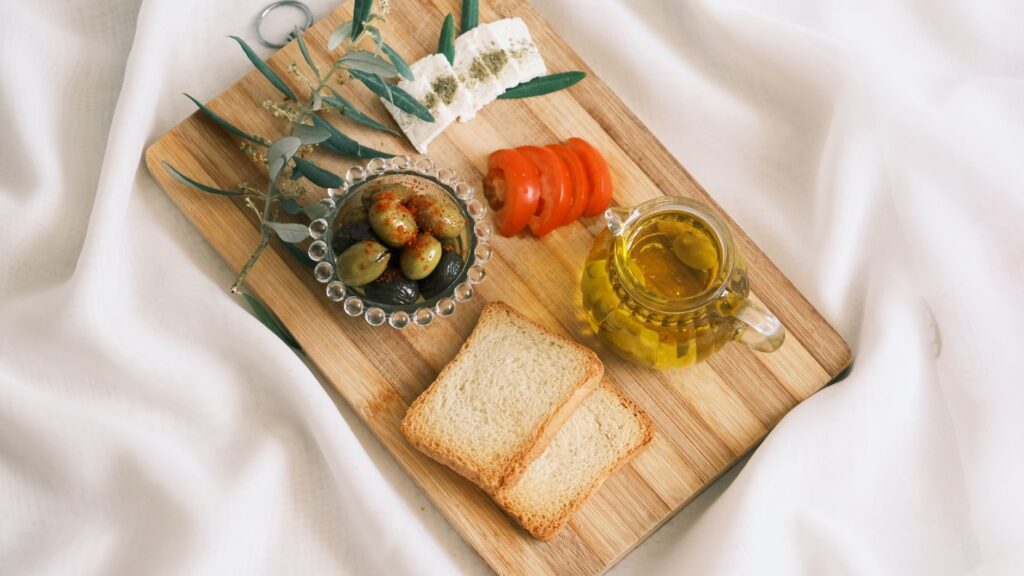
At the end of the journey, when the evening light casts ochre tones across the almond groves of the Pla and silence reclaims its natural space over the stone terraces, one realizes Mallorcan gastronomy is far more than a sum of recipes. It is, essentially, an emotional refuge built on patience, resilience, and profound respect for the earth’s cycles. Sitting at the table to share a piece of brown bread with extra virgin olive oil and artisanal goat cheese is not a merely nutritional act, but a communion with those who, through hands furrowed by daily labor, have managed to keep intact the soul of an island defying time.