
The Submerged Rampart of the Mexican Caribbean
More than thirty kilometers off the southern coast of Quintana Roo, emerging from the deep waters of the Caribbean Sea, lies Banco Chinchorro. This atoll formation, the largest in Mexico and one of the most complex reef structures in the Western Hemisphere, is far more than a postcard destination; it is a border ecosystem where oceanography and marine biology converge in a fragile equilibrium. Far from the mass tourism of the Riviera Maya, this insular and coral complex represents a stronghold for marine biodiversity, a living geological archive, and a critical field study site for contemporary ocean science.
The physical geography of Banco Chinchorro challenges the unprepared navigator. It is an ellipsoidal coral platform enclosing three shallow interior lagoons, surrounded by a continuous reef barrier that acts as the first line of defense against tropical hurricane strikes. In this environment, the interaction between Caribbean marine currents, nutrient inputs, and solar radiation generates a unique marine microclimate. Here, the survival of every organism is intrinsically tied to the collective health of a reef that has taken millennia to consolidate.
Oceanographic Dynamics and Currents of the Yucatan Channel
To understand the ecological persistence of Banco Chinchorro, it is imperative to analyze its oceanographic context. The atoll is situated under the direct influence of the main flow of the Caribbean Current, a dynamic arm that transports warm water masses toward the Gulf of Mexico and the Straits of Florida. This constant flow not only regulates surface sea temperatures but acts as a larval highway, transporting plankton, propagules, and fish larvae from the south of the continent to the far reaches of the Yucatan Peninsula.

Additionally, local upwelling and surge processes play a decisive role. On the outer slopes of the atoll, where the continental shelf drops sharply into abyssal depths exceeding one thousand meters, ascending currents of deep, cold water irrigate the reef with essential nutrients. This vertical mixing of water columns feeds the symbiotic microalgae, zooxanthellae, inhabiting the tissues of scleractinian corals, allowing calcareous structures to maintain calcification rates despite global warming.
Coral Demographics and Keystone Species in the Cays
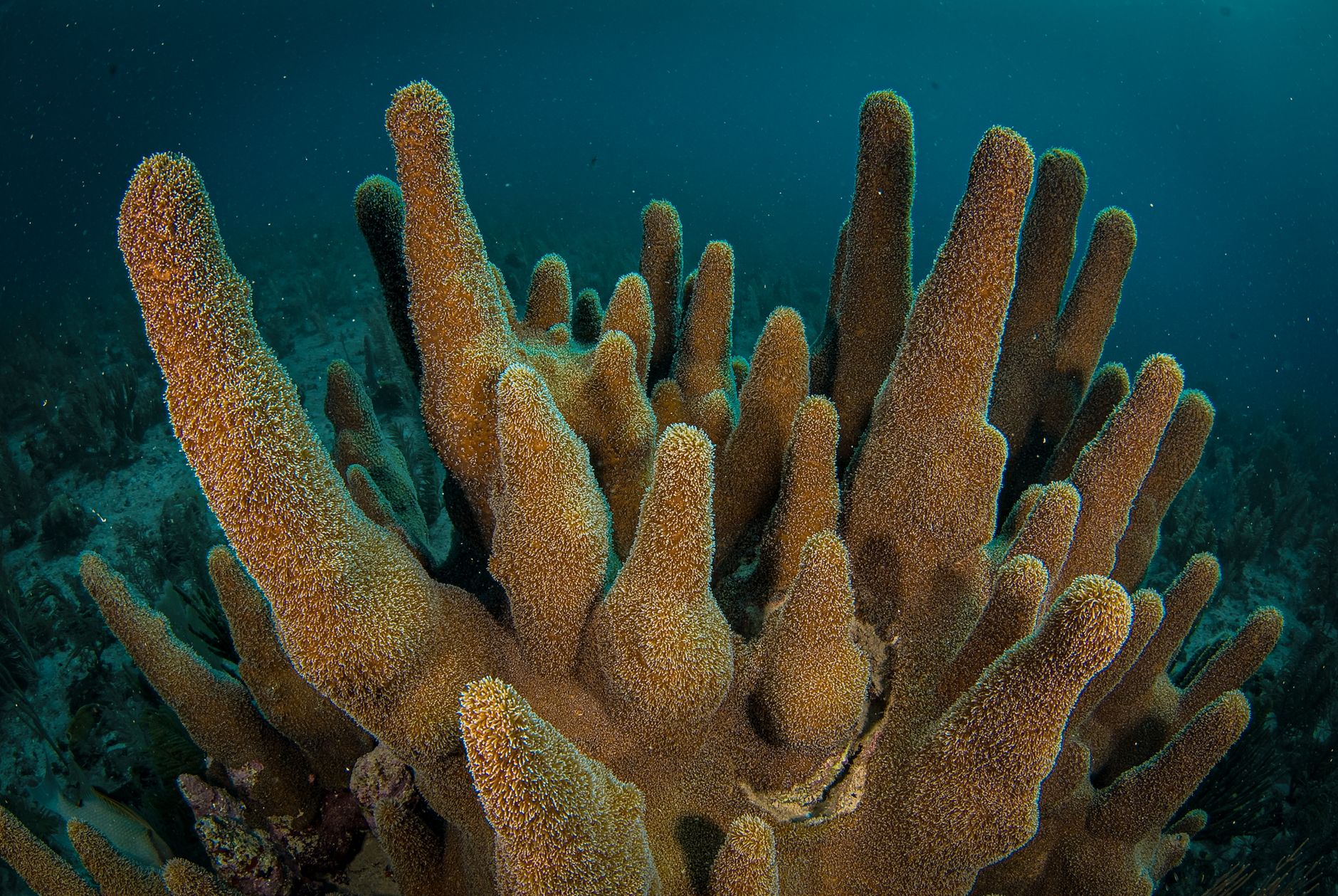
The living architecture of Banco Chinchorro is dominated by reef-building coral species that have suffered drastic declines globally but find refuge here. Elkhorn coral (Acropora palmata) and staghorn coral (Acropora cervicornis) shape the landscape in shallow zones, creating three-dimensional labyrinths that serve as nurseries for countless reef fish, crustaceans, and mollusks.
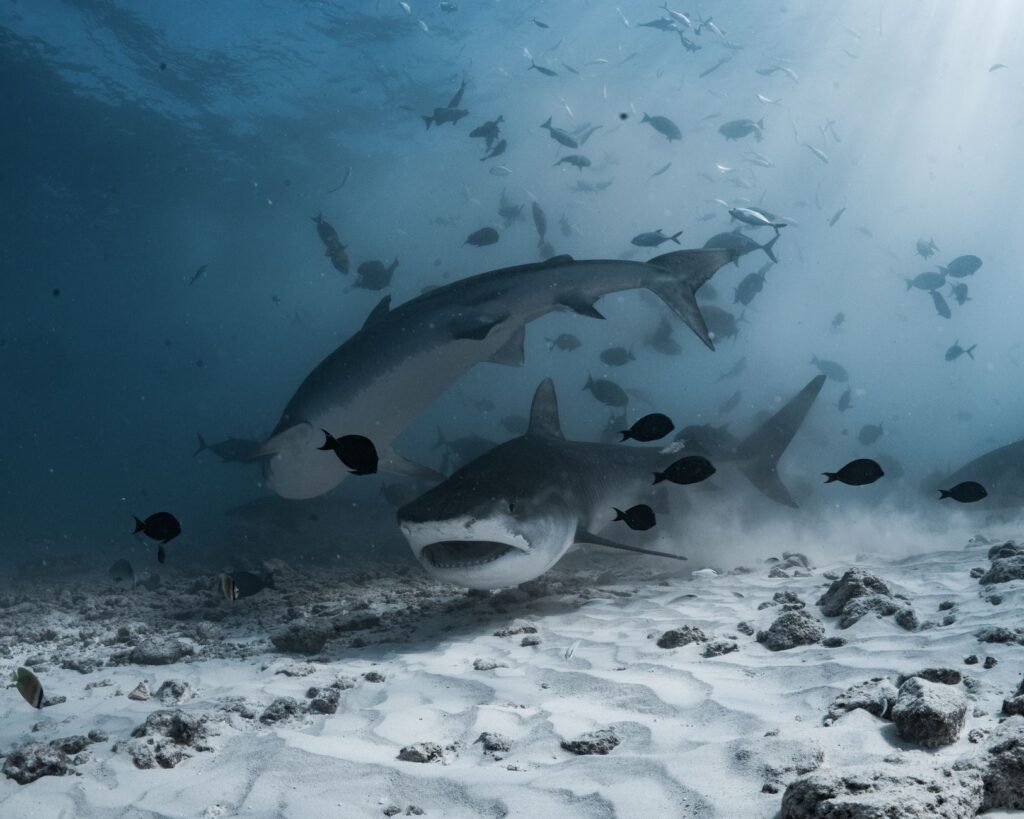
However, the demographics of these organisms have undergone remarkable transformations over recent decades. Marine scientists permanently monitoring the reserve have documented coral bleaching episodes induced by thermal anomalies, as well as the constant pressure of invasive species like the lionfish (Pterois volitans). Despite these stressors, stable populations of nurse sharks, spotted eagle rays, and a dense community of queen conch (Aliger gigas) demonstrate that the system retains ecological resilience superior to other Caribbean areas degraded by overfishing and coastal development.
The Submerged Heritage: Shipwrecks and Historical Memory
The geomorphological complexity of Banco Chinchorro, characterized by shallow reefs and sharp shifts in marine visibility due to wave action, has turned this enclave into a natural cemetery for vessels across centuries. Sandy bottoms and coral ridges shelter wrecks of colonial galleons, 19th-century steamers, and modern freighters that ran aground due to hurricane-force winds and the inaccuracies of early navigation charts.

The rusted hulls of shipwrecks, colonized by gorgonians and sponges, converse with marine biology in a transition where human history is subordinated to the relentless architecture of the reef.
These wrecks are not merely attractions for underwater archaeology; in practice, they function as artificial reefs. The metal structures provide hard substrates where coral larvae and sessile invertebrates quickly attach, generating biodiversity oases that complement natural coral patches. Managing this submerged heritage requires strict protocols to prevent looting and ensure specialized dive tourism respects both marine fauna and the integrity of historical remains.
The Inhabited Cays: The Fishing Community of Cayo Centro
Unlike other uninhabited atolls worldwide, Banco Chinchorro harbors a permanent yet seasonal human presence: artisanal fishers operating from Cayo Centro, the largest cay in the complex. These communities, organized into fishing cooperatives, have maintained for generations a direct and largely sustainable relationship with the atoll’s resources, harvesting Caribbean spiny lobster (Panulirus argus) through traditional methods such as wooden traps known as ‘casitas cubanas’.
Coexistence between strict conservation of the Biosphere Reserve—established in 1996—and the socioeconomic activity of fishers has required rigorous management regulations. Temporary closures, catch quotas, and designated fishing refuge zones are continuously negotiated between federal environmental authorities and local cooperatives. This model proves that safeguarding marine ecosystems does not always require absolute human exclusion, but rather the integration of local knowledge into the scientific governance of the territory.

Contemporary Threats: Climate Change and Acidification
The future of Banco Chinchorro is threatened by global processes beyond local control. Ocean acidification, driven by anthropogenic carbon dioxide absorption in the atmosphere, reduces calcium carbonate saturation in seawater, directly hindering corals’ ability to build and repair calcareous skeletons. Superimposed on this are recurrent marine heatwaves triggering zooxanthellae expulsion and subsequent coral tissue necrosis.
Furthermore, extreme weather events, increasing in frequency and intensity due to climate change, represent a constant physical hazard. Major hurricanes can fragment centurios colonies in hours. Nevertheless, ongoing research shows that local currents and the variable depth of Banco Chinchorro’s internal lagoons sometimes act as thermal buffers, offering microhabitats where certain coral genotypes exhibit higher tolerance to thermal stress.
Restoration Strategies and Scientific Monitoring
Faced with the global degradation of coral reefs, the National Commission of Natural Protected Areas (CONANP), in collaboration with Mexican academic institutions, has implemented underwater nurseries and coral microfragmentation techniques. These methods allow resilient colonies to be cultivated under controlled conditions before transplanting them to degraded areas of the reef barrier.

Satellite monitoring and scientific diving expeditions are vital to record ecosystem health in real-time. Using visual transects and submerged temperature sensors, biologists evaluate live coral cover, herbivorous fish density—essential for controlling macroalgae competing with coral—and physicochemical water quality. This multidisciplinary effort seeks to anticipate ecological tipping points and apply adaptive management responses before damage becomes irreversible.
Practical guide
How to get there: Access to Banco Chinchorro is exclusively maritime from ports along the Quintana Roo coast, primarily Mahahual or Xcalak. The crossing in authorized small vessels takes between one and a half to two hours, depending on wind conditions and sea state.
Permits and regulations: As a protected Biosphere Reserve, any navigation, commercial fishing, or recreational diving activity requires specific permits issued by CONANP and the Port Captaincy. Anchoring on coral heads, collecting marine organisms, or disturbing wildlife is strictly prohibited.
Accommodation logistics: There is no conventional hotel infrastructure on the atoll. Visitors on scientific expeditions or advanced diving trips typically stay in Mahahual, making daily round trips, or coordinating temporary stays with authorized fishing cooperatives on Cayo Centro.
Recommended season: The optimal window to visit and dive in Banco Chinchorro spans from April to August, when the Caribbean Sea experiences lower wind intensity and underwater visibility frequently exceeds thirty meters. The hurricane season, running from June to November, should be avoided.
Silence and Resilience in the Caribbean Frontier
When the sun descends over the horizon of Banco Chinchorro, dyeing turquoise waters in amber and violet tones, the atoll’s surface recovers an apparent calm contrasting with the intense biological activity occurring in the darkness of its depths. In this marine frontier, where geological time is measured in millennia of calcareous accumulation, nature follows its ancient course sustained by the silent resistance of its corals and the commitment of those watching over its protection.
Observing the distant profile of the cays from a drifting boat invites profound reflection on our relationship with the oceans. Banco Chinchorro is not only a biological refuge of immeasurable scientific value; it is a tangible reminder of the fragility of the planet’s great natural systems and our unpostponable responsibility in their conservation against the tide of global change.