
Introduction to the Edge of the Taklamakan
At the southern fringes of one of the planet’s most unforgiving arid expanses, where the Taklamakan Desert enforces its law of shifting dunes and thunderous silences, stands the historic oasis of Khotan. This pivotal enclave of the northern and southern branches of the ancient Silk Road is not merely a geographical accident, but a marvel sustained by human will and ancestral hydraulic engineering. Far from the hustle and bustle of modern metropolises, Khotan beats to the unhurried rhythm of the Kunlun mountain glaciers, whose meltwater runoff carves a corridor of life amid the emptiness. The contemporary traveler arriving here seeks not the artifice of mass tourism, but the authenticity of a geography where land, water, and time maintain a millennia-old pact.
The history of this territory is written with the invisible threads of caravan trade, the discovery of white jade originating from riverbeds, and the manufacture of a rustic, durable silk that fascinated distant empires. Venturing into Khotan means embracing a different cadence, where every adobe alleyway and artisan workshop reveals a lost link in the chain of Asian cultural exchange. The severity of its environment has forged an unbreakable local identity, deeply tied to cover-crop cultivation techniques and defense against the relentless sandstorms locally known as the kara-buran.
The Subterranean Engineering of Karez and Irrigation Canals
The survival of any desert civilization depends on its ability to manage its scarcest and most precious resource: water. In Khotan, this management has reached admirable levels of technical sophistication through capture and distribution systems designed to prevent the massive evaporation caused by scorching summer temperatures. Although the karez system—underground galleries excavated to channel meltwater—is more celebrated in neighboring regions, here the surface river network is complemented by a complex web of master irrigation ditches jointly managed for centuries.
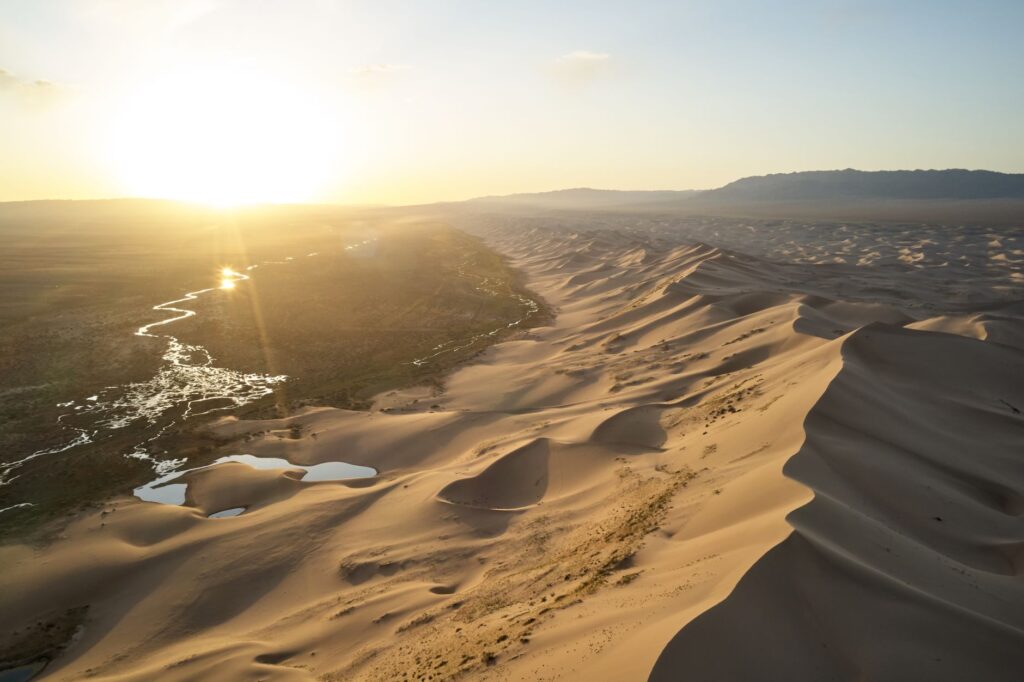
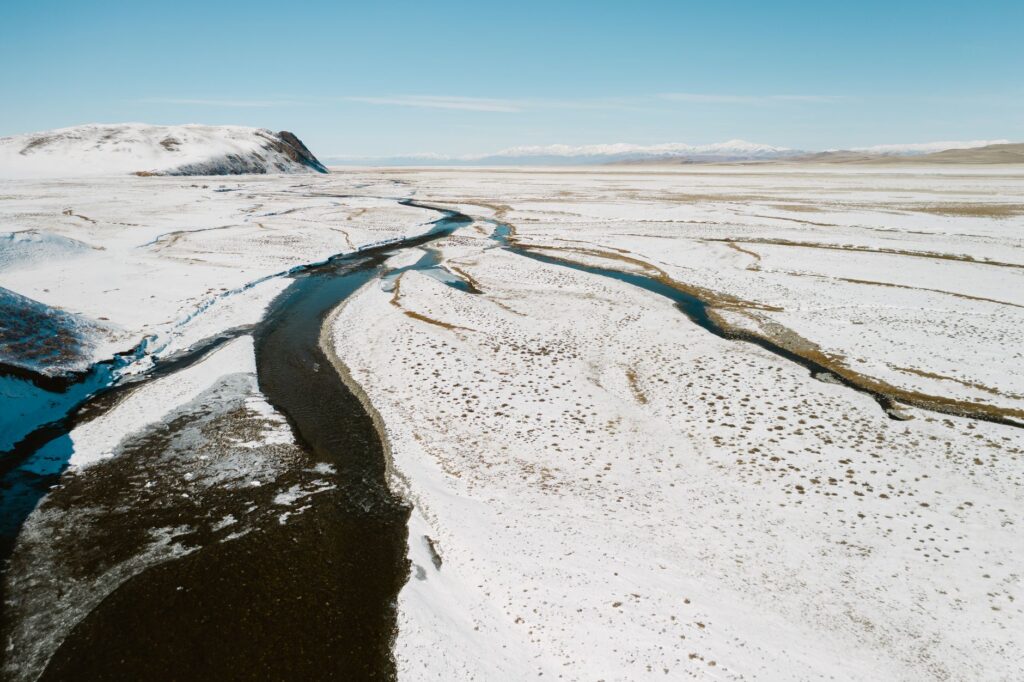
Water descends from the snow-capped peaks of the Kunlun range via the Yurungkash (White Jade River) and Karakash (Black Jade River) rivers. These channels, seemingly dry or reduced to thin threads for much of the year, transform into raging torrents with the arrival of summer. Local inhabitants have learned to divert and modulate these flows using traditional stone and wood dikes, ensuring that every drop irrigates wheat fields, pomegranate orchards, and mulberry groves that feed silkworms. This hydraulic network constitutes a living infrastructure that demonstrates how vernacular technology can overcome extreme climate challenges without depleting subterranean aquifers.
Rammed-Earth Architecture and the Labyrinth of Adobe
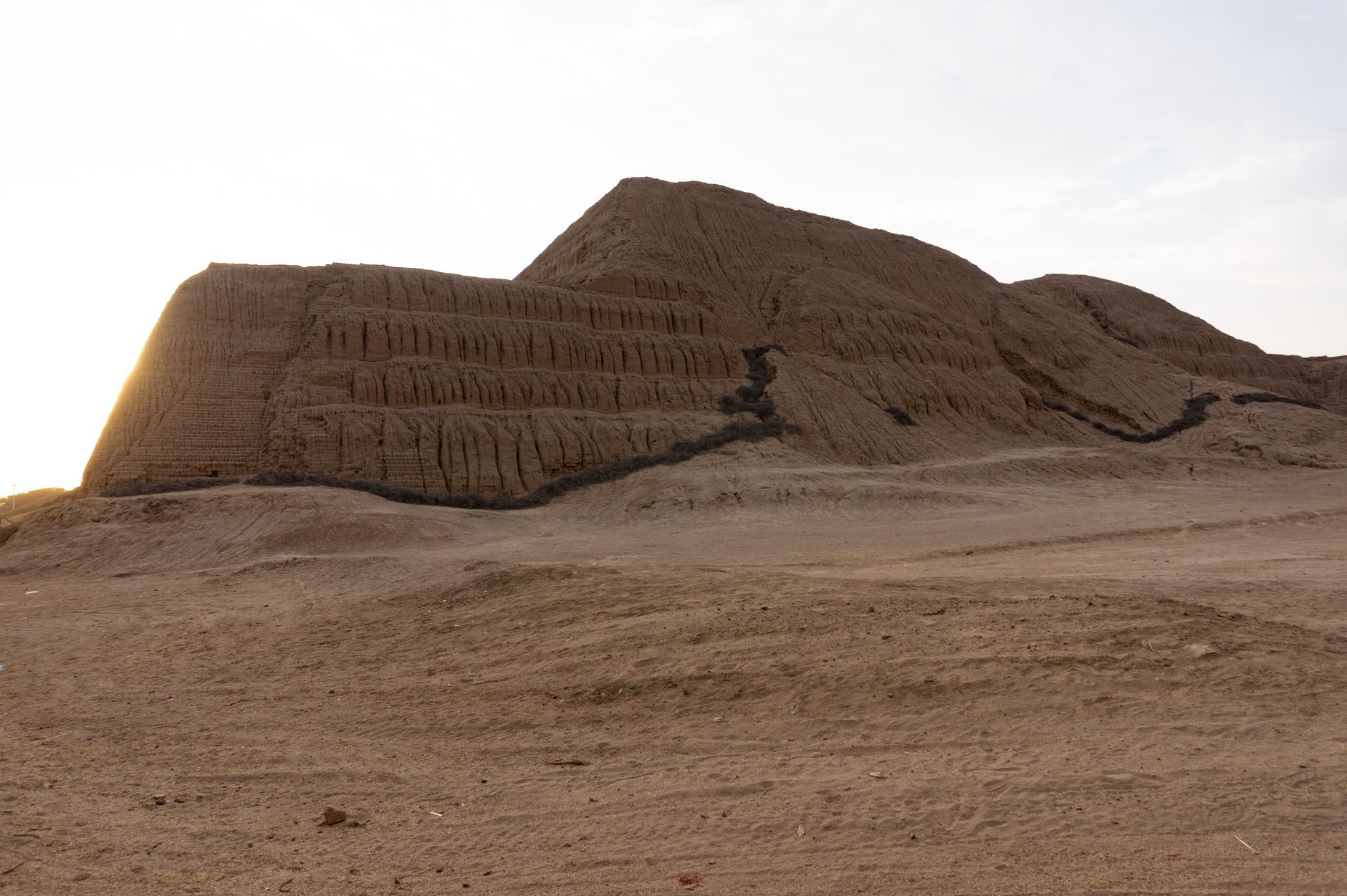
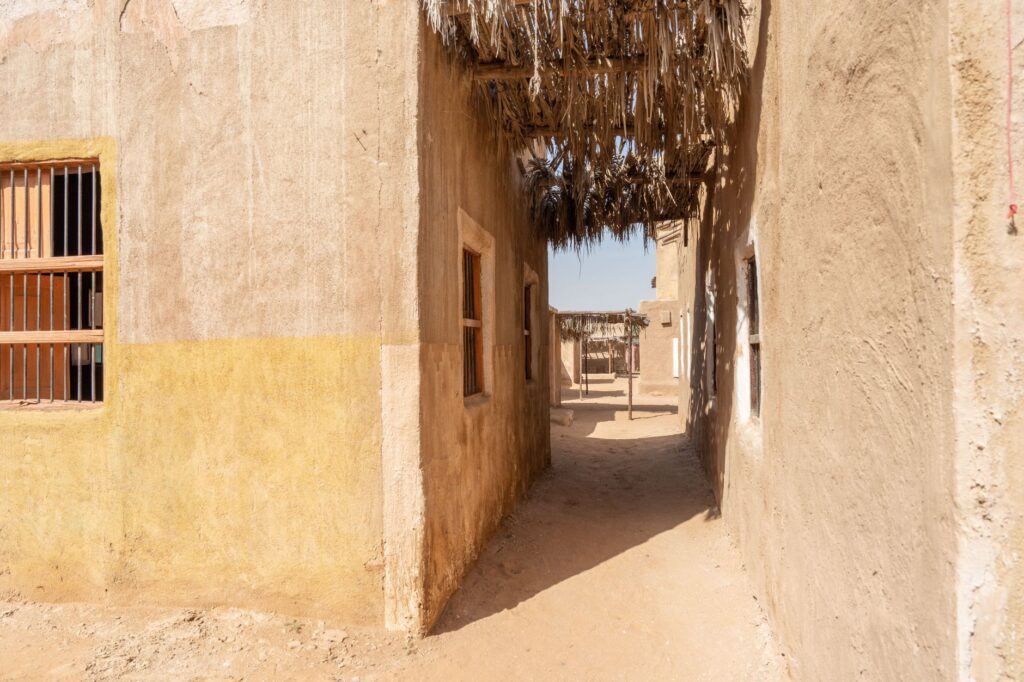
The urban and rural landscape of Khotan is inextricably linked to the earth that sustains it. The absence of stone in the surrounding sandy bed determined that local architecture evolved toward the intensive use of mud and clay, transformed through rammed-earth techniques and the production of sun-dried bricks. Traditional dwellings, perimeter garden walls, and ancient caravanserais exhibit an earthy aesthetic that visually merges with the desert tones. These massive walls fulfill a dual defensive and climatic function: they insulate interiors from extreme daytime heat while retaining warmth during freezing winter nights.
Wandering through the historic neighborhoods on the periphery of Khotan means stepping into a labyrinth of enclosed alleyways, where carved wooden gates protect the privacy of family courtyards. Window lattices and roofs supported by native poplar beams reflect carpentry mastery adapted to the scarcity of noble woods. This vernacular architecture seeks neither ephemeral monumentality nor superficial display, but durability and organic integration with the environment. Every adobe wall is a tangible archive of local sediments, a physical reminder that human construction in this frontier is a temporary loan granted by the desert itself.
The Artisan Pulse of Jade and the River Routes
Since time immemorial, Khotan’s value has been tied to the precious stones carried by its waters. The Yurungkash River is celebrated in Chinese annals for harboring the finest nephrite jade fragments, coveted by imperial dynasties that dispatched emissaries to negotiate the prized mineral. Unlike modern industrial mining, traditional jade gathering in dry riverbeds retains a quasi-ritual character. Local prospectors, equipped with knowledge passed down through generations, scour gravel beds using the soles of their feet to detect the unique texture and density of valuable stones beneath ordinary boulders.
Khotan jade is not extracted through the brute force of heavy machinery, but is discovered through patience and touch in the dry riverbeds descending from the Kunlun range.
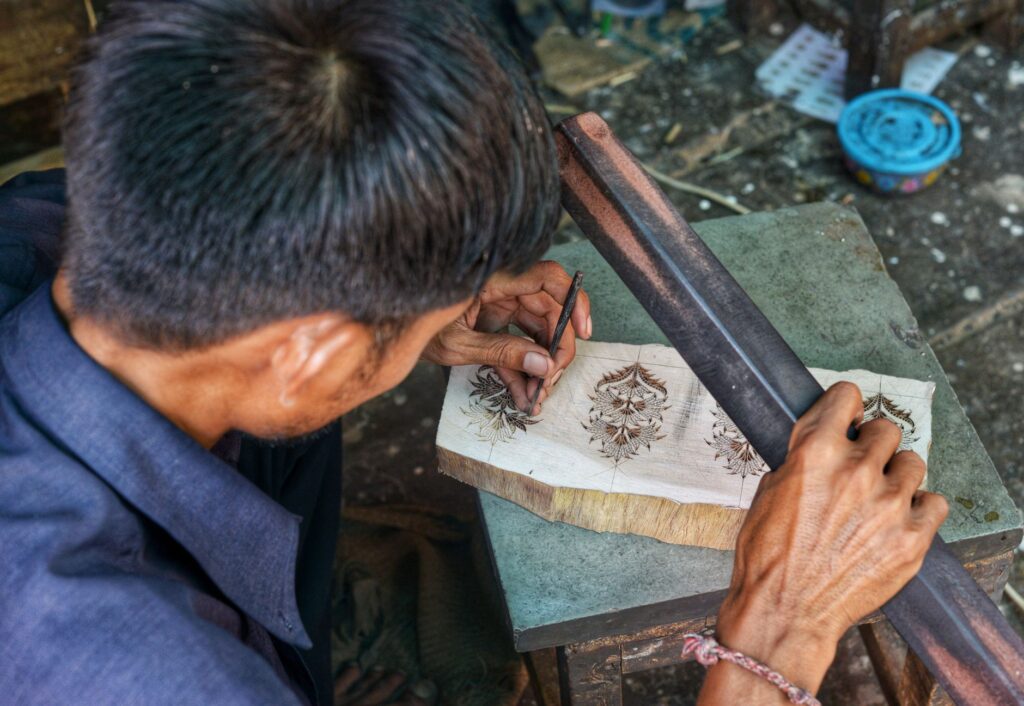
Once gathered, the stones are worked in traditional workshops of the old town, where master carvers use pedal-powered lathes and traditional abrasives to reveal the greasy luster and milky purity of the material. This artisanal process contrasts sharply with globalized mass production, offering travelers direct insight into the persistence of highly specialized manual crafts. The jade economy in Khotan is not merely a mercantile engine, but a fundamental pillar of the region’s cultural identity and intangible heritage.
The Millennial Tradition of Wild Silk and Mulberry Trees
Alongside jade, silk production has defined this oasis’s historical status. Unlike the large industrial plants of Asia’s eastern coast, sericulture in Khotan preserves artisanal methods of high purity. Local farmers cultivate extensive mulberry groves whose leaves serve as the exclusive food source for voracious silkworms. The region’s arid climate and intense sunlight impart exceptional strength and texture to the cocoons, yielding threads of extraordinary durability.
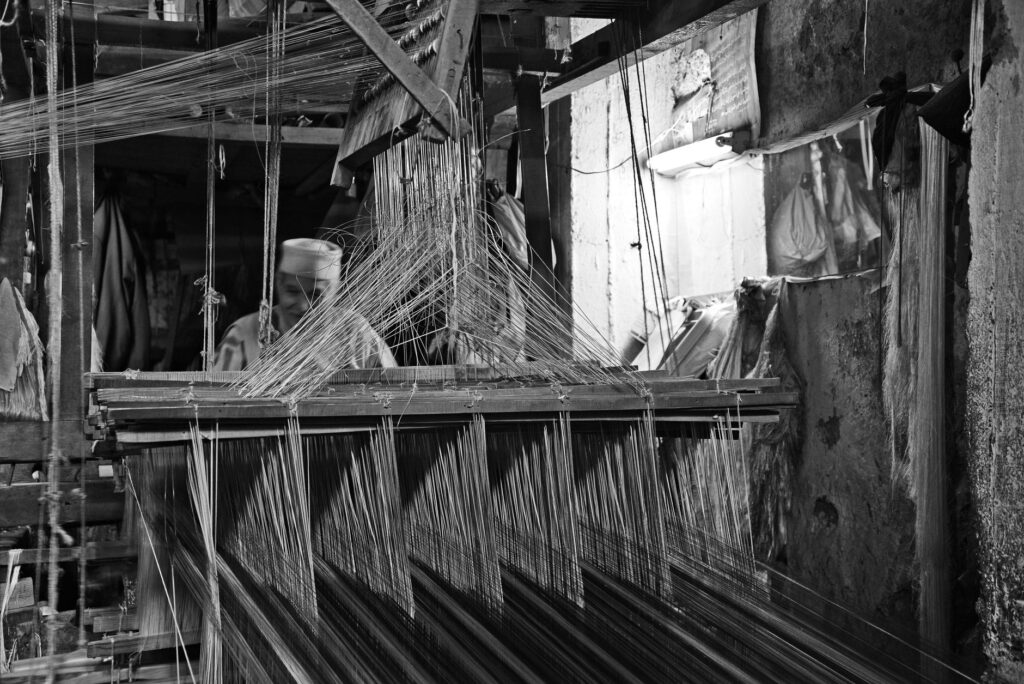
In family workshops, expert women manually reel the cocoons by submerging them in cauldrons of hot water, subsequently weaving fabrics on traditional wooden looms. Traditional textile patterns, characterized by complex geometries and a chromatic palette based on natural dyes from desert plants and local roots, reflect cross-cultural influences among Chinese, Tibetan, and Central Asian traditions. Observing this transformation process, from the mulberry leaf to the final textile, is to understand the complexity of a self-sufficient economy that has withstood the shocks of accelerated modernization.
The Culture of Sunday Markets and Living Trade
Khotan’s Sunday market is one of Central Asia’s most vibrant ethnographic events. Far from being a staged tourist attraction, this weekly souk is the neuralgic meeting point where mountain foothill shepherds, oasis farmers, carpet merchants, and antique experts converge. The bustle is organized into specialized sections: from the livestock market to areas dedicated to spices, utilitarian ceramics, hand-forged agricultural tools, and traditional wool and felt attire.
This space of commercial exchange keeps the spirit of ancient caravans alive. Here, physical goods are negotiated alongside news, genealogies, and traditional lore. The attentive visitor can perceive in everyday transactions the weight of unwritten codes of honor, where a handshake and a given word retain absolute contractual value. The Sunday market is, ultimately, the social mirror reflecting the multiple ethnic and cultural layers that have made Khotan a nodal point of human convergence for over two millennia.
Practical guide
How to get there: The most efficient way to access Khotan is via regular flights from Urumqi, the capital of the Xinjiang Autonomous Region, landing at Khotan Airport (HTN). Railway connections are also available via the circular rail line skirting the Taklamakan Desert, ideal for those preferring unhurried contemplation of the arid landscape.
Best time to visit: Autumn months (September to November) and spring (April to May) offer the most benign thermal conditions, avoiding extreme summer heat and severe winter sandstorms.
Accommodation: It is recommended to stay in restored traditional hotels in the historic center that preserve interior courtyards with adobe architecture, or alternatively choose international-standard establishments in the modern commercial district.
Health and travel recommendations: Comprehensive travel insurance covering remote areas is essential. Environmental dryness demands constant hydration and appropriate sun protection. Strictly respect local customs and obtain necessary permits for traveling through certain prefectural zones.
Epilogue in the Sand: The Memory of Travelers
At dusk, when the golden light of the dying sun sets fire to the dunes of Taklamakan and dyes Khotan’s adobe walls in ocher, the landscape reclaims its essential silence. It is the moment when traces of daytime hustle are erased under the soft caress of the wind, reminding the traveler of the fragility of all human enterprise in this extreme environment. Sitting to contemplate the horizon from the oasis margins allows one to measure the magnitude of the collective effort that, for millennia, has kept the flame of civilization alive between sand and sky. Khotan bids farewell to visitors not with shrill goodbyes, but with the imperturbable stillness of a jade stone polished by time, an enduring lesson on resilience and beauty born of scarcity.