
Introduction to the Great Alpine Route
Railway transit across the Swiss Alps represents one of the pinnacles of civil engineering and modern exploration in high-mountain environments. Far from constituting a mere passenger transfer between two internationally renowned resort towns, the route connecting Zermatt with St. Moritz embodies a masterwork where extreme topography and technical audacity converge. Every stretch of narrow-gauge track and every tunnel carved into living rock tells a story of human perseverance against the imposing geography of snowy ridges, vertiginous gorges, and ancient glaciers that define the heart of the European continent.
Immersing oneself in this rail expedition requires understanding that the leisurely pace of the convoy is not a logistical defect, but an operational necessity and a deliberate aesthetic choice. With an average speed that has rightfully earned it the popular title of the slowest express train in the world, this railway corridor compels the traveler to slow down their pace and attune to the colossal scale of a territory where nature imposes its own rules. This guide offers an analytical journey through the technical, historical, and practical aspects essential for tackling this traverse with competence and rigor.
The Genesis and Architecture of the Narrow-Gauge Track
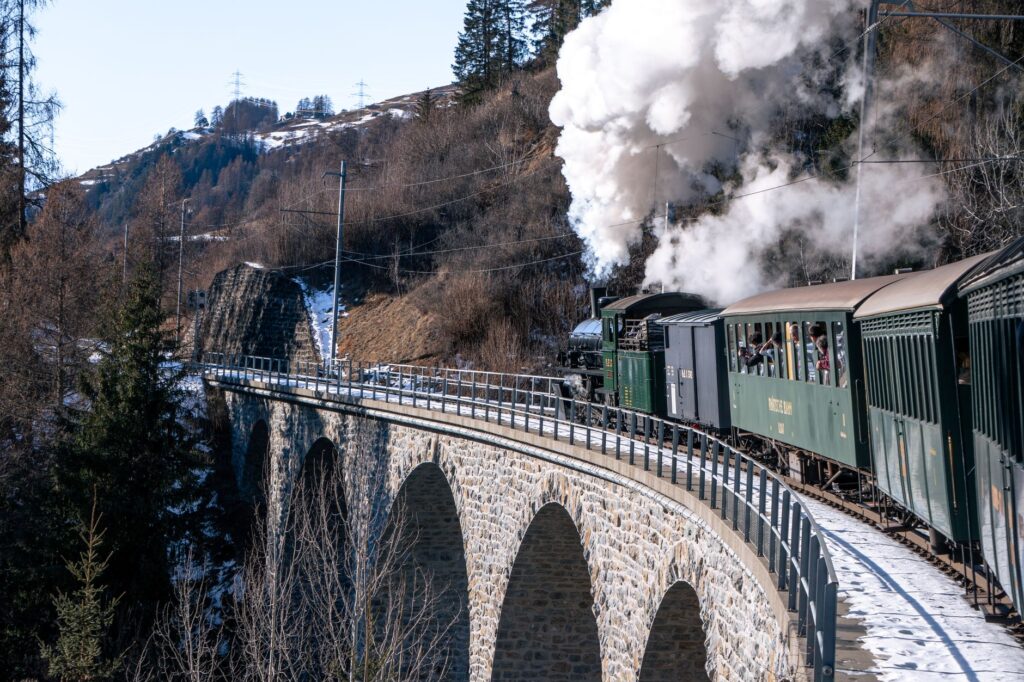
The construction of the lines that make up this alpine corridor today was a financial and technical epic developed in the late 19th and early 20th centuries. Unifying the deep valleys of the cantons of Valais, Uri, and Graubünden required overcoming formidable elevation changes without resorting to simple adhesion systems across the entire route, which drove the widespread adoption of the rack-and-pinion system on the steepest grades. Visionary engineers had to chart routes over inscrutable ravines, designing stone viaducts and metal bridges suspended over abysses that defied the physics of the era.
The result is a railway network composed of several historical sections managed today by emblematic companies such as the Matterhorn Gotthard Bahn and the Rhaetian Railway. The harmony between man-made elements and the natural landscape is such that a significant portion of the route has been designated by UNESCO as a World Heritage Site. Support structures, avalanche retaining walls, and high-altitude stations operate as a living system that requires constant and rigorous maintenance, especially during the harsh winter months.
The Engineering of Major Bridges and Tunnels
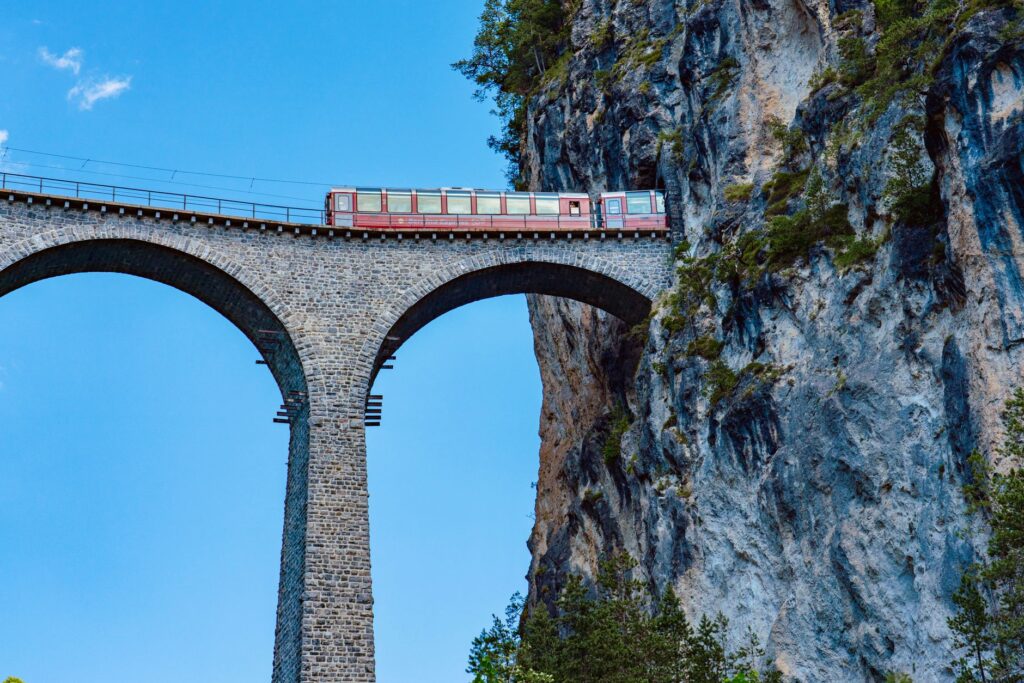
One of the most impressive milestones of the traverse is concentrated in the passage across the Landwasser Viaduct, a curved structure of dark limestone with six arches that leads directly into the mouth of a tunnel carved into the cliff face. This work of railway engineering art, located near Filisur, exemplifies how builders had to calculate loads and turning radii with absolute precision in extremely confined spaces. Crossing this viaduct generates a unique sensation of suspension over emptiness that synthesizes the audacity of the Swiss network.
Throughout the nearly three hundred kilometers of travel, the convoys cross over two dozen tunnels and hundreds of bridges. Among them, the Furka Base Tunnel stands out as a vital infrastructure that replaced the old high-mountain surface route to guarantee year-round operation. Ventilation management, the drainage of seepage from snowbanks, and the automated control of signaling in these underground corridors form an invisible yet essential part of the safety experienced by any traveler on board.
Traverse Logistics and Altitude Management
Planning a trip of this nature demands meticulous attention to logistical factors, starting with the selection of the season and seat reservation, which is mandatory during peak tourist demand months. The train features panoramic carriages equipped with large curved glass windows extending up to the roof, specifically designed to maximize visibility of peaks and valleys. However, this design requires advanced climate control systems to prevent condensation and regulate interior temperature against drastic external thermal fluctuations.
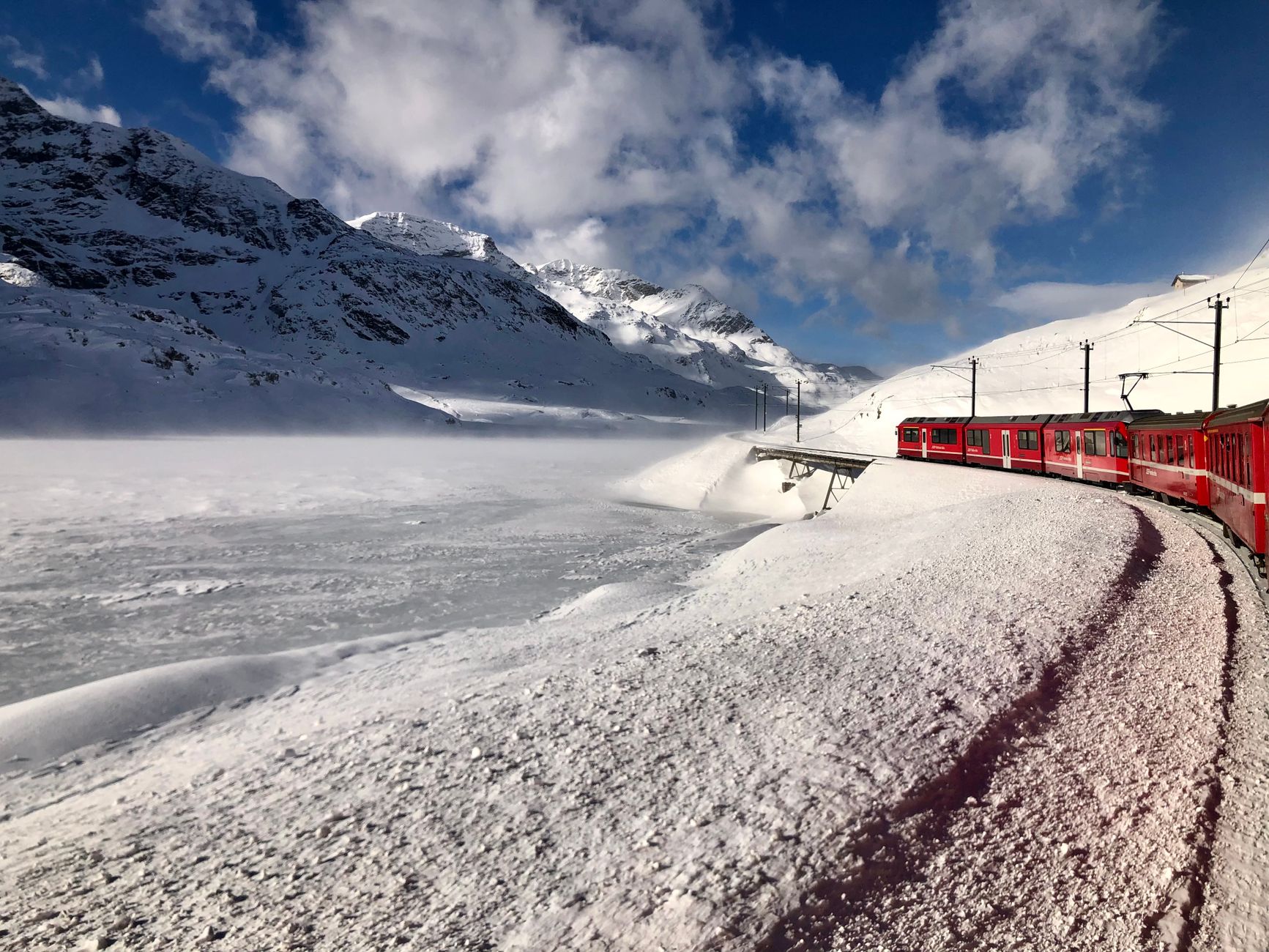
The culmination of the route is located at the Oberalp Pass, at over two thousand meters of altitude, where the convoy reaches its maximum elevation before descending toward the Rhine Valley. At this height, weather conditions can change suddenly, transforming a clear day into an alpine snowstorm within minutes. Coordination between rail traffic control centers, snowplow units, and local rescue teams is an exercise in pinpoint precision that guarantees service continuity and the safety of expedition members.
The Landscape Transition Between Zermatt and St. Moritz
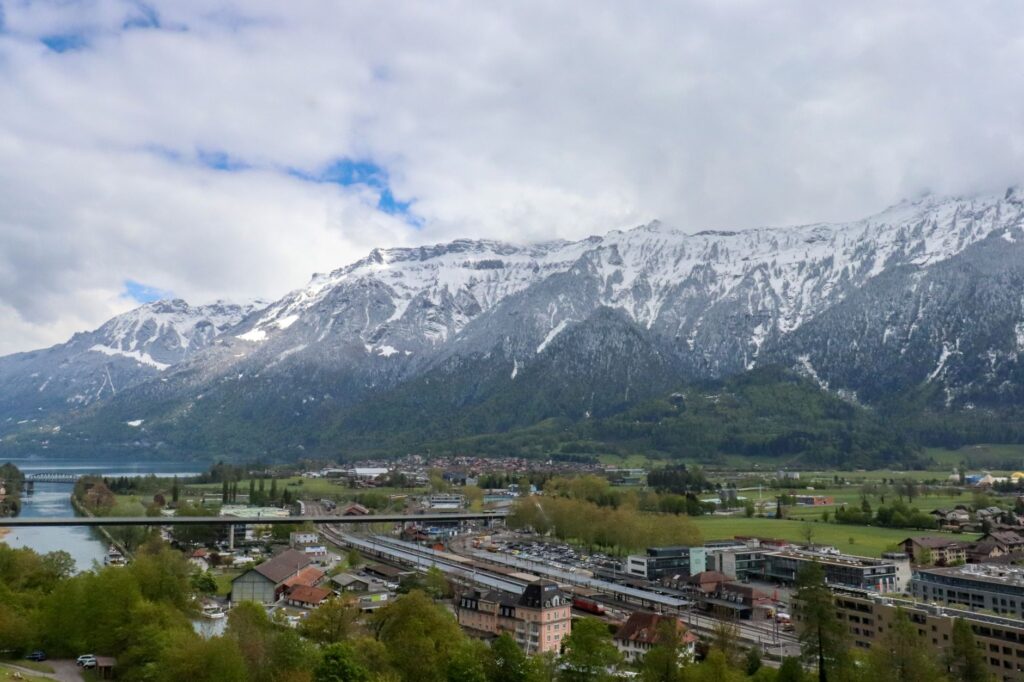
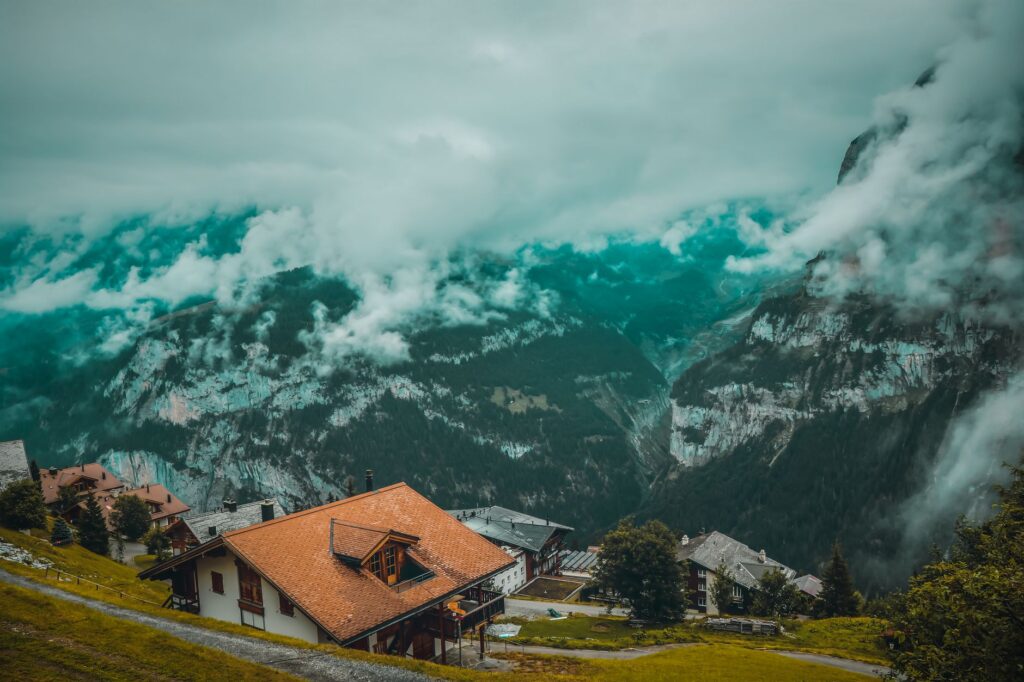
The geographical profile of the route is a mosaic of contrasts evolving from west to east. Starting from the foothills of the Matterhorn, the most emblematic pyramidal silhouette in the Alps, the journey initially runs through the enclosed valleys of the Valais canton, where traditional alpine culture and mountain agriculture cling to sunny slopes. Traditional sun-blackened wooden houses and barns elevated on stone pillars dot a landscape dominated by the constant presence of hanging glaciers.

As the train advances eastward, crossing the Graubünden canton, the geography transforms into a labyrinth of deep valleys and high plateaus known as the Engadin. Here, the traditional architecture of the villages adopts the sgraffito facade style, and local languages like Romansch provide a unique cultural substrate. This contrast between the glacial monumentality of the western sector and the forest and lake elegance of the eastern sector turns the traverse into a geographical and anthropological study of the highest order.
The alpine railway is not a simple means of transport, but a tool for territorial reading that allows the deciphering of layers of history, geology, and engineering in a single continuous movement.
Practical guide
Successfully undertaking the railway traverse across the Swiss Alps requires rigorous and realistic planning of every operational detail. The following essential guidelines outline how to organize the expedition independently and safely.
Route planning and reservations: The full journey between Zermatt and St. Moritz takes approximately eight hours of continuous travel. Seat reservation is mandatory months in advance, especially between June and September, as well as during the winter sports season in February and March.
Luggage logistics: Panoramic carriages have limited space for bulky suitcases. It is recommended to travel with light hand luggage or use the official luggage transport service of the Swiss Federal Railways, which transfers bags from station to station in a coordinated manner.
Personal equipment: Alpine weather is extremely variable. Even in summer, windproof garments, thermal layers, and appropriate footwear are essential for short walks at stop stations or in case of potential temporary service interruptions.
Connections and alternatives: The main stations of Zermatt, Andermatt, Chur, and St. Moritz are perfectly integrated with the Swiss national train network. In case of temporary closures due to adverse weather conditions, alternative replacement bus routes are operated by the same railway companies.
Emotional Epilogue in the Heights of the Engadin
When the convoy finally descends toward the Upper Engadin basin, skirting the crystal-clear waters reflecting a sky beginning to tint with the golden tones of the alpine twilight, the cumulative experience gathered throughout the day acquires a deeply introspective dimension. The hours spent contemplating the uninterrupted parade of abyssal gorges, centennial larch forests, and walls of eternal ice leave an indelible mark on the traveler’s spirit.
In that moment of stillness, as the last rays of sunlight abandon the peaks and the train’s silhouette winds silently along the snowy railway track, the true essence of the great rail adventure is understood. It is not merely about having crossed a legendary mountain range from side to side, but about having participated in a ritual of respectful communion with the immensity of the mountain, where human technique and wild nature embrace in a delicate balance that endures through time.