Introduction to the Sea of Sand
At the northernmost reaches of the vast Rub al-Khali desert, human survival relies not on the conquest of territory, but on the meticulous management of communication routes. The Liwa Oasis, a ribbon of agricultural settlements and palm groves stretching for over a hundred kilometers in the Emirate of Abu Dhabi, represents one of the most complex engineering achievements in hyper-arid environments. Far from being a static destination, this sandy depression functions as an intermodal ecosystem where cutting-edge road engineering merges with traditional transit across shifting dunes. Understanding mobility in Liwa requires examining how an isolated human community is sustained amid towering sand ridges, where every drop of water, ton of fuel, and visiting traveler depends on an extraordinarily fragile transport network.
The transformation of the territory over recent decades has been radical. Where once only camel tracks known to the Bedouin of the Bani Yas tribe existed, a black asphalt serpent now defies the constant advance of the dunes. Yet pavement is merely the visible surface of a much vaster infrastructure. Beneath the main highways operates an invisible network of secondary tracks, specialized vehicle fleets, and cargo transfer points linking traditional orchards with coastal supply hubs. This report explores the mechanical and human arteries that make life possible in the heart of the world’s largest continuous sand desert.
The Great Desert Artery: Road Engineering and Maintenance
The backbone supporting Liwa’s connectivity is the E90 Highway, a high-capacity route running from the Persian Gulf coast deep into the oasis interior. Designed to withstand extreme summer temperatures frequently exceeding fifty degrees Celsius, constructing this roadway was an unprecedented technical milestone. The primary enemy of the infrastructure is not heavy traffic, but the dynamic aeolian nature of the desert. Migratory dunes, driven by prevailing northern winds, constantly threaten to bury the asphalt, forcing authorities to deploy permanent clearing patrols equipped with heavy machinery.
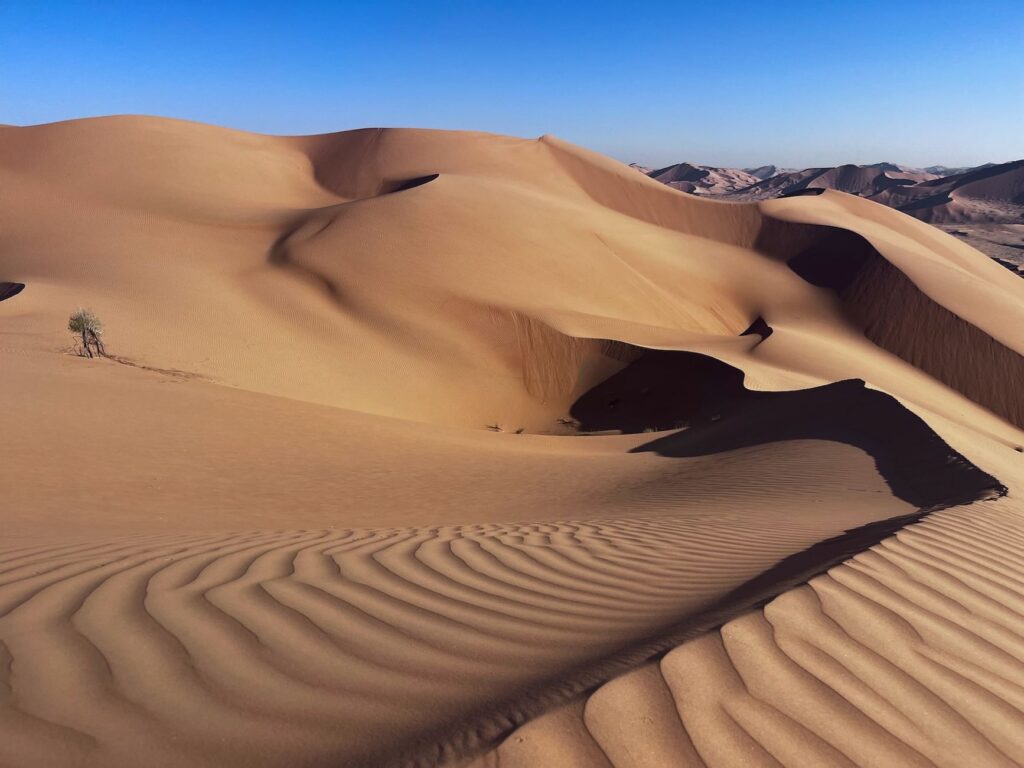
Maintaining the E90 and its branches toward towns like Hameem or Aradah requires constant logistical deployment. Graders work day and night clearing road shoulders, while sand-retention fences and chemical soil stabilization techniques are deployed in critical zones. Despite these efforts, the risk of blockage by sudden sandstorms remains a constant hazard for drivers. Local authorities issue regular weather advisories restricting heavy vehicle traffic, demonstrating that even advanced engineering must submit to the whims of the desert climate.
High-Mobility Vehicles and 4×4 Logistics
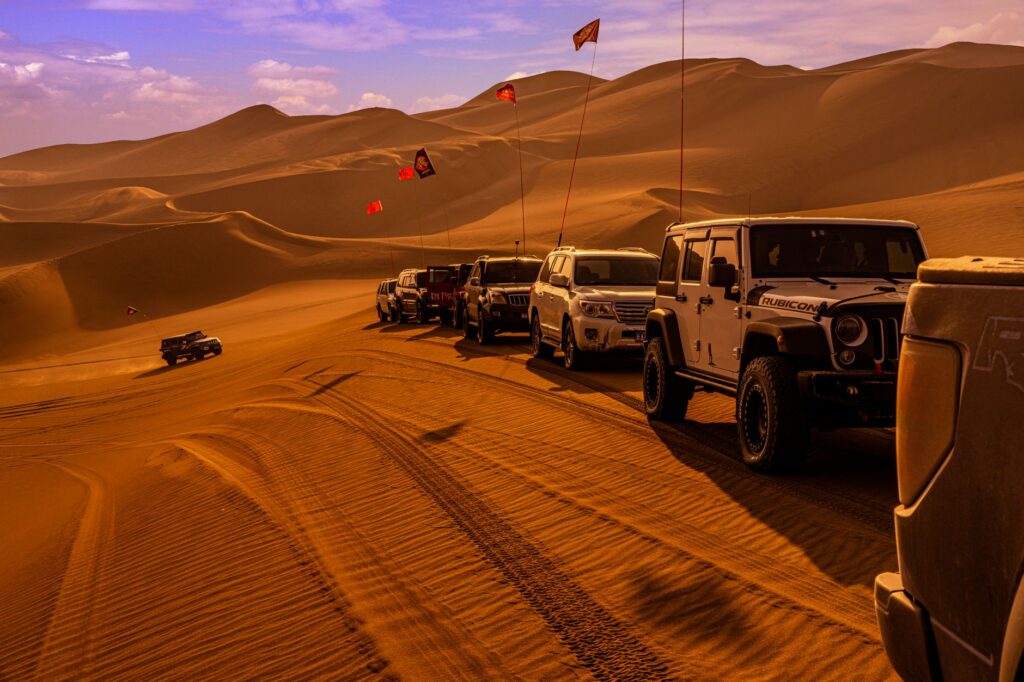
Leaving the major highways to access interior agricultural settlements and camel farms scattered among the dunes means asphalt gives way to compacted sand tracks and ultimately open desert. At this level of the network, conventional passenger cars are entirely useless. The backbone of local mobility consists of fleets of all-terrain vehicles equipped with permanent four-wheel drive, low-pressure tires, and auxiliary fuel tanks. These automobiles are not leisure vehicles, but indispensable working tools for residents and technicians operating across the region.
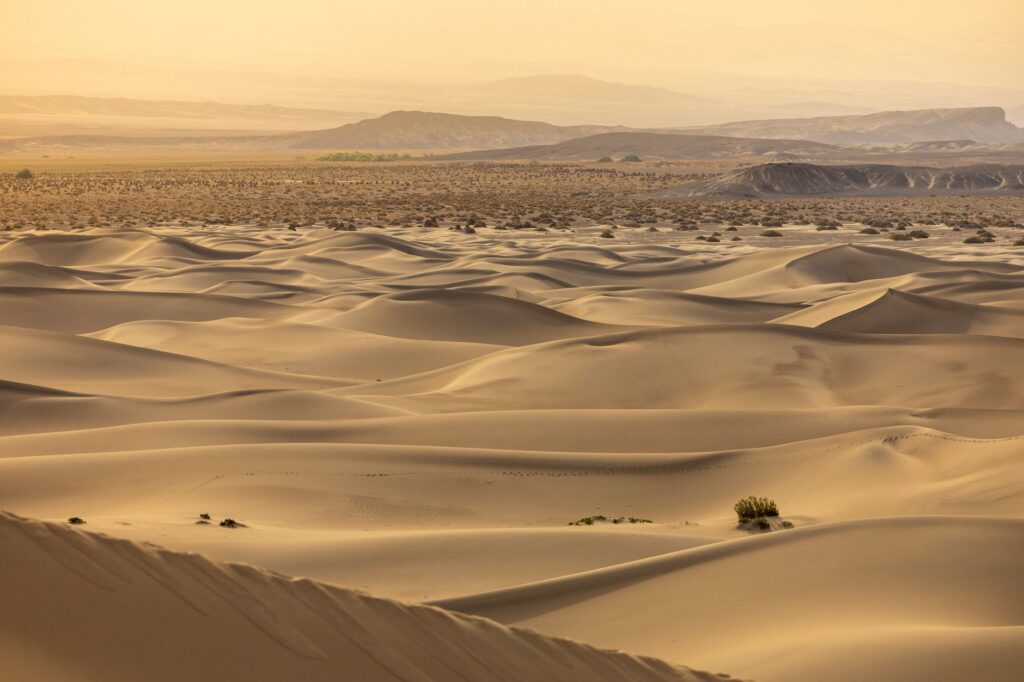
Driving techniques on these tracks demand absolute mastery of terrain physics. Local drivers deflate their tires to half their normal pressure to increase surface contact with soft sand, preventing dangerous sinking. Fuel stations situated at the oasis borders serve as the final outposts of civilization, where travelers must refuel and check tire pressure before venturing into the dune cordons. Miscalculating this logistical step can transform a routine journey into a dehydration emergency within hours.
The sand cannot be conquered; it must be negotiated through measured speed, proper tire pressure, and a profound respect for the silence of the desert.
The Invisible Supply Chain: Water, Fuel, and Provisions
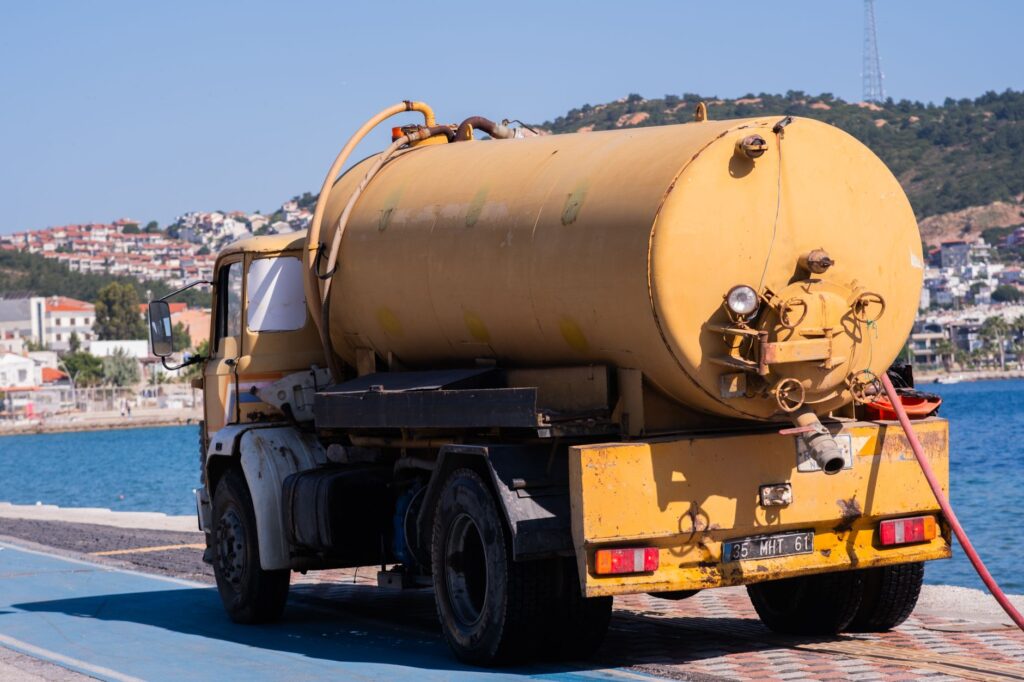
Liwa’s viability as an inhabited center depends entirely on a supply chain operating with Swiss-clock precision. Lacking natural surface freshwater sources, all drinking and irrigation water consumed in the oasis comes from coastal desalination plants, transported daily by an unceasing fleet of heavy tanker trucks. These vehicles traverse hundreds of kilometers along the E90, braving extreme heat and mechanical wear to supply community storage tanks and private agricultural holdings.
Alongside water, fuel for emergency electrical generators and agricultural machinery constitutes the other major logistical flow sustaining oasis life. Although the main electrical grid now covers most primary settlements, isolated farms and temporary tourist camps depend on punctual fuel truck deliveries. This external dependency turns access routes into vital umbilical cords. Any prolonged disruption to these roads, whether from traffic accidents or extreme weather, immediately threatens food security and basic comfort for thousands of people.
Digital Connectivity as New Infrastructure
In the twenty-first century, physical transport in remote regions cannot be understood without its digital counterpart. The ability to communicate, request assistance in case of breakdown amid the dunes, or coordinate cargo traffic depends on a robust telecommunications network. Along the E90 Highway and key nodes of the Liwa Oasis, cellular towers stand as technological beacons over the sandy horizon. These infrastructures ensure stranded drivers can transmit precise locations using satellite geolocation systems.
However, coverage is far from uniform. Deeper within deep interdune valleys, signals weaken until disappearing entirely. Transport companies and local expedition agencies have adapted through mandatory citizens’ band radios and satellite phones. This technological duality—the coexistence of urban fiber optics with deep-desert emergency radio frequencies—defines the complex reality of modern connectivity in the Rub al-Khali.
Tourism Transport and Pressure on the Fragile Environment
In recent years, the Liwa Oasis has experienced shifts in transport flows driven by surging adventure and nature tourism. On weekends, caravans of all-terrain vehicles driven by domestic and foreign visitors arrive, drawn by the majesty of Moreeb Dune, one of the world’s tallest. This recreational traffic has introduced a new variable in territory management, generating unprecedented challenges for landscape conservation and road safety along access tracks.
The impact of unregulated mass tourism has forced authorities to establish strict regulations on vehicle traffic in environmentally sensitive areas. Specific corridors have been designated for motorized sand sports, protecting endémic desert flora and fauna from uncontrolled erosion. Local travel agencies and tour operators play a fundamental role in this balance, educating visitors on strict safety rules and low-impact environmental protocols necessary to preserve oasis integrity.
The Future of Mobility in the Rub al-Khali
Looking toward the horizon, transport planners in the Emirate of Abu Dhabi are evaluating new technological solutions to ensure the long-term sustainability of Liwa’s connectivity. Proposals under study include advanced artificial intelligence early-warning systems to predict dune migration and optimize road-clearing routes. Researchers are also investigating the viability of incorporating heavy electric vehicles adapted to extreme climates to reduce the carbon footprint of water and freight transport in the region.
These innovations aim to resolve a perpetual tension: maintaining economic and tourism development in a flourishing oasis without compromising the fragile ecological balance of the surrounding desert. The answer, according to infrastructure experts, lies in increasingly decentralized management, where local renewable energies and fleet digitalization reduce reliance on traditional heavy logistical corridors. The oasis’s future ultimately depends on human capacity to adapt to the relentless rhythm of the sand.
Practical guide
- How to get there: Primary access to Liwa is achieved via private vehicle or 4×4 rental from Abu Dhabi along the E90 highway, a journey of approximately two and a half hours to the oasis edge.
- Best time to visit: Between November and March, when daytime temperatures moderate, allowing safer desert travel.
- Vehicle requirements: Four-wheel drive vehicles in good condition are mandatory when leaving paved roads. Tire deflation and inflation systems, recovery shovels, and tow straps are strongly advised.
- Essential supplies: Always carry abundant drinking water (at least five liters per person daily), extra fuel, non-perishable food, and satellite communication or radio gear when traveling off main routes.
- Safety and regulations: Off-road driving outside authorized zones is strictly prohibited to protect the fragile desert ecosystem. Always check local weather forecasts before embarking on any desert route.
The Silent Beat of the Dunes
As evening falls over the Liwa Oasis, the hum of tanker trucks and the whine of off-road engines gradually fade, reclaimed by the ancestral silence of the vast Rub al-Khali. In that transitional light, sand ridges take on coppery and violet hues that seem to erase all human footprints. It is the moment when the desert reclaims its true scale, reminding us that all the complex machinery of modernity—asphalt, telecommunications, piped water—is merely a fragile parenthesis sustained by the daily effort of those who have learned to coexist with the hostility and beauty of this sea of sand.
Standing on the crest of a great dune at sunset, contemplating the distant lights of palm groves and the dark ribbon of highway snaking toward the horizon, reveals the true magnitude of human endeavor in these latitudes. It is not about conquering nature, but about forging a precarious, enduring alliance with it. The inhabitants of Liwa, with their ancient routes converted into highways and storm-tested resilience, embody that eternal lesson. As long as the wind blows and stars light the desert night, the intermodal heartbeat of this oasis will continue to prove that life always finds a way, even where the map appears to end.