The horizon of Friesland is measured not by mountains or skyscrapers, but by the horizontal immensity of an ever-shifting sky that merges with the shallow waters of the Wadden Sea. In this northern region of the Netherlands, where territory has been reclaimed from the sea over centuries through dikes, windmills, and ancient hydraulic management, the contemporary challenge is no longer merely keeping the tides at bay, but how to move across them without disrupting the delicate balance of an environment designated as a UNESCO World Heritage Site. Mobility in this amphibious territory demands a constant reinvention of engineering and public logistics.
Traditionally dependent on a network of diesel ferries and fragmented road connections linking the mainland to the western Frisian islands—such as Vlieland, Terschelling, Ameland, and Schiermonnikoog—the province has embarked on a profound transition toward decarbonization. The goal is not only to reduce carbon emissions, but to redesign the travel experience so that the journey itself becomes part of the visitor’s environmental awareness. The mandatory slowness of transport in these waters is not a logistical hurdle, but the key to preserving an ecosystem inhabited by seals, migratory birds, and seagrass meadows found nowhere else in Europe.
The Transformation of the Maritime Fleet on Routes to the Islands
The most visible change in Friesland’s transport infrastructure is concentrated in the ports of Harlingen and Holwerd, the departure points for the Frisian islands. For decades, conventional ferries burned thousands of liters of heavy fuel to cover crossings of barely an hour, generating considerable acoustic and chemical stress on seabird nesting grounds. Today, the introduction of hybrid and electric propulsion catamarans marks a turning point in European inland navigation.
These new vessels combine state-of-the-art diesel engines with high-capacity battery banks that are recharged in port using local wind energy. During docking maneuvers and within protected navigation zones, the ferries operate in completely electric mode, drastically reducing underwater noise pollution. This operational silence protects local marine fauna, especially smaller cetaceans and common seal populations that use sandbanks as resting areas.
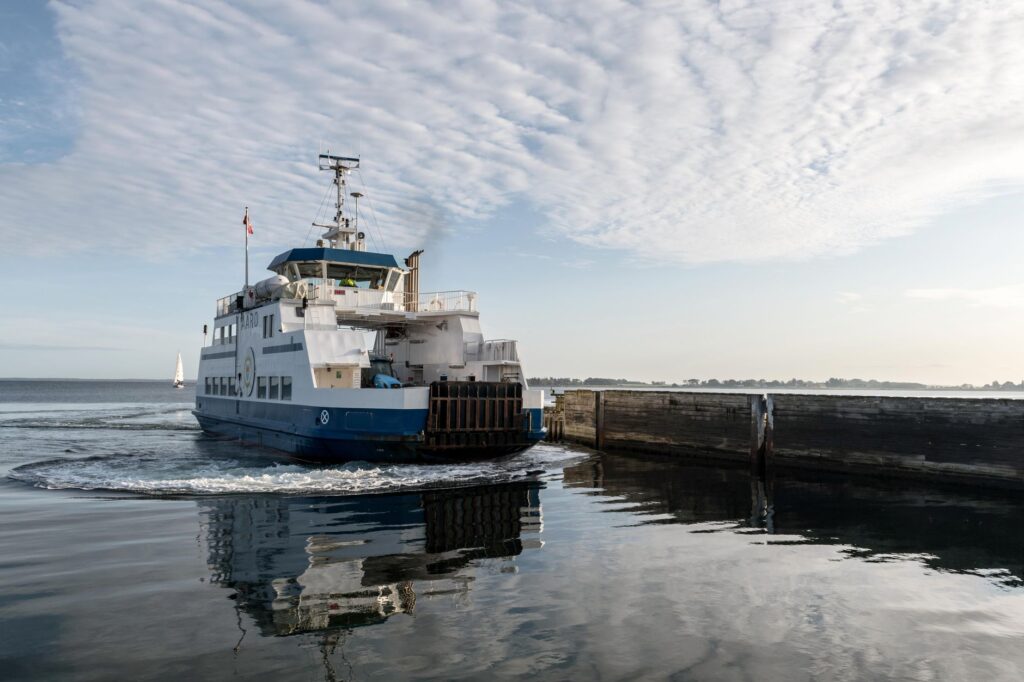
Beyond propulsion, the hydrodynamic design of the hulls has been optimized to generate less wake, minimizing erosion in the salt marshes and delicate approach channels. Passengers embarking for Terschelling or Vlieland experience a markedly quieter and more stable crossing, where the characteristic vibration of old engines has been replaced by a smooth glide over the water. This technical evolution demonstrates that energy efficiency can go hand in hand with traveler comfort.
Railway Integration and Cycling as the Terrestrial Backbone
Once on solid ground, whether on the mainland or after disembarking on the islands, Frisian transport policy relies firmly on intermodality. Regional rail operator Arriva, in collaboration with provincial authorities, has synchronized the timetables of trains arriving from Leeuwarden and Groningen with the departures of local ferries and buses. This meticulous coordination eliminates waiting times and discourages the use of private vehicles.
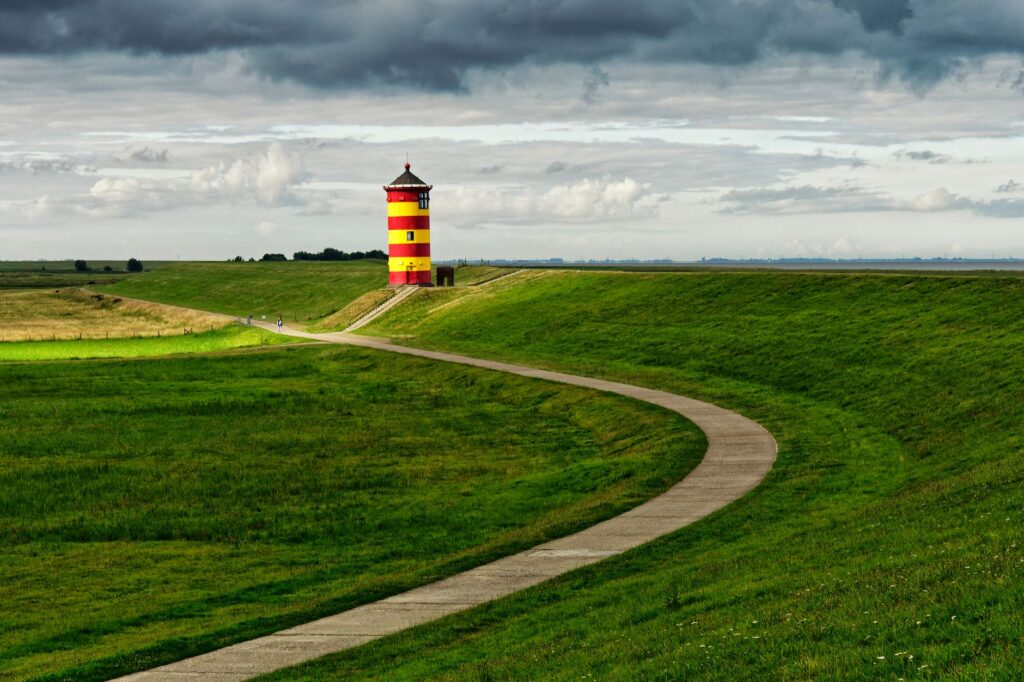
In historic cities like Leeuwarden or Sneek, railway stations function as integrated mobility hubs where travelers can rent high-range electric bicycles or connect with bus lines powered by biogas and green hydrogen. The widespread use of bicycles in Friesland is not a tourist trend, but the region’s most efficient and deeply rooted transport infrastructure, supported by hundreds of kilometers of exclusive lanes separated from heavy traffic.
blockquote>The true luxury in contemporary Friesland is not the speed of travel, but the certainty that every kilometer covered respects the heartbeat of land and sea.
For medium-distance journeys connecting terp villages—ancient artificial mounds built to survive floods—on-demand electric shuttles operating via shared mobile applications have been introduced. These flexible solutions allow rural residents and visitors alike to access cultural landmarks without needing to own a car.
The Role of Island Communities in Managing Visitor Flows
The success of the transition in Frisian transport relies heavily on local governance and the active participation of island inhabitants. On Schiermonnikoog, the smallest inhabited island in the Netherlands, motorized tourist vehicles have been strictly prohibited for decades. Visitors must leave their cars on the mainland and travel across the island exclusively on foot, by bicycle, or via local public transport.
This historic restriction, far from diminishing the destination’s appeal, has turned Schiermonnikoog into a European benchmark for slow tourism. The absence of engine noise and the absolute priority granted to pedestrians and cyclists create an atmosphere of profound disconnection that attracts conscious travelers from across the continent.

On larger islands, where territorial scale permits greater mobility, dynamic transport quotas and sustainability levies have been introduced to fund trail maintenance and dune protection. Island authorities work hand in hand with vehicle rental companies to limit the number of gasoline cars in circulation, prioritizing electric micromobility fleets adapted to coastal winds and traditional brick-paved roads.
Technological Challenges and Hydraulic Infrastructure Maintenance
Adapting a region so vulnerable to climate change and sea-level rise involves tackling colossal technical challenges. Ferry terminals must be constantly redesigned to adjust to wider tidal ranges and increased storm frequency in the North Sea. Frisian engineers use lightweight composite materials and modular systems that allow docks to be modified without interrupting public transport services.
Likewise, the electrical charging grid for ferries and buses demands a radical modernization of the regional power grid. Friesland generates a significant share of its electricity through onshore and offshore wind farms, but storing and distributing this intermittent energy to high-power fast-charging hubs continues to require multi-million-euro investments and meticulous planning by grid operators.
blockquote>Modern engineering in Friesland engages in dialogue with the landscape: every reinforced dike and every electrified pier is a truce signed with nature.

Despite these operational challenges, the Frisian model proves that peripheral regions of high ecological value can lead innovation in sustainable mobility, serving as a testing ground for island and coastal territories worldwide.
Practical guide
How to get there: The main gateway to the Friesland region is the city of Leeuwarden, connected by direct trains from Amsterdam and Utrecht operated by Nederlandse Spoorwegen (NS). To access the Frisian islands, travelers must take a train or regional bus to the ports of Harlingen (for Terschelling and Vlieland) or Holwerd (for Ameland).
When to visit: The months from May to September offer the most favorable weather conditions for navigation and cycling, with extended daylight. However, spring (April and May) stands out for lower tourist congestion and exceptional migratory bird watching in the tidal marshes.

Local transport options: The OV-chipkaart is valid across the entire Frisian rail network (Arriva and NS) and regional buses. For ferry crossings, booking passenger and bicycle tickets several weeks in advance through the official websites of local operators (such as Doeksen or Wagenborg) is highly recommended.
Sustainable accommodation: Prioritizing small family-run hotels, restored farmhouses, and eco-certified lodgings (Green Key) located in terp villages or the rural interior helps prevent overcrowding in main coastal hubs.
Equipment recommendations: Coastal weather is highly changeable; windproof and waterproof outerwear of good quality, comfortable footwear for walking on sandy or clay terrain, and lightweight panniers or backpacks for cycling excursions are essential.
The journey through Friesland inevitably concludes facing the immensity of the Wadden Sea at dusk, when the horizon line blurs into amber and gray tones while distant silhouettes of electric vessels navigate in absolute calm. In this European outback, where the weight of history blends with climate urgency, travel ceases to be a mere mechanical procedure and becomes a lesson in respect and contemplation. Upon returning to solid ground and hearing only the murmur of the wind over the dikes, the traveler understands that the true progress of our time lies in learning to move without leaving a trace.