Introduction to the Northern Lifeline
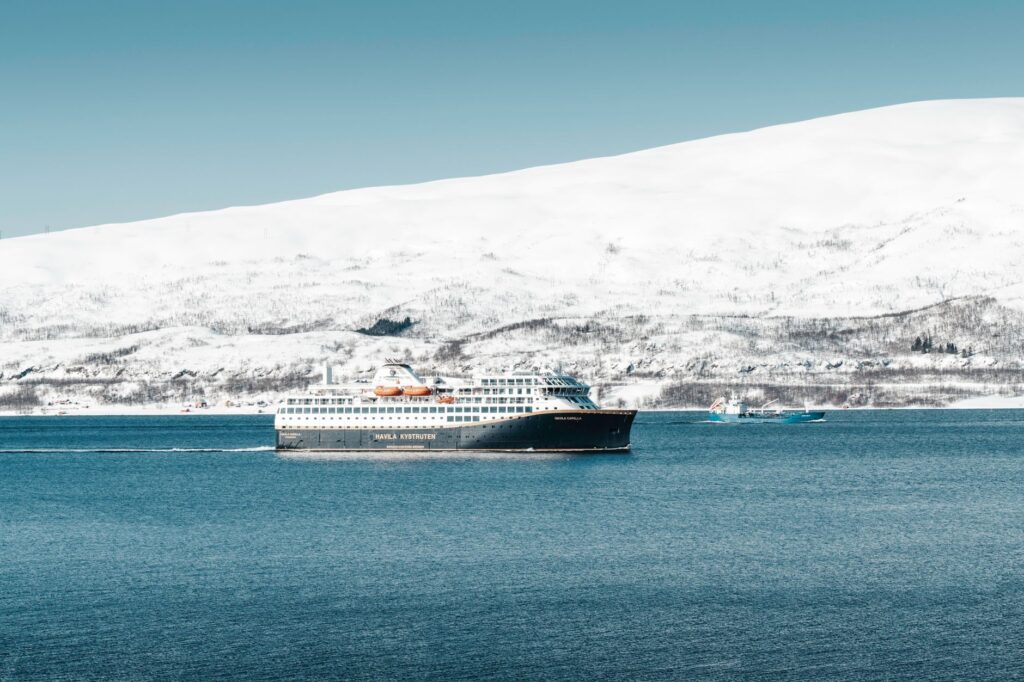
Along more than three thousand kilometers of rugged coastline, where glacial fjords carve deep into the earth and mountains plunge directly into the cold waters of the North Atlantic and the Barents Sea, the survival and connectivity of dozens of communities depend on a single vital lifeline: the Coastal Express, historically known in Norway as the Hurtigruten. This maritime transport system is not a conventional luxury cruise, but a fundamental logistics artery that, since 1893, has kept the most isolated settlements of the Arctic Circle united.
While land transport in this region faces impassable mountain passes during long winter months, perpetual snowfall, and complex fjords requiring costly detours or local ferry transfers, the sea remains open thanks to the Gulf Stream. The Coastal Express operates as a globally unique hybrid: it transports local passengers between small ports, carries essential cargo, fresh fish, mail, and vehicles, and simultaneously welcomes international travelers eager to understand the geographical reality of Northern Europe.
History and Evolution of Coastal Connectivity
Before the establishment of the regular service initially operated by Richard With in 1893, traveling from southern Norway to Hammerfest or Kirkenes could take weeks, depending entirely on weather conditions and the availability of irregular sailing vessels or cargo steamers. The Norwegian government recognized the urgent need to integrate the remote north—a region rich in fishing and commerce but geographically disconnected—with the rest of the country.

The creation of this maritime postal route radically transformed coastal economy and demography. Ships ceased to be mere means of transport and became the biological and social clock of the villages. The daily arrival of the ship meant the delivery of fresh newspapers, personal correspondence, medical supplies, and mechanical spare parts. Over the decades, the fleet has evolved from small coal-fired steamers to modern hybrid vessels capable of operating on liquefied natural gas (LNG) and battery power, drastically reducing their carbon footprint in an ecosystem as fragile as the Arctic.

The Route and Its Key Ports of Call
The complete journey between Bergen and Kirkenes, near the Russian border, takes twelve days round trip, stopping at 34 different ports, many of them unreachable for large-scale vessels. Among the most emblematic stops is Ålesund, entirely rebuilt in Art Nouveau architecture after a devastating fire in 1904, and Trondheim, with its imposing Nidaros Cathedral, the northernmost Gothic sanctuary in the world.
As the route advances northward and crosses the Arctic Circle, marked by the steel globe on the island of Vikna, the ports of call become shorter but more critical for local communities. Ports like Bodø serve as gateways to the Lofoten Islands, an archipelago where alpine peaks emerge straight from the Norwegian Sea. Here, unloaded cargo ranges from construction materials to industrial fishing gear, proving that the primary function of these ships remains anchored in the real economy rather than seasonal leisure.
Naval Engineering and Sustainability in Polar Waters
Operating in the Barents Sea and the Arctic Ocean poses extraordinary technical challenges. The Coastal Express ships must withstand gale-force winds, rough seas, and sub-zero temperatures that can ice over the superstructure within hours. For this reason, naval design prioritizes stability, featuring reinforced hulls and azipod propulsion systems that allow pinpoint maneuverability in tight harbor spaces exposed to strong tidal currents.
In recent years, environmental pressure and Norwegian legislation itself have driven an unprecedented technological transformation. Operators like Hurtigruten and Havila Voyages have invested billions of kroner in renewing their fleets. The new vessels incorporate hybrid propulsion, reducing nitrogen oxide (NOx) emissions by 80% and complying with strict zero-emission standards in UNESCO World Heritage fjords such as Geirangerfjord and Nærøyfjord.
The Coastal Express is not an artificial tourist attraction; it is the floating backbone that has sustained human life in the Norwegian fjords for over a century.
Onboard Life: Integrating Locals and Travelers
One of the most fascinating features of this journey is the daily coexistence between long-distance passengers—who travel the entire route to observe landscapes or the Northern Lights—and local residents who use the ship as an intercity bus to travel between neighboring villages for just a few hours.

This dynamic prevents the experience from turning into an isolated tourist bubble. In the main lounge or on deck, it is common to hear conversations in Norwegian about the price of cod or weather conditions for fishing, shared with travelers from Asia, America, or Southern Europe. Onboard meals reflect this philosophy: priority is given to local, farm-to-table products supplied by small producers along the route, from coastal pasture-raised lamb to fresh seafood hauled just hours earlier at the previous port.

Logistical Challenges and Connectivity in Remote Areas
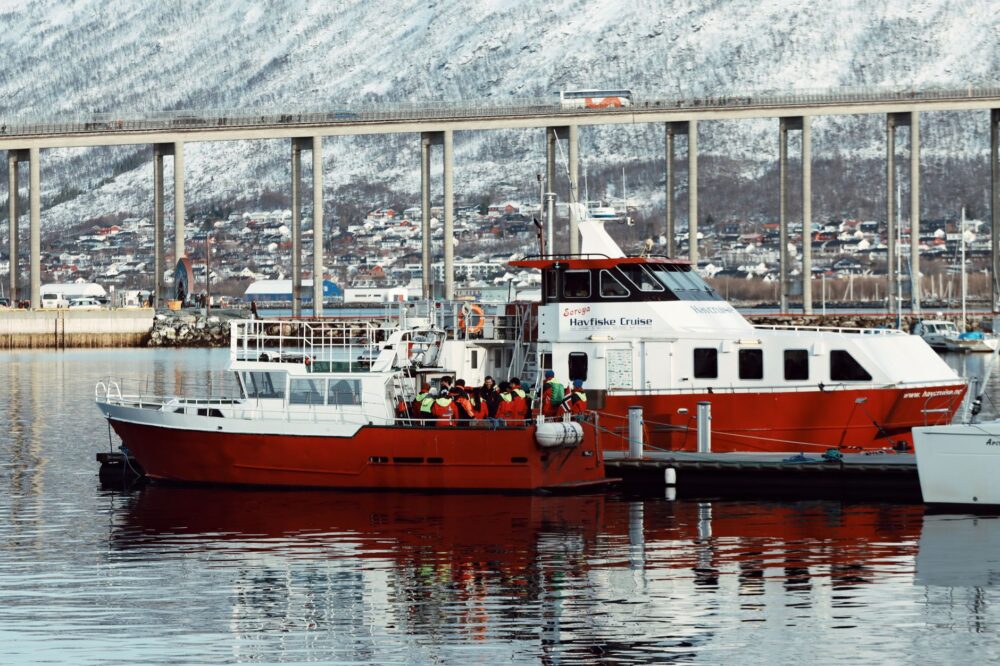
The logistical management of these routes requires surgical precision. Supply chains depend on a strict schedule that must be met despite frequent winter storms, dense fog, and the perpetual darkness of the polar night. Loading and unloading are carried out using onboard cranes, as many small northern ports lack automated port infrastructure.
Likewise, these ships act as improvised floating hospitals in extreme medical emergencies, transporting patients from unlinked islands to regional hospitals in Tromsø or Hammerfest when air ambulances are grounded due to blizzards. This versatility underscores why the Norwegian government subsidizes part of this service: maritime connectivity is a guaranteed social right to ensure the country’s territorial cohesion.
The Impact of Climate Change on Arctic Navigation
Global warming is drastically altering navigation conditions in northern Norway. Although the Barents Sea remains ice-free thanks to the warm current, the frequency of extreme storms, intense precipitation, and landslides blocking coastal roads has perceptibly increased over the past decade.
This has heightened local communities’ reliance on the Coastal Express. When land routes collapse due to snow avalanches or rockslides, ships become the only pathway to receive fresh food, fuel, and medical assistance. Paradoxically, the maritime transport industry must also accelerate its decarbonization to mitigate the very climate changes that threaten to make northern navigation increasingly unpredictable.
Sustainable Tourism and the Future of the Coastal Express
The balance between tourism development and the preservation of the local lifestyle is one of the most intense debates on the Norwegian coast. Local authorities and shipping companies have implemented strict regulations to prevent overcrowding in small ports, limiting port-call duration and promoting low-impact environmental excursions, such as guided hiking or electric bicycle use.
The future of this maritime line relies on the complete digitalization of cargo and passenger management, continuous improvements in energy efficiency, and integration with other regional public transport networks, such as local electric ferries and connecting buses. On this side of the Polar Circle, modernization does not seek to transform the route into a theme park, but to ensure it continues fulfilling its essential function: keeping the north alive.
Practical Information for the Traveler
Planning a journey aboard the Coastal Express requires understanding that it is a public transport service with a mixed mission. Unlike traditional cruises, there is no formal dress code, no choreographed nightly shows, and no onboard casinos.
- Duration: The complete Bergen-Kirkenes-Bergen trip takes 12 days, but travelers can book partial segments of 2 to 6 days depending on geographical interest.
- Time of Year: November through March offers the chance to observe the Northern Lights and extreme snowy landscapes; May through July allows experiencing the midnight sun and 24-hour continuous navigation.
- Cabin Booking: Booking months in advance is essential when traveling during the peak summer or winter seasons, especially for cabins with panoramic views.
- Equipment: Arctic weather demands layered clothing, windproof rain gear, footwear with non-slip soles for walking on icy decks, and binoculars for wildlife observation.
The true essence of the Norwegian coast is not discovered in large urban centers, but in the silent calm of an arctic port at three in the morning, when the ship docks to deliver the mail that keeps a community united.
Conclusion
The Norwegian Coastal Express remains a living testament to how transport infrastructure can be designed to serve people and territory, rather than subordinating itself exclusively to commercial profit. Navigating these waters is to understand the symmetrical relationship between human beings and a natural environment as beautifully relentless as the Arctic, where the punctuality of a cargo ship can mean the difference between isolation and community life.