A Historic Enclave at the Foot of the Samobor Hills
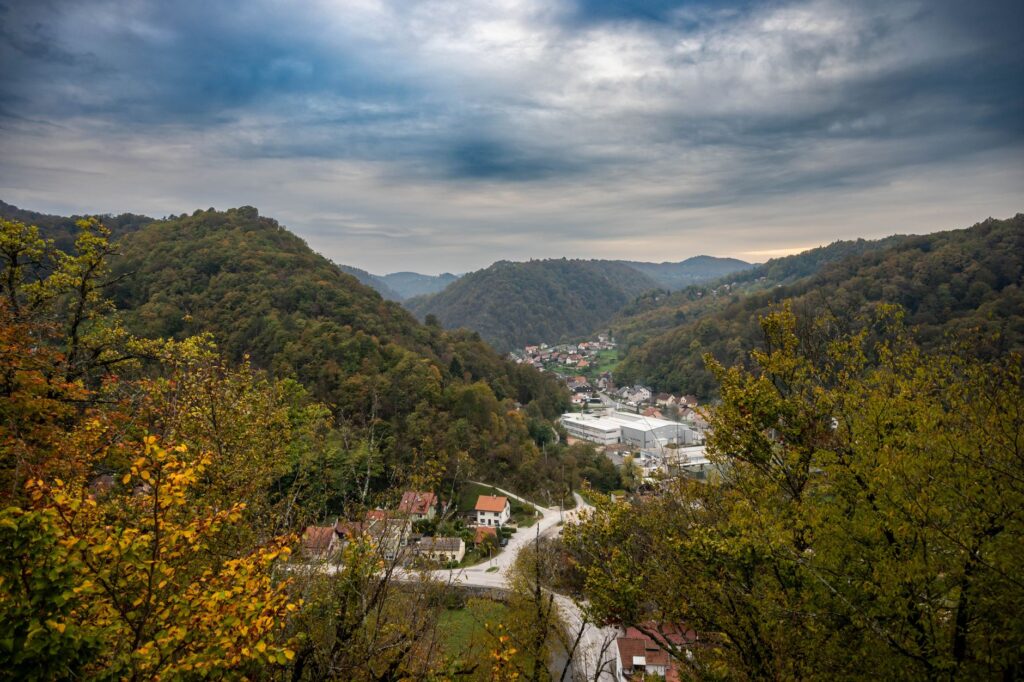
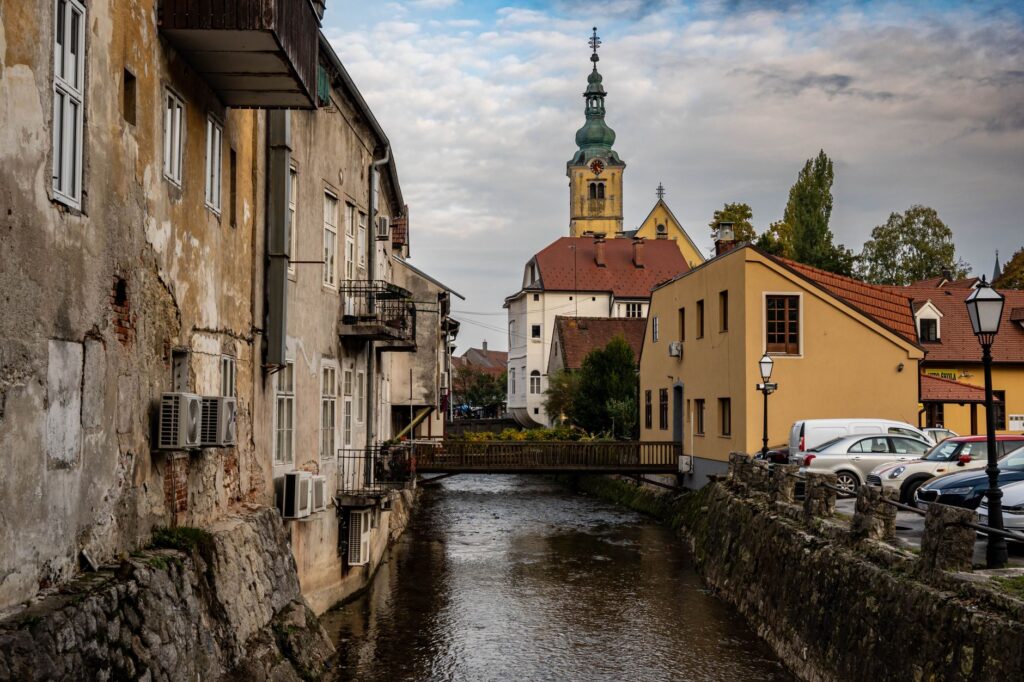
Just a few kilometers from the bustling Croatian capital, Samobor stands as a refuge where time seems to flow at a different cadence. Nestled at the foothills of the Žumberak mountains, this town in the Zagreb region has managed to preserve a physiognomy that intertwines Central European heritage with the Mediterranean character that subtly permeates the Balkans. Its cobbled streets and pastel-toned facades paint an urban landscape where history is not merely observed through museum glass, but lived on a daily basis in every corner.
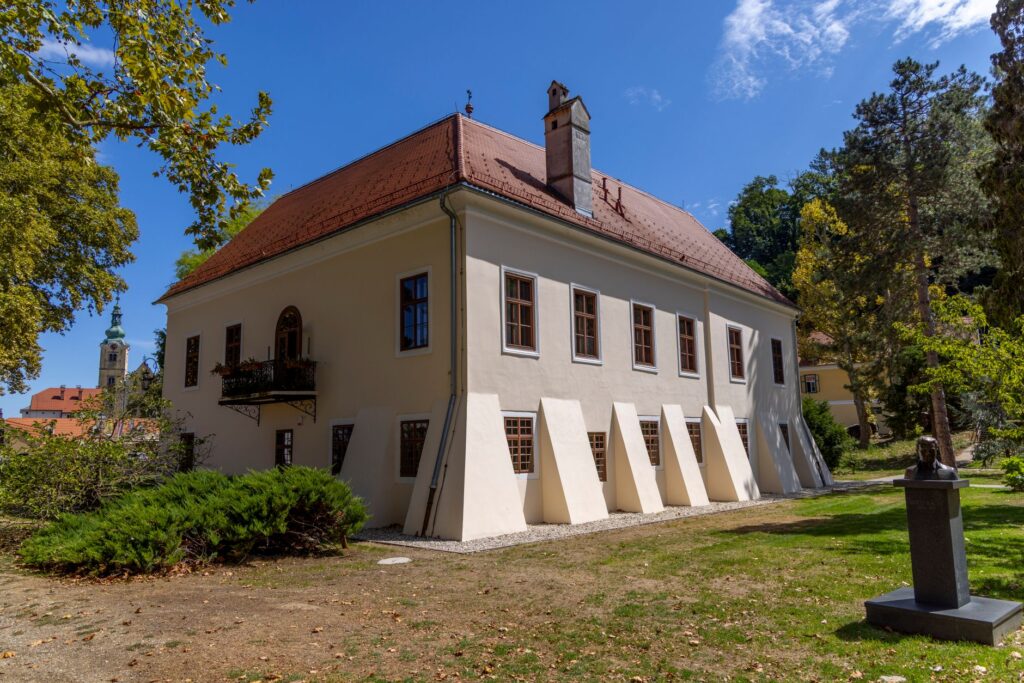
The urban layout follows an ancient logic, designed for human scale and leisurely strolls. Porticoed squares and bridges crossing the Gradna River structure a space where residents maintain customs rooted for generations. Walking through the old town reveals an architecture of gabled roofs, carved stone doorways, and interior courtyards that reflect an aesthetic influenced by historical ties with the Austro-Hungarian Empire. The preservation of this architectural heritage is not a matter of chance, but the result of a sustained effort to protect local identity against the pressures of contemporary growth.
Life in the Main Square and the Saturday Market Pulse
King Tomislav Square constitutes the true heart of Samobor’s social life. Surrounded by 18th- and 19th-century buildings, this open space hosts traditional markets every week where producers from neighboring villages offer fresh fruits, vegetables, and crafts. This is not a tourism-oriented gimmick, but a genuine market that has supplied local households since time immemorial. Verbal exchanges, greetings between neighbors, and deliberations over the quality of produce form part of a social choreography that repeats every Saturday morning.
Around this perimeter, traditional cafes and confectioneries serve as intergenerational meeting points. In these establishments, local news is discussed, seasonal agricultural tasks are planned, or visitors simply enjoy a pause facing a window overlooking the square. The prevailing atmosphere conveys a deep sense of community belonging, where commercial life synchronizes with the changing seasons and the calendar of festive celebrations.
Ruined Heritage: The Walls of the Old Castle
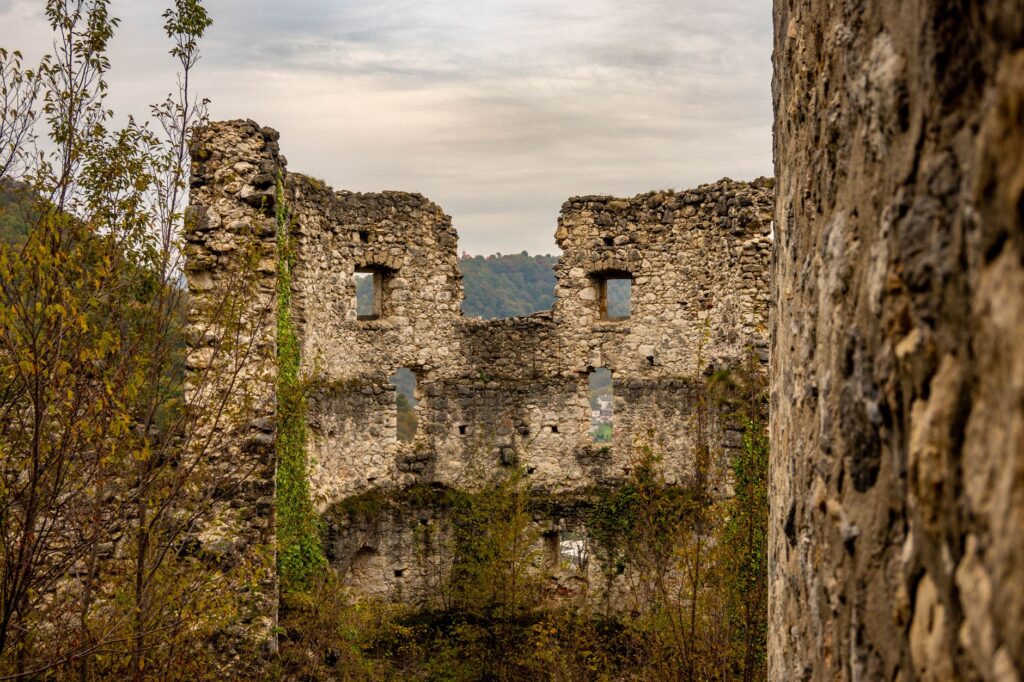
Rising above a wooded hill overlooking the valley, the ruins of the Old Castle of Samobor recall the town’s medieval origins. Built in the 13th century by order of Czech nobles from Gradec, this defensive bastion has witnessed numerous conflicts, changes of ownership, and structural transformations over the centuries. Although mostly stone walls and decayed arches survive today, the site retains a strong evocative power that attracts both historians and hikers interested in the region’s noble past.
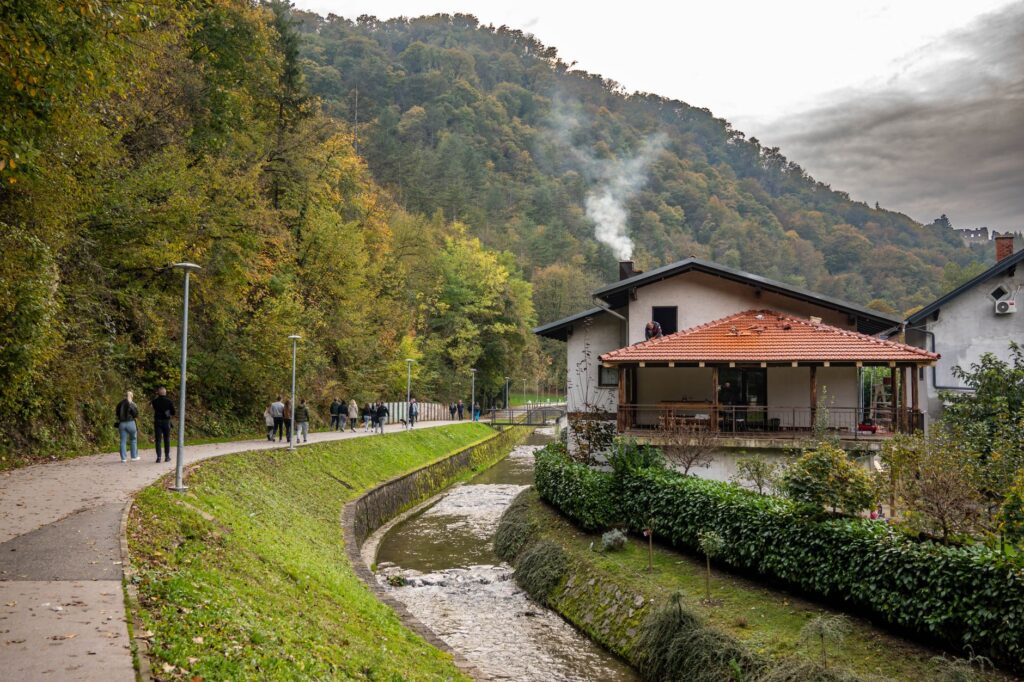
The ascent to the fortress winds along paths surrounded by beech and chestnut trees, offering panoramic views over the town’s rooftops and the meandering course of the Vugrinščak stream. This direct contact with the surrounding nature forms an inseparable part of the experience of visiting Samobor. Local residents use these paths for their Sunday walks, integrating historical heritage into their routines of wellness and outdoor recreation without artifice or overcrowding.
The Pastry Tradition and the Culture of Kremšnita
To speak of Samobor’s culinary identity is to refer unavoidably to its emblematic cream cake, locally known as kremšnita. This pastry, made with a crispy puff-pastry base and a generous filling of light custard topped with a layer of powdered sugar, holds an almost sacred status in local gastronomy. Its exact recipe has been a source of family pride and debate for decades, and each traditional confectionery defends subtle variations in ingredient proportions and baking temperatures.
The act of savoring a freshly made kremšnita, accompanied by a steaming coffee on a terrace sheltered from the wind, constitutes a social ritual that transcends mere sustenance. It represents a moment of shared pause, a recognition of the value of slow craftsmanship, and a tribute to artisanal baking that survives in a globalized market dominated by industrial standardization. Local pastry chefs pass down their trade from generation to generation, ensuring the survival of a know-how that defines the town’s hospitable character.
Crystal Craftsmanship and Trades That Resist Time
Alongside the culinary tradition, artisanal crystal production has played a fundamental role in Samobor’s economy and culture. Although industrial activity has undergone drastic transformations in recent decades, artisanal workshops and master glassblowers have successfully kept alive a legacy of precision and aesthetic beauty. Hand-blown pieces, characterized by geometric cuttings and crystalline transparency, reflect a technical mastery requiring years of apprenticeship and unwavering patience.
Visiting the small workshops located in secondary streets helps one understand the effort required to shape incandescent materials using only traditional tools. Local artisans combine fidelity to classical methods with designs that respond to contemporary sensitivities, ensuring their creations continue to find a place in the homes of those who value unique objects over mass production. This balance between preservation and adaptation defines the community’s cultural resilience.
Natural Spaces and the Green Lung of the Surroundings
The territory surrounding Samobor functions as an authentic green lung for northern Croatia, characterized by rolling hills, family vineyards, and dense deciduous forests. The Žumberak-Samoborsko Gorje Nature Park, located in the vicinity, offers a network of marked trails allowing visitors to explore karst formations, hidden waterfalls, and small rural settlements where agricultural life maintains low-intensity traditional methods.
The relationship between Samobor’s residents and their natural environment is based on mutual respect and sustainable land use, where outdoor activities integrate seamlessly with the protection of local biodiversity.
Hikers exploring these areas encounter a cultural landscape where human intervention—marked by terraced fields, votive chapels, and wooden bridges—blends harmoniously with native vegetation. This landscape integration fosters tangible environmental awareness among residents and visitors alike, who recognize the urgency of conserving these spaces against the pressures of excessive urban development.
Practical guide
How to get there: Samobor is located about 20 kilometers west of Zagreb. The most efficient way to arrive via public transport is by taking the regular buses that depart frequently from Zagreb’s central bus station, with a journey lasting approximately 35 to 45 minutes depending on traffic.
When to go: Spring (April to June) and autumn (September to November) offer mild temperatures ideal for walking through the historic center and hiking the surrounding hills without summer heat.
Where to stay: Family-run guesthouses and small boutique hotels located in the historic center or rural foothills predominate, ideal for a quiet stay focused on rest and gastronomy.
Recommended gastronomy: In addition to the famous kremšnita, visitors should try samoborska češtrica and local artisanal cold cuts prepared using traditional recipes from the Zagreb region.
Behavioral tips: It is recommended to explore the old town on foot and support local shops and producer markets to ensure a positive impact on the resident community’s economy.
The Unhurried Echo of a Timeless Refuge
At dusk, when golden light bathes the clay rooftops and shadows stretch across the main square, Samobor recovers an eloquent silence. The bells of the parish church mark the end of the commercial day, and residents leisurely return to their homes across bridges that have watched centuries pass without losing their firmness. In this balance between historical memory and daily life lies the true wealth of the town, a reminder that the most memorable destinations are those that invite us to slow down our gaze and understand the unhurried heartbeat of a community that belongs to itself.