
There is a widespread habit in our time that confuses movement with understanding. We believe that by crossing meridians and traversing borders at a accumulated speed, we gain a deeper comprehension of the world. Yet the experience of walking through unfamiliar territories frequently teaches us the opposite: that geographical distance is of little use if the gaze remains hurried and deaf to the nuances of the environment. Traveling, in its noblest sense, is above all an exercise in proportion.
The Weight of Haste in the Landscape
When the contemporary traveler approaches the world with the urgency of marking milestones on an invisible map, they run the risk of turning the territory into a mere backdrop for visual consumption. Haste is the great enemy of wonder. It prevents us from pausing before stone worn down by centuries, the minimal gesture of an artisan, or the eloquent silence of a valley at dusk. We move so much that we end up inhabiting nowhere.
Faced with this inertia, the great lesson of slow travel is the recovery of one’s own time. It is not about seeing more, but about seeing with greater depth. The horizon is not conquered; it is contemplated. And that contemplation demands renouncing the omnipotence of those who pretend to encompass everything in a few days to accept the condition of a temporary guest.
The Hospitality of the Unknown
Approaching a different culture requires a particular form of humility. The traveler who arrives with prefabricated answers barely succeeds in confirming their own prejudices. Instead, the one who arrives willing to listen discovers that the true wealth of places lies in their cracks, in their contradictions, and in that silent hospitality that springs from daily life.
The communities that receive us are neither open-air museums nor postcards designed for our recreation. They are living spaces where memory is woven with patience. Understanding this implies assuming an ethical responsibility: not altering the intimate course of the places we visit, but integrating into them with the respect of someone treading on sacred ground.
The Geography of Silence
In a world saturated with stimuli and screens, travel has become one of the few possible refuges for silence. We do not refer solely to the absence of noise, but to that mental stillness that allows things to resonate in their proper dimension. A natural landscape or an ancient street has its own voice, but they only let themselves be heard when we quiet our own expectations.
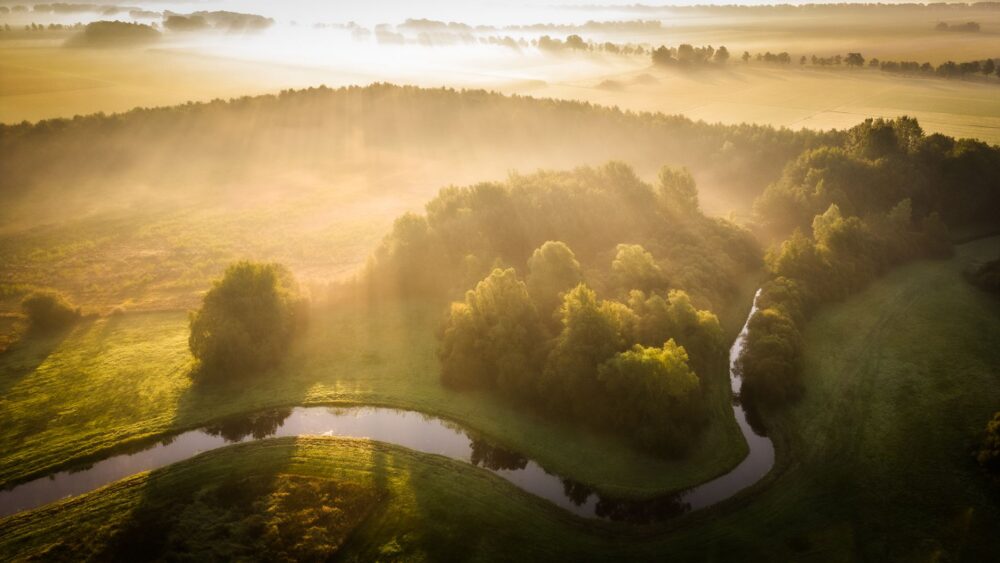
That fertile silence is what transforms displacement into learning. It restores our capacity to be astonished by the simple: the way light changes over an old facade, the aroma of a local market at dawn, or the steady flow of a river that ignores our urgencies.
The Art of Returning Transformed
Every authentic journey contains a promise of return. We do not travel to escape daily life, but to return to it with clean eyes. Distance allows us to see our own reality with perspective, appreciating what previously went unnoticed and questioning what we once took for granted.
In the end, the measure of the horizon is not calculated in kilometers traveled, but in the capacity for wonder that we are able to preserve and bring back home. That is the true baggage that endures when the maps are closed and the road becomes memory.