
Dawn Over the River and the Awakening of Kitchen Stoves
When the first rays of sunlight break across the eastern banks of Hanoi, the district of Gia Lâm stirs to life amidst the scent of steaming broth, freshly cut herbs, and the steady murmur of bicycles carrying goods toward local markets. In this Vietnamese enclave, daily cooking does not yield to the haste of major commercial avenues, but rather to the unhurried rhythm of a community rooted in river and agricultural traditions. Here, water and fertile soil are not mere geographical features, but the foundations upon which a deeply honest culinary culture is built, where every single ingredient tells a story of collective labor, patience, and profound respect for seasonal produce.
Life in Gia Lâm unfolds at a pace that contrasts sharply with the bustle of Hanoi’s historic Old Quarter. Separated by the currents of the Red River, this district blends high-density urban pockets with quiet zones where traditional vegetable gardens and small rural hamlets still thrive. In these neighborhood corners, the act of eating transforms into a communal ritual. There are no grand pretensions in the street stalls and family-run eateries dotting the streets; their value lies in steadfast consistency and fidelity to recipes handed down through generations, where broths simmered for hours absorb the essence of bones, local spices, and northern Vietnamese culinary heritage.
The Morning Market: The Heart Where the Local Pantry Beats
Walking through the aisles of Gia Lâm’s central market at dawn is an immersion into the true engine of the district’s gastronomy. Wicker baskets overflowing with leafy greens, bamboo shoots, aromatic roots, and freshwater fish from nearby tributaries crowd the stalls. The vendors, wearing traditional conical hats, arrange each product with surgical precision, ready to converse with neighbors who arrive daily to provision their households. This exchange is far from a mere commercial transaction; it constitutes a continuous dialogue regarding crop conditions, weather patterns, and the finest cuts for the family midday meal.
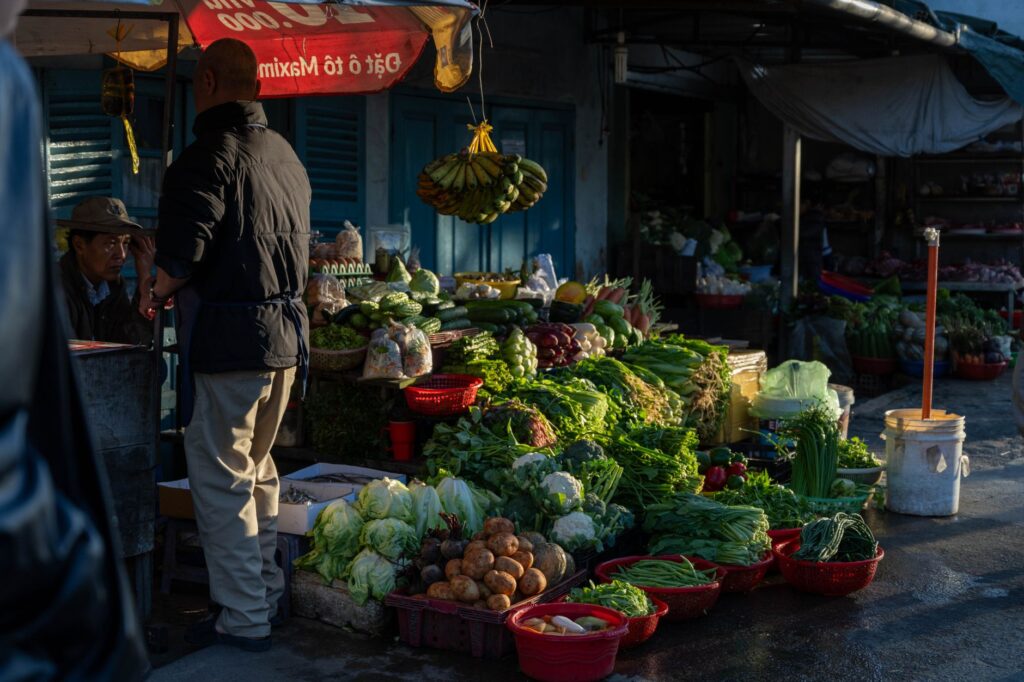
Among the spice stalls, the air fills with sharp notes of star anise, cinnamon bark, fresh cilantro, mint, and lemongrass. Local cooks navigate these same spaces every morning, personally selecting the ingredients that will anchor their daily menus. Freshness is never treated as a marketing pitch, but rather as an unwavering standard. If a vegetable has not been harvested hours prior or if a fish fails to reflect the vitality of the river, it simply finds no place in the cooking pots of Gia Lâm. It is this meticulous attention to detail that endows local cuisine with an unmistakable identity, characterized by an exquisite balance of sour, sweet, salty, and spicy notes.
The cuisine of Gia Lâm is a precise reflection of its people: simple in appearance, yet deep in memory and rigorous in everyday technique.
Essential Broths and the Mastery of Slow Heat
If there is one element that defines the gastronomic soul of this territory, it is the broth. Prepared since the early hours of dawn, large metal pots rest over gas or charcoal burners, releasing vapors that permeate the surrounding alleyways. Unlike the preparations found in other regions of the country, northern Vietnam favors clean, transparent broths that are nevertheless extraordinarily rich in nuance, where pork or beef bones combine with charred onions, fresh ginger, and a precise selection of toasted spices that release their essential oils.
In the small establishments of Gia Lâm, sitting on a low plastic stool is an invitation to observe the cook’s choreography. With precise, agile gestures, rice noodles are blanched, thin slices of meat are added, the bowl is crowned with generous handfuls of scallions and cilantro, and the boiling broth is poured to unify all elements. Each diner personalizes their dish with a squeeze of fresh lime, chili slices, and a dash of fermented fish sauce. This act of personal table-side completion underscores the area’s culinary philosophy: food is offered as an excellent baseline that each individual refines according to personal taste and sensibility.
Agricultural Heritage and Small-Scale Farming
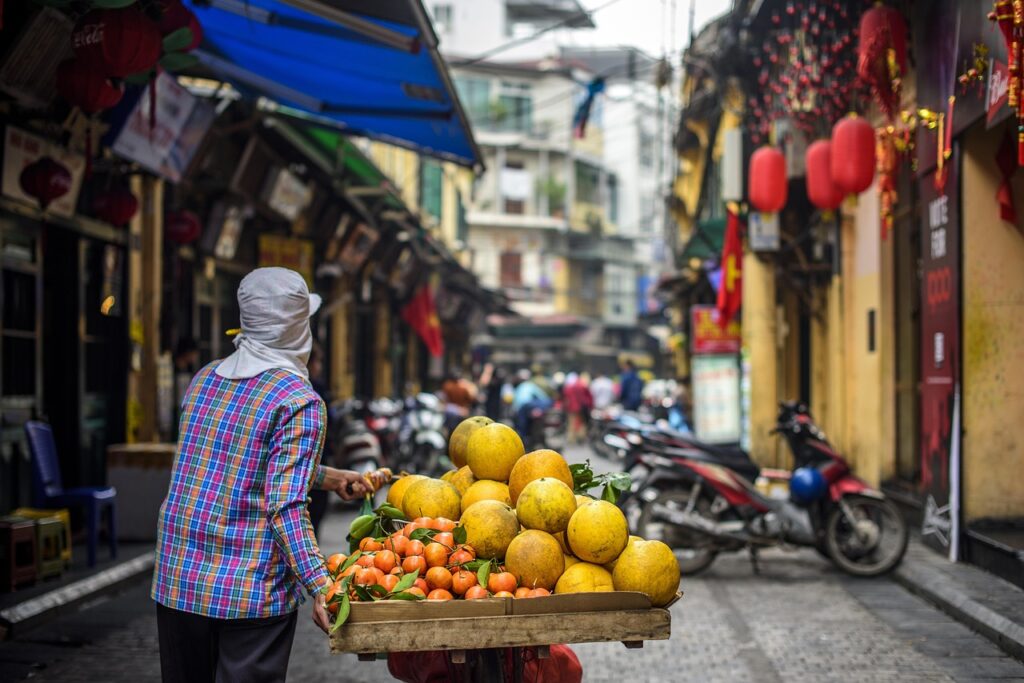
Beyond the urban markets, the landscape of Gia Lâm preserves fragments of an agricultural vocation that has withstood the march of time and modernization. Small cultivated plots near the river supply vegetables and culinary herbs throughout the entire district. Local farmers work the soil using traditional methods, taking advantage of the fertile sediments deposited historically by seasonal floods. This direct link between the farmer and the neighbor’s cooking pot guarantees the authenticity of the flavors served day in and day out.
Fresh herbs, in particular, deserve special mention. At the Gia Lâm table, fresh leaves are never treated as a mere decorative garnish; they function as a core ingredient that provides crisp freshness and contrasts with the richness of meats and savory broths. Local varieties of Asian basil, perilla, Vietnamese cilantro, and fig leaf are bundled into generous communal bowls accompanying virtually any dish. Cultivating these plants demands a deep understanding of natural cycles, irrigation water, and protection against northern climatic shifts.
Traditional Pastries and Neighborhood Bakery Craft
The gastronomic experience in Gia Lâm does not end with savory dishes; the district maintains a rich tradition of artisanal sweets and pastries made from rice flours, mung beans, and cane sugar. In small family-run workshops that have barely altered their appearance in decades, artisans shape dough with admirable dexterity, crafting items that mark seasonal changes and lunar calendar festivities. Often wrapped in banana leaves to preserve moisture and natural aroma, these sweets provide the ideal accompaniment to the green tea served at all hours across neighborhood street corners.
The crafting of these pastries is an exercise in patience. Grain soaking, grinding in traditional mills, and steaming require constant supervision. Artificial additives and preservatives find no entry here; preservation depends entirely on ingredient proportions and traditional packaging. Upon biting into one of these sweets, the palate encounters a smooth texture and subtle sweetness that never overwhelms, allowing the authentic flavor of glutinous rice and bean paste fillings or lotus seeds harvested from regional ponds to shine through.
Filter Coffee and the Pauses That Structure the Day
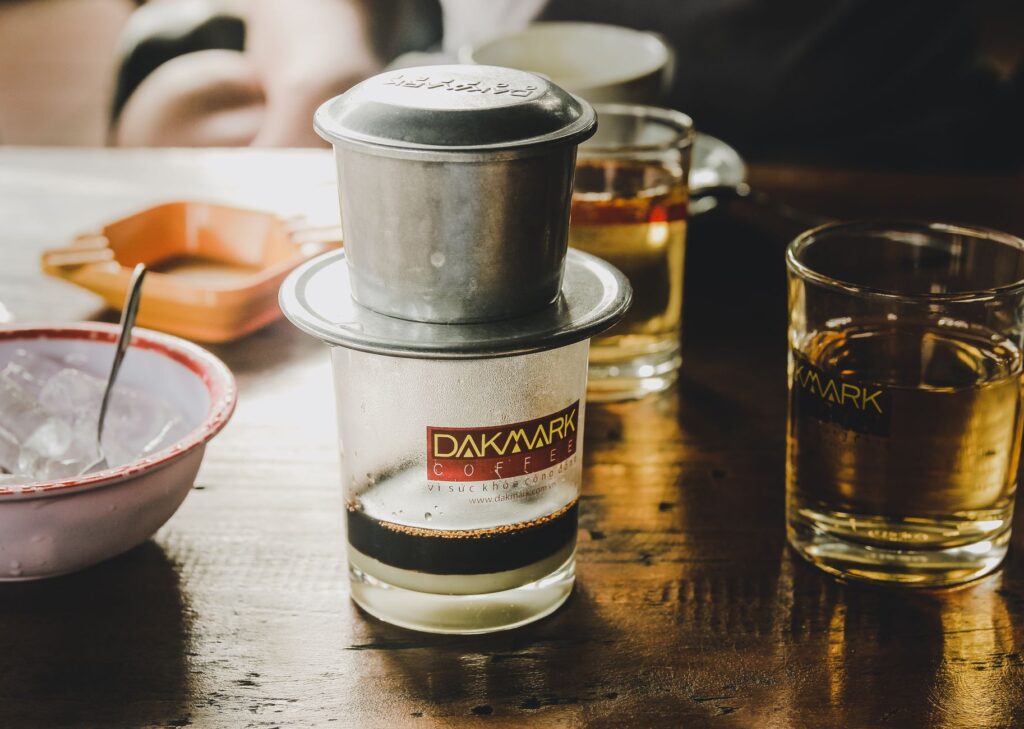
The daily rhythm in Gia Lâm pauses in an almost sacred manner during morning and mid-afternoon hours over a cup of coffee. Traditional establishments—ranging from a modest bench under the shade of a tree to a tiny café with walls weathered by humidity—serve Vietnamese coffee brewed through the classic individual metal drip filter known as the phin. The coffee drips slowly over a layer of sweetened condensed milk, creating a visual and temporal pause that structures community social life.
This coffee ritual is never a solitary act of quick consumption, but rather an opportunity for neighborhood exchange, reading the local newspaper, or simply contemplating the ebb and flow of passersby. The contrast between the intense bitterness of robusta beans harvested in the country’s highlands and the dense sweetness of condensed milk neatly summarizes the duality of life in Gia Lâm: a blend of hardworking intensity and unhurried hospitality. Locals discuss market prices, local infrastructure updates, or preparations for upcoming festivals, weaving an invisible web of social cohesion that sustains the district’s well-being.
Practical guide
When to visit: The months between November and April offer the most pleasant weather conditions in northern Vietnam, featuring moderate temperatures and lower humidity levels, ideal for exploring markets and dining outdoors.
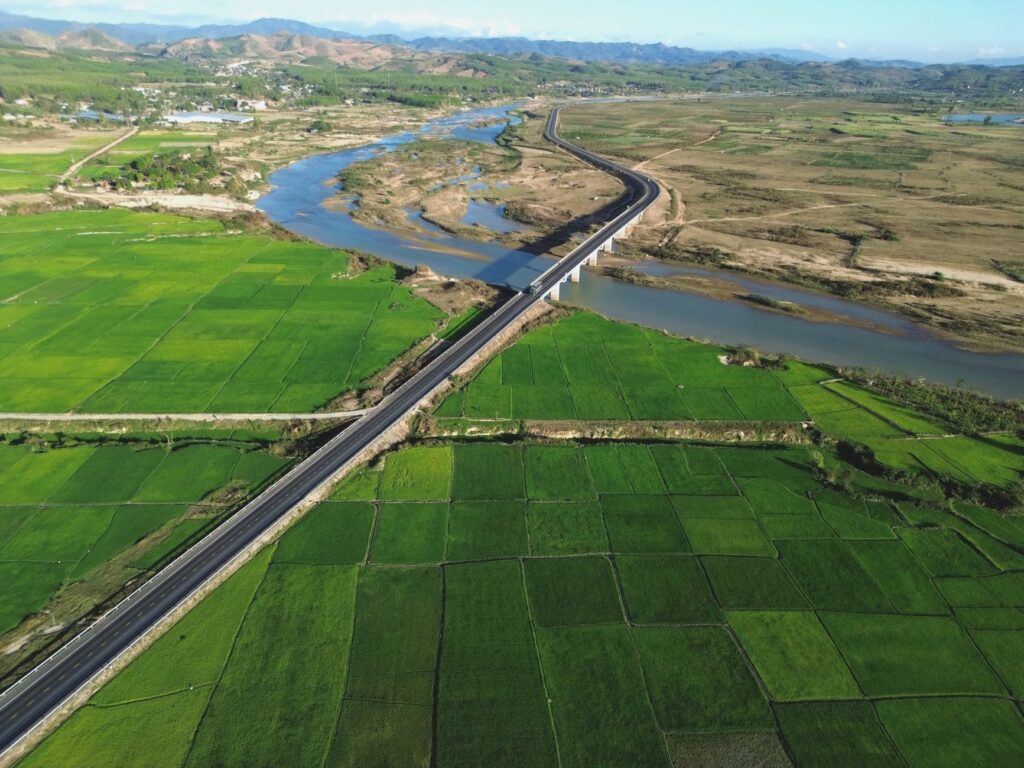
How to get there: Gia Lâm connects with central Hanoi via road and rail bridges crossing the Red River. It is easily accessible by taxi, city bus, or two-wheeled vehicles from any point in the capital.
Where to eat: The surroundings of the central market and streets bordering residential areas host the most authentic stalls for morning soups and local rice dishes.
Recommended gastronomy: Sample the rice noodle broths with fresh daily herbs, freshly wrapped rice paper rolls, and traditional filter coffee with condensed milk.
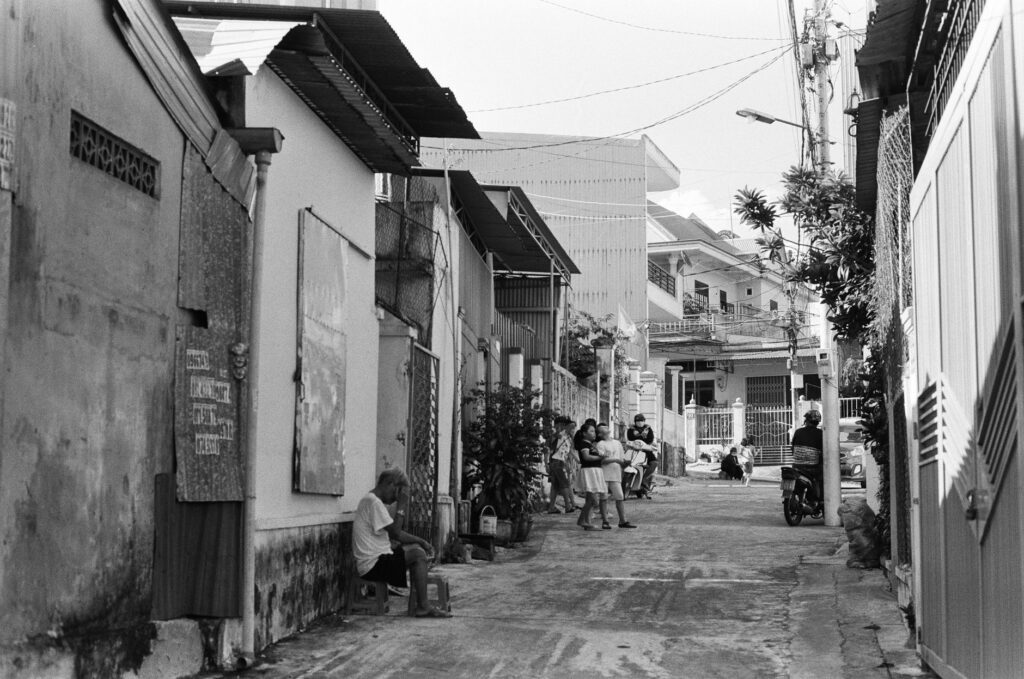
Etiquette tips: When sitting at street stalls, sharing tables with other local diners is customary; always greet with a slight nod and pay the person in charge directly upon finishing.
The Human Face Behind Every Dish Served
As evening falls, when street stalls begin extinguishing their burners and markets pack away the final goods of the day, Gia Lâm recovers a quiet calm that invites contemplation. Behind every steaming bowl of soup, every basket of fresh herbs, and every cup of filtered coffee lies the invisible effort of entire families who have turned hospitality into their life’s craft. There are no artificial pretensions in this corner at Hanoi’s doorstep; only the honest desire to nourish neighbor and traveler alike with the same dignity afforded to one’s own family, preserving an everyday heritage that proudly withstands the passage of time.