
Origins and Territorial Layout in the Heart of the Midlands
Located in the geographical center of the United Kingdom, the city of Birmingham stands as a fundamental node in the West Midlands region. Its average altitude, situated at around 149 meters above sea level, defines a gently rolling terrain upon which a dense and complex urban fabric has expanded. With a population exceeding one million inhabitants, this British metropolis has evolved from its medieval roots into a premier industrial and cultural benchmark in Europe.
The urban layout responds to centuries of cumulative growth, where open spaces and public squares alternate with ancient factory structures converted for modern uses. Unlike other administrative capitals on the continent, local identity has been forged far from the coastline, depending entirely on its inland position and its capacity to connect land and river trade routes. This interior location determined that the regional economy historically revolved around metalworking, fine metallurgy, and diversified manufacturing.
Urban expansion in the United Kingdom often reflects complex industrial histories, and this British locality is no exception. Its territory accommodates diverse neighborhoods where civic architecture narrates the evolution of labor and commerce. The historical topography demonstrates how human ingenuity adapted to natural constraints, transforming the surrounding landscape into a functional space for production and community life.
The River Network and the Historic Canal System
One of the most defining elements of Birmingham’s urban geography is its extensive network of navigable canals, constructed during the height of the Industrial Revolution to transport raw materials and manufactured goods. These artificial channels, which exceed in length those of other European cities traditionally associated with water, run through the subsoil and peripheral neighborhoods, forming a labyrinth of locks, iron footbridges, and red-brick wharves.
Today, the old freight routes have been transformed into pedestrian and cycling corridors that allow visitors to explore the locality from a completely different perspective. Walking alongside the water reveals the transition between nineteenth-century industrial architecture and contemporary urban developments. Victorian warehouses, once crammed with coal and iron, now house cultural spaces, independent bookstores, and cafes where citizens spend their mornings in tranquility.
Navigating these pathways provides a profound understanding of how water management shaped daily routines across the British territory. Residents and visitors utilize these corridors for quiet reflection, away from the bustling vehicular traffic, thereby reinforcing a sustainable connection between the natural water features and the dense urban environment.
Victorian Architecture and Urban Modernity
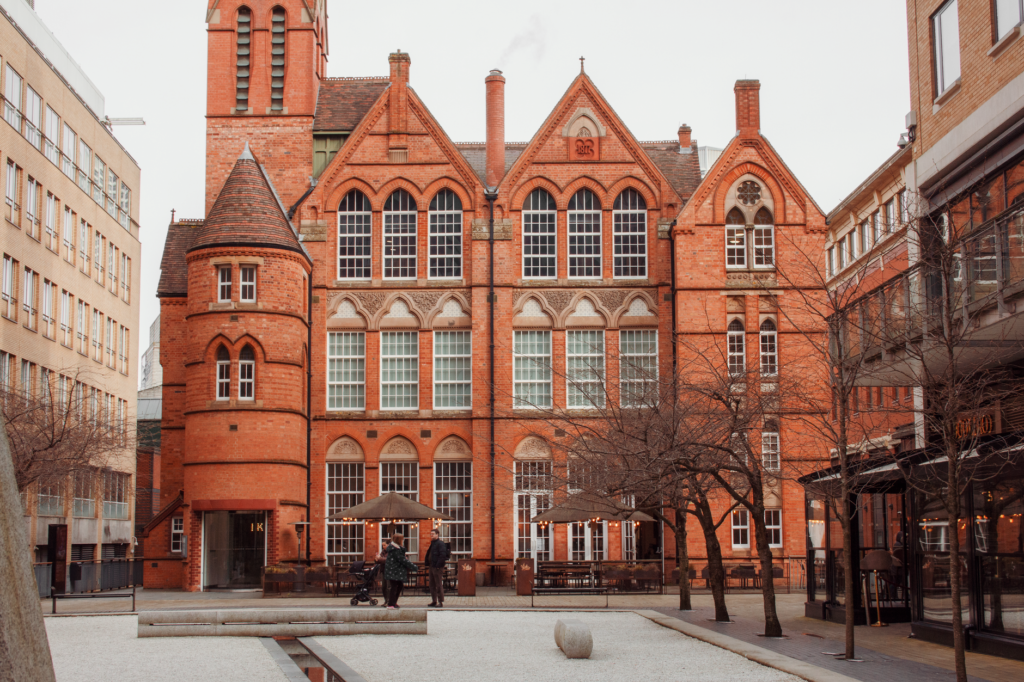
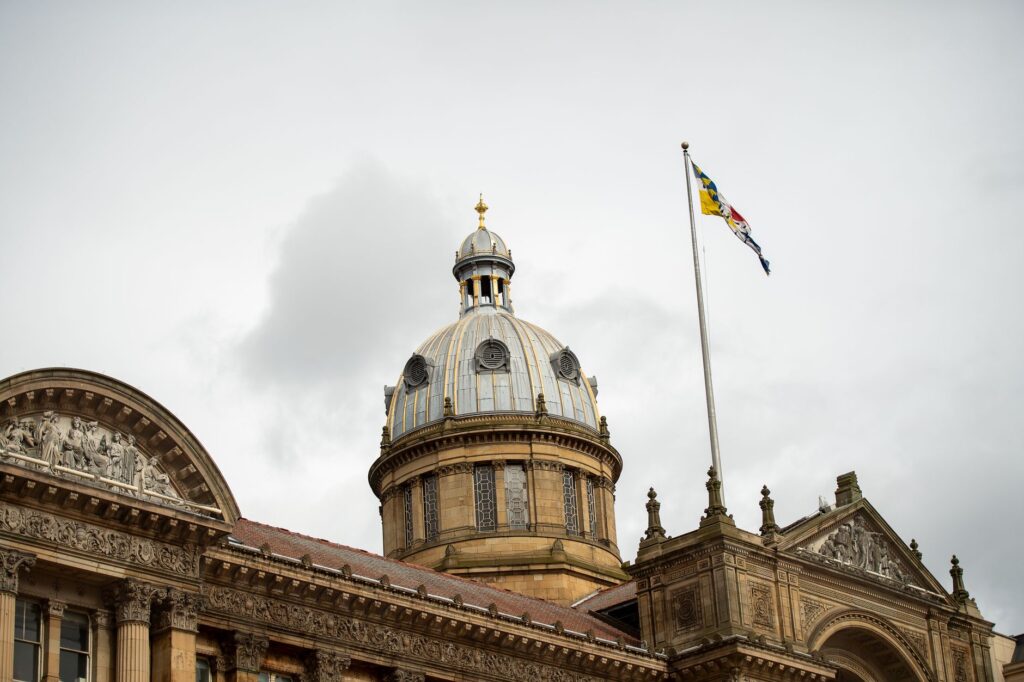
Birmingham’s architectural heritage offers a constant dialogue between the solidity of Victorian brick and bold twenty-first-century urban interventions. In the central core, emblematic public buildings such as the Council House and the Birmingham Museum and Art Gallery showcase the civic ambition of the Victorian era, characterized by noble stone facades and large classical colonnades.
Opposite these traditional structures stand landmarks of modern engineering and contemporary urban design, such as the iconic Library of Birmingham, whose filigreed geometric metal facade crowns Centenary Square. This architectural duality does not represent an abrupt break, but rather an overlapping of layers where each generation has left its mark without completely erasing the traces of its manufacturing past.
Preservation efforts throughout the United Kingdom frequently balance the imperative for modern infrastructural development with the urgent need to honor historical building techniques. This delicate equilibrium ensures that civic squares and historical avenues retain their distinctive character while accommodating the administrative and cultural demands of a growing modern populace.
Traditional Markets and Local Commerce
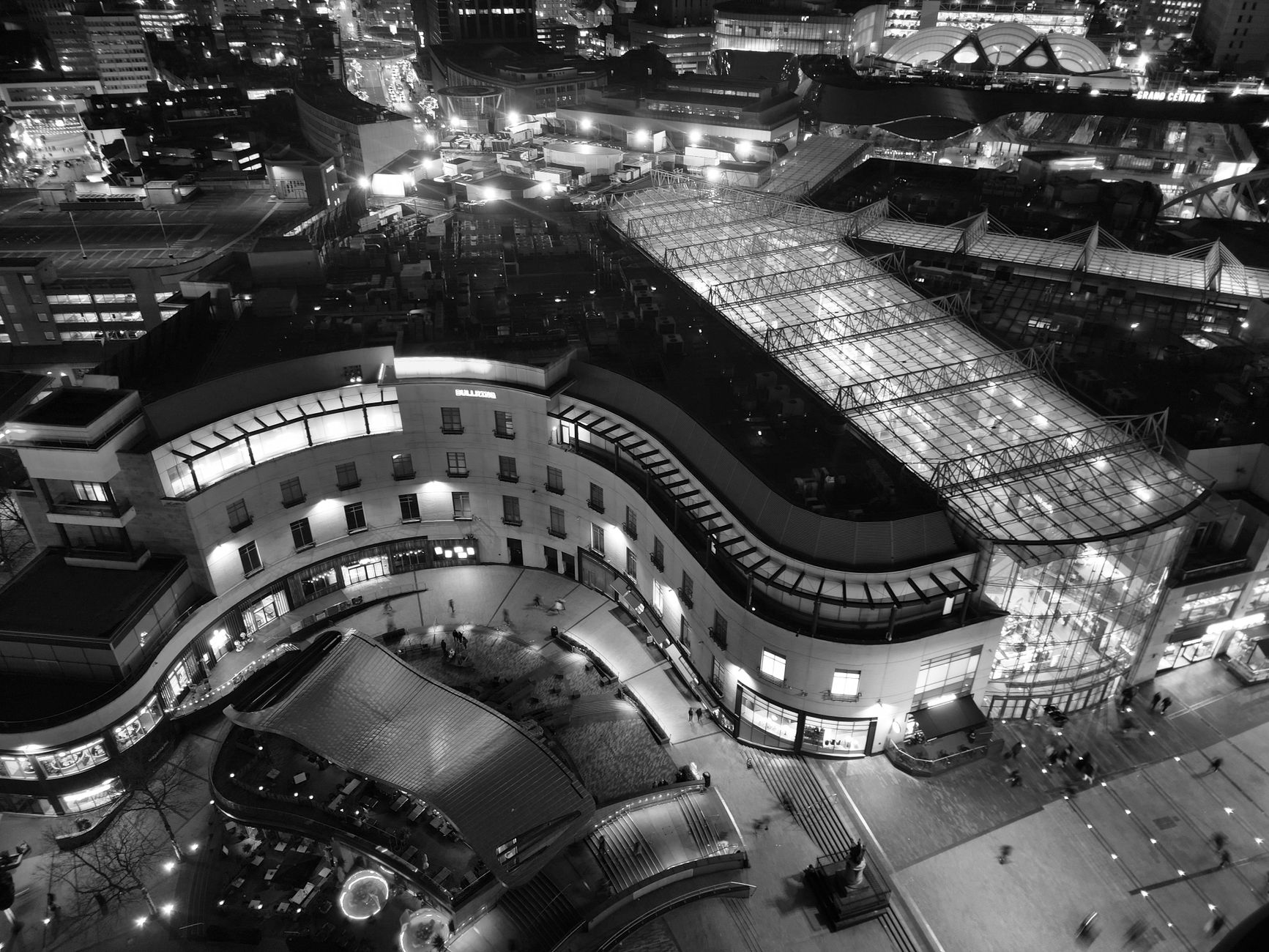
Daily life in the city finds one of its best exponents in its network of traditional markets, spaces where the commercial pulse of the neighborhood remains alive. The Bull Ring market, situated in the commercial heart, represents a tradition dating back centuries, when farmers and artisans from the Midlands came to offer their goods to local residents.
In these enclosures, the supply of fresh produce coexists with stalls offering antiques, textiles, and collectibles, reflecting the demographic and cultural diversity that characterizes the modern locality. Neighborhood commerce fosters a leisurely pace of life, where commercial transactions are accompanied by everyday conversations and the exchange of news between merchants and neighbors.
Supporting these local enterprises within the British commercial framework reinforces community resilience. Independent vendors sustain unique local traditions that mass-market retail chains often overlook, providing an authentic window into the socioeconomic fabric that binds the city’s diverse residential districts together.
Green Spaces and Urban Quality of Life
Far from the exclusive image of asphalt and concrete often associated with major industrial centers, Birmingham stands out for having a remarkable surface area of public parks and wooded areas distributed across all its residential districts. Cannon Hill Park and the Botanical Garden are clear examples of how nineteenth-century urban design integrated nature as an essential element for the health and recreation of the working population.
These green lungs offer a refuge from metropolitan bustle, hosting outdoor activities throughout the year. Paths bordered by centennial trees and artificial lakes provide stable habitats for various local bird species, turning these spaces into intergenerational meeting points where families stroll on weekends.
Environmental stewardship within British urban planning places strong emphasis on maintaining accessible natural sanctuaries. These verdant expanses not only improve air quality and microclimates but also encourage physical activity and mental well-being among residents of all ages.
Industrial Heritage and Site Museums
The memory of manual labor and assembly-line production is preserved in the city through a network of site museums and industrial archaeology initiatives that explain how the goods supplying the British Empire and the international market were manufactured. The neighborhood known as the Jewellery Quarter continues to house hundreds of workshops specialized in goldsmithing and artisanal jewelry, a unique concentration in Europe that keeps traditional techniques active.
Visiting these workshops allows visitors to understand the precision and rigor demanded of generations of artisans whose hands molded precious metals with inherited tools. Local archives and permanent exhibitions document the evolution of trade unions, working conditions, and technological innovations that made the economic takeoff of the Midlands possible during the eighteenth and nineteenth centuries.
Documenting this rich industrial heritage serves as an educational tool for current and future generations across the United Kingdom. It highlights the ingenuity required to overcome technical obstacles and underscores the collaborative spirit that historically defined the region’s workforce.
Cultural Diversity as a Community Driver
Birmingham’s current demographic makeup is the result of successive migratory waves that have enriched its social fabric, contributing culinary traditions, festivities, and artistic expressions from very diverse corners of the world. This plurality manifests itself on a daily basis in peripheral neighborhoods, where mosques, Sikh temples, historic churches, and community centers coexist.
Municipal policies and neighborhood initiatives prioritize social cohesion through community festivals, intercultural food markets, and educational programs that highlight the contribution of each community to the collective identity. In this way, the city is experienced not only as a heritage archive, but as a living organism in constant reinvention.
Embracing multiculturalism strengthens the social fabric of this British destination, fostering mutual understanding and respect among diverse ethnic groups. This inclusive atmosphere translates into a vibrant cultural calendar that continually refreshes the city’s artistic and social expressions.
The identity of an industrial metropolis resides not solely in its stone monuments, but in the capacity of its inhabitants to transform the workspace into a shared home.
Reflecting on the future of this British enclave involves recognizing the value of its everyday heritage against the pressures of global real estate speculation. Neighborhood associations play a decisive role in protecting smaller-scale historic buildings and defending open public spaces for collective use.
Responsible Practices for the Visitor
Exploring the city with a sustainable approach requires adopting practices respectful of the environment and the local communities that inhabit it permanently. It is recommended to prioritize getting around on foot or using the public transport network and tram system, thereby minimizing the carbon footprint associated with conventional urban tourism.
Likewise, supporting independent commerce, shopping at local farmers’ markets, and respecting coexistence rules in natural and residential spaces ensures that the presence of visitors contributes positively to the general well-being of the community without altering its daily rhythm.
Visitors must also remain mindful of noise levels in residential neighborhoods and adhere strictly to local guidelines regarding waste management and recycling. Such considerate behaviors protect the structural integrity of historical sites and preserve the peaceful ambiance cherished by permanent residents.
Practical guide
How to get there: Birmingham Airport (IATA code: BHX) features excellent direct rail connections to New Street station in the urban center, alongside regular links with other major British cities.
When to travel: Spring and early autumn offer moderate temperatures ideal for walking along the canals and public parks without the summer crowds.
Internal transport: The bus network and the light metro system (West Midlands Metro) efficiently connect the main tourist and commercial points of interest.
Accommodation: Varied options exist ranging from rehabilitated historic hotels in the center to small independent establishments in the peripheral residential neighborhoods.