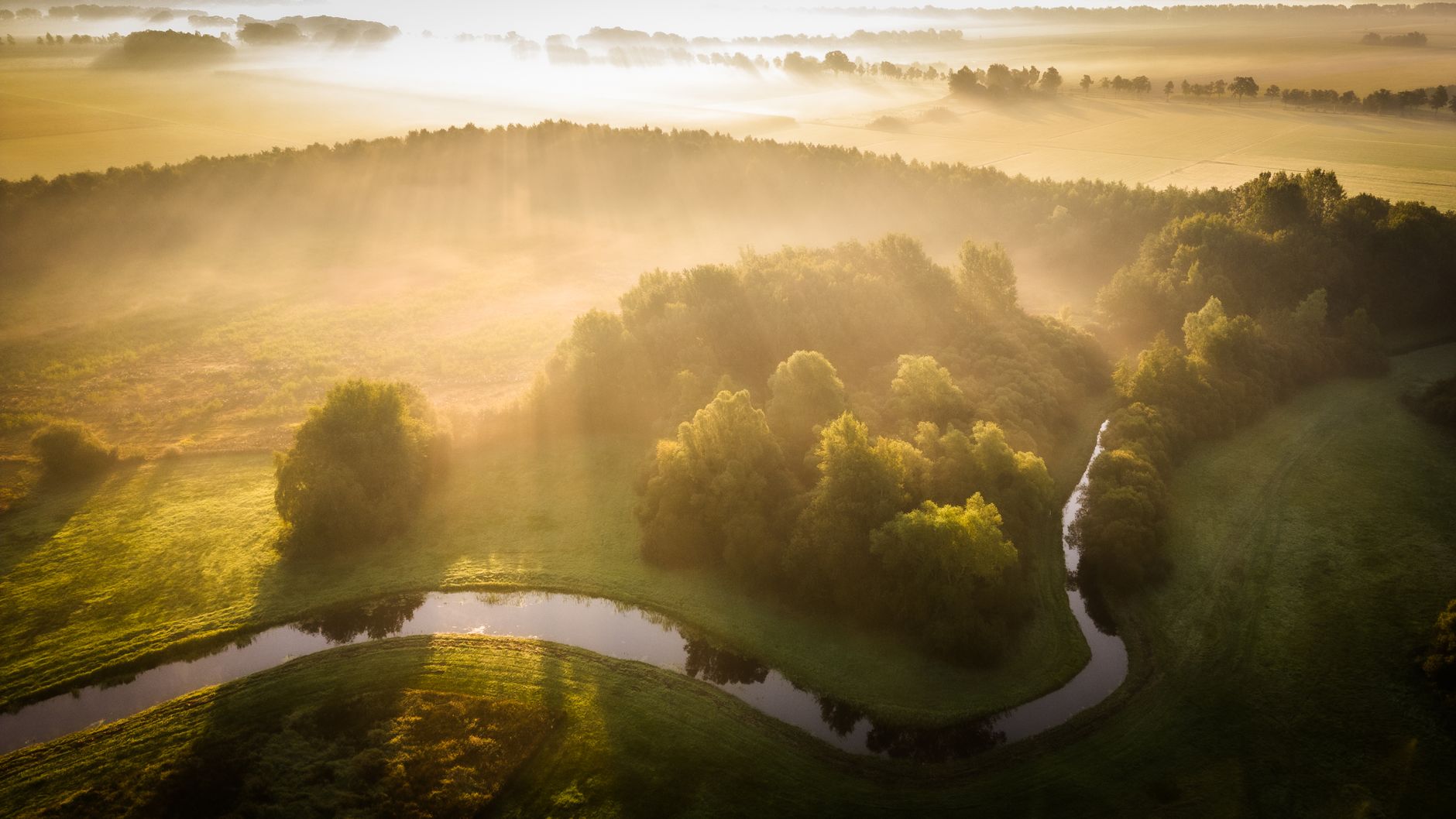

There is an invisible architecture that sustains the physiognomy of the world, a millenary stroke that precedes roads, cities, and the written memory of mankind. We refer to moving water, to the rivers, streams, and torrents that draw a silent grammar across the surface of the earth. Traveling with mindful attention implies, to a large extent, learning to read that hydrographic network that not only sustains biological life, but also organizes the culture, vernacular architecture, and economic pulse of every region we visit.
The Riverbed as the First Map
When we first arrive in an unknown valley, our eyes tend to seek out the peaks or the church steeples. However, the true backbone of the place always runs lower down, at the bottom of the depression, shaping the relief with geological patience. Water draws the natural boundary between fields, marks the rhythm of harvests, and determines the exact location of human settlements. In former times, civilizations were not founded at random; they responded to an imperative need for proximity to the vital resource. Studying the course of a river is, therefore, deciphering the first map of human coexistence and settlement on the planet.
The Architecture of Thirst and Irrigation
Human intervention in river systems reveals one of the most subtle forms of dialogue between nature and technique. Across the globe, from acequias inherited from medieval traditions to stepped terraces descending toward great Asian rivers, water has demanded an engineering based on measure and respect. It is not about violently dominating the flow, but rather channeling it wisely so that the earth bears fruit without exhausting itself. Observing these historical infrastructures teaches us that true sustainability is not a modern fad, but an ancestral practice of shared survival.
The Liquid Flavor of Territories
It is impossible to separate the gastronomic identity of a place from the quality and character of its waters. Local crops, transhumant livestock, and traditional recipes depend directly on the minerals dissolved in the water that nourishes pastures and orchards. Even the crafting of bread, beer, or wine responds intimately to this foundational element. When we sit at the table in a distant destination, we are ultimately tasting the invisible geography of the watersheds that irrigate that specific corner of the world, a reminder that we are an inseparable part of the natural cycles that sustain us.
The Ethics of the Pause by the Bank
In an era obsessed with speed, a riverbank represents one of the last spaces of resistance for contemplation. Sitting down to observe the constant passage of the current invites a necessary mental pause, a readjustment of our perspective before the immensity of the landscape. The contemporary traveler often runs the risk of accumulating superficial images without stopping to understand the depth of what they contemplate. Water reminds us that time is a continuous flow and that haste is a human invention alien to the deep logic of the Earth. Stopping by the water is recovering the proper rhythm to inhabit the world.
Toward a More Lucid and Respectful Gaze
Caring for riverbeds and respecting the integrity of aquatic ecosystems is an inescapable responsibility for those of us who walk the paths of the planet. Every traveler leaves a trace, and our obligation is for that presence to be light, conscious, and respectful of local balances. By recognizing water as the origin of all culture and the sap of territories, we transform our way of traveling. We cease to be mere spectators avid for novelties and become attentive witnesses to a shared story that flows, incessant and fragile, beneath our feet.