
The Human Scale of a Renaissance Capital
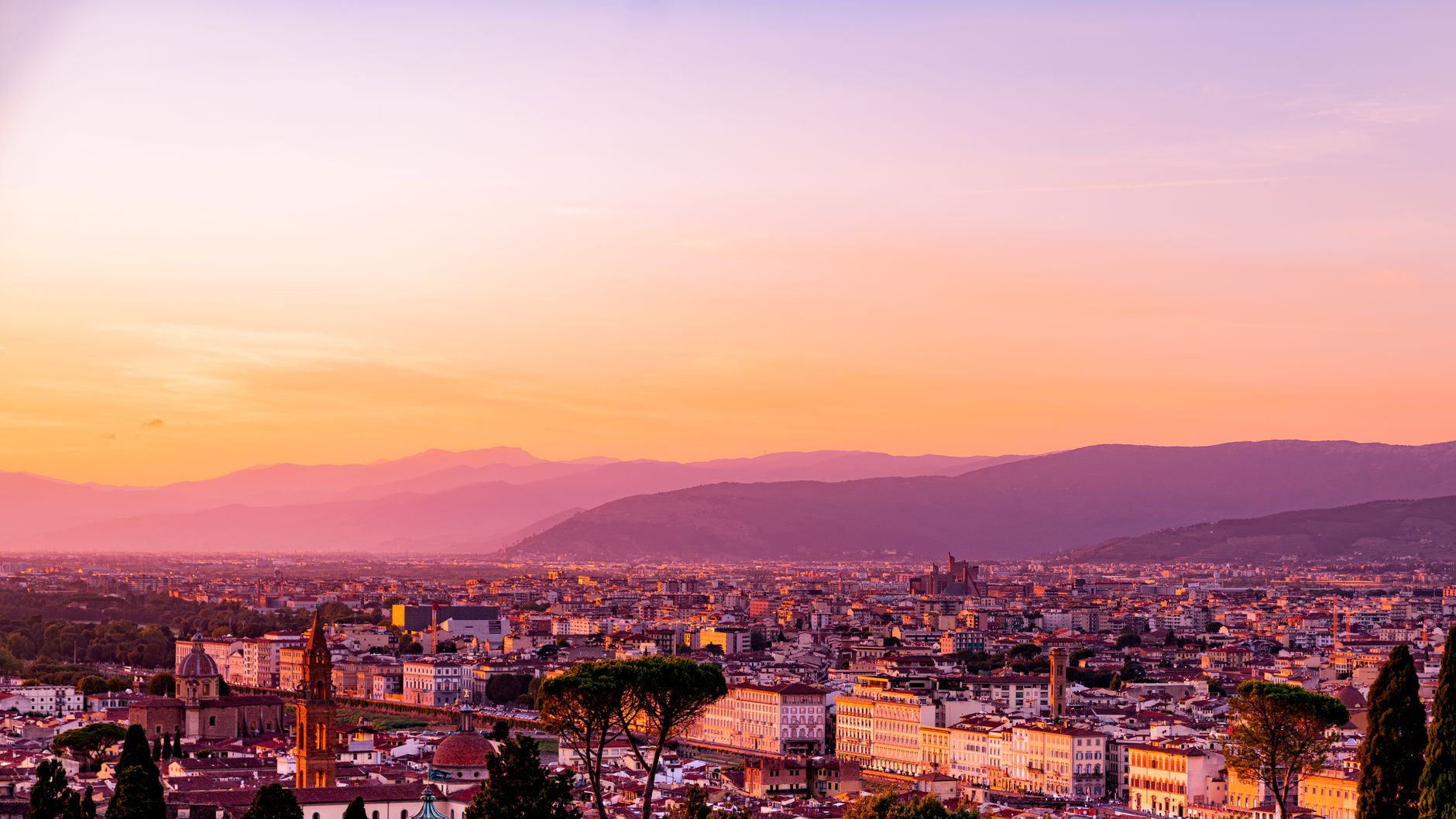
Florence, the capital of Tuscany situated along the banks of the Arno River, sustains a population slightly exceeding three hundred and sixty thousand residents. Far from the static open-air museum image often projected outward, the city preserves a network of neighborhoods where daily life unfolds on foot, among centuries-old artisanal workshops and tree-lined squares acting as authentic social lungs. An average elevation of fifty meters above sea level defines a river valley surrounded by gentle hills, a geographical setting that has historically favored refuge, exchange, and a particular understanding of urban habitability.
Wellbeing in this Italian city is not sought in isolated retreats, but rather in the cadence of footsteps over historic paving stones and in the observation of architectural details shaping the daily landscape. Recent urban management decisions aimed at protecting residential tranquility against tourist pressure have restored prominence to food markets, interior courtyards, and pedestrian routes connecting the center with less traveled peripheral enclaves. This renewed focus on neighborhood life allows both residents and mindful visitors to engage with the rhythm of the city in a respectful manner, fostering a deep connection with the local environment.
Understanding Florence requires looking beyond the postcard views and recognizing the subtle interplay between architectural heritage and everyday existence. The preservation of historical landmarks is inextricably linked to the vitality of the people who inhabit them, creating a continuous dialogue across centuries. Visitors who take the time to observe these dynamics discover a city that prioritizes human connection and sustainable interaction over frantic sightseeing.
Routes of Stone and Shadow: Urban Design as Refuge
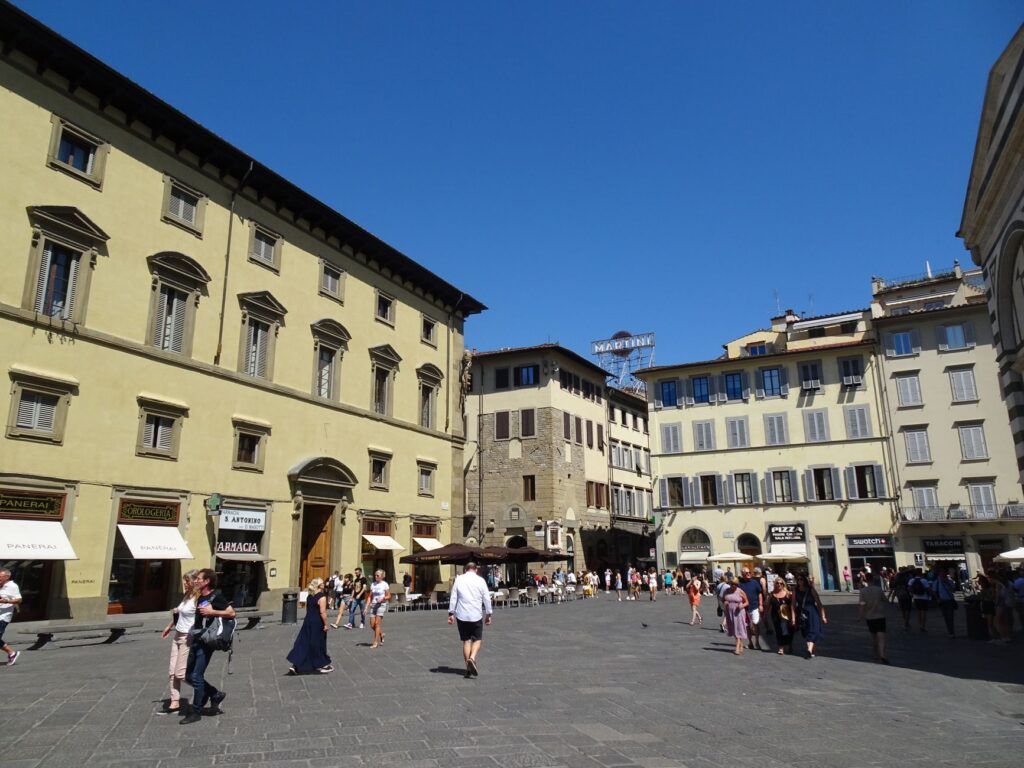
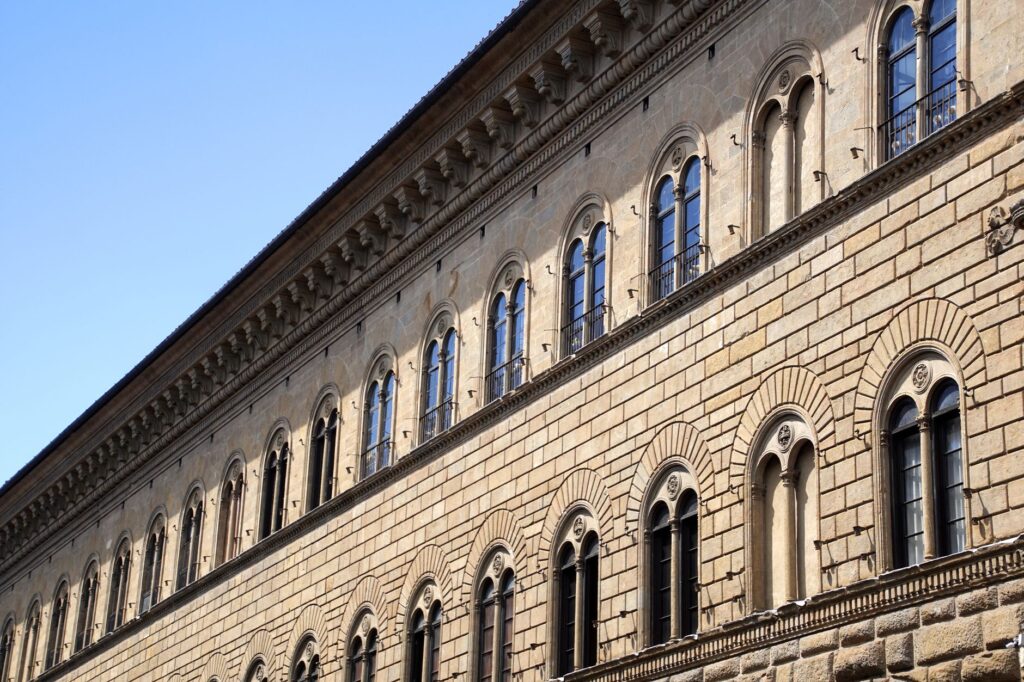
Walking through Florentine streets requires understanding how the shadow cast by robust ashlar palazzos regulates temperature and the pace of passersby. The facades of pietra forte, a material historically quarried from the surrounding hills, give architecture a warm tone that mutates with daylight. This medieval and Renaissance urban design, far from being a mere ornamental vestige, functions today as a natural bioclimatic infrastructure protecting against summer heat and sheltering leisurely conversation.
Public spaces are articulated through a network of small-scale squares where water from historic fountains continues to serve a gathering function. In these enclaves, local residents maintain deep-rooted customs, from the morning purchase of proximity goods to the evening pause for reading beneath porticos. The absence of heavy crowds in these secondary zones allows experiencing the city from a sustainable perspective, where monumental heritage dialogues harmoniously with neighborhood routine.
Navigating these narrow streets without haste invites a sensory awareness often lost in modern urban environments. The tactile quality of ancient stones, the acoustic resonance of footsteps echoing off masonry walls, and the shifting plays of light and shadow throughout the day contribute to a grounding experience that enhances mental clarity and emotional equilibrium for anyone willing to slow down.
The Green Pulse of Hills and Urban Gardens
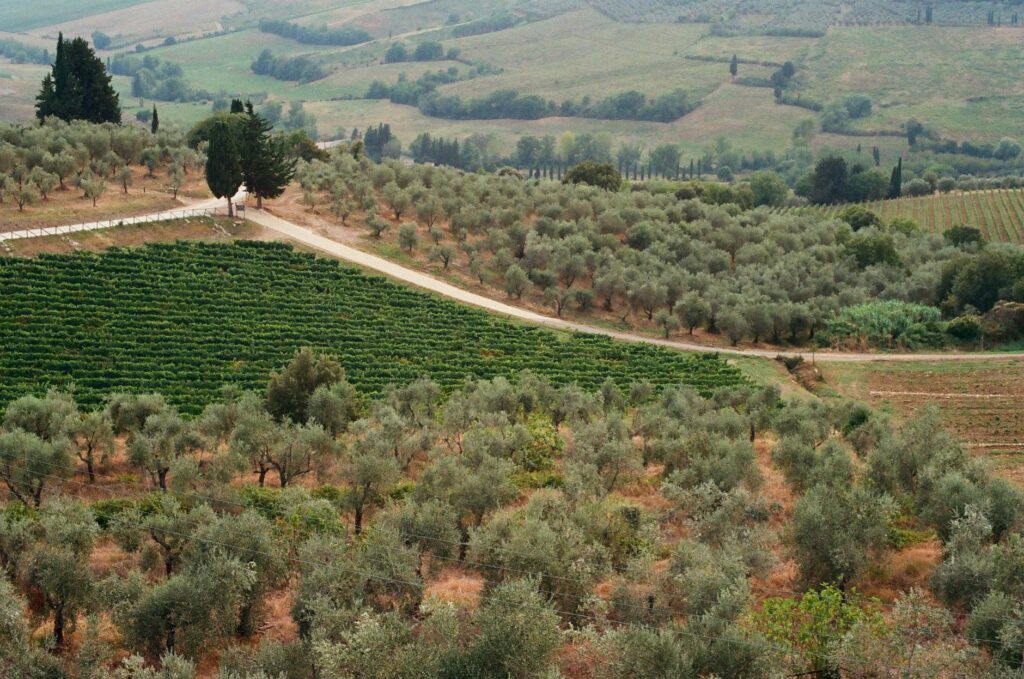
Beyond the walled core, the Tuscan topography emerges in the form of cultivated terraces, olive groves, and historic gardens descending toward the valley. These green spaces not only represent unquestionable landscape value but also act as regulatory elements for the community’s physical and mental wellbeing. Access on foot to natural viewpoints such as San Miniato al Monte offers a panorama where human intervention and surrounding nature merge into an ancient equilibrium.
Peri-urban agriculture and the care of traditional gardens on the city’s slopes constitute silent resistance against urban homogenization. In these plots, local collectives and neighborhood associations recover autochthonous varieties of fruit trees and vegetables, guaranteeing the survival of an agrarian heritage supplying local markets and educating new generations in responsible consumption and food sovereignty.
These green lungs and cultivated fringes remind visitors of the delicate balance between urban development and natural preservation. Spending time among these terraced landscapes offers a restorative pause, connecting the individual directly with the seasonal rhythms of the Tuscan countryside without needing to venture far from the historic urban center.
Craftsmanship as a Practice of Mindfulness
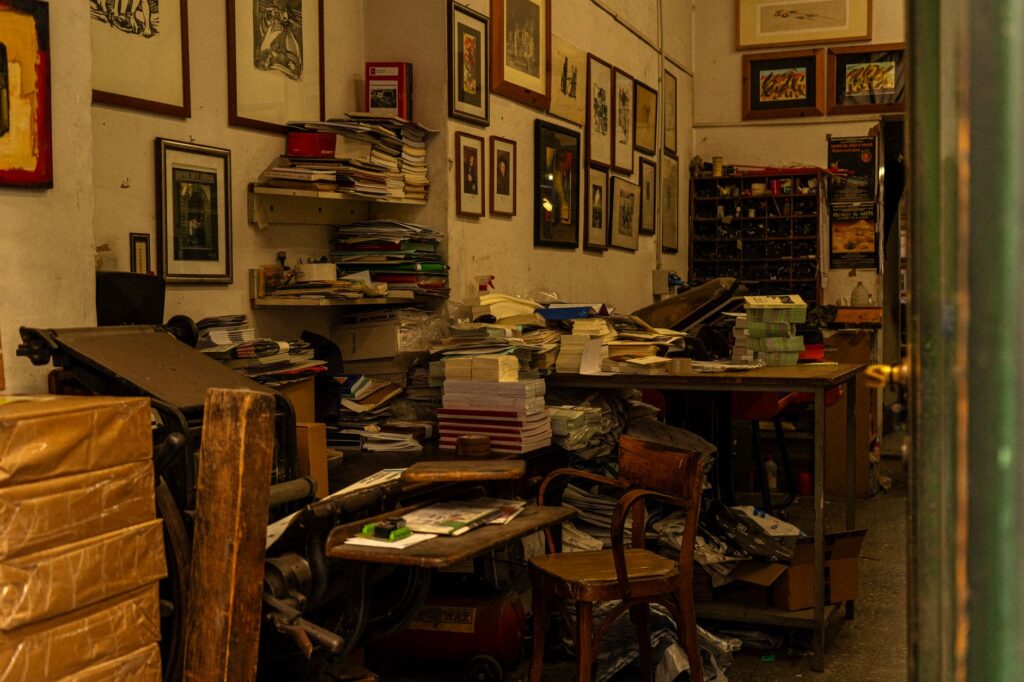
Florence’s socioeconomic fabric continues to find one of its firmest pillars in craft workshops. In neighborhoods like San Frediano or Santo Spirito, leather manipulation, antique book restoration, and goldsmithing are executed through gestures that have barely varied in centuries. For those visiting the city with an attentive gaze, observing these artisanal routines constitutes a form of active meditation, a tangible reminder that slowness and precision remain possible in the twenty-first century.
Local artisans not only preserve material techniques but also sustain a proximity commerce model fostering social cohesion. Conversing leisurely behind the workbench, respecting material drying times, and passing down knowledge orally configure a labor and human wellbeing ecosystem contrasting sharply with the dizzying cadence of globalized consumption.
Supporting these independent makers through conscious patronage ensures that traditional skills continue to thrive in the modern era. Each handcrafted object carries the narrative of its creation, serving as a meaningful souvenir that embodies the enduring values of patience, dedication, and respect for raw materials.
The beauty of Florence resides not solely in its major artistic landmarks, but in the capacity of its daily fabric to integrate history without renouncing the human scale.
Food Markets: Provisioning as a Community Ritual
Municipal markets, such as Sant’Ambrogio or peripheral neighborhood stalls, represent the true nutritional and social heart of the Tuscan capital. Far from strictly monumental circuits, these commercial exchange spaces are intergenerational convergence points where the quality of seasonal produce grown in the Arno plain and the Chianti hills is negotiated.
Visiting the market implies embracing a personal time, alien to the immediacy of large shopping centers. Buyers examine goods closely, converse with vendors about the exact origin of artichokes or the ripening point of pecorino cheeses, and participate in a daily liturgy reinforcing a sense of community belonging. This conscious consumption model favors a direct relationship between the countryside and the table.
Engaging with local food culture through these markets encourages a deeper appreciation of regional gastronomy as an expression of cultural identity. Every purchase becomes a deliberate choice that supports regional agriculture and preserves culinary traditions passed down through generations of Tuscan families.
Seasonal Pause and Evening Light
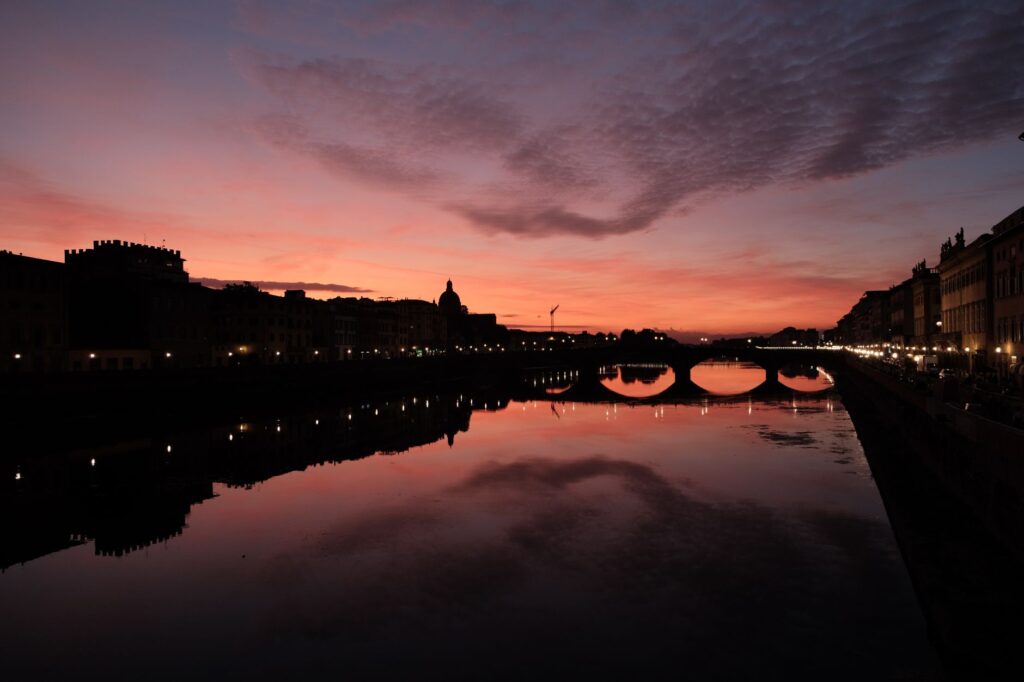
As afternoon progresses and sunlight dyes Roman tile roofs in ochre, Florence adopts a particular stillness. Historical bridges crossing the Arno, especially Ponte alle Grazie or Ponte Santa Trinita, become spontaneous viewpoints where passersby stop to contemplate water reflections and civic tower silhouettes against the evening sky.
This lighting transition marks the end of commercial activity and the beginning of neighborhood rest. The absence of strident stimuli and respect for nocturnal silences in residential areas allow recovering a biological rhythm consistent with natural cycles. The city thus demonstrates that true contemporary luxury consists of inhabiting spaces where time recovers its thickness and original meaning.
Allowing oneself to witness this daily transformation fosters a sense of tranquility and closure, helping visitors transition from active exploration to restorative evening reflection within an environment deeply attuned to historical continuity.
Florentine urban wellbeing rests upon the patience of its stones and the loyalty of its inhabitants toward leisurely forms of coexistence.
Practical guide
How to get there: Florence-Peretola Airport (FLR) is located a few kilometers from the center and connects with major European hubs via regular flights. Likewise, Santa Maria Novella railway station offers frequent connections with Rome, Bologna, and Milan.
When to travel: Spring months (April to June) and autumn (September to November) offer moderate temperatures ideal for exploring the city on foot and enjoying open spaces without summer’s extreme heat.
Getting around: The historical center is pedestrianized, and the best way to discover its corners is on foot. For longer journeys toward the hills or peripheral residential areas, the urban bus network managed by Autolinee Toscane operates regularly.
Accommodation: Opting for small independent hotels, guesthouses run by local families, or regulated tourist apartments located in Oltrarno or San Frediano neighborhoods is recommended.
Responsible gastronomy: Prioritize neighborhood trattorias preparing menus based on seasonal Tuscan plain products, such as ribollita, panzanella, and locally produced extra virgin olive oil.
Civic norms: Respect neighborhood rest in residential areas, avoid consuming food on historic monument steps, and use public fountains to refill drinking water.
Context readings: Consult historical guides on Quattrocento civil architecture and essays on the evolution of the Tuscan agrarian landscape to deepen local identity.