
Some cities do not ask to be admired; they ask to be used. San Juan, the head town of the Tibás canton, belongs to that discreet category of places where daily life has not yet turned into stagecraft. At 1,159 metres above sea level in Costa Rica’s Central Valley, this urban core of roughly 26,000 people forms part of greater San José without dissolving into it: it keeps its parish, its market rhythms and a pace that still recognises the neighbour you greet twice in the same morning.
Getting here does not require an expedition. It does require a decision: to accept that the interest lies not in a single monument but in the way a town organises itself around its church, its square and its coffee slopes. This piece proposes walking it the way someone comes to understand a place rather than collect it.
A small canton with a large name in the capital’s conversation
Tibás is one of the smallest cantons in San José province, yet its name surfaces often in metropolitan talk for reasons that have little to do with tourism: traffic, stadiums, the roads that cut north. That functional familiarity has long obscured a solid local identity built on the parish of San Juan Bautista, neighbourhood schools and a commercial life that does not depend on visitors.

For the traveller, that condition is an advantage. A place that does not live off tourism has not learned to pretend. The corner kitchens serve what they serve, the hours are the hours, and the conversation at the bus stop does not stop when a camera appears.
The square, the church and a shared calendar
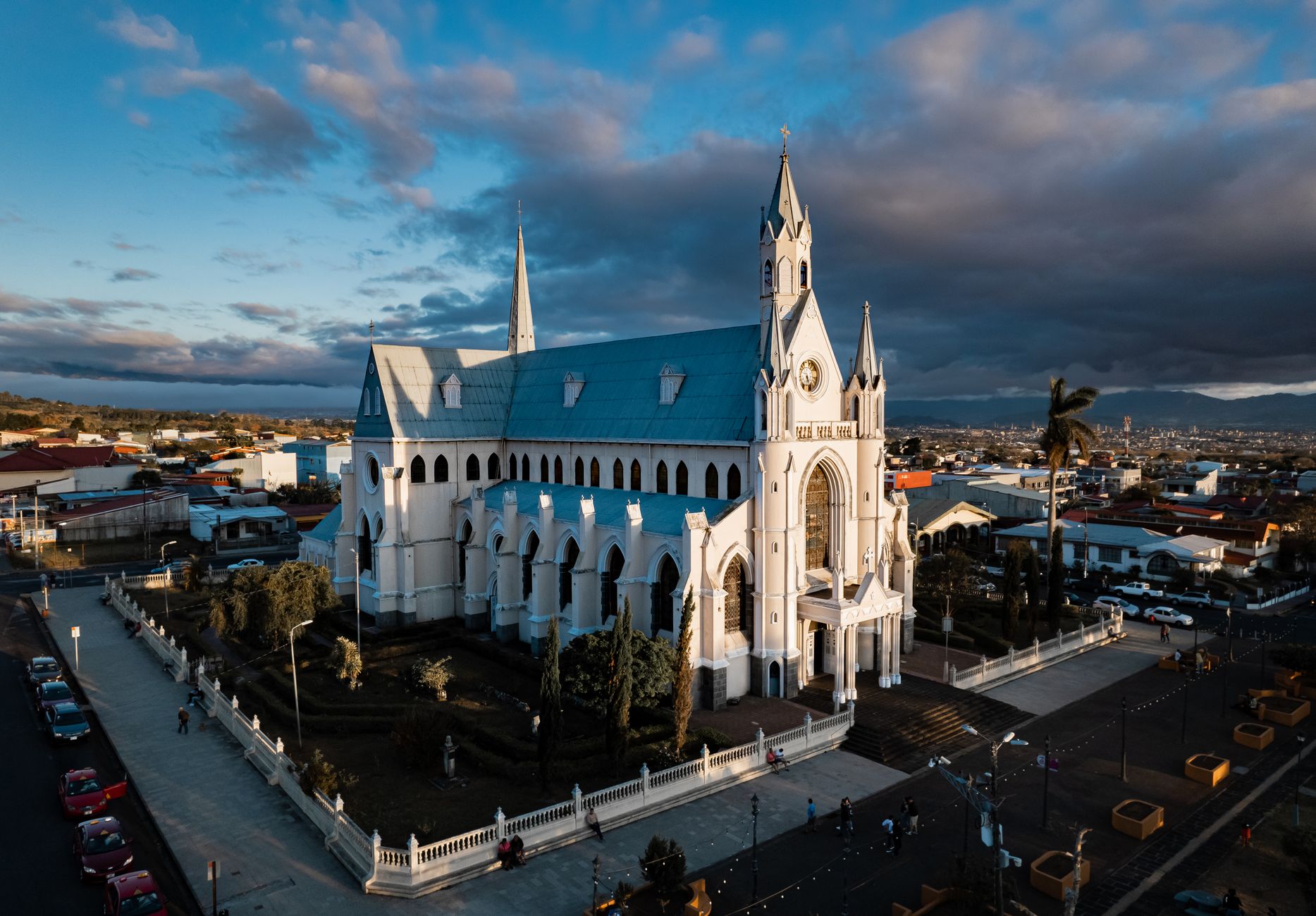
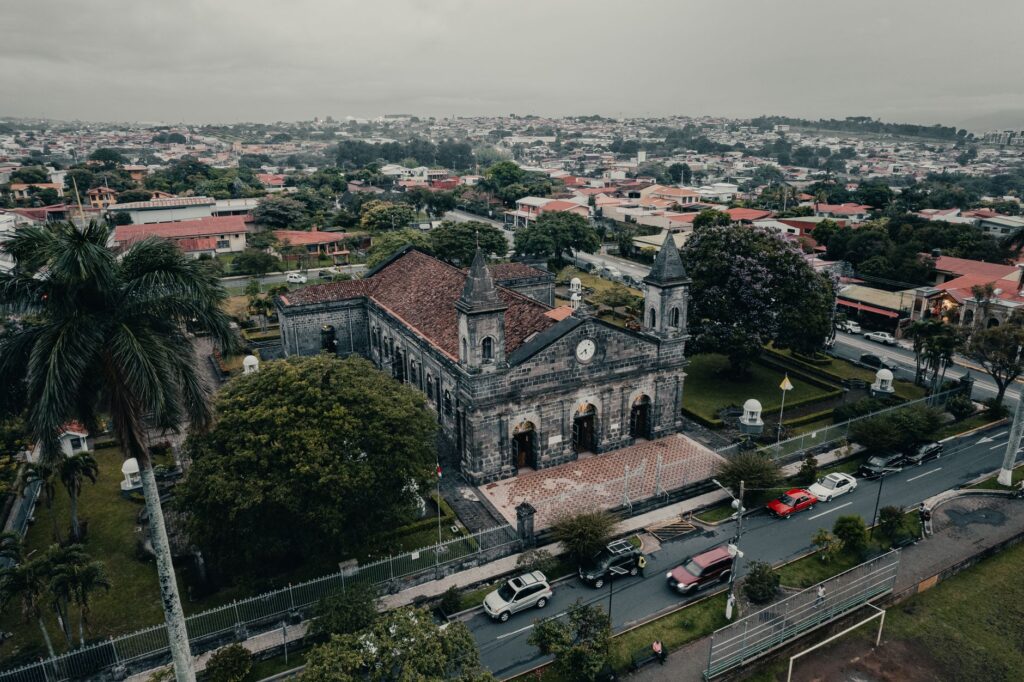
Central San Juan follows a logic repeated across Costa Rica and working here with particular clarity: the church facing the park, the park facing the community hall, and around that axis the bank, the pharmacy, the bakery and the fruit stall. The architecture is not spectacular, but it is efficient, designed so a neighbour can solve the day on foot.
The parish church of San Juan Bautista serves a function beyond worship: it marks the year. Patronal festivals, processions and parish activities order a calendar the community knows without consulting it. Anyone visiting during those dates will find active streets and a hospitality that is not advertised.
In Tibás heritage is not behind glass: it is in the daily use of the square, in the afternoon mass and in the queue at the bakery.
High-grown coffee in a landscape that became a city
Costa Rica’s Central Valley was built on coffee, and Tibás is no exception. For much of the twentieth century the slopes now occupied by housing and shops carried coffee plantations that fed the national economy. Today’s landscape keeps fragments of that memory: stone walls, shaded yards, an old boundary wall between modern buildings.
That past should not be idealised as a lost arcadia. Urbanisation brought services, transport and employment. But understanding that there is an agricultural history beneath the asphalt changes how the canton reads: it explains the shape of the streets, the long interior patios and the persistence of a culture of courtyard and conversation that the temperate climate favours.
What people eat and where they eat it
San Juan’s food scene reflects its condition as a working town. The sodas — small neighbourhood kitchens — serve casados, gallos, arroz con pollo and chorreado coffee at everyday lunch prices. It is unpretentious cooking that, well chosen, offers one of the most honest experiences of a trip through Costa Rica.
- Casado: a combined plate of rice, beans, protein, salad and plantain. The house measure.
- Gallo pinto: seasoned rice and beans, present at breakfast and at any hour.
- Café chorreado: brewed through a cloth bag, the domestic gesture that accompanies the table talk.
Ask about opening hours before sitting down: many places close between meals and reopen for dinner. That pause is also information about how the canton lives.
Moving slowly through the metropolitan sprawl
San Juan connects to the rest of the Greater Metropolitan Area by bus and a dense road network. Visitors should assume that travel times depend on traffic and that rush hour turns short hops into long transfers. The sensible approach is to group visits by proximity and leave margin between them.
Walking the centre is straightforward and safe during daylight, with the usual urban precautions taken in any Central American city. Pavements are uneven in places and the midday sun is strong; carry water and cover up.
Living heritage versus the temptation of the set piece
The risk for neighbourhoods that begin to receive visitors is the conversion of daily life into spectacle. In San Juan that process is only beginning, and the traveller still has room to decide what kind of visit to make. Buying from local shops, respecting places of worship and not interrupting the routines of the square are concrete ways of ensuring that interest does not erode what people come to see.

Tibás’s heritage is above all a heritage of use: a school still working, a church still filling, a park still serving as a meeting point. The best way to know it is to join that normality discreetly.
A reasonable outing in the surrounding valley
San Juan’s position allows it to be combined with other points in the Central Valley without becoming an isolated stop. To the south, central San José offers museums and institutional architecture; to the north, the roads lead to Heredia and the mountain landscapes. None of these combinations requires invented itineraries: check real schedules and work out the public transport logistics.
With a full day, a sensible sequence is to start early in central San Juan, have lunch at a local soda and continue to a nearby point in the valley. The key is not to stack destinations: scale matters more than quantity.
Climate, altitude and pace
The 1,159 metres of altitude temper the tropical heat. Mornings tend to be clearer and afternoons bring cloud and rain in the wet season, so plan walks before midday. The same altitude explains the culture of the patio, of hot coffee and of conversation outdoors.
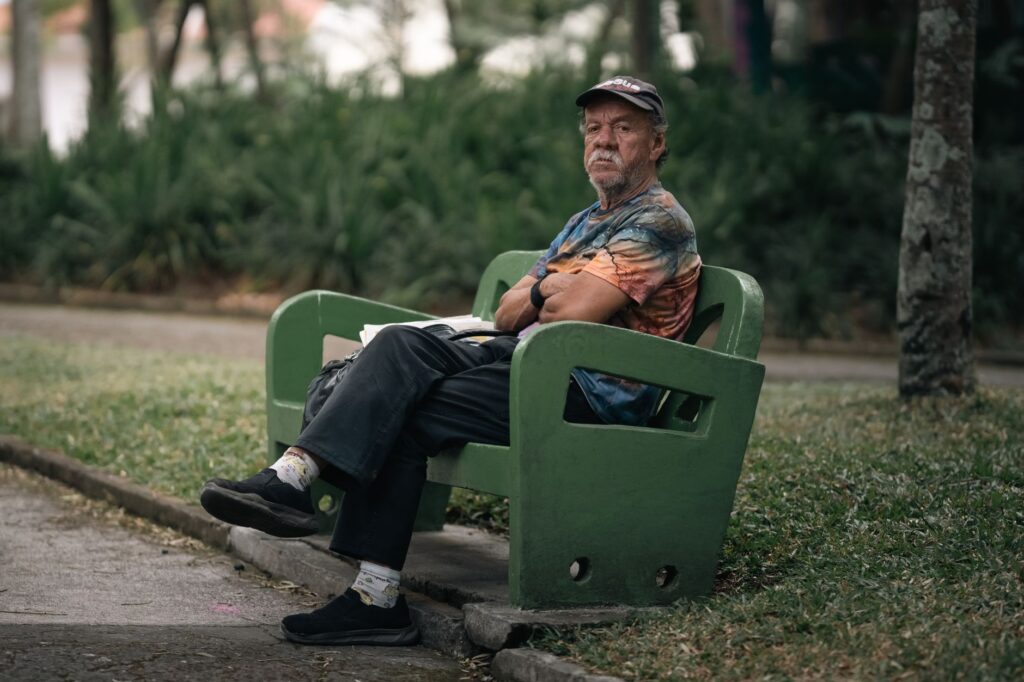
Valley light changes quickly and the town settles early. Anyone expecting intense nightlife will choose the wrong place; anyone seeking a quiet afternoon in a park with old trees will find exactly what they came for.
Practical guide
- Getting there: bus or car from central San José; confirm routes and times with the local operator before setting out.
- Best time of day: morning, to walk the centre and find shops open.
- What to bring: water, sun protection, comfortable shoes and cash for small businesses.
- Suggested duration: half a day for the centre; a full day if combined with nearby valley stops.
- Language: Spanish; English is limited outside formal tourism services.
- Local respect: ask before photographing people or church interiors; spend in neighbourhood businesses.
The day’s last stop
As evening falls, the park returns to its essential function: a place where people wait. Benches fill, students head home and the church falls quiet between two lights. There is no viewpoint and no scheduled show. There is a small city doing what it has done for decades, offering the visitor something increasingly scarce: the chance to look without being the centre of the gaze.