

A Port That Sets the Day
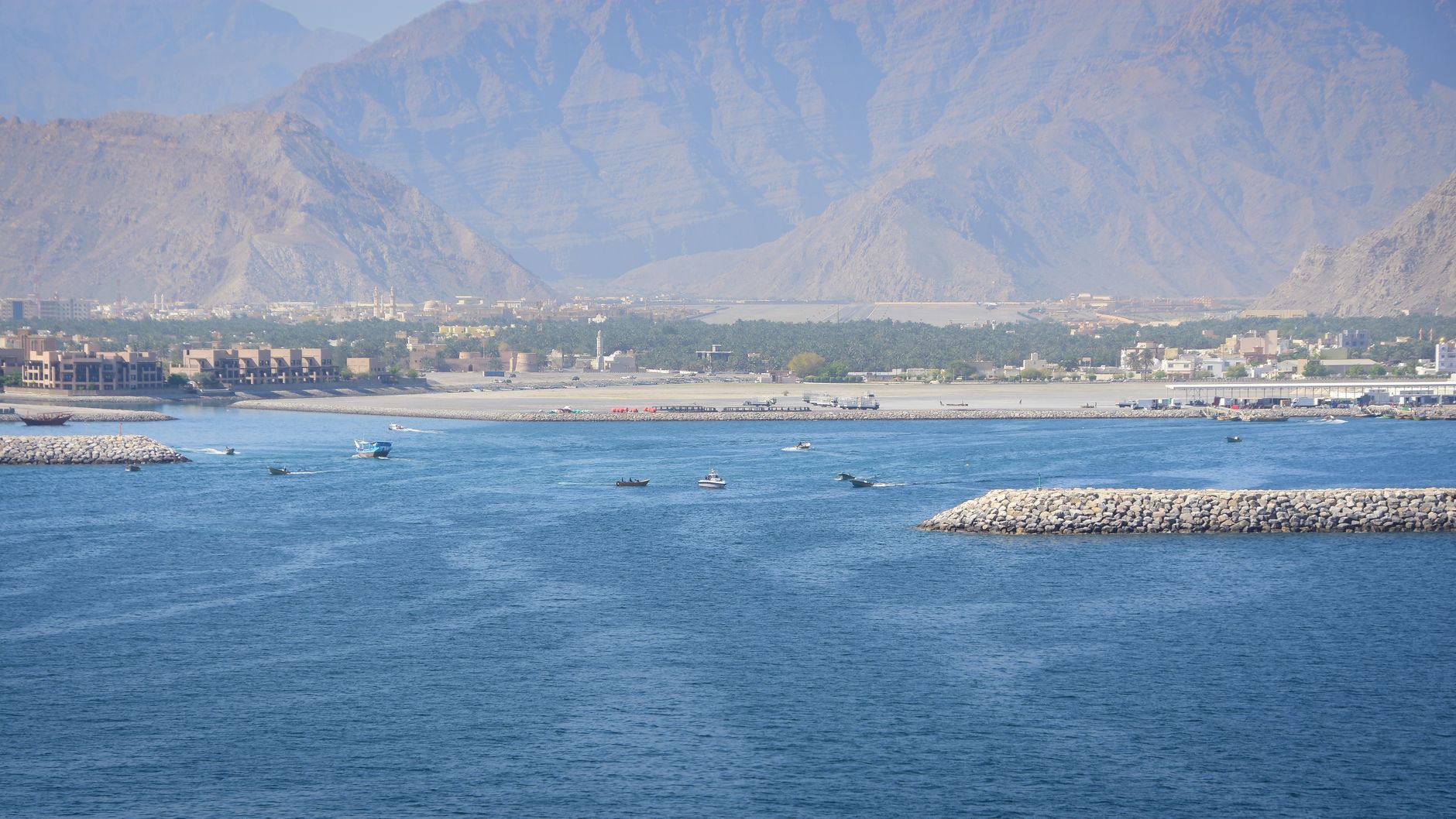
Al Khābūrah spreads along the coast of North Al Batinah Governorate in Oman, at the gentle elevation of a city built almost at sea level. Its population exceeds fifty thousand, yet the scale a traveller perceives is that of a neighbourhood: a seafront promenade, a fish market that rises early, a mosque that marks the hours and a road that has turned the town into a reference point for anyone driving the coast between the capital and Sohar.
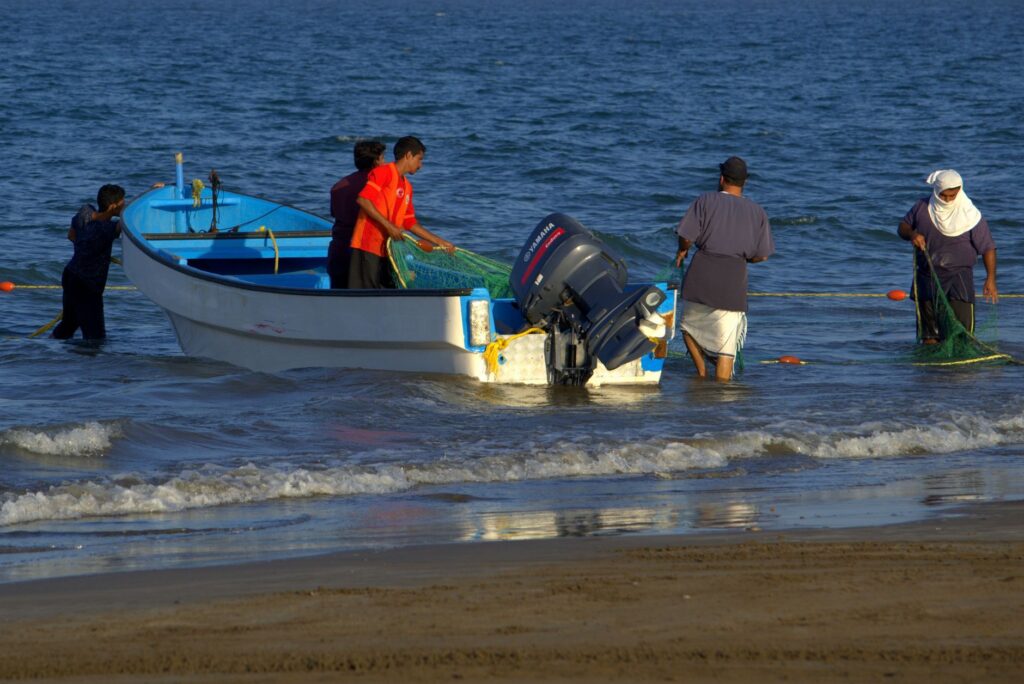
That double condition — a city of maritime trades and a place of transit — defines everything else. It is not a destination of grand monuments or enclosed itineraries. It is a place where heritage is recognised in daily activity: in nets mended in the sun, in ice boxes waiting beside vans and in the way fish changes hands before the heat sets in.
The Promenade as a First Reading
The waterfront works as the town’s index. Walking the corniche allows you to understand the geography without a map: on one side, the open waters of the Gulf of Oman; on the other, a low urban strip of homes and shops that grew without haste and without great height. Morning light reveals the texture of the place better than any description.

It is worth walking early, when the promenade belongs to those who rise out of obligation rather than tourism. That is when the port shifts become visible, along with the movement of small boats and the arrival of the first buyers at the market. A visitor arriving at midday will find a quieter town, sheltered from the heat, and an almost empty corniche.
In Al Khābūrah, heritage is not visited: it is observed while it happens, at the hour it happens.
The Fish Market and the Ethics of Looking
The fish market is the economic and social heart of the town. It is not a museum space or a stage prepared for visitors: it is working infrastructure where produce is auctioned, sorted and transported. Activity begins very early and is concentrated in a few hours, so anyone wishing to understand it must adjust to that schedule rather than the reverse.
The practical rule is simple: observe without getting in the way, ask before photographing and do not interfere in the chain of work. Fishermen and wholesalers are on their shift, and respect for that time is the most basic form of responsible tourism. Buying from nearby stalls, eating at local establishments and accepting that some areas are reserved for the trade are small gestures with a real effect on the neighbourhood economy.
The catch landed each morning sustains a simple, seasonal kitchen. Around the port, people eat what the day has brought, with rice, spices and bread as accompaniments. There is no need to look for fine dining: freshness and proximity are the argument.
A Maritime Memory That Is Inherited
The identity of Al Khābūrah has been built on the sea and on the coast. Fishing, coastal navigation and trade have shaped a culture of trades passed down within families and neighbourhoods rather than in books. That memory is recognisable in the traditional boats still in use, in repair techniques and in the vocabulary specific to the port.
The traveller will not find a large interpretation centre, but scattered clues: a small boatyard, a conversation at the auction floor, a shop selling rigging. The recommendation is to read the place patiently and without demanding spectacle. The authenticity of Al Khābūrah lies precisely in the fact that it has not been organised for tourist consumption.
The town does not offer a closed story about itself: it offers the conditions for the visitor to build one with respect.
Architecture on a Humble Scale
The built landscape responds to climate and function. One- and two-storey houses, inner courtyards, light-coloured walls and a discreet presence of the mosque as a visual and aural reference. There are no skyscrapers or monumental fabric, and that architectural modesty is part of the character of the place. The town grew along the road and the coast, with a practical urbanism that prioritises shade and ventilation.

For the visitor, the consequence is clear: the interest lies not in singular buildings but in the relationship between architecture and the life it hosts. Walking the side streets, away from the main axis, reveals that relationship without the interference of traffic.
North Al Batinah: The Context That Explains the Town
Al Khābūrah belongs to North Al Batinah Governorate, a fertile and densely inhabited coastal strip that has historically been the corridor between the capital, Muscat, and the northern regions. That position has given the town its character as a place of passage: goods, people and services move through here, and that commercial function coexists with maritime life without replacing it.
Understanding this dual nature prevents mistaken comparisons. Al Khābūrah is neither a village frozen in time nor a tourist town in expansion. It is an Omani locality that works, and whose heritage is both material and intangible.

Climate as a Planning Factor
Heat conditions any visit. The central hours of the day are not conducive to walking, and social activity concentrates in the morning and the evening. Planning the route around temperature is not a minor detail: it is the difference between a pleasant experience and an uncomfortable one.
Discreet, light clothing, water and sun protection are essential. So is adjusting the pace: in Al Khābūrah, as in much of Oman, haste does not improve the journey.
Responsible Decisions for the Visitor
Tourism in places of work raises an inevitable question: how to be present without altering. The answer lies in choosing local accommodation and restaurants, avoiding the spectacularisation of trades and accepting that some spaces and hours are not open to visits. Respect for working time is also a form of heritage conservation.
Photographing people requires prior consent, and at the market it is advisable to ask before raising a camera. The line between documenting and appropriating is thin, and it depends on concrete gestures.
What Can Be Verified and What Cannot
Al Khābūrah offers verifiable information about its geography, its population and its fishing activity, but it is unwise to invent details about schedules, fares or specific routes. Travellers should confirm practical data at the time and through local sources. That caution is part of journalistic rigour and also of the ethics of travel.
Practical guide
- When to go: avoid the central hours of heat and organise the visit around morning and late afternoon. Port activity concentrates early.
- Getting around: a car facilitates access along the North Al Batinah coast; within the urban core, walking is the best way to read the place.
- What to see: the seafront promenade, the area around the fish market and the side streets of the centre. There is no large monumental ensemble.
- Where to eat: local establishments near the port, with fresh produce and simple cooking.
- What to respect: working hours, areas reserved for the trade, discreet clothing and consent before photographing.
- What to avoid: treating the market as an attraction, aggressive bargaining or demanding explanations from people who are working.
A Photograph for the End
At sunset, the promenade recovers its social function. Families stroll, fishermen check their gear and the sea changes colour without haste. It is the moment when Al Khābūrah shows its most human dimension: a town that needs no staging because its daily life is already the landscape. Those who leave with that image will carry something more useful than a list of places: the certainty that some destinations are best understood when you arrive without demanding anything of them.


