
In Oman’s far northwest, Al Buraymi sits on an arid plain at around 300 metres above sea level, close to the border with the United Arab Emirates. The city is the capital of the governorate of the same name and is home to more than 70,000 people, according to available geographic data. Its identity is not explained by its street layout alone, but by the water system that made life possible in this corner of the Arabian desert for centuries.
Anyone arriving in search of monumental sights has come to the wrong scale. Al Buraymi is explored slowly, among palm groves, irrigation channels and a market that still sets the rhythm of the week. Understanding how that mechanism works is the best way to visit the city without turning it into a backdrop.
An oasis that is not a decorative garden
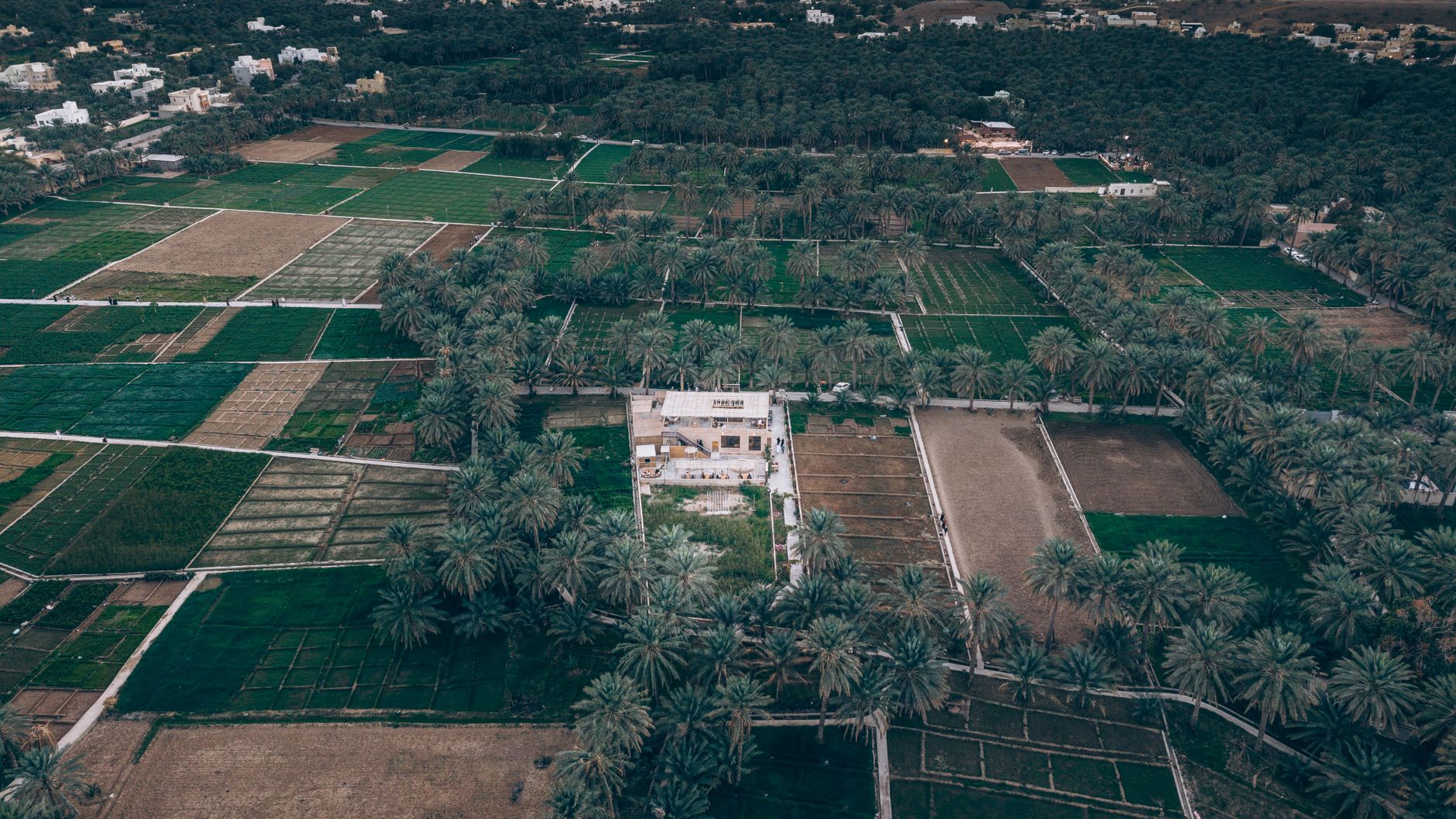
The Al Buraymi oasis belongs to that category of landscapes that only make sense when you look at the work behind them. Date palms do not form an ornamental forest: they are crop, shade and food. Other crops grow beneath them in layers, and water arrives through channels that distribute the flow according to inherited rules.
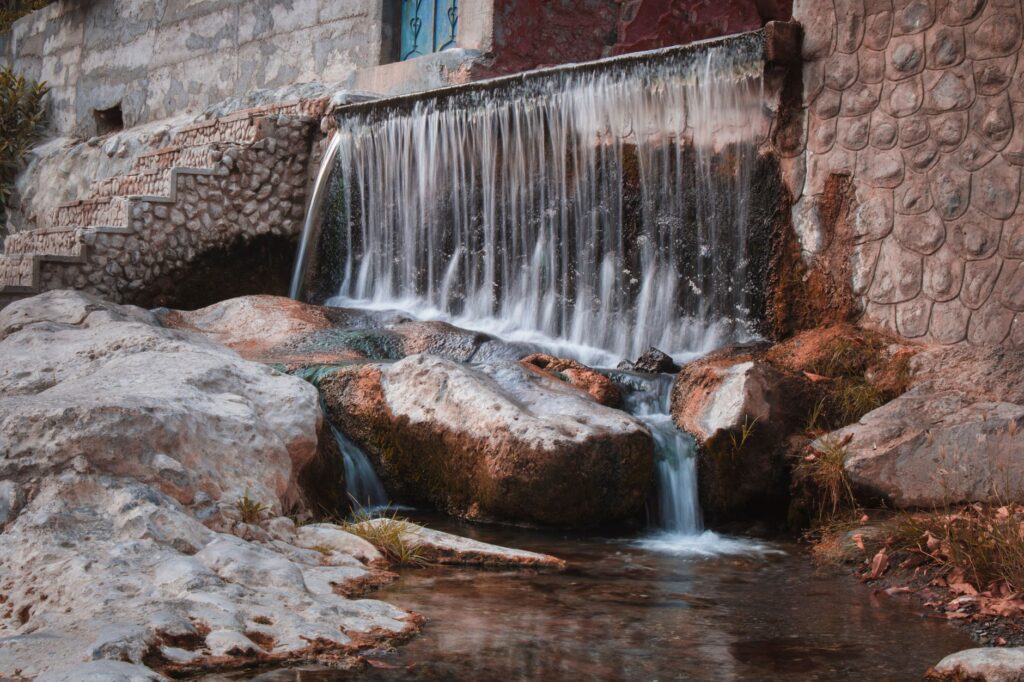
That irrigation system, known as falaj, is living heritage. It is not abandoned infrastructure for tourists, but a network that still shapes local farming. Walking the edges of the oasis reveals how water is shared, how channels are maintained and what rhythm it imposes on the working day of those who tend the land.
For visitors, the advice is simple: walk on marked paths, do not enter private property and avoid touching or diverting the water. A seemingly innocent gesture can alter the distribution of a scarce resource.
The market as a social calendar
In many Gulf cities, commerce has moved to air-conditioned shopping centres. In Al Buraymi, the market retains a function beyond buying and selling: it organises the week and brings together people from the surrounding area. Stalls selling dates, spices, fabrics and household goods coexist with conversation and unhurried bargaining.
You do not need to buy anything to understand the place. It is enough to observe how the stalls are arranged, which products change with the season and how sellers and customers relate to one another. It is a space for socialising, not just for trade.
The market in Al Buraymi is not visited as an attraction: it is frequented the way a square is frequented, with respect for other people’s time.
For those travelling with a photographic interest, ask permission before photographing anyone. A stall full of dates may look beautiful, but the dignity of the person tending it matters more than any framing.
The border that shapes local character
Al Buraymi shares an urban area with the Emirati city of Al Ain on the other side of the dividing line. That proximity has marked the recent history of the region: families split by an administrative boundary, trade crossing in both directions and a daily life that does not always respect political borders.

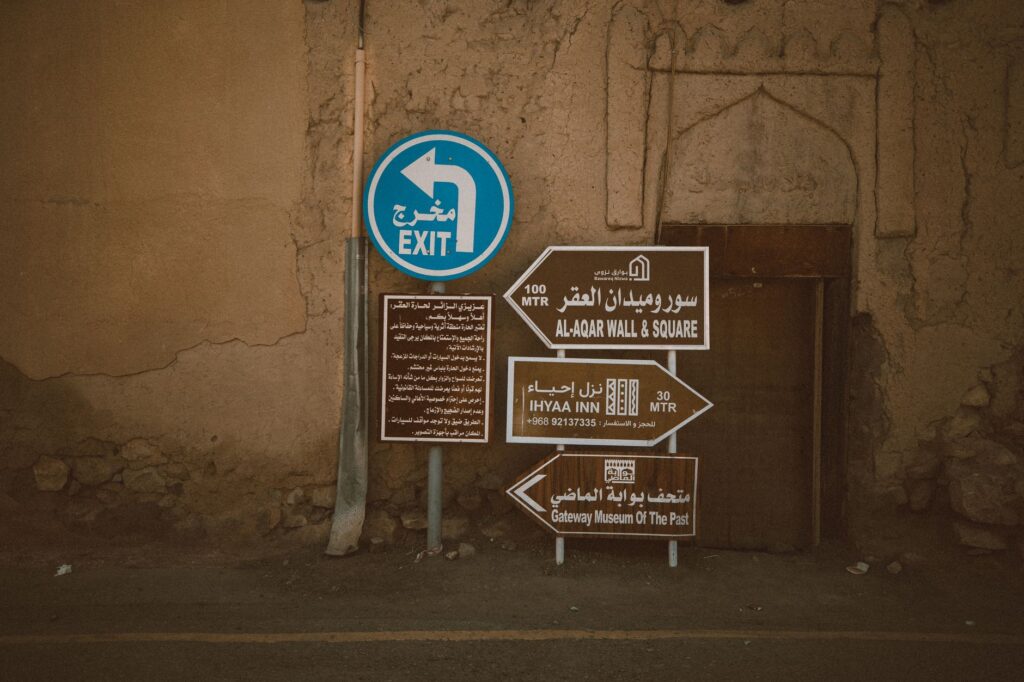
Visitors notice that duality in small details: signs in two languages, commuter traffic, prices that get compared. It is not an accidental stopover, but a node where two countries look at each other closely.
It is worth checking entry and exit requirements before moving around the area. Rules can change, and this text is not a substitute for official information. Caution and prior consultation are part of the journey.
Adobe architecture and shade
The traditional architecture of Al Buraymi responds to the climate with simple, effective solutions: thick walls, small openings, inner courtyards and local materials. Adobe and stone maintain temperature and reduce dependence on artificial cooling.
Some historic compounds and forts in the area preserve that construction language. They are not always open to the public, but viewing them from outside already offers clues about how life was organised: private spaces facing inward, sober facades facing out.
For travellers interested in heritage, patience is key. Opening hours may be limited and guided visits scarce. Asking on site, in advance, prevents frustration.
Dates, coffee and bread: the everyday table
Local gastronomy revolves around simple ingredients: dates, flour, lamb, rice and spices. Coffee is served with cardamom and accompanied by dates in many homes and shops. It is a combination that sums up the hospitality of the place better than any speech.
Popular restaurants serve hearty dishes meant for sharing. Shuwa, marinated meat cooked slowly, appears at celebrations, although it is not always available on the daily menu. For those seeking a culinary experience without pretension, stalls selling freshly made bread and sweet shops are a must.
It is worth remembering that water is a scarce commodity. Ordering only what you will consume and avoiding waste is a concrete way of travelling responsibly.

Archaeological heritage in the surroundings
The Al Buraymi region preserves traces of ancient occupation, from settlements linked to caravan trade to defensive structures. Some sites lie outside the urban core and require travel by vehicle.
Not all of them are prepared to receive visitors. Before going, it is advisable to consult local authorities or accredited guides. The temptation to improvise can lead to entering protected areas or damaging fragile materials.
The heritage of this area is not a theme park: it is a fragile record that demands distance and care.
Getting around and when to go
Al Buraymi is reached by road from the United Arab Emirates and from other parts of Oman. Al Ain airport, on the other side of the border, serves as a nearby reference, although connections depend on the season and the airlines operating.
The climate is desert: summers are very hot and winters milder. Spring and autumn offer more bearable temperatures for walking. Mornings are the best time to explore the oasis and the market.

Renting a car makes movement easier, but requires attention to traffic rules and cross-border insurance. Local public transport is limited, and journeys on foot can be long under the sun.
Practical guide
- Documentation: check visas and entry requirements with official Omani representations before travelling. Do not rely on outdated information.
- Clothing: light clothing covering shoulders and knees, and comfortable shoes for walking on uneven ground.
- Water: carry a reusable bottle and avoid unnecessary plastic. Water is a scarce resource in the region.
- Photography: ask permission before photographing people. Avoid photographing military installations or border areas without authorisation.
- Heritage: do not touch irrigation channels or archaeological materials. Respect signage and private spaces.
- Opening hours: the market and shops have their own rhythms. Mornings tend to be quieter; on Fridays, hours change.
- Health: sun protection, a hat and caution with heat in summer. Consult official sources for health recommendations.
A city remembered on foot
Al Buraymi does not offer the immediate impact of other Gulf destinations. Its appeal is slower: the sound of water in a channel, the smell of cardamom coffee, the shade of a palm at midday. Those who accept that pace discover a city that does not need to show off to be interesting.
The best way to visit is with curiosity and without haste, understanding that heritage is not an object of consumption but a shared responsibility. That is perhaps the most valuable lesson this border oasis offers to travellers.