


Sagarmatha National Park in Nepal covers 124,400 hectares in the Solu-Khumbu district and contains the highest summit on Earth, Everest, at 8,848 metres. This is not an empty territory: more than 6,000 Sherpas live within its boundaries, spread across some twenty villages, and their presence is inseparable from the area’s natural history. Since its creation in 1976 and its inscription as a UNESCO World Heritage Site in 1979, the park has been a laboratory where mountain ecosystem conservation intertwines with the daily life of those who inhabit the Dudh Kosi valley.
Altitude organises everything. Below 5,000 metres, the landscape divides into high-altitude pastures, rhododendron and birch forests, and cultivated slopes. Above that line, the terrain turns to bare rock, ice, and moraine. This extreme gradient explains why the park shelters rare species such as the snow leopard and the red panda, and why its conservation depends as much on science as on local practices.
A park that is inhabited, not merely visited
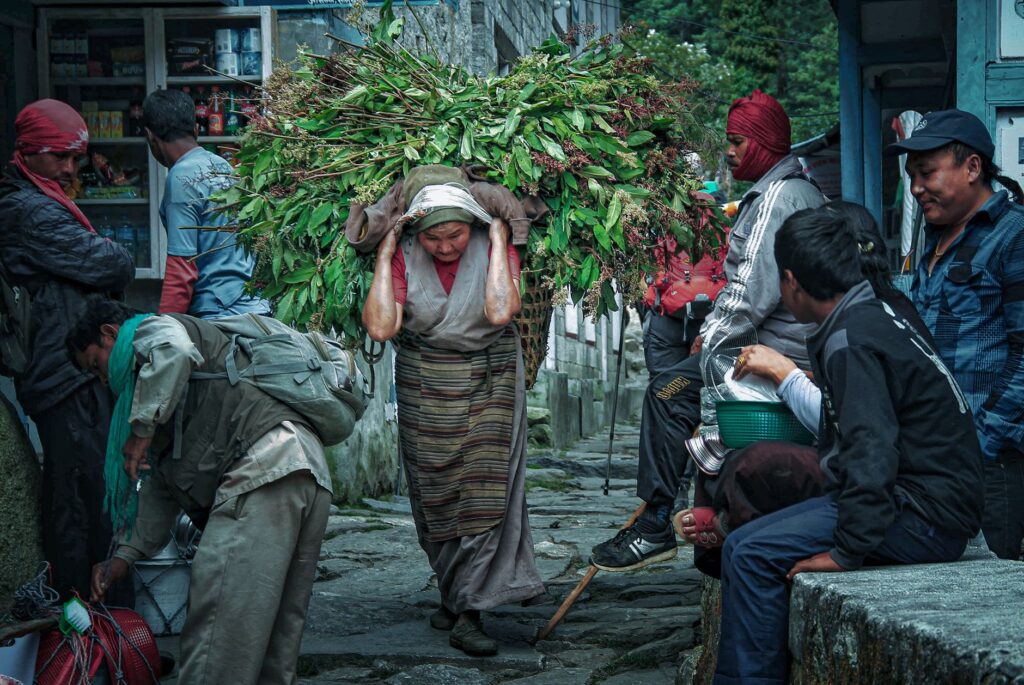
Unlike other protected areas conceived as sanctuaries without human presence, Sagarmatha was born with Sherpa villages inside its boundaries. Nepalese legislation excluded private property from the park but kept communities at the heart of the territory. That decision, made nearly five decades ago, proved crucial: the Sherpas, of Tibetan Buddhist tradition, have practised restrictions on hunting and reverence for all living beings for centuries, principles that align with conservation objectives.
The result is a hybrid model. The park is managed by Nepal’s National Parks and Wildlife Conservation Office, with support from a company of the Nepalese Army for protection and law enforcement. But alongside the state structure operate buffer zone management committees, user committees, and local groups that participate in decisions about resources. The government channels 50% of the park’s revenue to local communities through the Integrated Conservation and Development Programme.

Conservation in Sagarmatha was not imposed from outside: it was built on practices that already existed in the valley.
This institutional framework does not eliminate tensions. The steady increase in visitors—from 3,600 in 1979 to more than 25,000 in 2010—has boosted the local economy and improved health, education, and infrastructure, but it has also pressured a fragile ecosystem. The construction of illegal trails, resort development, energy demand, and waste management are problems acknowledged by park authorities.
Glaciers, lakes, and the water that flows from the roof of the world
The park encompasses the upper catchment of the Dudh Kosi river system and borders to the north on the main divide of the Great Himalayan Range, which marks the international boundary between Nepal and the Tibetan Autonomous Region of China. That position gives it a first-order hydrological function: Sagarmatha’s glaciers are a source of freshwater for communities downstream, both inside and outside the park.
In 2007, the designation of the Gokyo lakes and associated wetlands as a Ramsar site added international recognition to a high-altitude lake system that supports migratory birds and species adapted to extreme conditions. The presence of the snow leopard, which has recolonised areas of the park, is interpreted as an indicator that the habitat retains sufficient prey and adequate refuge for both predator and prey.
Climate change is the cross-cutting threat. The park monitors its impacts on flora, fauna, and Sherpa communities, aware that altered snow and melt cycles affect both glaciers and the high-altitude pastures on which local livestock depend.
High-altitude forests under pressure
Only about 3% of the park is forested; 28% is grazing land and 69% is barren terrain above 5,000 metres. That proportion explains the fragility of the forest resource. The constant and growing demand for firewood for heating and cooking has degraded the mountain forest, and although some micro-hydro projects operate as an energy alternative, the pressure persists.
The paradox is that the same tourism that pressures the forest also finances its protection. Park revenue and the buffer zone programme have improved infrastructure and services, but managers acknowledge that the park’s organisational structure needs upgrading to respond to tourism pressure and promote sustainable use of natural resources.
The high-altitude forest is the most vulnerable link in an ecosystem that depends on a very fine balance between altitude, climate, and human presence.
Sherpa culture as conservation infrastructure
The relationship between the Sherpas and the park is not folklore for visitors: it is a management system. Traditional natural resource management practices, combined with Buddhist reverence for life, have been major contributing factors to the success of conservation in Khumbu. The Park Advisory Committee, made up of local leaders, village elders, head lamas, and park authority representatives, channels that participation.

This structure has helped halt controversial development projects, such as the extension of Sanboche airport. It has also facilitated collaboration with national and international partners conducting research and supporting management. The Sacred Himalayan Landscape, a government initiative spanning from the Kanchenjunga Conservation Area to Langtang National Park, integrates conservation and community participation across the region.
Waste, hotels, and the limits of carrying capacity
Proper waste disposal is one of the principal obstacles the park faces. The Sagarmatha Pollution Control Committee, a community-based NGO headquartered in Namche Bazar, works actively on pollution control with support from other agencies and coordination from park authorities. Even so, the problem persists.
With growing tourism, the demand for new hotels and lodges is inevitable, and the park remains vulnerable to encroachment and pressure on habitats and species. Assessing tourism impacts and the territory’s carrying capacity are central issues in current management.
The park also relies on external instruments that reinforce its integrity: the creation of Makalu Barun National Park in 1998 to the east and the Gauri Shankar Conservation Area in 2010 to the west expanded protection in the region. To the north, continuity with the Qomolongma Nature Reserve in Tibet extends protection beyond the border.
What visitors see and what sustains the ecosystem
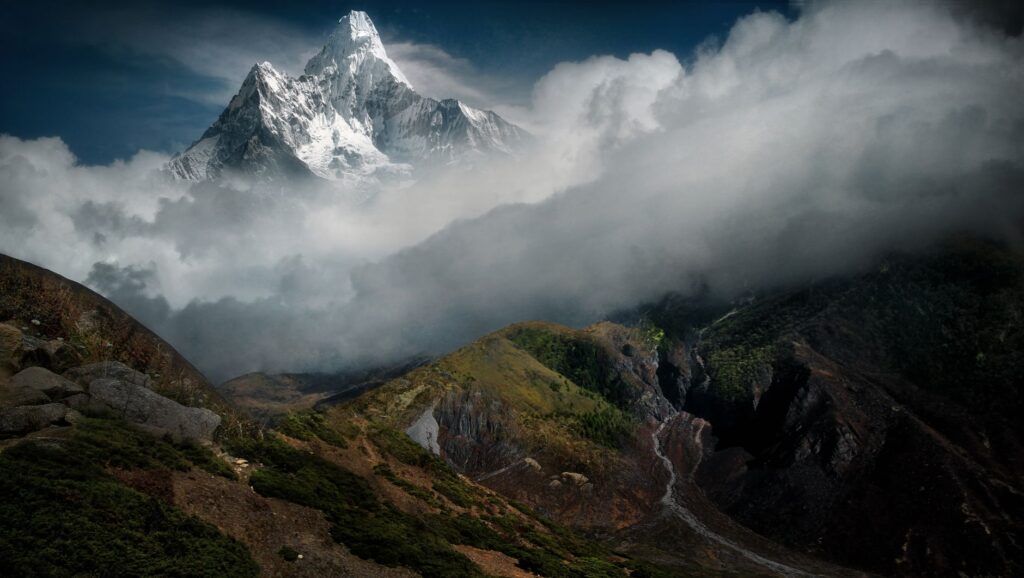
Visitors trekking the park’s trails see peaks, glaciers, and deep valleys. What they do not see at first glance is the network of committees, rangers, monks, local leaders, and researchers that sustains that landscape. Conservation in Sagarmatha does not depend on a single measure but on a combination of legal protection, community participation, scientific monitoring, and constant adaptation.
The park is an example of how a mountain ecosystem can be protected when local culture is integrated into the strategy rather than excluded. It is also a reminder that this protection is fragile: climate change, tourism pressure, and demand for natural resources continue to strain a balance that requires ongoing attention.
Practical guide
To visit Sagarmatha National Park with judgement, it helps to first understand its structure and boundaries. The usual access begins at Lukla, reached by flight from Kathmandu, and continues on foot through the Dudh Kosi valley towards Namche Bazar, the gateway to the high zone. There are no roads inside the park, and movement is exclusively on foot.

- Best season: spring and autumn offer the most stable conditions for trekking, with clearer skies and less extreme temperatures than in winter or during the monsoon.
- Acclimatisation: altitude is the critical factor. Any route above 3,000 metres requires gradual ascent and rest days to reduce the risk of altitude sickness.
- Permits: park access requires official permits arranged before entry. Always check with official park sources or authorised agencies.
- Waste: the park faces a serious litter problem. Carrying out your own waste and avoiding unnecessary plastics is a direct contribution to its conservation.
- Energy: firewood demand pressures the high-altitude forest. Choosing lodges that use alternative energy sources helps reduce that pressure.
- Culture: Sherpa villages are living communities, not attractions. Respecting local norms, religious spaces, and residents’ privacy is part of the visit.
- Wildlife: the snow leopard and red panda are rare and elusive. Sightings are never guaranteed and should not be the sole aim of the journey.
Information on fees, flight schedules, trail conditions, and specific requirements changes frequently and should always be verified with official sources before travelling. This report does not replace that verification.
A landscape cared for on foot
At the end of the day, in the valley’s villages, Everest ceases to be a goal and becomes an everyday presence: the shadow that lengthens the afternoons, the reference that orders the seasons, the reason thousands of people come and go each year. Sagarmatha National Park does not protect only a summit; it protects a way of life that has learned to coexist with the mountain without exhausting it.
That coexistence is neither perfect nor final. It is continuous work, made of agreements, monitoring, and difficult decisions. But as long as Sherpas continue to inhabit the valley and glaciers continue to feed the Dudh Kosi, Sagarmatha will remain something more than the roof of the world: a place where conservation is practised daily, step by step, in the shadow of the highest summit.


