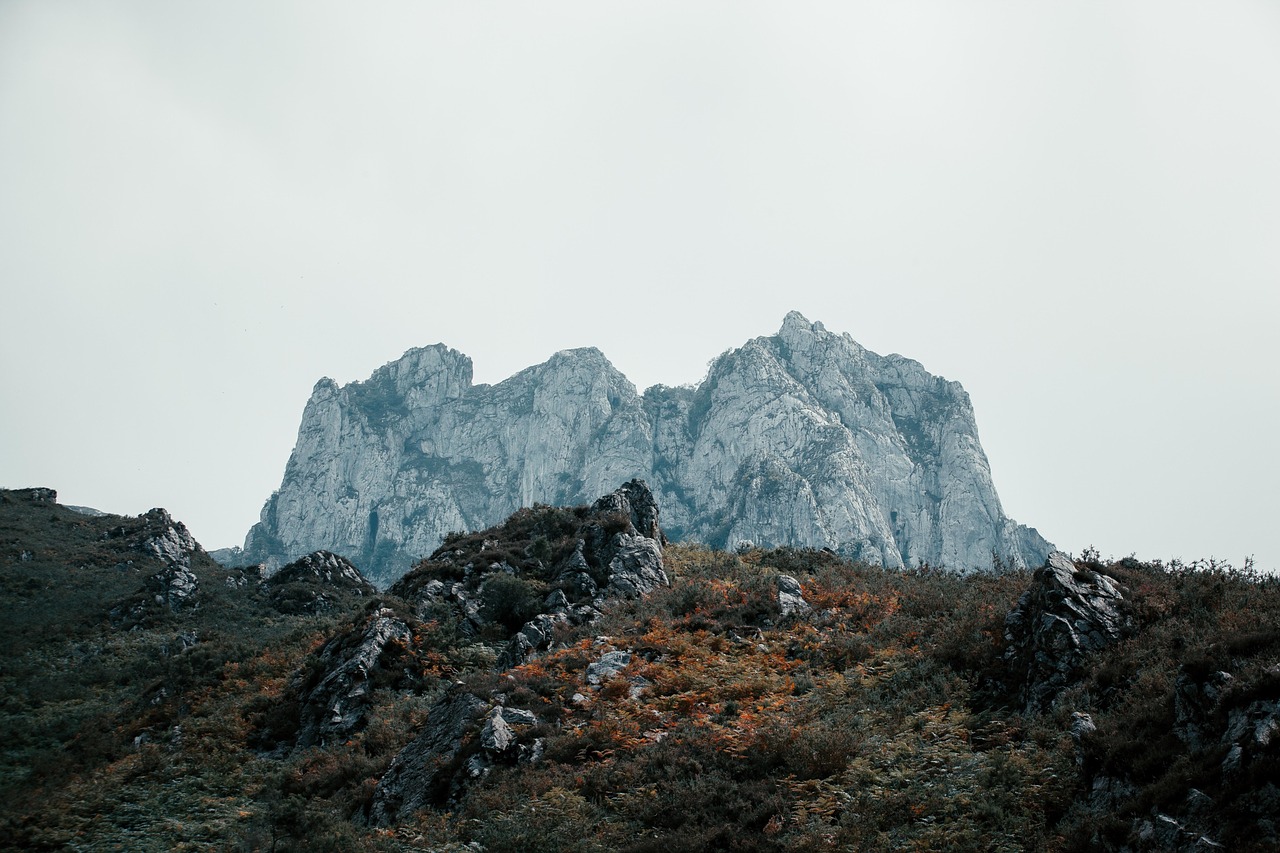

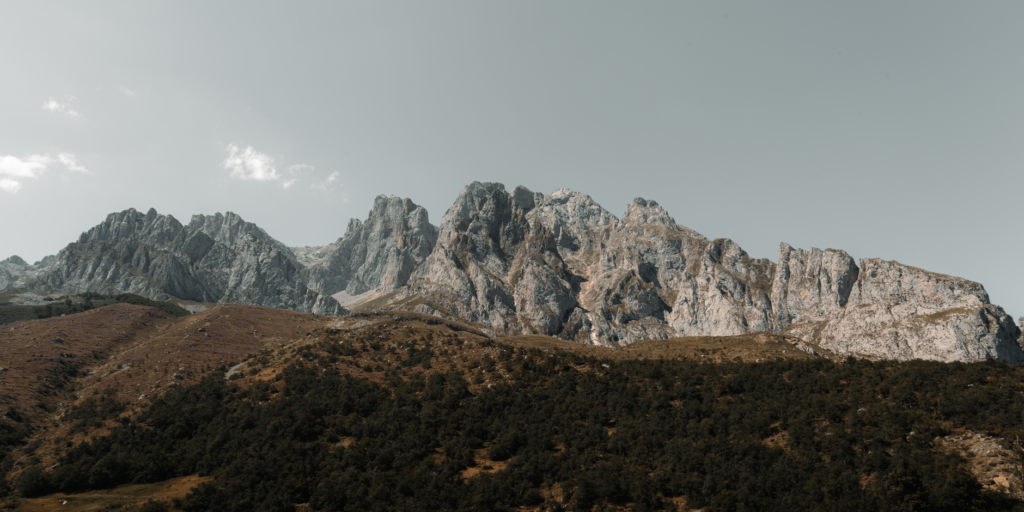
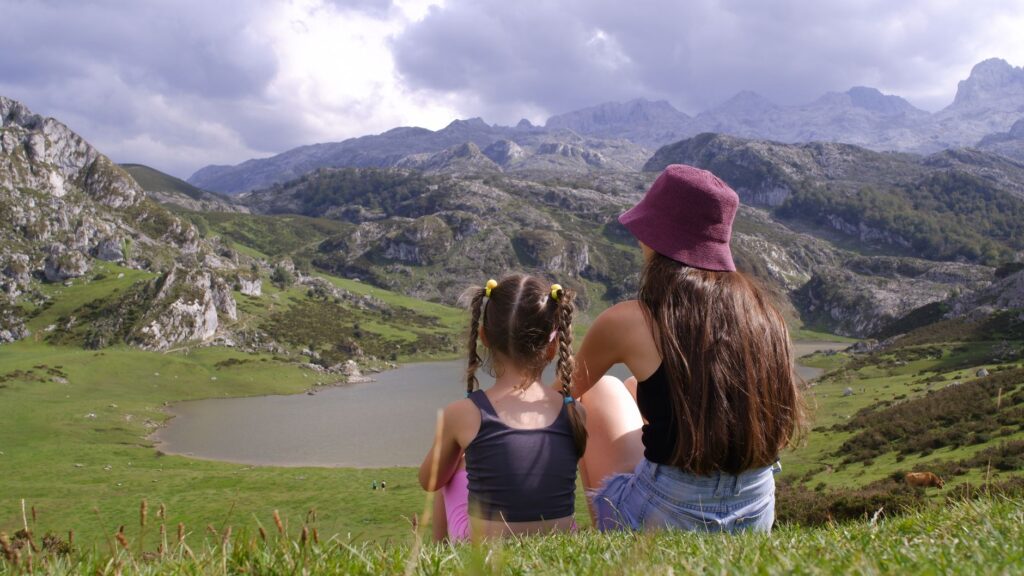
The Picos de Europa are not a theme park of summits. They are three limestone massifs —the western Cornión, the central Urrieles, and the eastern Ándara— spread across Asturias, Cantabria, and Castilla y León in northern Spain. Anyone arriving in search of a postcard finds fog, cows crossing the track, trails climbing through beech woods, and villages where people still head up to the high pastures to tend livestock. Walking here means accepting that the landscape is not just for looking at: it is for living alongside.
The useful question is not which route is the most spectacular, but how to traverse these valleys without turning them into a backdrop for quick consumption. The answer begins by understanding that most of the paths are not ours: they are paths of shepherds, of locals, of people who live here year-round. That changes everything about how we walk.
A Territory of Limestone, Fog, and Livestock
Limestone defines everything. It dissolves with water, forming gorges, sinkholes, limestone pavements, and caves. That is why the terrain is so distinctive: no large forests at higher elevations, but bare pastures, jagged rock, and a network of trails winding between dry-stone walls. Atlantic fog, rising from the Cantabrian Sea, appears and vanishes without warning. In summer it can be hot at midday and cold at dusk. In spring and autumn, rain is a regular companion.
Livestock is not decoration. Cattle, sheep, and goats move up to the high pastures in summer and down in autumn. Shepherds still do this work, though with growing difficulties. When you walk along a track and meet a herd, you are not interrupting a picturesque scene: you are crossing someone’s workplace. Closing gates, not startling animals, and leaving no waste are minimal gestures, but essential ones.
What It Means to Prepare for Walking Here
You do not need to be an alpinist to enjoy the Picos de Europa. There are routes for all levels, from valley strolls to ascents requiring experience. But preparation is not only physical. It is also mental: accepting that weather may force you to change plans, that a route marked on the map may take longer than expected, and that a mountain hut is not a hotel.
The right clothing is not a luxury. Layers, waterproofs, footwear with good grip, and enough water. In many areas there are no fountains. Navigation matters: although there is signage, fog can erase landmarks within minutes. Carrying a map and knowing how to read it remains more reliable than relying solely on a phone.
The mountains are not conquered: they are traversed with attention. Here, the difference between a good day and a problem often comes down to having started too late or ignored the forecast.
Villages as Starting Points, Not Scenery
Around the massifs, villages maintain a life of their own. In Asturias, Sotres, Bulnes, Posada de Valdeón, or Caín; in Cantabria, Espinama, Potes, or Fuente Dé; in León, Valdeón and Posada de Valdeón. They are not just starting points: they are places where you buy bread, ask about trail conditions, and understand that tourism can be an income or a threat, depending on how it behaves.
Staying in these villages, eating in their bars, and shopping in their stores is a way to keep money local. It is also a way to listen. Locals know which trail is closed, where there is construction, or which spring has dried up. Asking before setting out is not weakness: it is common sense.
Paths That Are Not Only Ours
Many of the trails visitors walk today were, for generations, paths of shepherds, smugglers, or villagers traveling from one valley to another. Some remain the only access to certain places. That implies responsibility: not blocking passages, not leaving gates open, and not assuming all the land is open for unrestricted use.
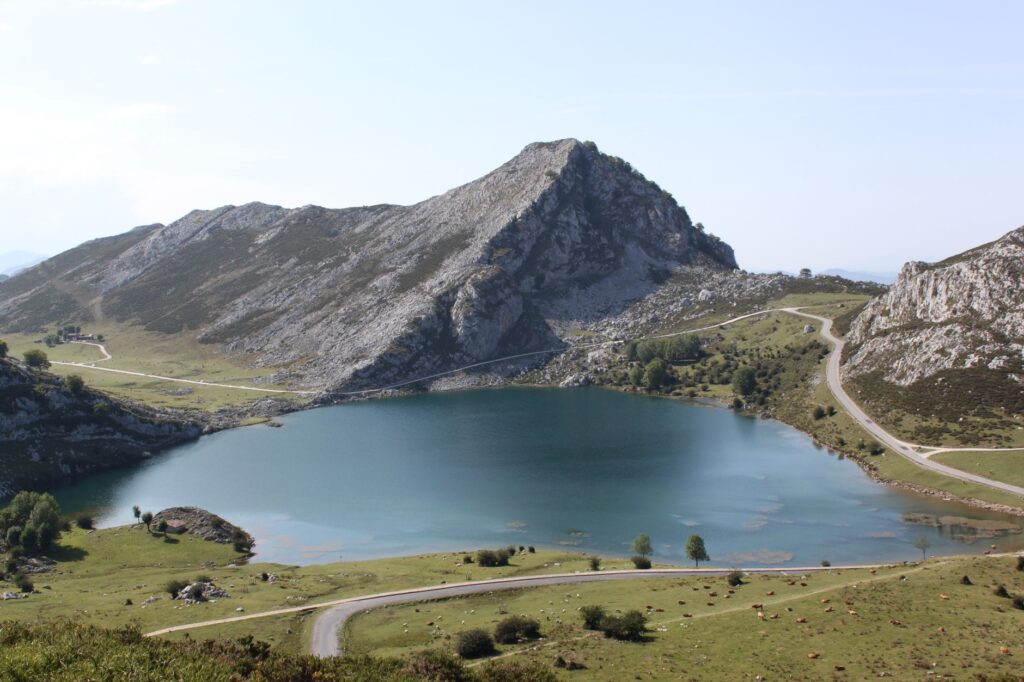
The national park regulations set limits in some areas, especially in reserve zones. It is not about prohibiting for the sake of it, but about protecting fragile ecosystems. Informing yourself before setting out, respecting signs, and staying on marked trails when indicated is part of the deal.
Wildlife That Does Not Show Itself
The chamois, capercaillie, golden eagle, and bearded vulture inhabit these massifs. Seeing them is not the norm; they are elusive and sensitive to human presence. The best behavior is not to chase them, not to approach, and not to use drones in natural areas. Silence and distance increase the chances of observing them without disturbing them.
The flora is also unique. There are plants adapted to limestone, altitude, and wind. You should not pick flowers or plants, not even to take home. What is seen in the mountains stays in the mountains.
Eating and Sleeping in the Mountains: What to Know
In mountain huts you sleep in bunk beds and share space. They are not hotels: they are places of passage where you eat what is available and respect others’ rest. It is wise to book ahead in high season and bring a sleeping bag if required. In the villages there are rural houses, small hotels, and hostels, with varied prices and quality.
Local gastronomy is hearty: cheeses like Cabrales or Gamonéu, stewed meats, hearty soups, tortos, and cider. Eating in village bars is also a way to understand the territory. It is not about seeking the exotic, but about eating what is produced nearby.
Weather: The Factor That Changes Everything
Proximity to the Cantabrian Sea makes the weather changeable. In a single day there can be sun, rain, fog, and wind. Forecasts help, but they are not infallible. The rule is simple: if the weather worsens, go down. No summit is worth unnecessary risk.
In winter, many high areas are covered in snow and require specific gear and experience. In spring and autumn, rain and mud can make an easy trail slippery. In summer, midday heat and afternoon storms are common. Adapting is part of the journey.
There is no bad weather, only bad preparation. In the Picos, that phrase is not a cliché: it is a practical warning.
Responsible Visiting: What Every Walker Can Do
Responsible visiting is not an abstract label. It is a set of concrete decisions: carry your waste back, do not light fires, do not disturb livestock, respect private property, use designated parking, and do not drive onto meadows. It also means choosing less crowded seasons and spreading visits throughout the year.
The national park has rules and recommendations worth reading before you arrive. They are not obstacles: they are how this landscape remains what it is. Walking slowly, greeting those you meet, and understanding that we are not in an amusement park are gestures that add up.
Practical guide
When to go: May to October is the most common season. July and August draw more visitors; June and September offer variable weather but fewer people. In winter, only for those with experience and proper gear.
Getting there: main access points are through Asturias (Cangas de Onís, Arenas de Cabrales), Cantabria (Potes, Fuente Dé), and León (Posada de Valdeón). There are buses and mountain roads; check schedules and parking restrictions.
What to bring: hiking boots, warm and waterproof layers, water, food, map, compass or GPS, sunscreen, hat, and a basic first-aid kit. In high areas, trekking poles can help.
Where to sleep: mountain huts, rural houses, small hotels, and hostels in the villages. Book ahead in high season.

Basic rules: stay on marked trails, do not pick plants or rocks, do not disturb animals, close gates, leave no waste, and follow park instructions.
Emergencies: carry a charged phone, but do not rely solely on it. Tell someone your planned itinerary. The emergency number in Spain is 112.
At the end of the day, when fog rises up the valley and the cows return to the village, a simple feeling remains: the mountains do not belong to us. We only cross them. And if we do so carefully, they may let us return.