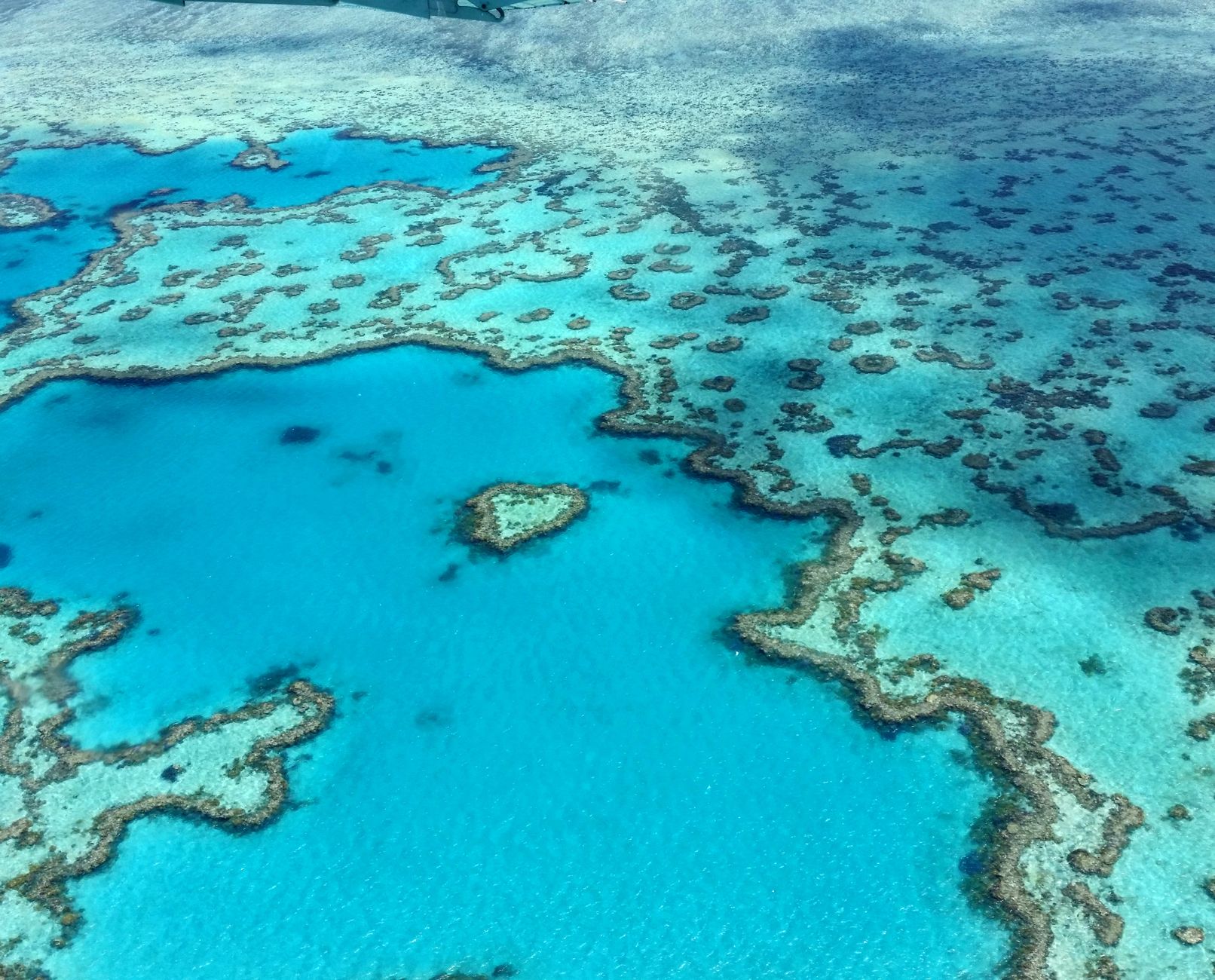

Stretching for 2,000 kilometres along Australia’s northeast coast lies the world’s most extensive coral reef system: the Great Barrier Reef. Inscribed as a UNESCO World Heritage Site in 1981, this region covers some 348,000 square kilometres and includes 2,500 individual reefs and more than 900 islands. It is not merely a spectacular landscape but a natural laboratory where geological and biological evolution unfolds with extraordinary complexity.
The reef supports 400 species of coral, 1,500 species of fish, 4,000 species of molluscs, and around 240 species of birds. It is also home to threatened species such as the dugong and the green turtle, and contains the world’s largest green turtle nesting site on Raine Island. Visiting this environment requires understanding its ecological rules and adopting responsible practices.
A mosaic of reefs, islands, and depths
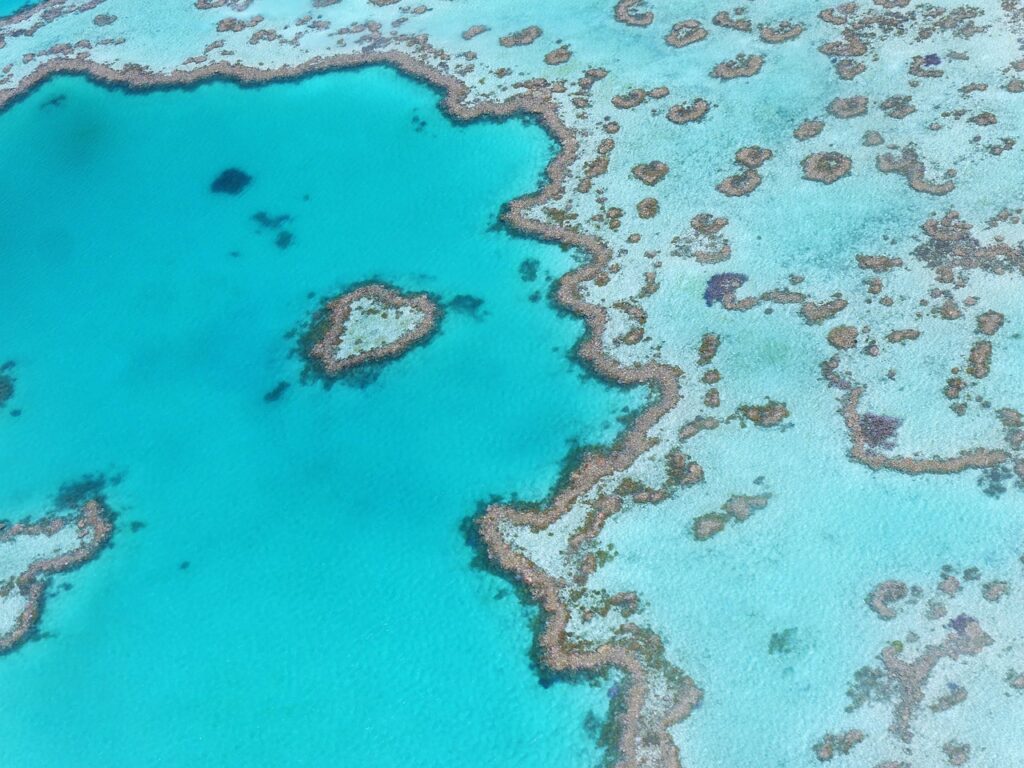
The Great Barrier Reef is not a continuous strip but an archipelago of coral structures extending from the coast to 250 kilometres offshore. This cross-shelf diversity includes inshore, mid-shelf, and outer reefs, as well as oceanic waters exceeding 2,000 metres in depth. The islands range from small sandy cays to large continental islands covered in vegetation, such as Hinchinbrook, which rises over 1,100 metres above sea level.
This variety of environments creates a unique array of ecological communities. Mangroves, seagrass meadows, and inter-reefal channels sustain a biodiversity unmatched by any other World Heritage property. The connectivity between these habitats is crucial for larval dispersal, species migration, and the system’s resilience.
Biodiversity: numbers that astonish
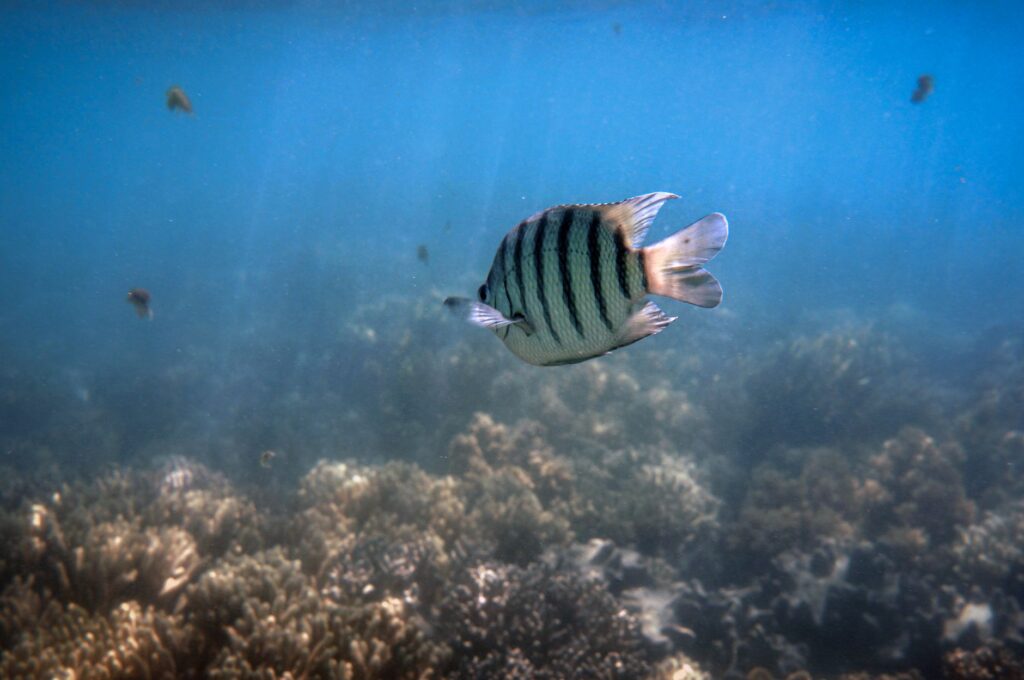
The figures are striking: over 1,500 species of fish, about 400 species of coral, 4,000 species of molluscs, and 240 species of birds. Add to that a great diversity of sponges, anemones, marine worms, and crustaceans. This richness makes the reef one of the most complex and vibrant ecosystems on Earth.
Among the emblematic species are the dugong, a herbivorous marine mammal, and the green turtle, which finds its main global breeding ground on Raine Island. At least 30 species of whales and dolphins have been recorded, along with six of the world’s seven marine turtle species. The site’s scientific importance is immense, allowing the study of evolutionary and ecological processes on a grand scale.
The Great Barrier Reef is not just a landscape; it is a living archive of the planet’s climatic and geological history.
A geological story spanning millennia
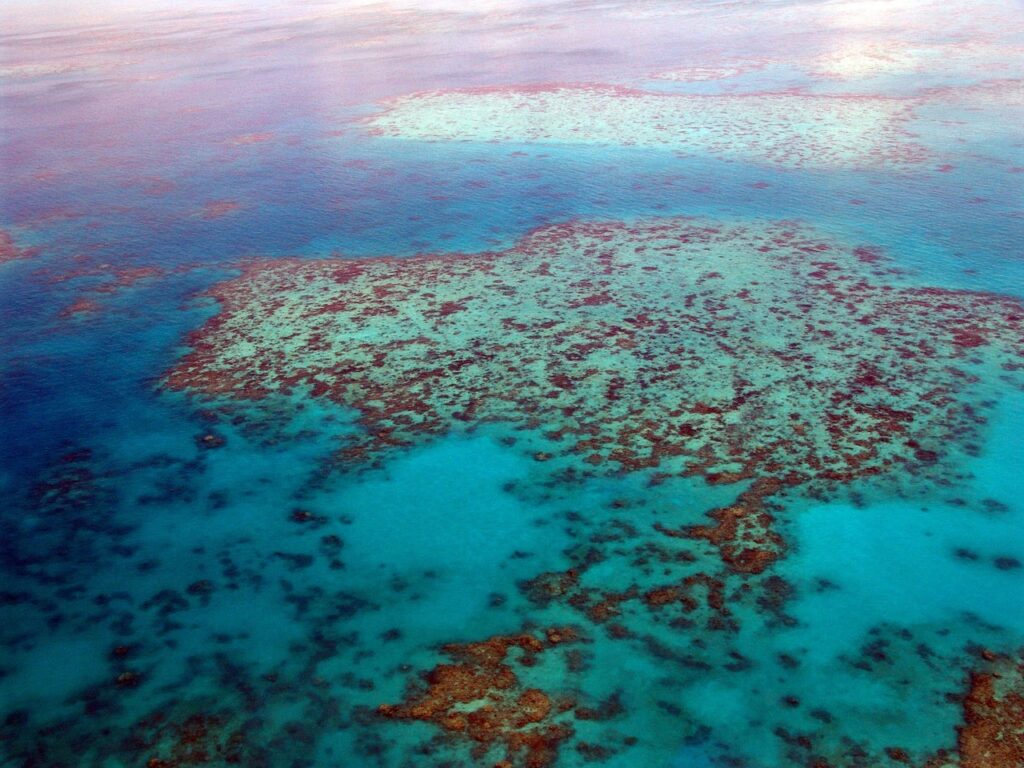
The reef’s current form results from at least four glacial and interglacial cycles. During glacial periods, sea levels dropped and exposed the reefs as flat-topped hills of eroded limestone. In interglacial periods, rising waters allowed corals to recolonise the continental shelf. This process, documented in massive coral cores, shows how the ecosystem has responded to environmental change over millennia.
Today, the Great Barrier Reef represents all stages of reef development, from incipient to mature. The combination of continental islands, coral cays, and submerged reefs forms a marine landscape shaped by wind, water, and time. Understanding this history helps appreciate the system’s fragility in the face of current pressures.
The role of traditional communities
Aboriginal and Torres Strait Islander peoples have maintained a deep connection with the sea for thousands of years. Their traditional knowledge, reflected in stories, marine totems, and fishing practices, is part of the cultural heritage associated with the reef. UNESCO recognises this connection as a key element for conservation, integrating ancestral wisdom into modern management.
Today, many of these groups participate in management and monitoring programmes, bringing a perspective that combines respect for the ecosystem with sustainable use of resources. Their presence reminds us that conservation is not only a scientific matter but also a cultural and social one.
Threats and conservation efforts
The Great Barrier Reef faces natural pressures such as cyclones, outbreaks of the crown-of-thorns starfish, and sudden large influxes of freshwater from extreme weather events. Human impacts include unregulated tourism, shipping, and coastal development. Climate change, with rising sea temperatures, triggers coral bleaching episodes that affect vast areas.
To address these challenges, the Great Barrier Reef Marine Park, managed by the Marine Park Authority, applies a zoning system that includes 115,000 square kilometres of no-take and no-entry zones. These areas protect the most sensitive habitats and allow populations to recover. Special management plans, agreements with traditional owners, and scientific monitoring programmes are also in place.
The marine park’s zoning is a key tool: it combines strict protection with regulated uses to balance conservation and human activity.
What you can see underwater
Diving into the Great Barrier Reef is entering a world of shapes and colours. Hard and soft coral assemblages create branching, massive, and plate-like structures that shelter thousands of species. Common fish include wrasses, parrotfish, clownfish, and large predators such as groupers. In places like Cod Hole, near Lizard Island, it is possible to observe large groupers in crystal-clear waters.
Beyond fish, the reef hosts turtles, rays, reef sharks, and countless invertebrates. Visibility varies by season and location, but outer waters generally offer greater clarity. For divers, the experience is as overwhelming as it is fragile: every fin movement must be careful not to damage the corals.
The experience of visiting the Whitsundays
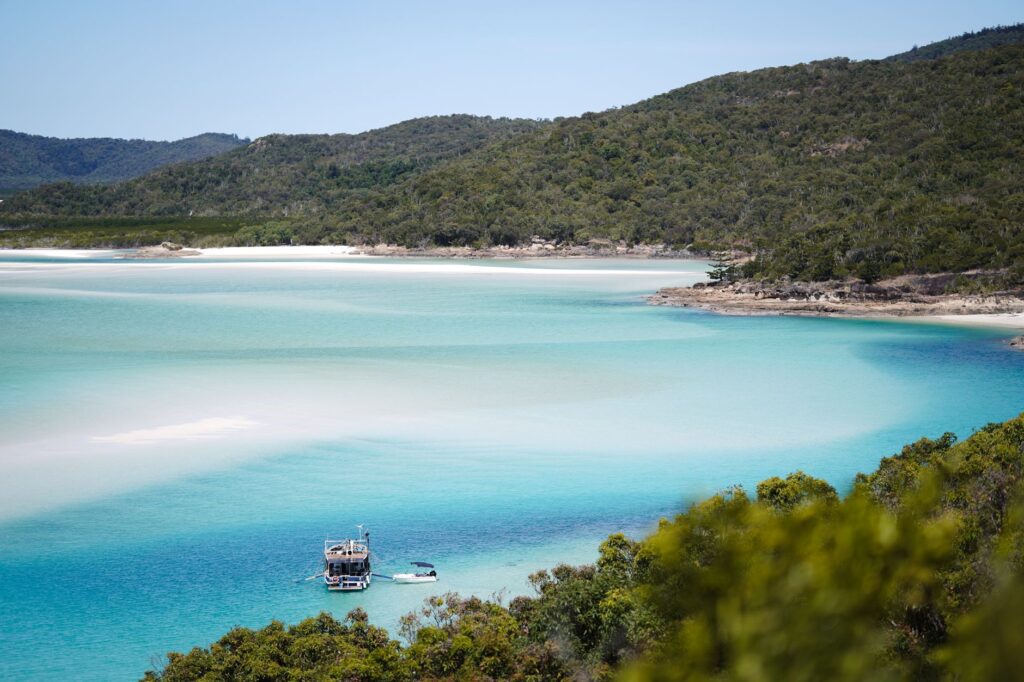
The Whitsundays, a group of 74 islands in the heart of the reef, offer one of Australia’s most iconic landscapes. Their turquoise waters, white sand beaches, and green hills contrast with the vastness of the ocean. Many of these islands are protected as national parks, and only a few have tourism infrastructure.
Sailing among them reveals the transition between inshore and outer reefs. On the cays, it is common to see seabirds nesting and turtles surfacing. The beauty of the place invites contemplation but also demands respect for visiting rules to minimise impact.
A haven for birds and marine life
The Great Barrier Reef is a key site for seabirds. Some 22 species breed on the cays and certain continental islands, and 242 species have been recorded in total. Bird colonies are especially important on islands like Raine, where green turtles also nest. The presence of birds indicates the ecosystem’s health, as they depend on abundant fish and other marine organisms.
On the continental islands, vegetation is more diverse and supports terrestrial plant and animal species. The mangroves of the Hinchinbrook Channel are an example of well-preserved coastal forest. This combination of marine and terrestrial environments makes the Great Barrier Reef a unique place for nature observation.
Practical guide
The best time to visit the Great Barrier Reef is from June to October, when the weather is drier and water temperatures are pleasant. The wet season, from November to May, can bring greater turbidity and the presence of jellyfish, so protective clothing is recommended if swimming.
To get there, the main access points are Cairns, Townsville, and Airlie Beach, with regular flights from major Australian cities. From there, day trips or multi-day voyages are organised. It is essential to choose certified operators that follow responsible tourism practices, such as not touching corals, not feeding fish, and keeping a prudent distance from wildlife.
Accommodation ranges from island resorts to coastal hotels. Many islands only allow day visits, while others offer lodging. Booking in advance is advisable during high season. For diving or snorkelling, check local conditions and follow guide instructions.
The best way to contribute to conservation is to inform yourself before travelling, choose environmentally certified companies, and participate in educational activities. The Great Barrier Reef is a shared treasure, and its future depends on the decisions of those who visit.
At sunset, when golden light reflects on the water and birds return to their nests, the immensity of the reef becomes almost intangible. It is a reminder that some places are not just visited: they are learned and protected.