
In Amsterdam, the bicycle is neither a leisure activity nor an occasional green gesture: it is how the city breathes. With more bicycles than residents and a lane network extending into every neighbourhood, the Dutch capital has turned cycling into everyday infrastructure as natural as plumbing or street lighting. For newcomers, understanding that code does not just ease the trip: it reveals a different way of understanding public space.
This report does not aim to turn visitors into engineering experts. It aims for something more useful: explaining how mobility is organised in Amsterdam, what to expect from its routes, how to plan journeys without depending on a car and why Dutch urban design has become a global reference. There are no current timetables or fares in these pages, only context, heritage and practical keys to move with judgement.
A city built to the measure of wheels
Amsterdam was not always a cycling paradise. In the 1960s and 1970s, as in so many European cities, the car was gaining ground and streets were filling with traffic. The transformation came after years of public debate, accidents and growing awareness about air quality and child safety. Today, that history can be read in every lane: the bicycle was not a whim, it was a political decision sustained over decades.
The result is a network combining segregated lanes, signalled intersections and legal priority for two-wheeled vehicles. It is not a perfect network free of tensions, but it is a coherent system that allows crossing the city from west to east without sharing space with cars for most of the journey.
What makes this system work is not only asphalt but consistency. A lane that ends abruptly or a junction without clear markings forces riders into conflict with cars, trams or pedestrians. Dutch planners learned that lesson early: continuity matters more than isolated stretches of good infrastructure. For the visitor, that means the safest route is usually the one that keeps you on marked lanes rather than the shortest line on a map.

What you will find in the centre: canals, bridges and priorities
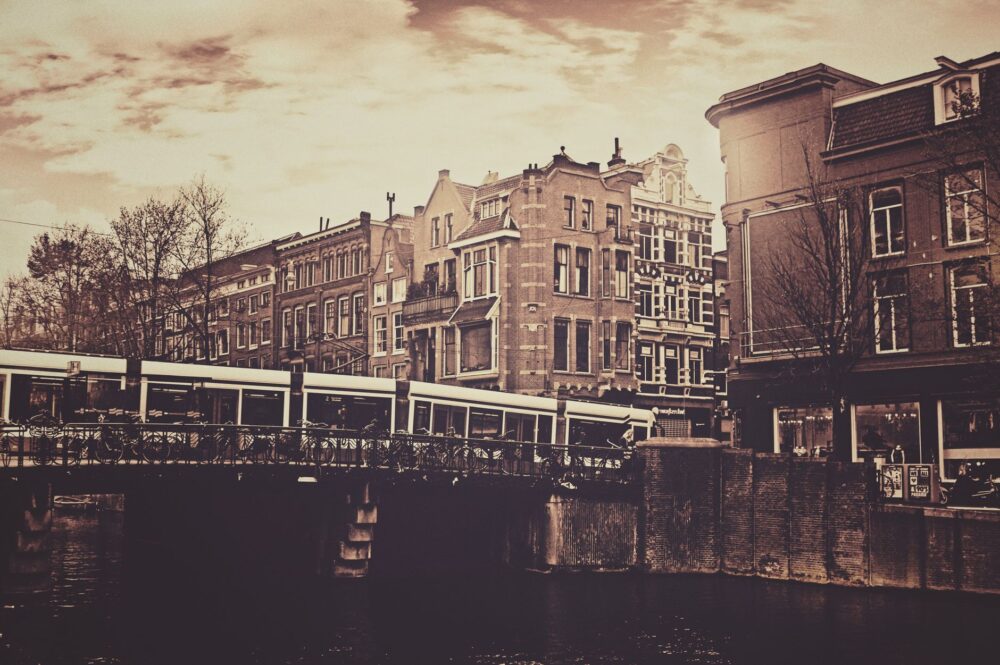
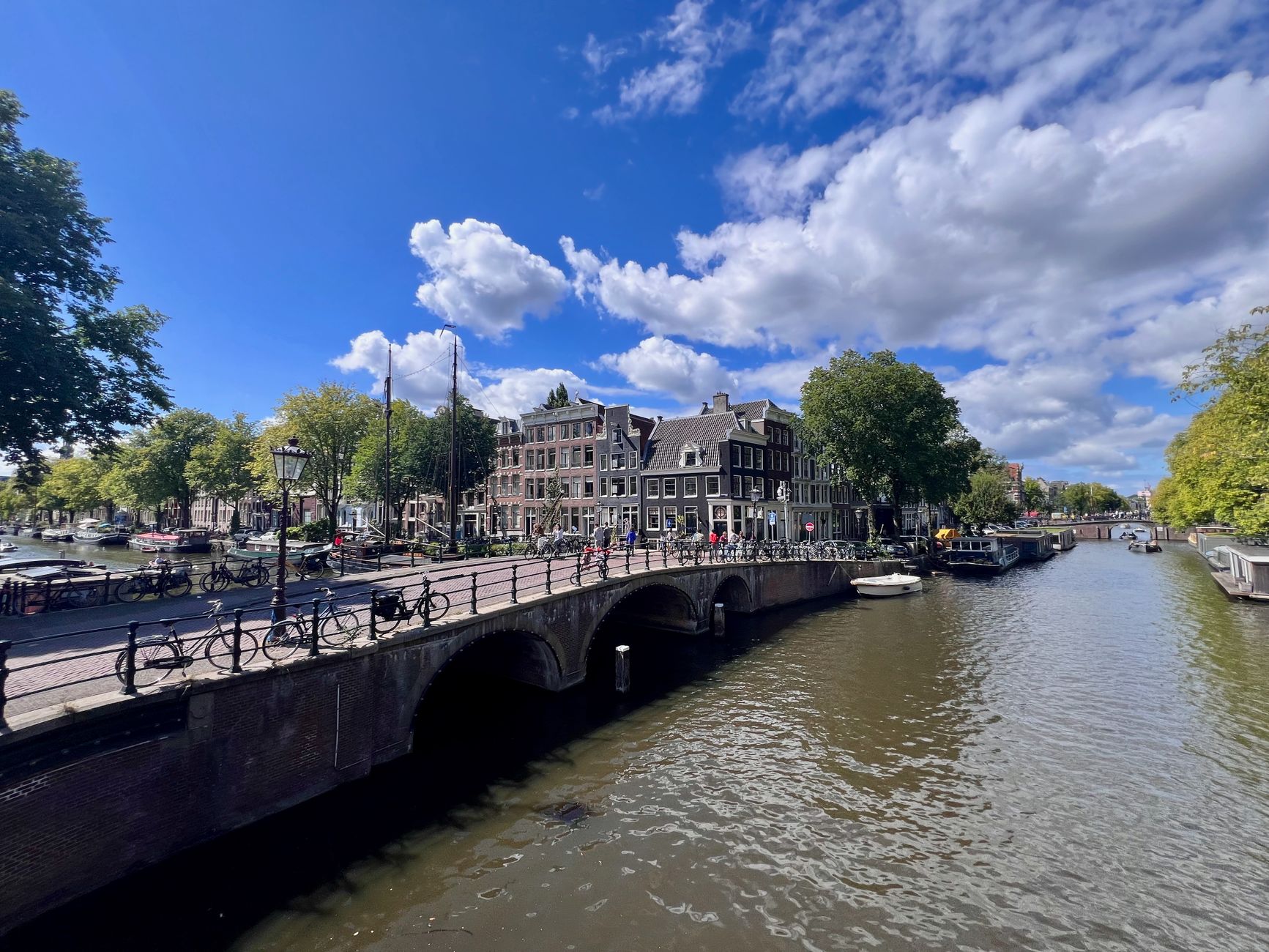
The historic centre, a UNESCO World Heritage Site, imposes its own rules. Canals force detours, bridges narrow the passage and uneven paving on some streets demands attention. Here the bicycle shares space with trams, pedestrians and urban deliveries. The key is not speed but anticipation.
Lanes are usually marked in red or with specific signage, and busier intersections have dedicated traffic lights. Respecting those lights is not optional: it is the norm that prevents accidents. Trams, silent and heavy, have de facto priority; crossing their tracks without looking is the most common cause of scares among visitors.
The centre also concentrates most of the city’s visitors, which changes the rhythm. In narrow streets such as those around the Nine Streets or the Jordaan, a bicycle can feel like the fastest way forward, but it is also where patience is tested most. Locals tend to avoid the busiest corridors at peak times, not out of fear but because the detour is often quicker. Learning to read the city this way, as a set of flows rather than a list of landmarks, is the first step towards moving like a resident.
Beyond the centre: neighbourhoods where the bike is the norm
Moving away from the canal ring changes the experience. Areas such as Oud-Zuid, De Pijp or Amsterdam-Oost have wide lanes, less pedestrian congestion and a daily life built around the bicycle. Here visitors discover that the real city is not just the centre’s backdrop but a sum of neighbourhoods connected by safe routes.
Oud-Zuid, for instance, combines museums, parks and tree-lined avenues with a cycling network that reaches Museumplein with little effort. Planning is visible here: wide pavements, raised crossings and signage that prioritises continuity of pedalling.
In Amsterdam-Oost, the mix is different. The streets are broader, the architecture more varied and the presence of schools, markets and community facilities gives the bicycle a utilitarian character. This is where you see parents carrying children, workers heading to shifts and students moving between campuses. The bicycle here is not a statement; it is simply the most practical tool available. For a visitor, riding through these districts offers a more representative picture of daily life than any postcard view of the canals.
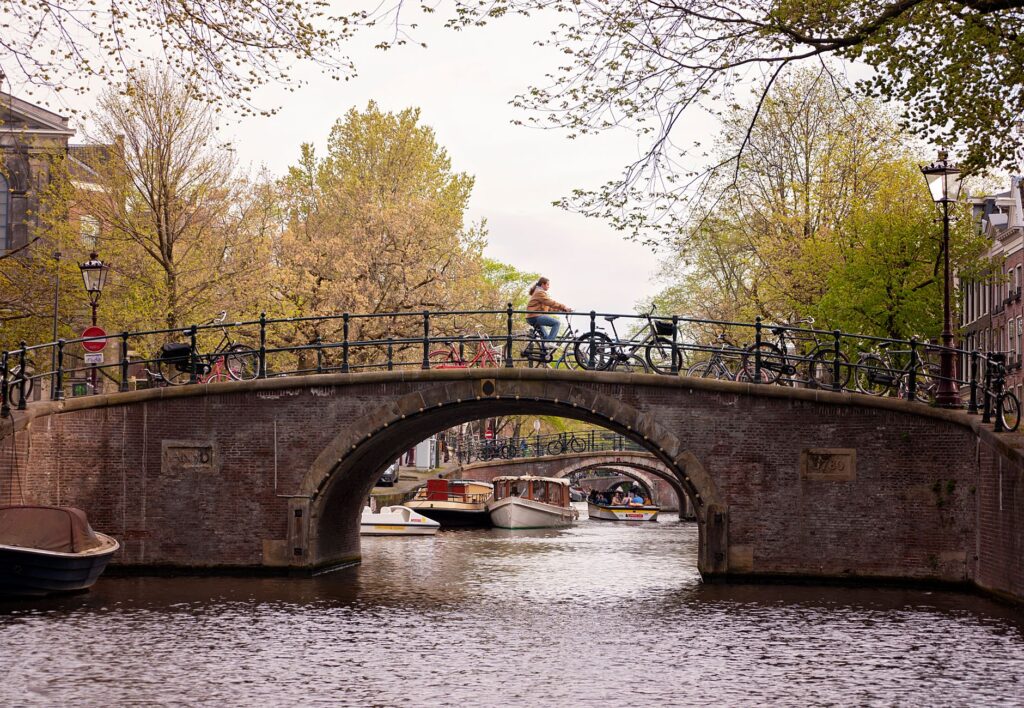
In Amsterdam, the bicycle does not compete with the city: it organises it. Understanding its rules means understanding how daily life works.
Cycling etiquette: signals, lights and silence
The Dutch do not gesticulate or ring their bell at every turn. Communication relies on hand signals, lights and an unwritten rule: hold your line. Turning without warning, braking suddenly or riding against traffic are the offences that most irritate locals.
- Signal with your hand before turning or stopping.
- Use lights at dusk; they are mandatory and enforced.
- Do not ride on pavements or signposted pedestrian zones.
- Respect traffic lights even when no one is coming.
- Park only in designated racks; removing badly parked bikes is common practice.
Etiquette is not rigidity: it is what allows thousands of people to share a limited space without constant conflict. Once internalised, moving around Amsterdam feels surprisingly fluid.
There is also a question of pace. Dutch cyclists move steadily but rarely sprint. Sudden accelerations, weaving between pedestrians or overtaking on the inside are considered poor form and, more importantly, unsafe. The system works because everyone can predict what the person in front will do. That predictability is the real currency of Amsterdam’s streets, and visitors who adopt it quickly find that the city opens up.
Planning the day: routes, times and alternatives
The city is compact and flat, but improvising is not advisable. A journey between the Jordaan and Oosterpark may look short on the map and stretch out due to works, markets or events. Sensible planning includes time margin, rest points and an alternative route.
Mobility apps and official city maps help trace routes along safe lanes. For longer journeys, combining bicycle and public transport is common: many stations have guarded parking and the public rental system facilitates intermodality. It is not about covering more kilometres but about choosing well the stretch worth pedalling.

It also helps to think in terms of purpose. If the goal is a museum visit, the bicycle is best used to reach the area and then parked; if the goal is to explore, a loop that links parks, markets and residential streets will be more rewarding than a straight line between two monuments. Amsterdam rewards those who treat the journey as part of the destination, not as dead time between stops.
Weather as a variable, not an obstacle
Rain in the Netherlands is frequent but rarely torrential. Locals do not stop: they equip themselves. Light raincoats, mudguards and a pragmatic attitude are part of the basic kit. Wind, however, is the real factor to consider, especially on bridges and along the IJ.
Flexible planning helps: if the day dawns grey, it is worth reserving indoor visits for the windiest or rainiest hours and leaving cycling for clear spells. The city offers museums, cafés and covered markets where you can wait without losing the day.
Seasonal light also matters. In winter, daylight is scarce and lights become essential not only to see but to be seen. In summer, long evenings invite late rides along the canals or through the parks, when the city is calmer and the heat of the day has passed. Adjusting the plan to the season is not a concession; it is part of riding well.
Heritage and landscape: what you see from the handlebars
The bicycle offers a perspective no other mode equals. From the lane, Amsterdam reveals itself in layers: canal architecture, inner courtyards, narrow facades and converted warehouses. Heritage is not only in museums but in the human scale of the streets.
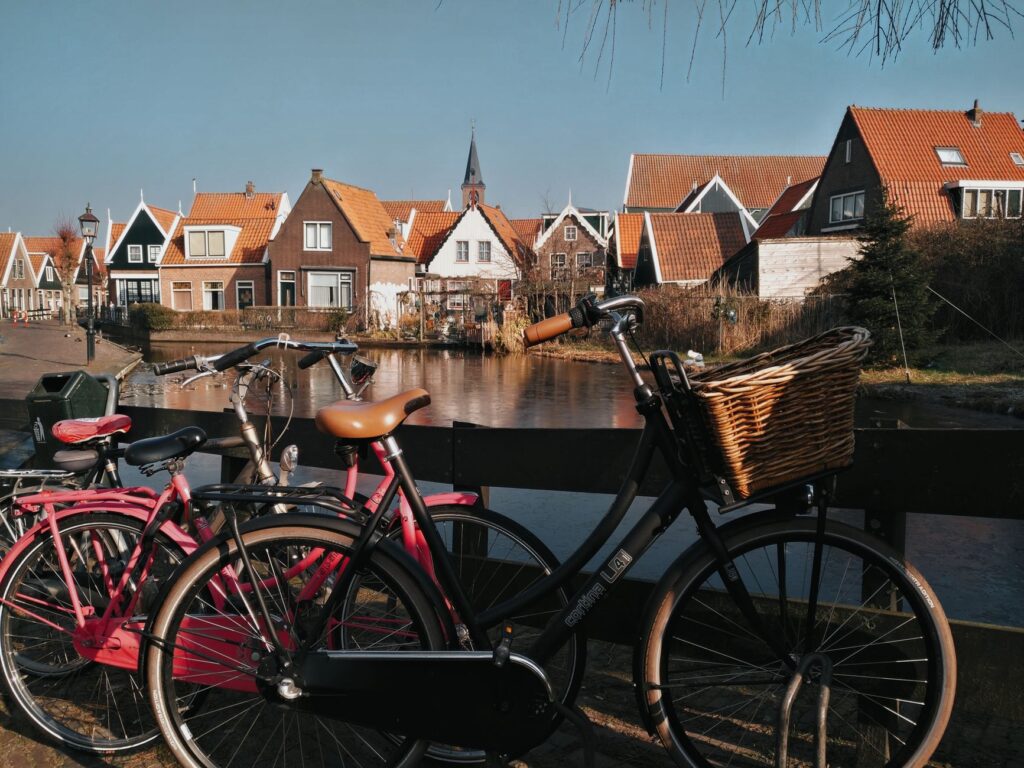
Classic routes such as the canal ring or the axis towards Museumplein allow alternating culture and urban landscape. Others, less travelled, skirt the IJ or venture into port areas under transformation, where the contrast between industrial past and residential present is particularly eloquent.
Riding also changes how you perceive distance. What looks far on a map is often a short pedal, and what looks close can take longer because of a bridge, a market or a one-way system. This recalibration of the city is one of the quiet pleasures of cycling here: it replaces the abstract grid of the map with the physical experience of the streets.
The best way to understand Amsterdam is not to look at it from a viewpoint but to travel through it at the height of its inhabitants.
Practical guide
When to go: spring and early autumn offer mild temperatures and long days; summer concentrates more visitors and winter demands technical clothing and lights.
How to move: rent a bicycle from a reputable shop, check brakes and lights before setting off and adjust the saddle to your height. For longer journeys, consider combining bike and public transport.
What to bring: a light raincoat, a robust lock, lights and a bag that does not interfere with pedalling. Avoid bulky backpacks at peak times.
Key rules: ride on the right, signal turns, respect traffic lights and do not use your phone while cycling. Helmets are not mandatory for adults but are advisable on long journeys or with children.
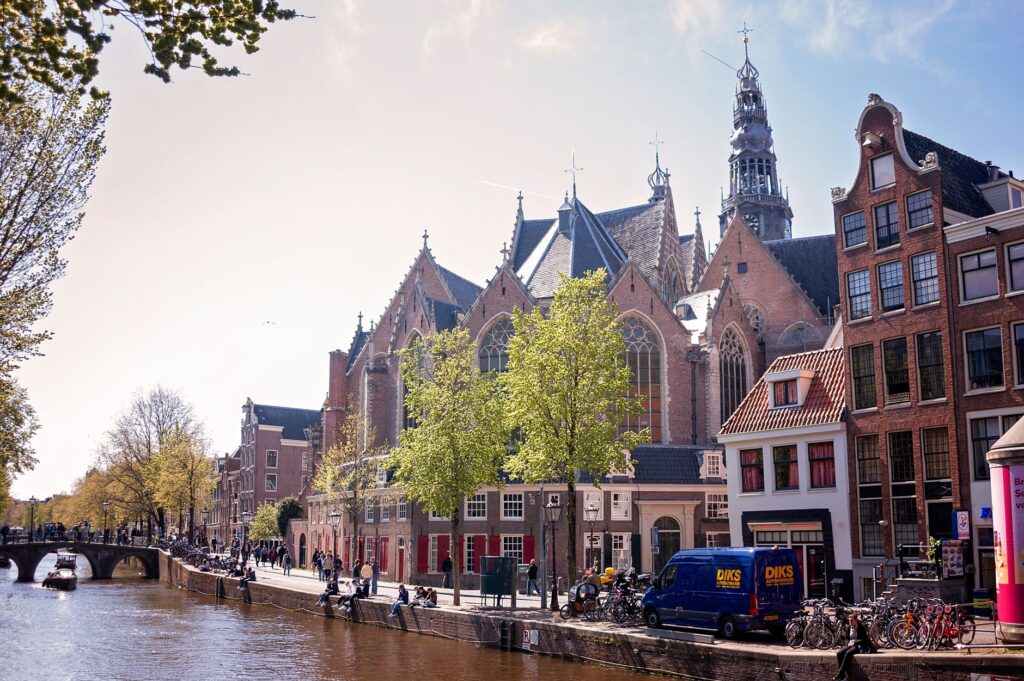
Safety: keep distance from trams, do not ride against traffic and take extra care at intersections with poor visibility. If travelling with children, use approved seats and quiet routes.
Language: Dutch is the local language, but English is widely spoken in tourist signage and visitor services.
Orientation: the city is flat and compact, but the canal ring can disorient newcomers. Using the canals themselves as reference points, and noting that the centre is ringed by a broader belt of neighbourhoods, helps build a mental map quickly. Most short journeys within the centre can be done on foot or by bike, while longer crossings are where planning pays off.
A closing on wheels
At the end of the day, when lights come on and the flow of bicycles becomes constant, Amsterdam shows its true nature: a city not contemplated from outside but travelled through. Visitors who accept the rules and plan calmly discover that moving here is not a feat but a conversation with the city. And like any conversation, it improves when you listen before speaking.