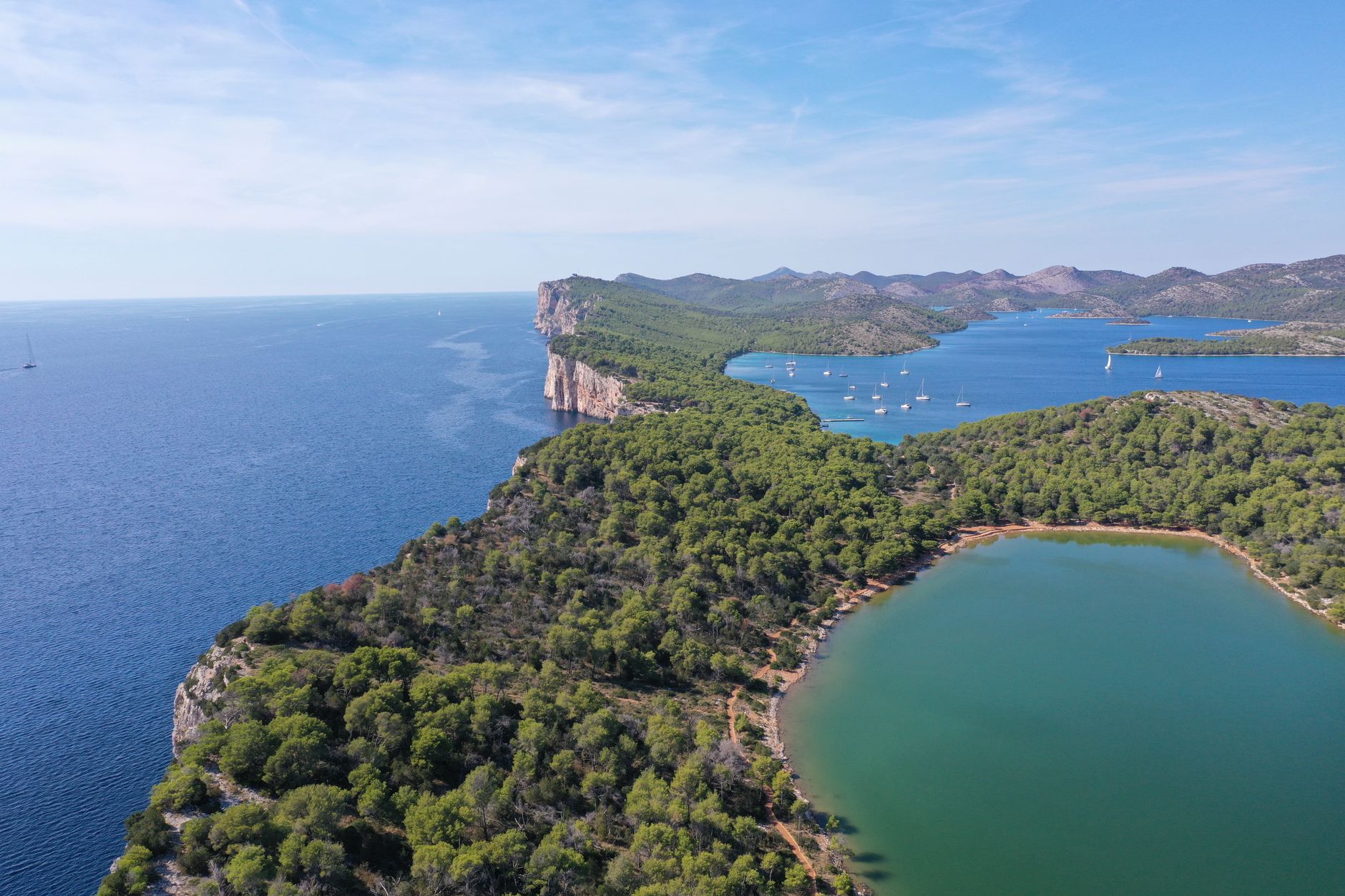

Some paradises do not announce themselves with palm trees or white-sand beaches. The Kornati archipelago, off the Dalmatian coast of Croatia, belongs to that rarer breed of places that command respect before comfort. More than eighty islands, islets and reefs rise from the Adriatic like limestone vertebrae, almost all uninhabited, many without a single patch of shade. The sea, deep blue and clear, is the only obvious luxury. The rest is silence, salt and a history of human effort stretching back centuries.
Declared a national park in 1980, Kornati is not a destination for resorts or organised entertainment. It is a protected territory where visiting demands planning, respect and a certain willingness to forgo the superfluous. Those seeking a different experience—one of unhurried sailing and contemplation of a mineral landscape—will find an uncommon reward here.
A limestone rosary in the Adriatic
The archipelago lies off the central Dalmatian coast, between the cities of Zadar and Šibenik. Administratively it belongs to Croatia, and its best-known core is the island of Kornat, the largest and most elongated, which gives the group its name. The islands run almost parallel to the mainland, separated by narrow channels and anchorages that for centuries served as shelter for fishermen and shepherds.
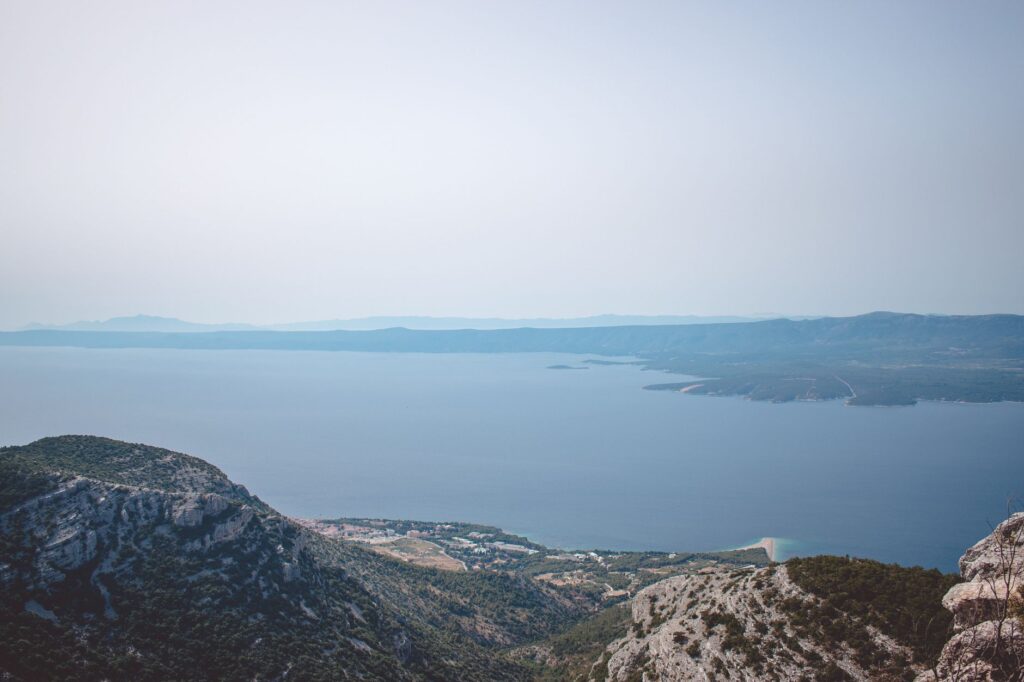
Geology explains much of their character. Limestone, fractured by water and wind, forms cliffs that drop sheer into the sea, especially on the outer face of the archipelago. There, vertical walls of more than a hundred metres are an overwhelming sight, particularly at sunset, when low light ignites the rock and the water turns metallic.
There are no rivers or streams. Fresh water has always been scarce, collected in cisterns and small seasonal pools. That aridity has shaped life and limited it to the essentials.
The human hand on an extreme landscape
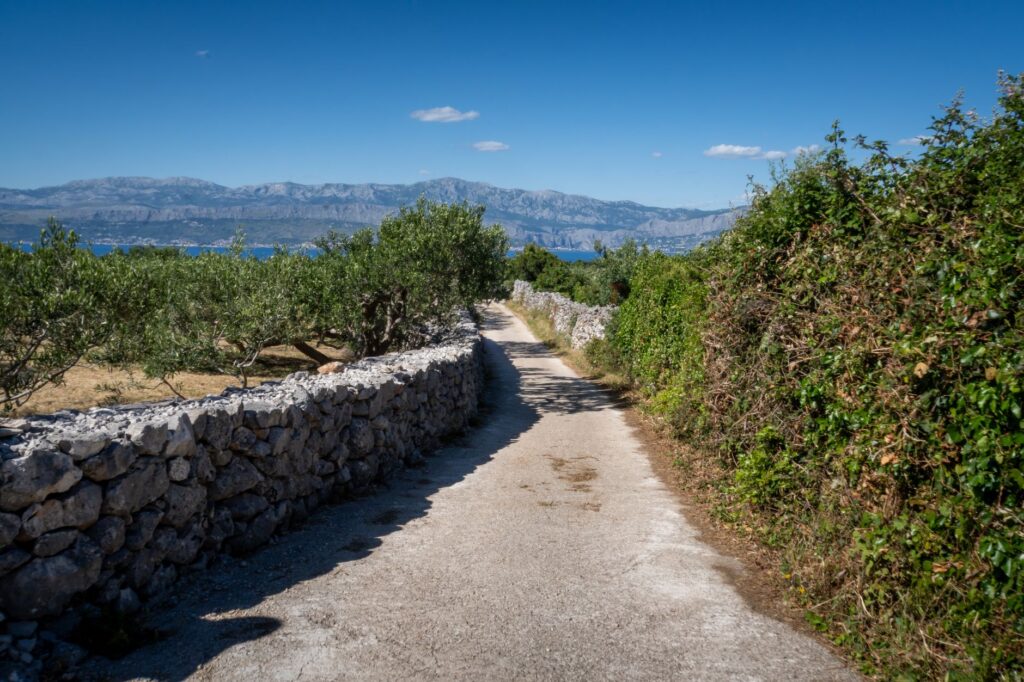
The image of deserted, wild islands is only partly true. Kornati has been shaped by generations of shepherds and landowners who, from the nearby island of Murter, maintained for centuries a system of farming and grazing adapted to drought. The dry-stone walls that cross the islands are not decorative ruins: they are evidence of a titanic effort to mark out pastures and protect them from the wind.

Sheep, few and hardy, still graze on some islands for part of the year. Their presence keeps the pastures open and prevents low vegetation from closing in completely. It is a fragile balance, now recognised and regulated by the park’s management.
The beauty of Kornati is born not of abundance but of the tension between stone and sea, between abandonment and human persistence.
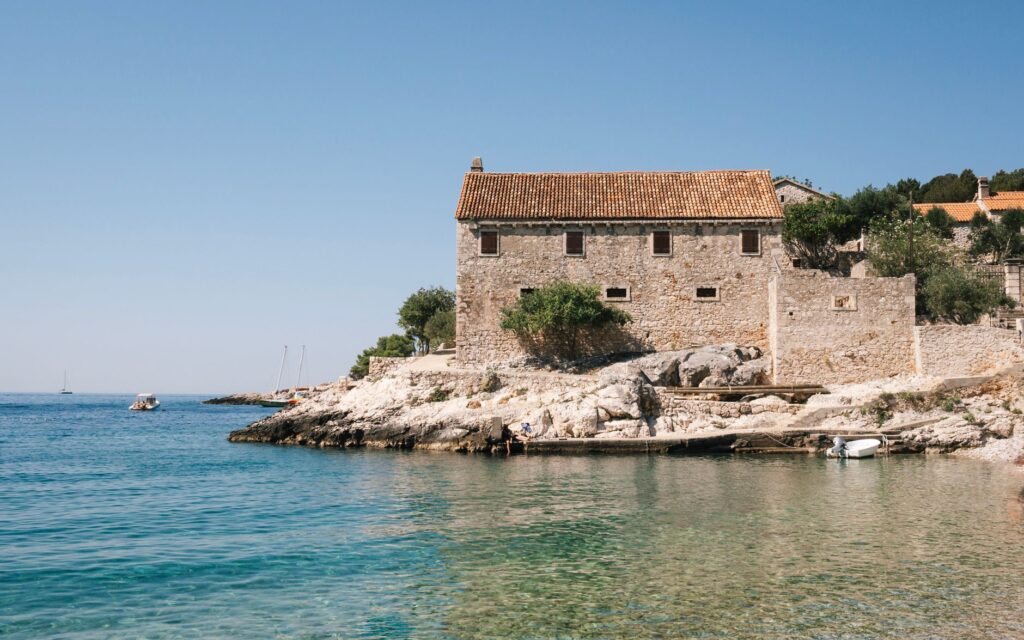
The so-called kornatska kuća, the traditional island house, is an example of functional architecture: thick stone walls, tile or stone roofs, tiny windows to protect against heat and wind. Many have been restored and are used as seasonal shelters rather than permanent homes.
The sea as the only road
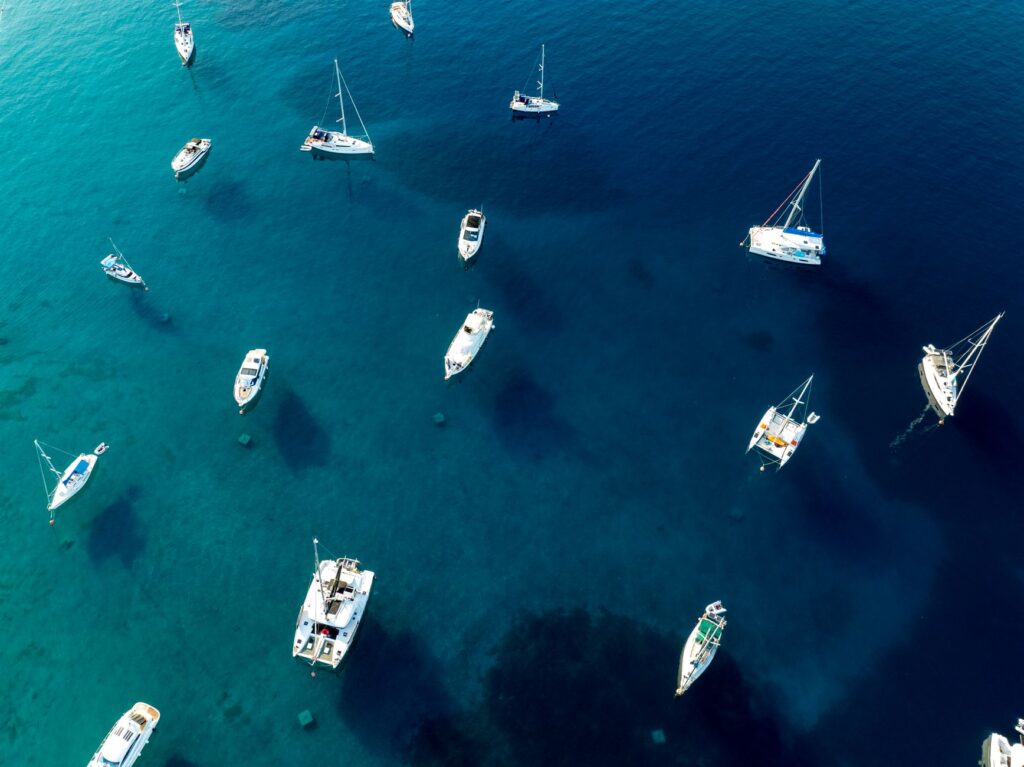
There are no roads in Kornati. Access is exclusively by sea. Organised excursions from Murter, Zadar or Šibenik allow day visits, but to grasp the archipelago’s scale and rhythm it is better to stay overnight on board or in one of the authorised accommodations. Sailing, however, is subject to strict rules: regulated anchorages, exclusion zones and the obligation to respect posidonia meadows, a key underwater ecosystem for the clarity of the water.
The park has promoted ecological anchoring projects and awareness of the importance of maritime spatial planning. The idea is simple: such a fragile place cannot withstand intensive use without consequences. Visitors who understand this do not see it as a limitation but as part of the experience.
What you can and cannot do
- Sail and anchor only in permitted areas.
- Visit marked viewpoints and trails on the island of Kornat.
- Snorkel and dive at authorised spots, always respecting wildlife.
- Do not collect plants or disturb animals.
- Leave no waste: everything taken on board must return to land.
Light and wind as protagonists
The Mediterranean climate here means hot, dry summers and mild winters, but the wind dictates terms. The bura, a cold, gusty northeasterly, can turn a calm day into a challenge for navigation. The jugo, from the southeast, brings humidity and often bad weather. Islanders have learned to read the sky and the sea; visitors would do well to check conditions before setting out.
That same hard, clean light is what draws photographers and painters. The contrasts between white rock and Adriatic blue are hard to capture without falling into cliché, but the landscape imposes itself.
Submerged heritage and historical memory
Beneath the surface, Kornati holds traces of shipwrecks and ancient occupations. The area has been navigated since antiquity, and there is evidence of human presence since the Neolithic. The seabed preserves amphorae, wrecks and structures that archaeologists study with caution. This is not an archaeological theme park but a territory with a historical density that demands protection.
On land, remnants of walls, cisterns and small chapels speak of a hard life that has now almost disappeared. The island of Kornat retains some structures that the park maintains as testimony to that heritage.
A visit that demands preparation
Kornati is not a destination for improvisation. Accommodation is limited and concentrated in authorised facilities inside or near the park. Most visitors come on day trips from Murter, but those with more time can stay on the island of Kornat or on vessels based in nearby ports.
High season coincides with the summer months, when heat is intense and the sea is calmest. May, June and September offer milder temperatures and gentler light. In winter, the park is virtually empty, subject to the force of the bura.
What to bring and how to get around
- Footwear suitable for walking on limestone, which is slippery and sharp.
- Enough water: there are no fountains on the islands.
- Sun protection and a light windproof layer.
- Absolute respect for park rules and private property.
Practical guide
Kornati National Park is visited mainly by boat. Day trips depart from Murter, Zadar and Šibenik, with frequent departures in season. For overnight stays, there are regulated accommodations on the island of Kornat and on some smaller islands, as well as the option of sleeping on board. It is essential to check entry fees and permitted anchoring zones before arriving. Night sailing is not recommended for those unfamiliar with the area. The park has information points and signage on the main land routes. There are no water or food supplies on most islands, so visitors must bring everything needed and take waste away. The best time to visit runs from May to September, avoiding days of strong wind. The currency is the euro since 2023 and the official language is Croatian, though English is spoken in the tourism sector.
A closing note for memory
At the end of the day, when excursions return to port and the archipelago recovers its silence, Kornati reveals its true nature. It is not a place to conquer or simply photograph. It is a landscape that imposes itself through austerity and invites a slower, more attentive and more respectful way of travelling. In a world of saturated destinations, this corner of Croatia preserves something increasingly rare: the sense that the sea and the stone still have the final word.