
Introduction to the Ancient Art of Earthenware and Glazing in North Africa
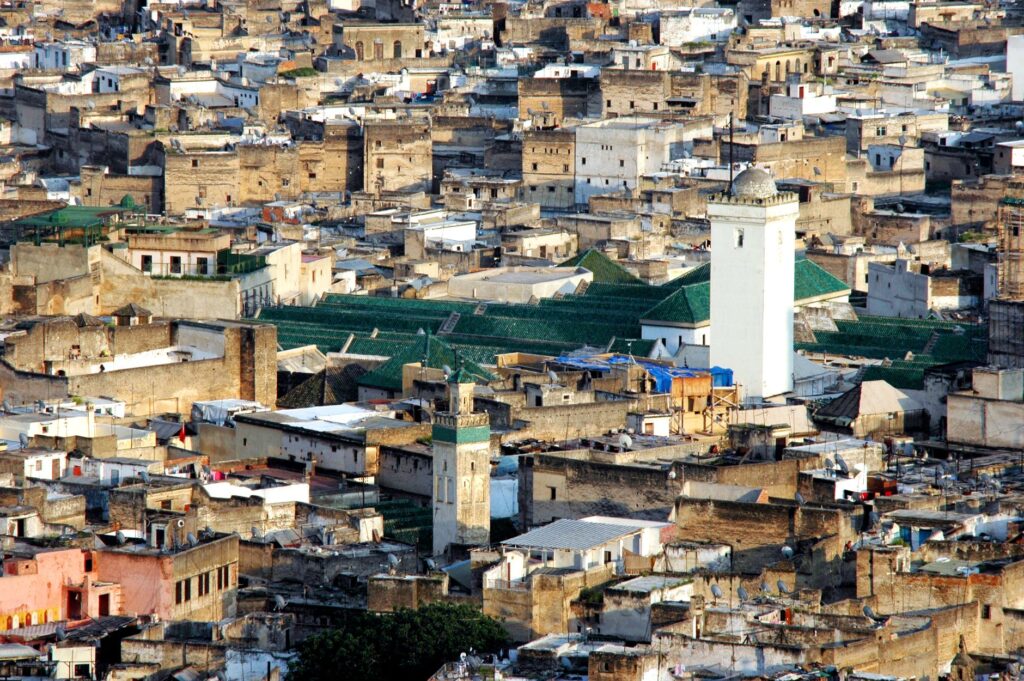
The territory of Fes el-Bali cannot be understood solely through its Marinid ramparts or the tireless hustle of its souks, but rather through the dull, rhythmic sound with which artisans strike the clay before throwing it on the wheel. In this urban labyrinth declared a UNESCO World Heritage site, raw material is not merely a resource; it is the living archive of a civilization that has transformed grey and red clay into the geometric, colorful skin of palaces, mosques, and monumental fountains. Far from touristic aestheticization, traditional potteries operate as complex, human-scale industrial ecosystems where empirical chemistry and the oral transmission of ancient gestures defy the obsolescence of the contemporary world.
Entering the peripheral neighborhoods of the medina where wood-fired kilns are concentrated means stepping into a smoky landscape where time seems to fold in upon itself. Here, every piece of glazed tile and every tessera destined for the complex mosaics known as zellige responds to a perfectly synchronized assembly line involving molders, cutters, and master kiln operators. This report investigates the material processes, socioeconomic tensions, and contemporary vitality of a craft that, in the heart of the twenty-first century, continues to cement Morocco’s architectural identity with the same patience used to extract silt from the Fez River eight hundred years ago.
Extraction and Kneading: The Birth of Clay in the Sebú Valley
The production cycle begins long before the potter’s hands touch the wheel; it starts in the fertile banks and clayey slopes surrounding the Sebú River basin. Master potters rigorously select clay deposits with millimeter precision, seeking an exact balance between the plasticity of the argillaceous earth and the thermal stability of silty minerals. This raw material is extracted manually or through small local quarries, transported by cargo trucks to workshop courtyards near Bab Guissa and Ain Nokbi, where the laborious purification process begins.

Once inside the workshop, raw clay is spread across large settling pools excavated in the floor to undergo a decantation and hydration cycle lasting several weeks. Water dissolves lumps, eliminates organic impurities, and separates fine particles from unwanted stones by density. This purified mud, now possessing a smooth and homogeneous texture, is traditionally trampled by workers to expel trapped air pockets. The result is a dense, ductile paste perfectly prepared to withstand both the tension of wheel-throwing and the violent thermal contraction during subsequent firing.
Manual Molding and the Geometry of Traditional Roof Tiles
Inside the open sheds facing the central courtyard, throwers work at a frantic yet measured pace, sculpting with gestures automated by decades of practice. For the production of traditional curved tiles, locally known as kermoud, clay is laid over curved wooden molds that imprint the characteristic semicircular section designed to waterproof historic roofs. Each piece is smoothed with a metal scraper and left to dry naturally under the shade of porches, protecting it from sudden drafts that could crack the surface during evaporation.
Simultaneously, producing flat tiles destined to be cut into zelliges requires pressing into shallow rectangular wooden molds. Artisans overflow frames with wet clay, leveling the surface with a wooden straightedge to achieve a uniform thickness of roughly two centimeters. These large square slabs, once air-dried under the Moroccan sunset, are stacked with surgical precision awaiting the slip layer and metallic glazes that will define their definitive color before their initial passage through the kiln’s fire.
The Alchemy of Color: Oxides, Metals, and the Magic of Glazing
The chromatic palette of Moroccan decorative art—composed of deep green, ivory white, amber yellow, manganese brown, and cobalt blue—results from an absolute mastery of mineral oxide chemistry. In small rooms adjoining the main courtyard, artisans prepare vitreous coatings by mixing imported mineral powders or extracts from ancient local veins with water and natural fluxes based on lead and ground quartz sand. The celebrated Fez green, for instance, is obtained by precisely dissolving copper oxide over a stanniferous base that grants its characteristic brilliant opacity.
The glaze application process demands extraordinary manual dexterity. Bisque-fired clay tiles, following an initial light firing providing structural solidity, are briefly submerged or showered with liquid color suspension. Moisture absorption by the ceramic must be calculated to the millimeter: excess liquid causes blistering and peeling during firing, while a deficit leaves porous zones unprotected against environmental humidity. It is at this exact moment that traditional empirical science intersects with aesthetic intuition cultivated across generations of artisan families.
Wood-Fired Kilns and the Ritual of Fire in Ain Nokbi
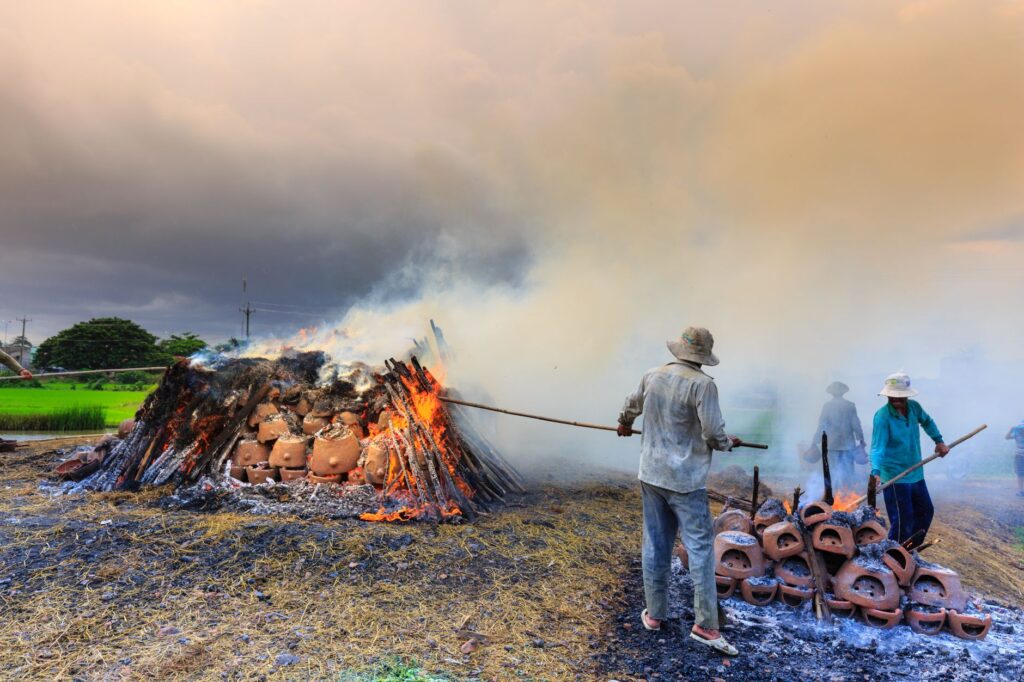
The culminating moment of the entire process lies in firing, a phase that in traditional Fez potteries still relies on burning biomass, carpentry scraps, and olive tree branches from surrounding fields. The kilns, colossal masonry structures lined with refractory clay, are hand-loaded by introducing thousands of pieces stacked upon one another in a meticulous three-dimensional choreography allowing homogeneous circulation of flames and hot gases inside the fire chamber.
The kiln’s fire forgives no haste; it demands the sacrifice of wood and the watchful vigil of the master, who reads the exact soul of the molten mineral in the color of the flames.
For over twenty-four continuous hours, stokers feed the kiln’s lower mouths, taking turns day and night to maintain an ascending temperature curve exceeding one thousand degrees Celsius. Thermal control is purely sensory: craftsmen observe the reddish tone of the refractory ceiling bricks, listen to the dull hum of the draft, and analyze the smoke escaping the central chimney. Once peak combustion concludes, the kiln is hermetically sealed to initiate a slow cooling process lasting several days, preventing thermal shocks that would shatter the glazed pieces.
The Chisel and the Stroke: The Meticulous Art of Zellige Cutting
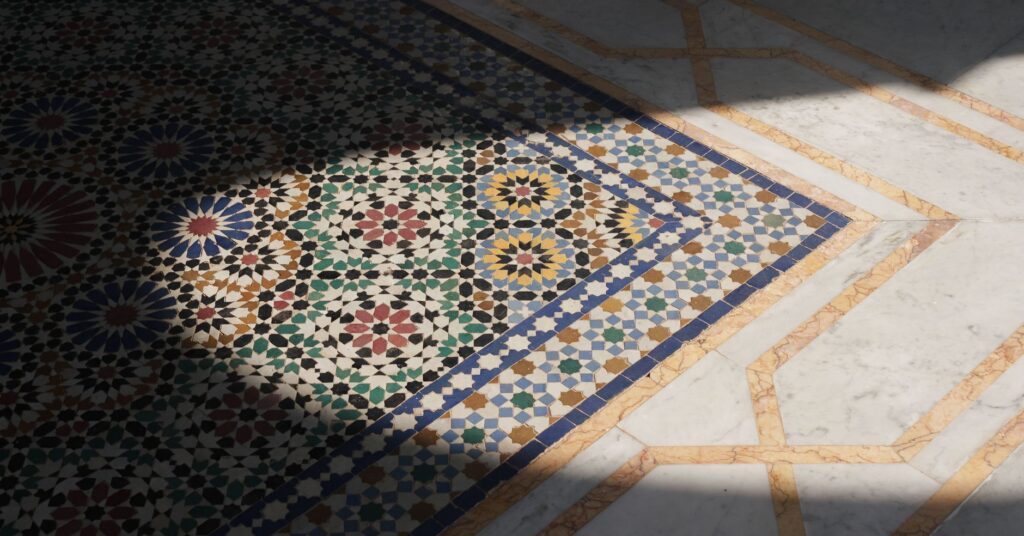
Once glazed tiles leave the kiln transformed into bright monochromatic surfaces, the most laborious phase of the artisanal chain begins: geometric piece-cutting for wall mosaics. Workers, seated on straw mats equipped with a heavy cutting-edge hammer called a menkach, trace invisible lines on the tile’s reverse side using geometric templates memorized during childhood.
With dry, rapid, millimeter-precise strikes, the artisan chisels pieces into complex polygonal shapes—eight-pointed stars, rhombuses, crosses, and irregular hexagons—with exact angles permitting subsequent assembly without a single visible drop of mortar. This work requires iron concentration and infallible visual acuity; a single millimeter deviation in cutting angle disrupts the symmetry of the entire decorative panel. Afterwards, pieces are placed face-down on the floor following the inverted mosaic design, finally united using a lime and white cement mortar wash that consolidates the block for final wall installation.
Contemporary Challenges: Generational Turnover and Economic Pressure
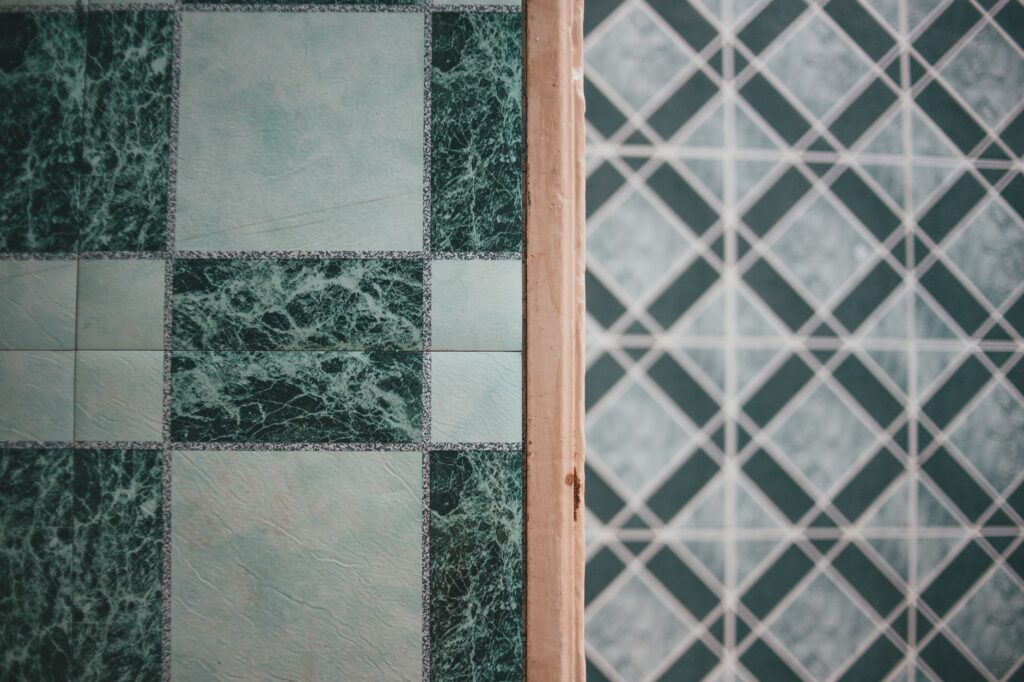
Despite their incalculable heritage value, Fez potteries face a period of profound economic and social vulnerability. Inflationary pressures on combustion wood costs, rising prices of mineral raw materials, and unfair competition from synthetic industrial imitations manufactured via digital printing threaten the viability of small family workshops. Many young people, drawn by service sector expectations or modern industry, reject the physical hardship, respiratory risks, and modest economic margins of a traditional craft requiring years of unpaid apprenticeship.
Facing this announced decline, various local associations, conservationist architects, and international bodies promote homologation initiatives, ergonomic workshop improvements, and advanced technical training programs. The creation of designation-of-origin seals and opening workshops to responsible cultural tourism act as bulwarks against the definitive disappearance of a savoir-faire that constitutes the true aesthetic lung of traditional North African architecture.
Practical guide
How to get there: Access to Fez is primarily through Fes-Saïss International Airport (FEZ), connected to major European capitals via regular direct flights. From the airport, a taxi ride to historic medina gates like Bab Boujloud or Bab Guissa takes approximately thirty minutes. For travelers arriving by train from Casablanca, Rabat, or Marrakech, the Fez Railway Station offers frequent and comfortable connections.
When to visit: Spring months (March to May) and autumn (September to November) offer the most favorable climatic conditions for exploring guild neighborhoods and open-air potteries, avoiding scorching Moroccan summer temperatures that frequently exceed forty degrees Celsius in firing courtyards.
How to get around: The Fez medina is exclusively pedestrian due to the labyrinthine narrowness of its streets. Visiting ceramic workshops in the outer neighborhoods of Ain Nokbi or near historic gateways requires hiring accredited official guides through local tourism offices to avoid getting lost and transparently support community economies.
Etiquette and photography: Ceramic workshops are active, intensive workspaces, not static museums. Explicit permission must be requested from master artisans before photographing their faces or operational kilns. Modest attire and comfortable footwear suitable for dusty, uneven surfaces are strongly recommended.
Emotional Epilogue: The Echo of Clay Under the Medina Sky
When dusk falls over Fez and minarets chant the call to prayer, the dense smoke of kilns slowly dissipates among palm silhouettes and satellite dishes. Deep within the workshops, the weathered hands of the master potter carefully brush dry clay flakes from a leather apron, closing another day where earth has once again obeyed fire. There is no pretense in this daily ritual; only the silent certainty that as long as wood burns in Ain Nokbi, the city’s memory will continue to shine, unaltered and alive, beneath the green glaze of its centuries-old roofs.