
Traveling abroad exposes the human body to unfamiliar microclimates, unusual bacteria, disrupted circadian rhythms, and minor accidents that can derail even the most meticulously planned itinerary. While most tourists limit their packing to generic bandages and last-minute painkillers, security professionals and crisis managers view the world through a radically different lens: every journey is a potential staging ground where preparedness dictates the boundary between a minor anecdote and a medical emergency. Experience gathered at nightclub doors, major events, and high-tension situations demonstrates that the human factor and immediate response capability remain the most valuable assets before professional medical staff can intervene.
This pragmatic perspective avoids fostering hypochondria or turning a backpack into a makeshift field hospital. Instead, it equips the contemporary traveler with a robust, versatile, and basic clinical framework. Through direct observation of how bodies react to mild trauma, cuts, sunburns, or food poisoning in urban and remote settings, building a genuinely useful first-aid kit becomes achievable. Far from commercial pharmacy catalogs, the best kit is one that answers real terrain needs, blending durability, simplicity, and proven pharmacological efficacy.
The Rescuer’s Mindset: Anticipating Everyday Chaos
At the heart of any security protocol lies an unshakeable principle: reaction time is the silent enemy of recovery. A door supervisor or private security agent does not step in when disaster is inevitable; their job is neutralizing risk before escalation occurs. Applied to tourism, this means the first-aid kit should never be opened only when pain becomes unbearable or infection sets in, but at the exact moment a blister forms, extreme fatigue creeps in, or mild digestive discomfort arises after sampling exotic street food.
The most frequent travel incidents are not major catastrophes, but a thousand small physical frictions: blisters caused by long walks over cobblestones, superficial cuts from cans or zippers, sunburns from direct exposure, and unacknowledged dehydration. Mental preparation involves accepting that the environment is inherently unpredictable and that relying on an emergency pharmacy at three in the morning in a foreign city can become an impossible test of patience.
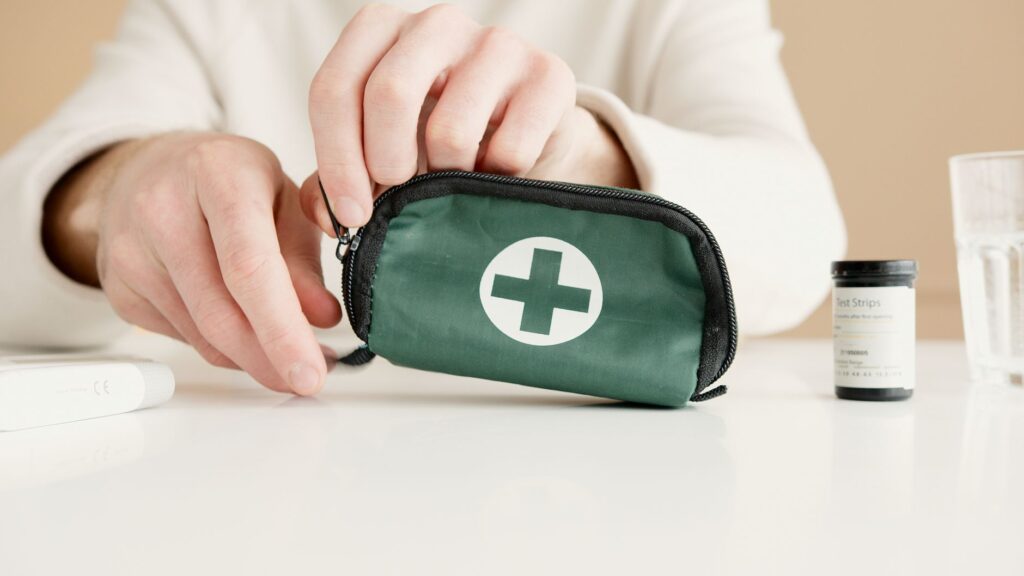
Travel safety does not depend on carrying the heaviest luggage, but on understanding which tools save the moment when everything else fails.
For this reason, selecting medical supplies must prioritize versatility. Every item included in the kit should serve at least two distinct functions. An elastic bandage, for instance, works both to contain minor bleeding and to immobilize a sprained ankle on a mountain trail or serve as temporary support for an improvised splint.
Wounds, Cuts, and Abrasions: Deep Cleaning Protocols
Inadequate treatment of a superficial wound is the most common entry point for severe bacterial infections during travel. Most tourists rely on bottled water and a bit of cotton to clean a scratch, ignoring the fact that microscopic dust, rust, or asphalt particles require real antiseptic action and a sterile physical barrier against environmental contamination.
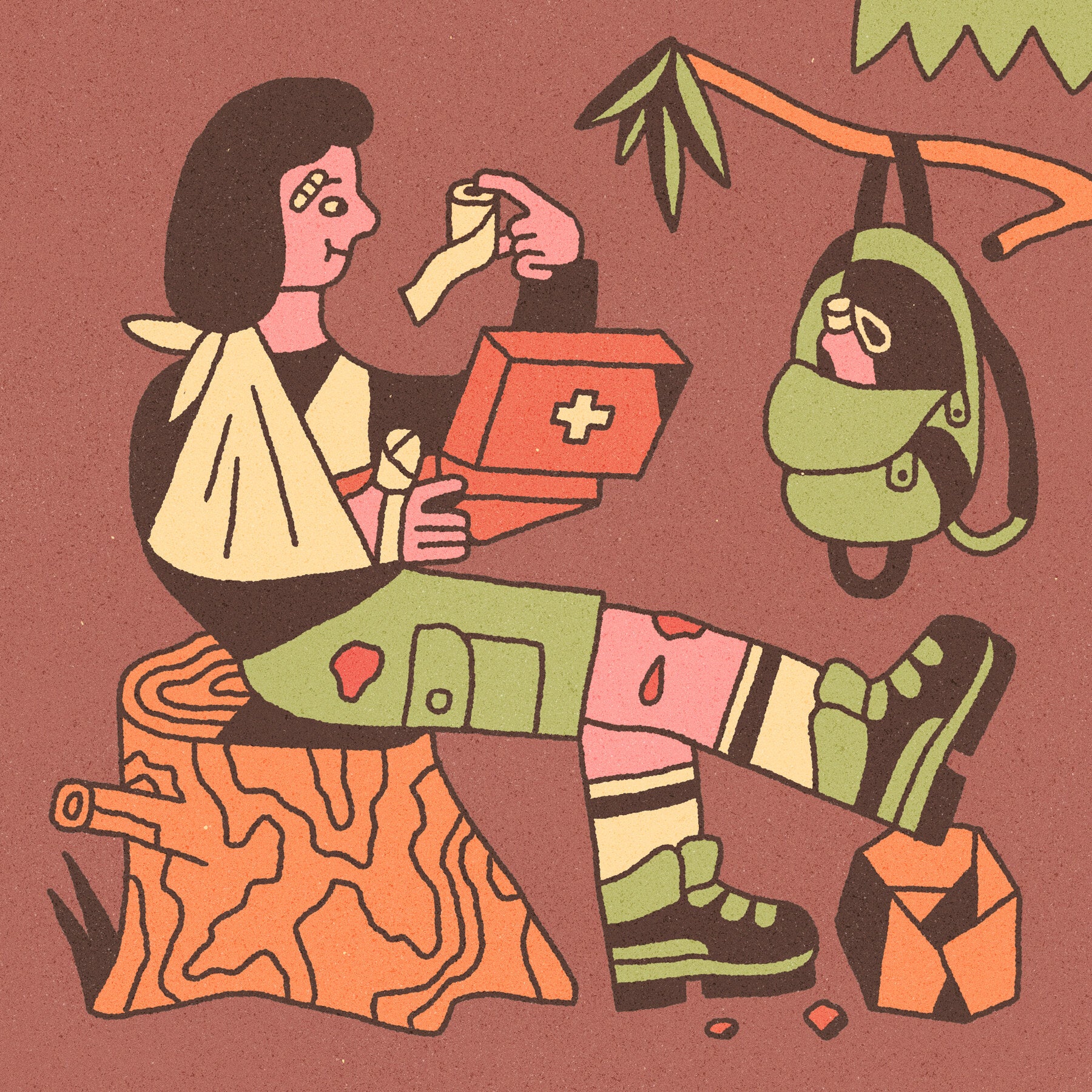
The basic kit for managing skin trauma should include:
- Individual sterile gauze pads to prevent cross-contamination of the entire package.
- Single-dose saline solution, ideal for washing away dirt without irritating live tissue.
- Broad-spectrum antiseptic that does not cause excessive burning on damaged skin.
- High-adhesion, water-resistant bandages, preferably made of non-woven fabric.
- Hypoallergenic paper or cloth medical tape to secure larger dressings.
Pressure-washing with saline is the most critical step that many omit due to haste. A strong stream of sterile liquid flushes out foreign bodies that, if left behind, would cause inflammation and delay the epidermis’s natural healing process.
Digestive Health: Mastering the Stomach in Unfamiliar Territories
Few challenges test a traveler’s resilience as mercilessly as a gastrointestinal disorder. Shifting bacterial flora, unpotable tap water, poor food handling in local markets, or simply the stress of a transcontinental flight drastically alter digestive balance. Security professionals accustomed to managing upset stomachs after long night shifts recommend a phased strategy.
Rather than bombarding the body with heavy antibiotics without a doctor’s prescription—a practice discouraged by the World Health Organization due to the risk of bacterial resistance—the kit should focus on rehydration and moderate symptom management. Oral rehydration salts are mandatory: they restore electrolyte balance lost through diarrhea or severe vomiting much faster than any commercial sports drink.
Likewise, carrying fast-acting anti-diarrheal medications allows travelers to reach a medical facility or return to lodging without collapsing on public transport. However, experts remind us that abruptly halting intestinal transit is not always curative, since the body sometimes needs to expel toxins. Moderation and attentive listening to body signals are essential.
Pain, Inflammation, and Rest: Managing Physical Wear
Walking between fifteen and twenty-four kilometers daily during cultural vacations subjects joints, the spine, and muscles to strains that sedentary office lives never encounter. By evening, accumulated fatigue manifests as tension headaches, neck tightness, and sharp pain in the soles of the feet.
To counter this wear without disrupting travel functionality, proven analgesics and anti-inflammatories such as paracetamol or ibuprofen, adjusted to professional dosages, are recommended. The common mistake is masking chronic pain to keep walking, which frequently leads to severe tendon injuries that force premature trip interruptions.
In addition to oral medications, a cold-effect gel or topical cream containing diclofenac immediately relieves localized inflammation in knees and ankles. Applying a gentle massage before sleep aids lymphatic drainage and ensures deep nightly rest, key for cellular regeneration and emotional stability on the road.

Environmental Hazards: Sun, Insects, and Minor Emergencies
Climate is an unpredictable agent that turns an idyllic landscape into a biological risk zone within minutes. Ultraviolet radiation in high-altitude destinations or tropical regions causes second-degree burns that incapacitate travelers for days. Meanwhile, vector-borne insects—such as mosquitoes in endemic regions—demand rigorous use of repellents based on effective compounds like DEET or picaridin.
A broad-spectrum sunscreen (SPF 50+) is not cosmetics, but a mandatory medical shield. Reapplication should occur every two hours, especially after swimming or heavy sweating. For annoying bites, an antihistamine or 1 percent hydrocortisone cream halts the itch-scratch cycle and prevents secondary infections from compulsive scratching.
Environmental prevention is not about aesthetic comfort, but forms a direct barrier against severe skin pathologies and systemic infections.
Including fine-tipped tweezers for the safe removal of ticks or stingers is also wise, a classic item that commercial kits often omit or include in poor-quality versions that complicate the maneuver.
Practical guide
Essential information for organizing and transporting a travel first-aid kit with safety guarantees and compliance with international regulations.

- Liquid checklist: Keep gels, eye drops, and liquid antiseptics in containers under 100 ml inside a transparent resealable bag.
- Medical documentation: Translate specific medication prescriptions into English and carry the treating physician’s report in digital and printed formats.
- Thermal control: Store temperature-sensitive medications—such as certain painkillers or insulins—in appropriate insulated cases to prevent degradation.
- Expiration checks: Quarterly inspect expiration dates on pills, ointments, and sterile solutions.
- Emergency contacts: Write down travel insurance assistance numbers and the local embassy or consulate contacts on a physical card.
The Human Factor: Empathy, Calm, and Resilience on the Road
At the end of the journey, the true value of a first-aid kit lies not in the economic cost of its components nor in the sophisticated design of its waterproof case, but in the mental peace it imparts to the carrier. Travel safety, much like nighttime crisis management, relies on the ability to keep a cool head when surroundings collapse and original plans fall apart. A cut finger or sudden fever cease to be causes for panic when the right tools are at hand and, above all, the serenity required to use them properly.
Traveling with eyes open and body protected transforms every adventure into a profound learning experience. Caring for oneself and travel companions through rigorous prevention is the highest form of respect for the world we explore, always remembering that true freedom of movement is born from individual responsibility.
Source in EN: The New York Times.