
At the southern tip of Brittany, where the Loire River dissolves into the Atlantic Ocean, lies a landscape of hypnotic geometry that seems to float between heaven and earth. These are the salt marshes of Guérande, a two-thousand-hectare labyrinth of clay and water where, for over a thousand years, one of Europe’s most pristine culinary and ecological miracles has taken place. Here, the landscape is not the work of wild nature alone, but of an ancient choreography between human hands, the sun, and the tides.
Unlike modern industrial operations where machinery and chemical processes accelerate evaporation, in Guérande time is measured by the rhythm of the tides and the patience of the paludier, the salt artisan. Armed only with wooden tools designed in the Middle Ages and empirical knowledge passed down through generations, these harvesters of water and wind continue to extract the legendary Fleur de Sel (flower of salt) without altering a single aspect of the ecosystem that sustains them.
The labyrinth of clay and water
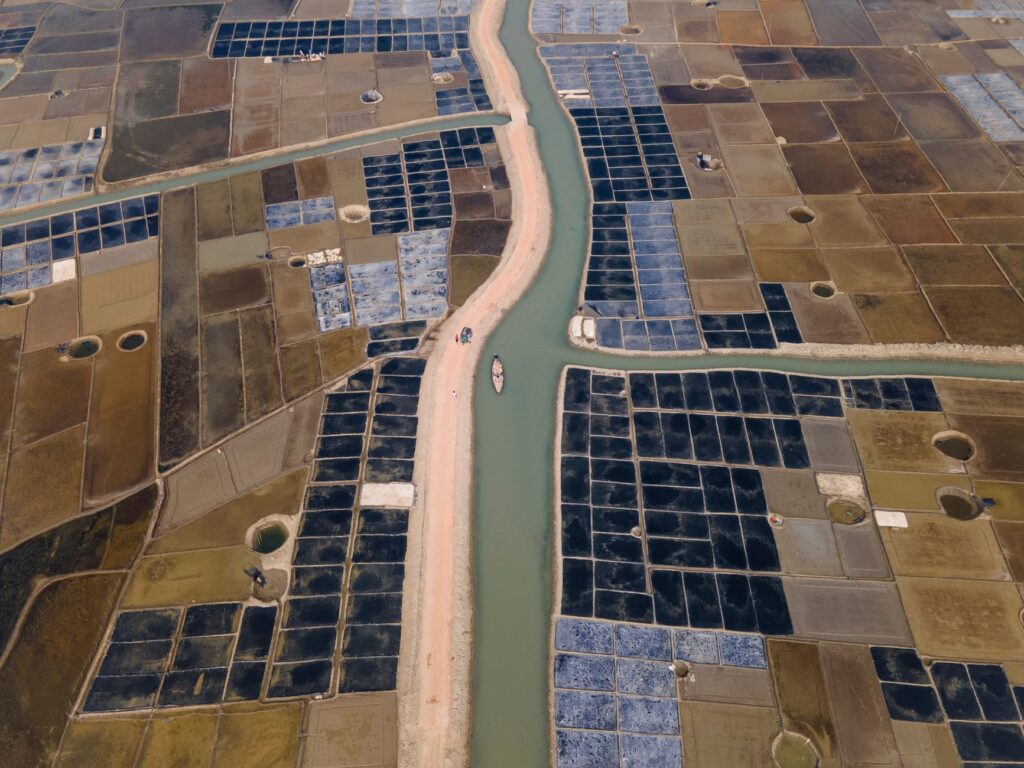
To understand the magic of Guérande, one must observe the salt pans from above. The territory appears as a mosaic of interconnected basins, separated by narrow dikes of gray clay. This hydraulic system, whose current structure was perfected by the monks of Landévennec Abbey in the 9th century, operates entirely by gravity and the push of high tides.
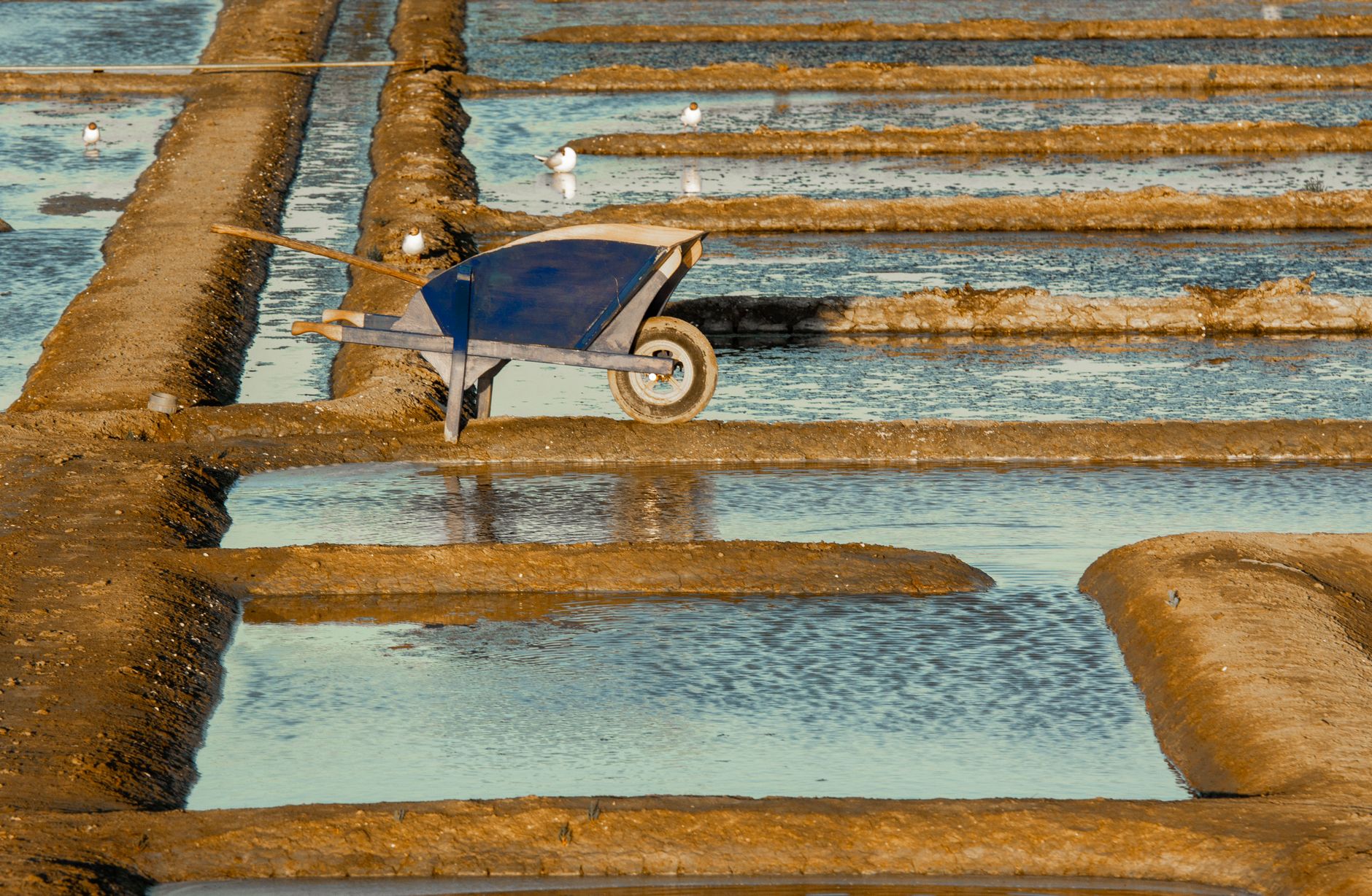
Ocean water first enters the vasière, a large settling pond where the water warms and begins to shed its impurities. From there, it begins a downward journey through a series of clay channels called étiers, passing through progressive evaporation ponds (the cobier, fares, and adernes) until reaching the œillets, the small rectangular pans where final crystallization occurs. It is a journey of millimetric precision where the salinity of the water increases from the initial 35 grams per liter to over 250 grams per liter.
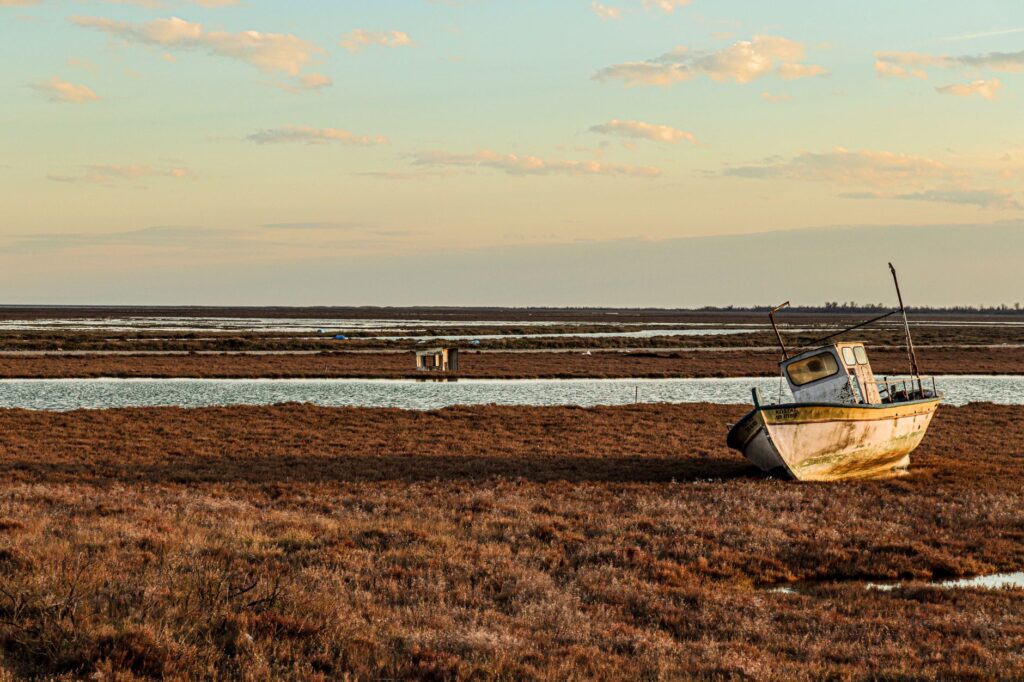
“Salt is not manufactured; it is harvested. We only prepare the bed so that the sun and the wind can do their work,” explains an old paludier while cleaning a canal.
The clay of Guérande plays a fundamental role in this process. It not only waterproofs the basins naturally but also imparts to the coarse sea salt its characteristic trace elements, especially magnesium and iron, giving it a slightly grayish hue and an aroma reminiscent of seaweed and the Breton coast. Maintaining this clay structure requires grueling work during the winter, when the salt pans must be cleared of silt accumulated by the seasonal rains.
The craft of reading the wind
The work of the paludier is an exercise in applied meteorology. During the harvest months, from June to September, these artisans live with their eyes fixed on the sky and their skin sensitive to the direction of the wind. A dry, steady east wind is their greatest ally, accelerating water evaporation; conversely, summer storms or humid west winds can ruin weeks of preparation in a matter of hours.
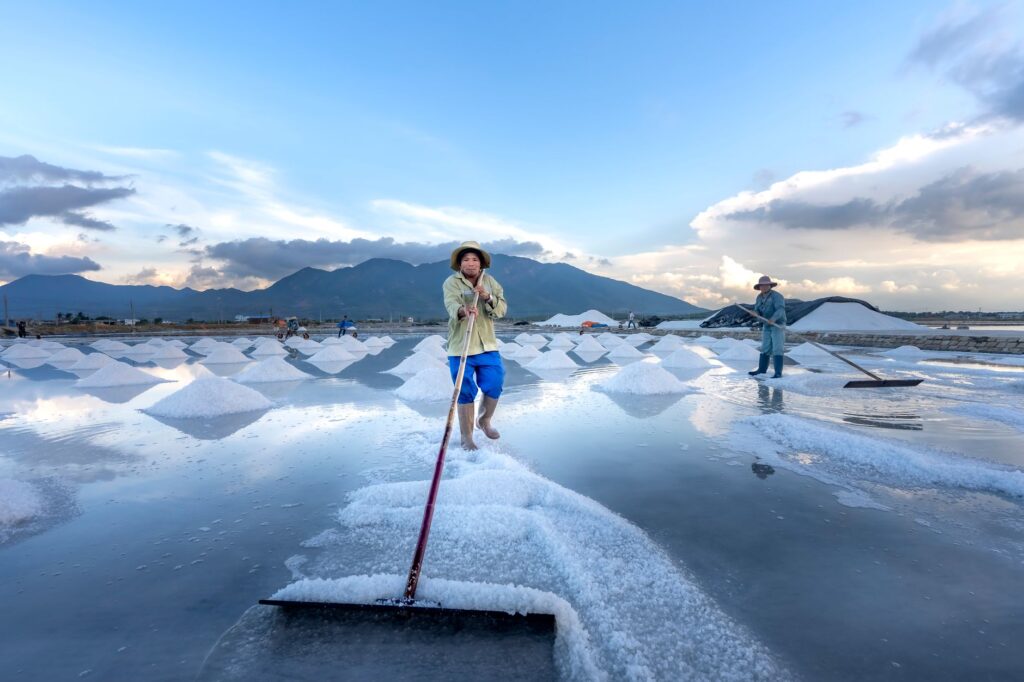
Each afternoon, as the sun begins to lower and the water temperature in the œillets reaches its peak, the harvest begins. It is a quiet, almost meditative labor, where the only sound is the hiss of tools sliding over the wet clay bed. The artisan must move with extreme gentleness to avoid disturbing the bottom of the pans, which would muddy the newly formed white salt.
The tools of the Middle Ages
- The las: A long pole made of linden wood or resin, up to five meters long, ending in a flat paddle. It is used to pull the coarse salt that settles at the bottom of the pan toward the edges.
- The lousse: A wooden or resin skimmer used to gently lift the fine layer of Fleur de Sel floating on the water’s surface.
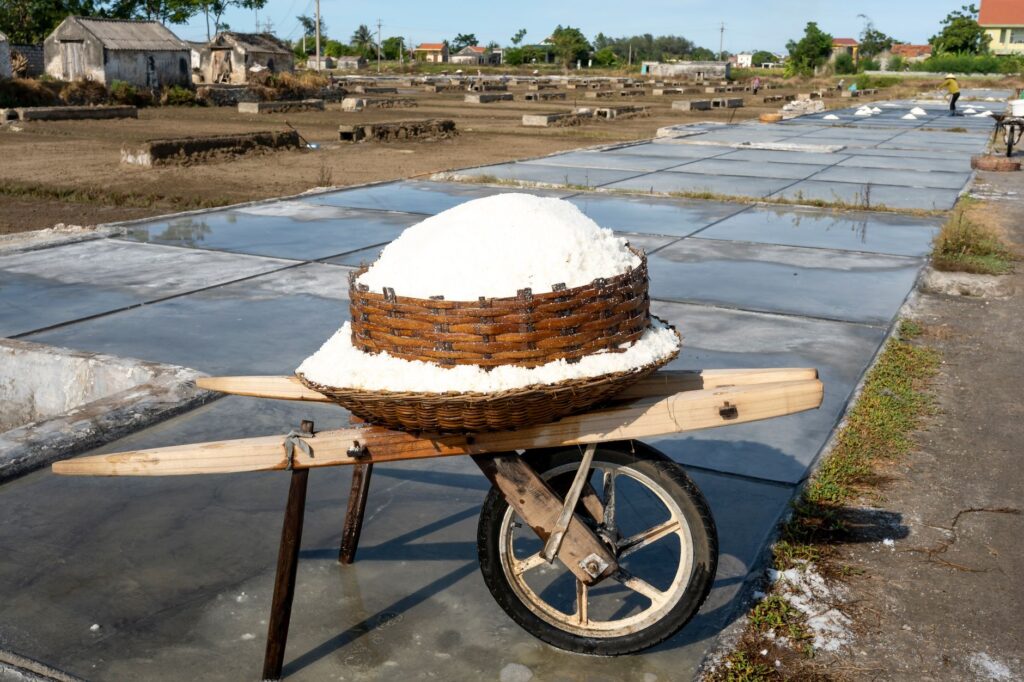
- The brouette: The traditional wooden wheelbarrow used to transport the harvested salt from the clay dikes to the drying platforms.
The alchemy of Fleur de Sel
The crown jewel of Guérande is undoubtedly the Fleur de Sel. Unlike coarse salt, which sinks to the bottom under its own weight, Fleur de Sel forms only on the water’s surface under very specific weather conditions: a combination of intense sun, low humidity, and a gentle, steady east wind. These extremely fine and fragile crystals resemble a thin sheet of ice glistening under the afternoon sun.
Harvesting Fleur de Sel requires almost surgical dexterity. The paludier uses the lousse to slide just beneath the water’s surface, lifting the crystals without submerging them. If the wind blows too hard, the crystals sink and mix with the coarse salt at the bottom, losing their delicate crunch and visual purity.
The miracle of crystallization
Guérande’s Fleur de Sel is never ground or processed. It is dried naturally in the sun and packaged directly. On the palate, it offers a completely different experience from common salt: its crystals are not hard but dissolve quickly in the mouth, releasing a subtle saline flavor with hints of violet. It is a finishing salt, destined to elevate fresh fish, a pat of Breton butter, or artisanal chocolate.
Meanwhile, the coarse salt (known as sel gris due to its contact with the clay of the basins) is harvested by piling it into small round mounds called mulons along the dikes. These mounds, dotting the landscape like small white and gray temples, are left to dry in the wind before being transferred to communal warehouses.
An ecosystem protected by tradition
The marshes of Guérande are not just an artisanal production center; they also constitute a wetland of international importance protected by the Ramsar Convention. The alternation of fresh and salt water, combined with the absence of heavy machinery and pesticides, has created a unique ecological refuge where hundreds of migratory bird species, halophytic plants, and microorganisms coexist.
During the spring, it is common to observe the elegant little egret, the marsh harrier, or the aquatic warbler feeding in the settling ponds, which are rich in small crustaceans like Artemia salina. This biodiversity was on the verge of disappearing in the 1970s, when an urban development project aimed to build a highway and hotel complexes over the salt pans. It was the peaceful resistance of the paludiers themselves and the local community that managed to save this historic landscape.
“Every grain of Guérande salt preserves the memory of the clay and the freshness of the Atlantic Ocean,” is a common saying on the peninsula to recall the value of its preservation.
The generational handover in the salt pans
Unlike other traditional crafts in Europe that suffer from a lack of succession, cooperative structures have saved the salt pans of Guérande. In 1989, local producers founded the cooperative Les Salines de Guérande, a structure that guarantees fair prices for the artisans and handles the distribution and promotion of the product under strict quality labels, such as the Protected Geographical Indication (PGI) and the prestigious French Label Rouge.
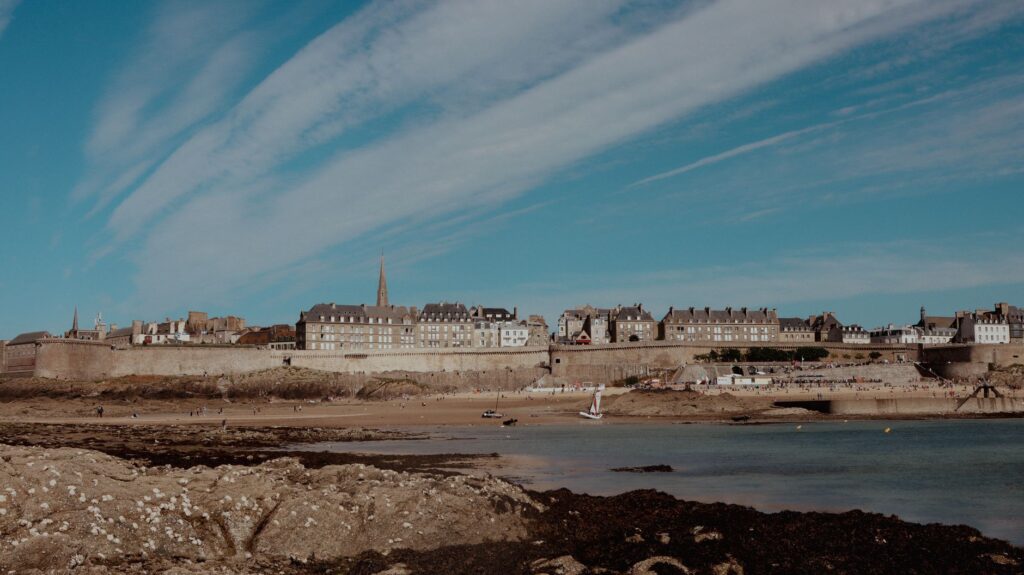
Today, a new generation of men and women, many from urban backgrounds and without family history in the salt pans, attend the training school in Saint-Gildas-des-Bois to learn the trade. For these new paludiers, working with salt is not just a job but a lifestyle choice based on environmental respect, food sovereignty, and a direct connection to the cycles of nature.
Practical guide
To visit the salt marshes of Guérande and understand the complexity of this landscape, it is recommended to start your journey at Terre de Sel, an interpretation center located in the village of Pradel. From there, guided walking tours along the dikes are organized by active paludiers and nature guides.
How to get there: The Guérande peninsula is located in the Loire-Atlantique department. The most convenient way to arrive is by high-speed train (TGV) from Paris to La Baule-Escoublac or Le Croisic station, and from there, rent a bicycle or a car to travel the scenic secondary roads crossing the salt pans.
Best time to visit: Without a doubt, the months of July and August. This is the peak of the harvest, when you can see the paludiers working in the basins under the golden afternoon light. In spring and autumn, the landscape is equally beautiful and much more solitary, making it ideal for birdwatching.
Gastronomy and shopping: When purchasing salt, ensure it bears the seal of the Le Guérandais cooperative or certified independent producers. Be sure to try the traditional salted butter cookies (palets bretons) and salted butter caramel, authentic local delicacies made with salt from the marshes.
The last gleam on the water mirror
As the sun begins to sink into the Atlantic horizon, the salt marshes of Guérande transform into a giant mirror reflecting shades of purple, gold, and violet. The wind dies down, and the silhouette of the paludier, silhouetted against the burning sky, makes the final movements with the las, gathering the salt into one last mound before night falls. It is a moment of fleeting and moving beauty, where human physical effort merges harmoniously with the rhythms of the cosmos.
In this corner of Brittany, progress is not measured by speed or automation, but by the ability to keep intact a pact of mutual respect between the earth and humanity. Every grain of salt that reaches our tables is a piece of this landscape suspended in time, a testament that patience and fidelity to the land remain, after a thousand years, the purest way to create beauty.