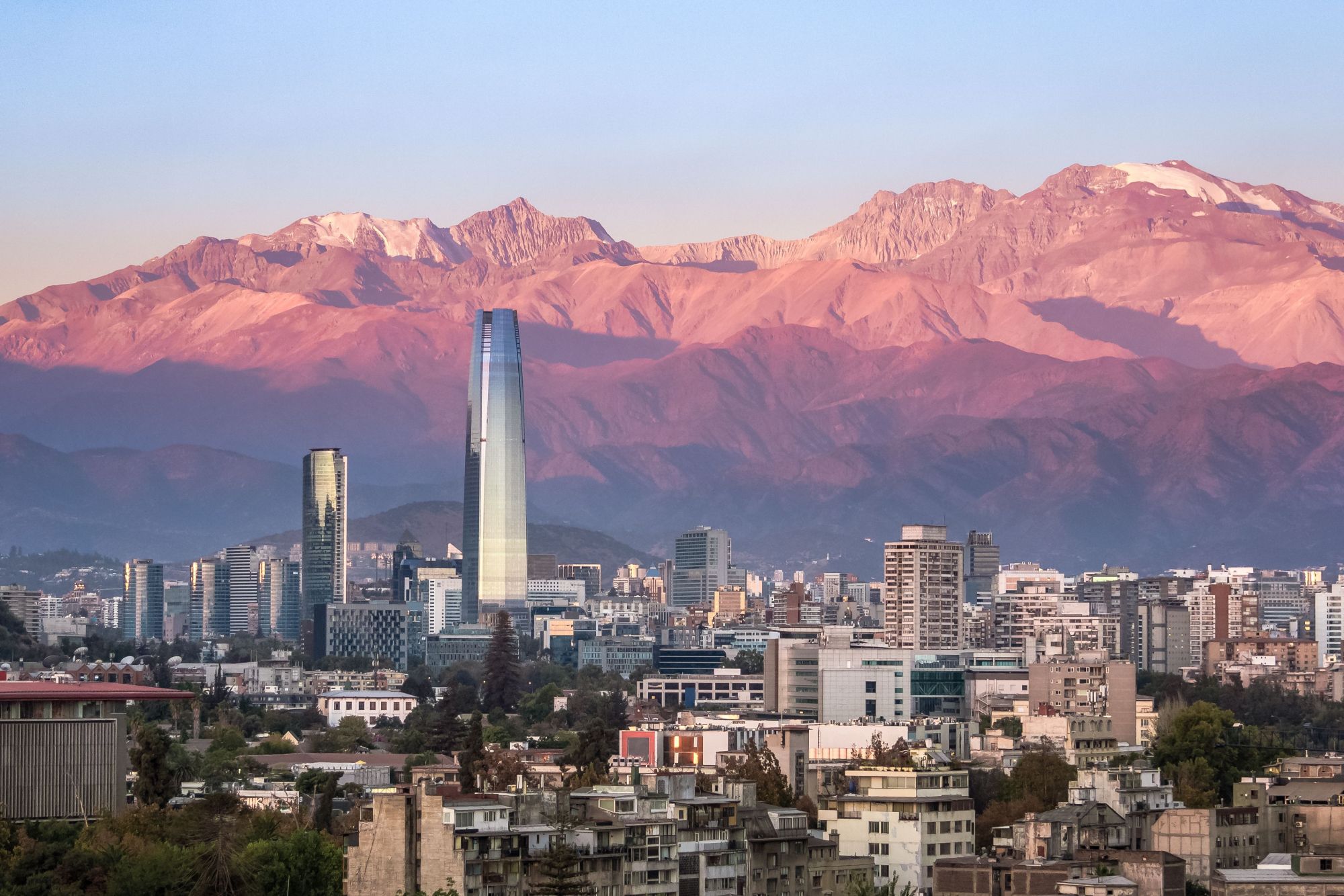

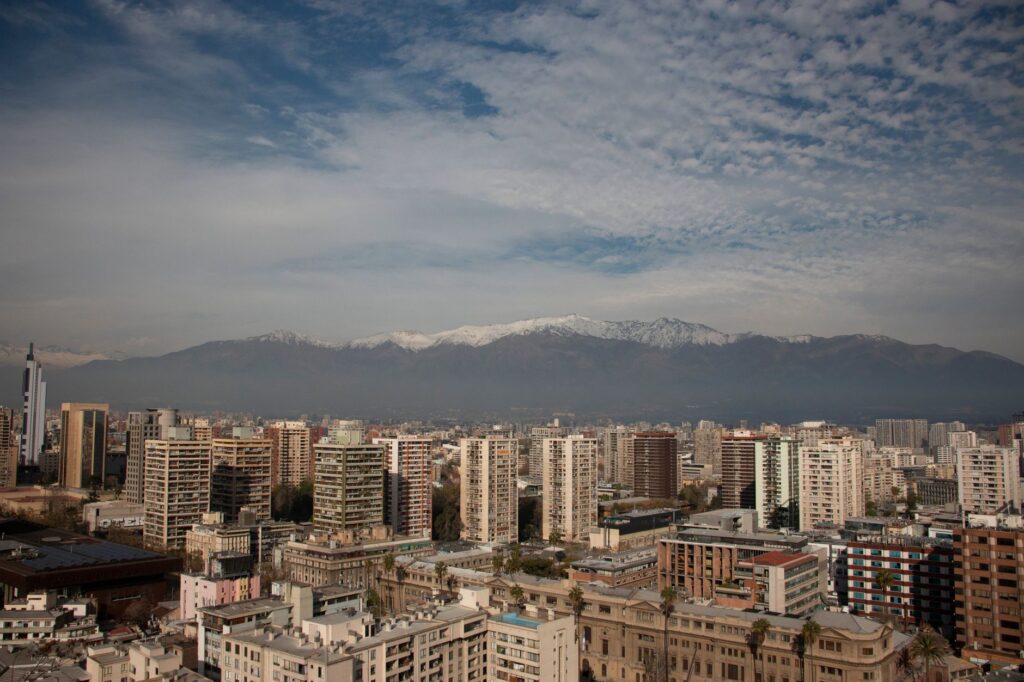
Santiago de Chile is not a city to be discovered at a single glance. It is a metropolis of geological and social layers, where asphalt and residential neighborhoods coexist with the imposing, almost magnetic presence of the Andes mountain range. Every morning, when the early morning smog dissipates its mist, the snow-capped mass appears in the background as a perpetual backdrop reminding travelers and locals of the fragility and majesty of the territory they inhabit. It is not merely a landscape; it is a geographical pulse that conditions the light, the climate, and the character of its inhabitants.
This report journeys through the heart of a capital that has learned to reinvent itself without erasing the scars of its past. Far from the traditional postcard of glass-walled financial centers, Santiago beats in its popular markets, in the architectural memory of its palaces, and in a cultural scene that openly engages with its eventful political and social history. Walking through its streets is deciphering a map where colonial tradition, the bold modernism of the 21st century, and wild nature that is never fully tamed by concrete converge.
The zero kilometer: between memory and stone in the Plaza de Armas
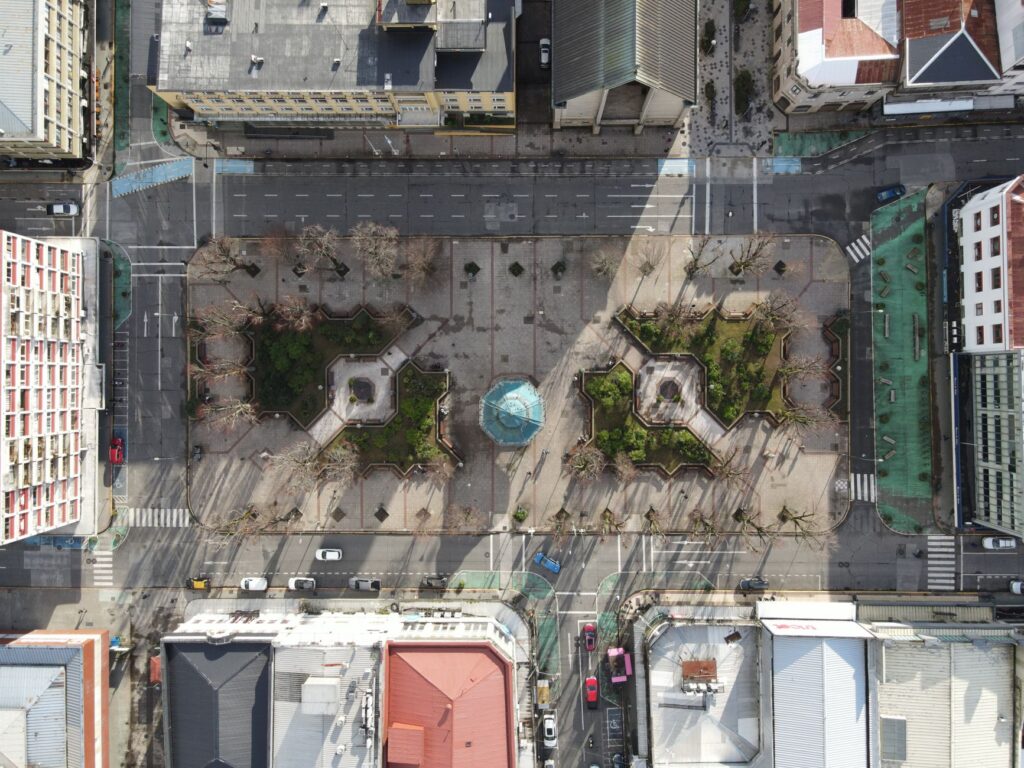
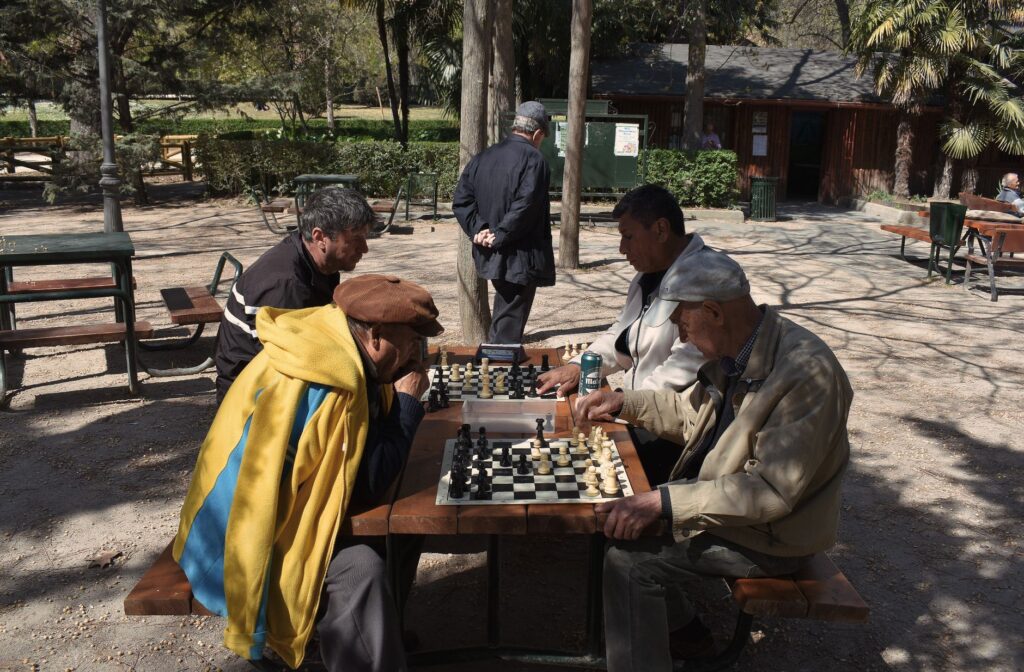
The mandatory starting point for any rigorous tour is the Plaza de Armas, the foundational heart laid out by Pedro de Valdivia in 1541. Beneath its colonial layout beats the memory of the indigenous peoples who already traversed this valley watered by the Mapocho River. Today, this public space is a vibrant agora where local chess players dispute silent matches surrounded by centuries-old palm trees and the daily hustle of office workers.
Facing the square stands the imposing Metropolitan Cathedral, a temple whose current construction reflects decades of architectural adaptations following the earthquakes that periodically shake the region. Its interior, of sober neoclassical elegance, contrasts with the outdoor bustle and houses chapels where religious fervor and museum-like silence intersect. Nearby, the Central Post Office building and the Municipality of Santiago complete a monumental complex that synthesizes the political and institutional history of the country.
The heritage footprint at the Palacio de La Moneda
A few blocks from the square lies the Palacio de La Moneda, a masterpiece of neoclassical colonial architecture originally designed as the Royal Mint. This building is not merely the seat of the Government of Chile; it is a stage charged with historical symbolism. Its stone and brick walls guard the memory of the 1973 coup d’état and the subsequent democratic transition.
Wandering through the Plaza de la Constitution and observing the changing of the guard—a ritual alternating day by day with martiality and solemnity—allows visitors to connect with the nation’s republican pulse. Beneath the palace, the Palacio La Moneda Cultural Center offers a contemporary counterpoint with underground exhibition rooms housing the best of design, photography, and pre-Columbian and international art.
Lastarria Neighborhood and Forestal Park: the bohemian and intellectual pulse
Leaving the institutional gravity of the historic center behind, the city becomes more intimate upon entering the Lastarria Neighborhood. Cobblestone streets, early 20th-century European-style mansions, and an unmistakable cultural atmosphere define this enclave frequented by writers, artists, and independent booksellers.
Lastarria is an open-air museum where historic residential architecture has successfully transformed into specialty coffee shops, art galleries, and auteur cinemas like the National Cinematheque. Wandering aimlessly down Monjitas Street or Coronel J. P. Vallejo inevitably leads to Forestal Park, a green lung designed at the beginning of the 20th century following French landscaping canons.
The greenery of Forestal Park acts as an urban truce, a corridor where centuries-old trees filter traffic noise and offer shade to walkers.
Within this park stands the National Museum of Fine Arts, a building with an imposing metallic structure and glass dome inspired by the Petit Palais in Paris. Its permanent collection charts the evolution of Chilean visual arts from the colonial period to the avant-gardes of the 20th century, establishing itself as an indispensable stop for understanding the visual identity of the South American country.
Bellavista and civic poetry in La Chascona
Crossing the Mapocho River grants access to the Bellavista Neighborhood, a vibrant territory where urban art impregnates every facade. Muralism, goldsmith workshops, and a lively nightlife coexist in this district of colorful streets ascending toward the foothills of San Cristóbal Hill.
Here stands La Chascona, one of the homes belonging to Nobel Prize-winning poet Pablo Neruda. The space, now converted into a house-museum, reflects the poet’s fascination with the sea, ships, and unusual objects. Its labyrinthine hallways, built on different levels following the slope of the hill, hold letters, works of art by Diego Rivera, and an intimate atmosphere transporting visitors into the creative universe of the author of Canto General.
The summit of San Cristóbal Hill: Santiago from a bird’s-eye view
To comprehend the urban immensity of Santiago, nothing compares to ascending San Cristóbal Hill, the city’s great natural viewpoint. Visitors can climb on foot, by bicycle, or via the historic funicular railway operating for over a century. Halfway up lies the Sanctuary of the Immaculate Conception, crowned by a statue of the Virgin Mary overlooking the valley.
From the summit, more than 800 meters above sea level, the perspective shifts completely. The skyscrapers of Providencia and the financial sector popularly known as ‘Sanhattan’ look like toy models, while the mountain range rises imposingly on the eastern horizon, reminding travelers that nature is never truly absent in this metropolis.
The new financial and architectural face in Las Condes and Providencia
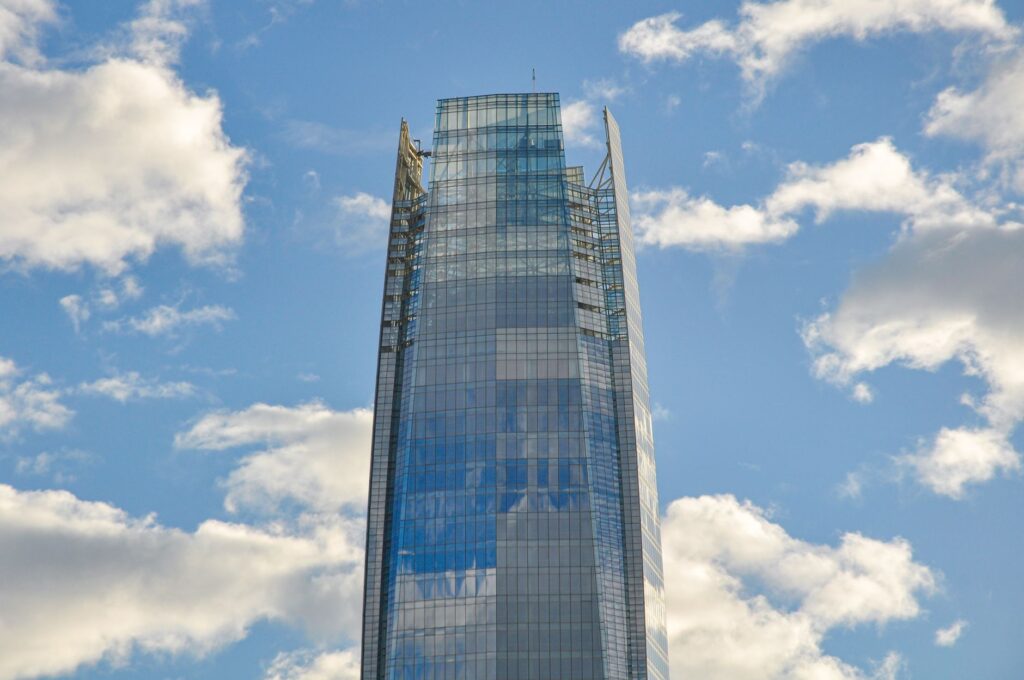
Santiago’s modernity shifts eastward, uniting with the communes of Providencia and Las Condes. Here, the city adopts a contemporary profile marked by glass and steel towers challenging global seismic standards. The undisputed symbol of this transformation is the Gran Torre Santiago, part of the Costanera Center complex.
At 300 meters high, it is the tallest building in South America. Its observation deck, Sky Costanera, offers a vertiginous experience with 360-degree panoramic views over the central valley and surrounding mountain ranges. Nearby, the financial district showcases a global district dynamic, featuring commercial boulevards, high-end hotels, and a gastronomic offering competing internationally.
Culinary tradition and markets: the flavor of land and sea
Santiago’s gastronomy is the happy result of a geography combining the Pacific Ocean with agricultural valleys and mountains. An authentic culinary immersion must begin at the Central Market, a late 19th-century wrought-iron building declared a National Historic Monument.
Although much of its space is tourist-oriented today, it retains stalls where fishermen and vendors offer conger eel, razor clams, sea urchins, and other marine treasures extracted from Chile’s 6,400-plus kilometers of coastline. Across the river lies the Vega Central, a much more popular and bustling supply market where locals purchase fresh seasonal fruits and vegetables.
High-altitude wines and terroir culture
Santiago is also the world capital of wine in terms of proximity to internationally prestigious wine valleys. Just a few kilometers from the urban center, valleys like the Maipo offer century-old vineyards cultivating emblematic Cabernet Sauvignon and the historic Carmenere, a grape once thought extinct in Europe and rescued in Chilean soils.
Visiting historic wineries situated at the foot of the mountain range illuminates the importance of meltwater in fruit quality. Guided tastings reveal how the thermal amplitude of the mountains imparts mineral notes and freshness to wines now featured on the world’s finest restaurant menus.
Practical guide
How to get there: Arturo Merino Benítez International Airport connects Santiago with major capitals in America and Europe through daily direct flights.
When to go: The austral spring (October to December) and autumn (March to May) offer pleasant temperatures and clearer skies for viewing the mountain range.
Urban transport: Santiago’s Metro network is one of the most modern and efficient in Latin America. Acquiring the bip! card is required to access both the subway and the urban bus network (Red).
Safety: As in any large metropolis, caution is recommended regarding personal belongings in crowded areas and public transport stations.
Currency: The official currency is the Chilean peso (CLP). Credit card payments are widely accepted in shops and restaurants.
Alpine epilogue: when afternoon light sets the mountains ablaze
As the sun begins to set in the west, the Andes mountain range stages one of Santiago’s most moving visual spectacles. The snow-capped peaks, which maintained a milky white during central daylight hours, gradually tint with intense pink, violet, and ochre hues, a lighting phenomenon locally known as alpenglow or the burning of the sierra.
This is the moment when the city recovers a more leisurely pace. On the terraces of Providencia or the stone benches of Forestal Park, santiaguinos watch artificial lights begin to turn on along the slopes of the Andean foothills. In that moment of transition, between urban bustle and geological immensity, the true essence of this capital is understood: a human refuge embraced by giants of rock and snow watching, undisturbed, over the unfolding of its history.
Source in English: Condé Nast Traveler Spain