
Along the banks of the Guadalquivir River, where Andalusia’s monastic and commercial history seems in permanent dialogue with the rhythm of its modernity, the capital of Seville has once again become the epicenter of international tourism reflection. The Tourism Innovation Summit 2026 is far more than a mere convention of IT solutions applied to leisure; it is the forum where the great travel industry examines its own seams and acknowledges that unbridled growth, as conceived at the turn of the century, is no longer viable. Against a backdrop defined by climate urgency and resident fatigue in iconic destinations, the gathering places artificial intelligence and advanced digitization at center stage—not as an end in themselves, but as the indispensable scalpel required to perform a deep and long-overdue metamorphosis.
This year’s event transcends standard corporate rhetoric to delve into the operational dilemmas facing airlines, hotel chains, tour operators, and public administrations. While the streets of Seville’s historic center buzz with the everyday hustle of spring visitors, the pavilions of Fibes host rigorous debates on how to balance economic profitability with the preservation of the social fabric. Artificial intelligence ceases to be an abstract concept and manifests in algorithms capable of predicting mobility flows, managing waste in real time, optimizing water consumption in hotel complexes, and offering tailored experiences that respect the carrying capacity of the most fragile ecosystems.
The New Technological Paradigm in Destination Management
The digital transformation of the tourism sector is no longer restricted to booking digitization or social media presence. At the Tourism Innovation Summit 2026, speakers have trained their focus on governance driven by big data and predictive modeling. Destinations can no longer afford to manage blindly, relying solely on lagging accounting of airport arrivals or hotel overnight stays. The emergence of sophisticated analytical tools empowers public managers to anticipate the saturation of unique public spaces and divert flows toward less congested areas before bottlenecks occur.
This analytical approach redefines the very concept of tourism competitiveness. Victory no longer goes to the territory that attracts the most visitors, but to the one that successfully optimizes the length of stay, maximizes economic return per traveler, and minimizes ecological footprint. Integrated artificial intelligence platforms empower city councils to monitor pedestrian density in real time, dynamically regulate access to monuments, and adjust public transport frequency according to real demand detected through sensors and anonymous geolocation patterns.

Algorithmic Personalization and Respect for Privacy
In the realm of the traveler’s experience, generative artificial intelligence and hyper-personalized recommendation systems are rewriting the rules of trip planning. Next-generation virtual assistants no longer offer standardized packages, but dynamic itineraries that adapt to the user’s mood, cultural preferences, physical pace, and ethical values. If a traveler expresses a declared interest in farm-to-table gastronomy or lesser-known artisanal heritage, the system crafts a route that bypasses tourist traps and connects directly with local producers.
However, this degree of sophistication opens an unavoidable ethical debate regarding privacy and the use of personal data. During workshops held in Seville, cybersecurity and digital law experts reminded attendees that consumer trust is the industry’s most fragile asset. The boundary between exquisitely attentive service and invasive algorithmic intrusion is blurry, and companies operating in the sector are compelled to establish frameworks of radical transparency and informed consent if they wish to avoid the frontal rejection of an citizenry increasingly jealous of its digital intimacy.
Sustainability and Decarbonization: Beyond Green Marketing
One of the core axes of the congress has been the imperative to eradicate greenwashing—a practice that for years has allowed certain sector actors to wave green banners without backing them up with genuine structural transformations. The event showcased energy audits powered by artificial intelligence that measure with millimetric precision the carbon footprint of every hotel stay, from textile laundering to the supply chain of the food served in the restaurant.
Decarbonizing tourism demands colossal investments and a radical overhaul of existing infrastructure. Hotels of the near future are configured as autonomous, circular organisms capable of generating their own energy through local renewable sources, recycling one hundred percent of their greywater, and entirely eliminating single-use plastics thanks to blockchain traceability systems. These technologies, far from being aesthetic luxuries, stand out as non-negotiable regulatory requirements in the face of EU environmental mandates set to tighten progressively over the current decade.
The Water Challenge and Hydrological Management in Southern Europe
For a territory like Andalusia, historically marked by water scarcity, technological innovation applied to water is not a theoretical option, but a matter of economic and social survival. Technical presentations analyzed success stories where the installation of smart sensor networks in tourism complexes has reduced water consumption per client by thirty percent without compromising the comfort of the experience.
The use of artificial intelligence to detect micro-leaks in the piping networks of hotel complexes and high-season municipalities demonstrates that technology can drastically mitigate the impact of structural droughts. Efficient water resource management thus solidifies as the primary indicator of quality and viability for a tourist destination across the Mediterranean basin in the years ahead.
Technology in tourism should not serve to overcrowd with greater efficiency, but to find the lost balance between the visitor and the home that welcomes them.
The New Traveler Profile: Conscience, Exigency, and Roots
The Seville congress also brought to light a profound sociological mutation in the psychology of the contemporary traveler. The post-pandemic tourist—particularly younger generations—shows growing rejection of homogeneous, depersonalized mass tourism. Authenticity is sought after, alongside direct contact with the local community and the certainty that money spent on the journey contributes fairly to the economic development of the visited territory.
This demand for authenticity compels operators to reorient their catalogs toward regenerative tourism, a concept that goes beyond passive sustainability. Simply avoiding harm to the environment is no longer enough; the goal is to leave the place better than it was found. This translates into initiatives supporting regenerative agriculture, participation in the restoration of threatened historical heritage, and direct collaboration with local biodiversity conservation projects.
Resident Resistance as an Early Warning Thermometer
The tensions witnessed in recent years in cities such as Barcelona, Amsterdam, Venice, and Seville itself occupied a central place in the discussions at the Tourism Innovation Summit. Overtourism—understood as the displacement of habitual residents from urban centers due to the uncontrolled proliferation of vacation rentals and businesses geared exclusively toward visitors—is no longer addressed as a minor nuisance, but as an existential threat to the destination’s very viability.

Mayors and managers gathered at the forum agree that artificial intelligence must be harnessed to safeguard the right to the city. Automated limitation of vacation rental licenses in saturated zones, strict fiscal control of the shadow economy, and the enactment of courageous residential protection regulations are tools that city councils are beginning to deploy, underpinned by the analytical power of new data systems.
Smart Mobility and Intermodal Connectivity
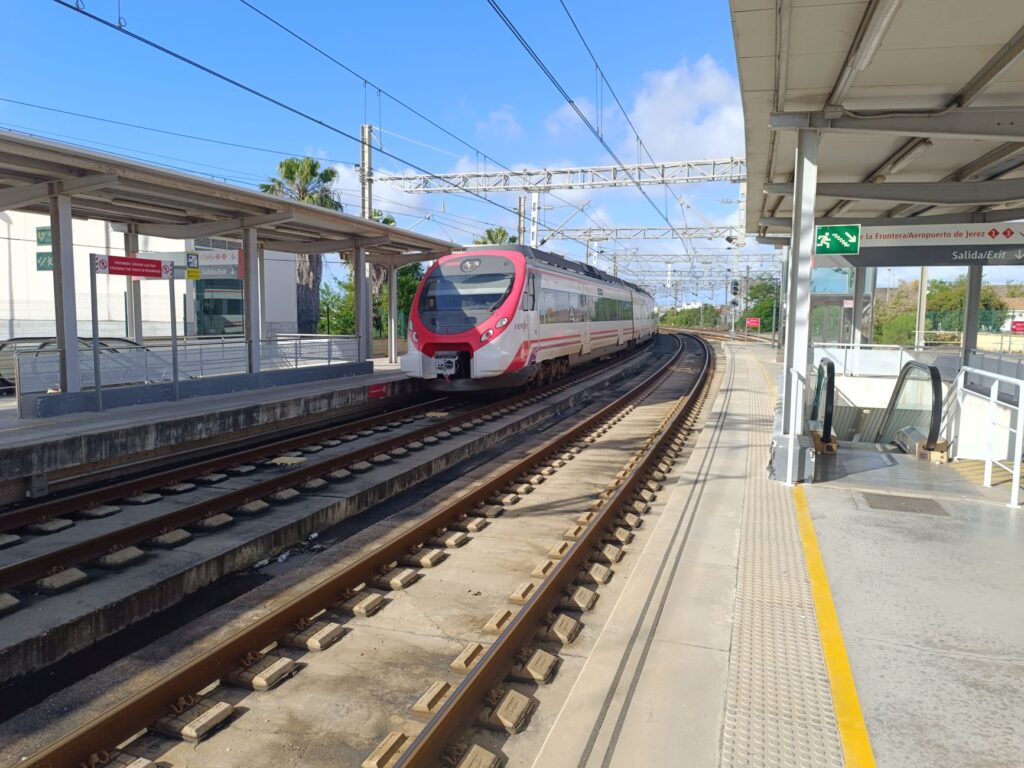
Getting around within the destination and reaching it continues to be one of the industry’s Achilles’ heels. The model focused exclusively on private vehicles and short-haul flights is environmentally unsustainable. Seville witnessed the presentation of the most ambitious advancements in smart intermodal mobility, where a single digital platform integrates train tickets, urban buses, shared electric vehicles, and public bicycle systems.
The integration of artificial intelligence allows for the prediction of demand peaks in public transport networks and the dynamic reallocation of resources, reducing waiting times and decongesting urban thoroughfares. Additionally, initial pilot projects in sustainable aviation powered by synthetic fuels and advancements in high-speed rail electrification in Europe were thoroughly analyzed.
Decentralization as a Territorial Strategy
One of the most applauded conclusions of the congress centers on the urgent need to decentralize tourist flows. The concentration of eighty percent of visitors in barely ten percent of the territory is a logistical and environmental absurdity. Predictive marketing tools and the creation of alternative cultural routes based on the richness of rural and secondary heritage are enabling entire regions to redistribute economic wealth.
In the Andalusian case, initiatives connecting Seville’s monumental offerings with the natural parks of the mountain ranges or the whitewashed towns of the countryside demonstrate that shifting focus toward lesser-known enclaves is entirely feasible, relieving pressure on historic quarters while offering the traveler a much richer and more tranquil experience.
Practical guide
How to get there: Seville Airport (SVQ) maintains direct connections with major European capitals. Santa Justa station offers high-speed trains (AVE and Ouigo) connecting to Madrid in approximately two and a half hours.
When to attend the Tourism Innovation Summit: The congress is held annually at the Palacio de Exposiciones y Congresos de Sevilla (Fibes) during autumn, coinciding with the low season of mass tourism crowding in the city.
Recommended accommodation: To understand the commitment to hotel sustainability, establishments certified with European eco-labels in the Triana neighborhood or around Alameda de Hércules are recommended.

Urban mobility: The light rail network and bike lanes allow visitors to explore Seville efficiently without relying on combustion vehicles.
Resources of interest: Full presentations and executive summaries of the congress are accessible through the official Tourism Innovation Summit platform for professionals and sector researchers.
Sunset on the River: When Technology Embraces Memory
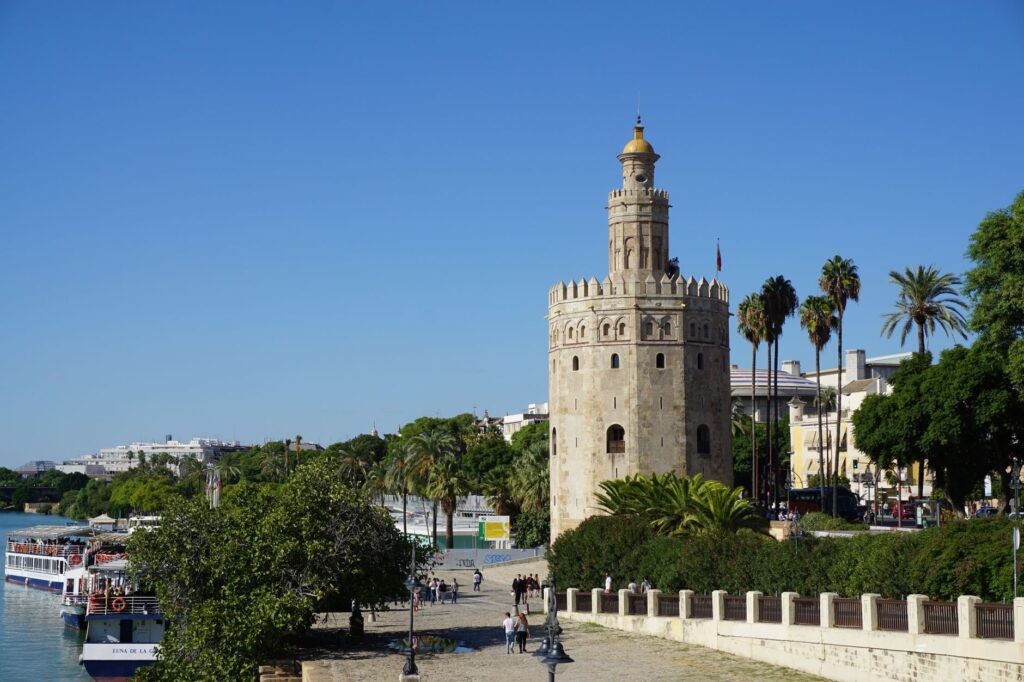
As evening falls, when the final rays of sunlight set fire to the silhouette of the Golden Tower and reflect upon the tranquil waters of the Guadalquivir, the bustle of the technological congress quiets down to make way for serene contemplation. In that instant of lighting transition, it becomes evident that no artificial intelligence tool, no predictive recommendation algorithm, and no flow management platform will ever replace the intimate and silent emotion produced by the authentic beauty of a place. The great lesson left by this gathering in Seville is that the most advanced digitization and the strictest sustainability are not ends in themselves, but humble guardians destined to protect the fragility of the human experience, ensuring that future generations may continue to marvel at the intact magic of traveling with respect and awareness.
True innovation in tourism does not reside in the complexity of machines, but in the human capacity to preserve the magic of the places we love.
Source: La Vanguardia (https://www.lavanguardia.com/)