
In the luminous labyrinth of Seville’s historic quarters, where summer heat seems to suspend time and fuse whitewashed walls with midday light, an art survives that captures color amidst aridity. The cuerda seca (dry cord) technique, introduced to the Iberian Peninsula during the Caliphate period and masterfully perfected in Sevillian kilns during the 15th and 16th centuries, is not merely a decorative procedure; it represents a complex chemical architecture where mineral physics and human dexterity converse with furnace fire. Far from mass-market tourism circuits, the workshops still practicing this craft stand as bastions of material resistance against industrial standardization, keeping alive formulas of oxides, clays, and manganese that have barely changed in five hundred years.
To grasp the magnitude of this visual heritage, one must venture into the back rooms of traditional workshops tucked away in peripheral districts like Triana or quiet intramural alleys near San Lorenzo. Here, time is measured in firing cycles and the infinite patience with which master artisans prepare ceramic bodies. Unlike flat tilework or overglaze painting, cuerda seca demands relentless geometric discipline. The initial tracing, executed with a greasy mixture of linseed oil and manganese dioxide, acts as an impassable wall preventing liquid glazes of different colors from bleeding into one another during pyoplastic fusion. This dark border, slightly raised once the piece is finished, not only delineates chromatic fields but provides an unmistakable graphic strength that has characterized the ornamentation of palatial courtyards, convent wainscots, and monumental facades across Andalusia.
The Alchemy of the Line: Anatomy of an Andalusi Technique
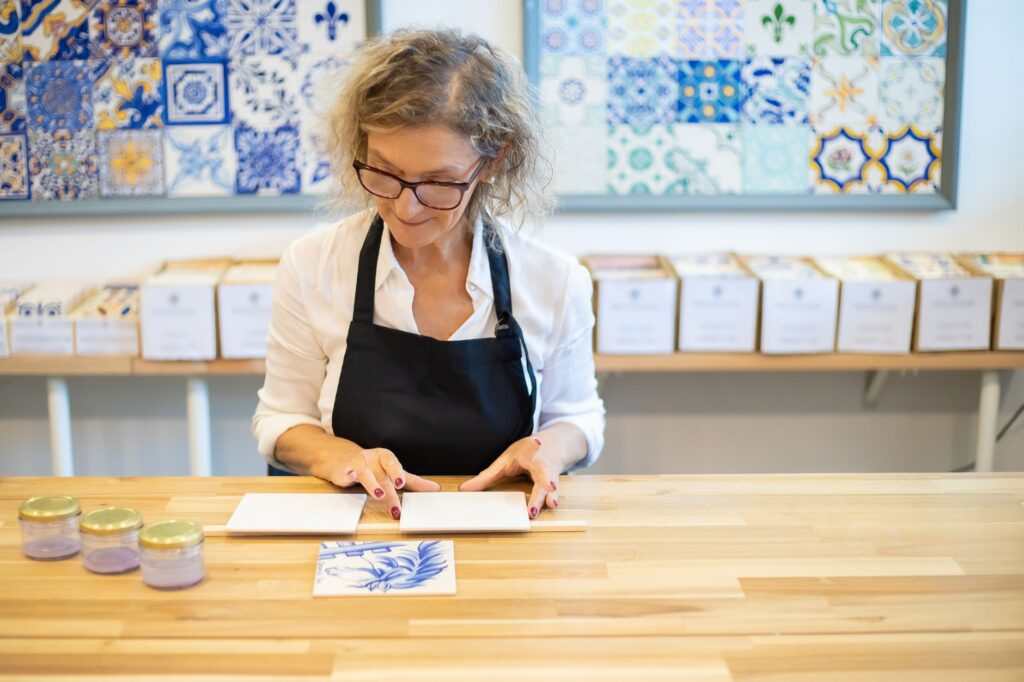
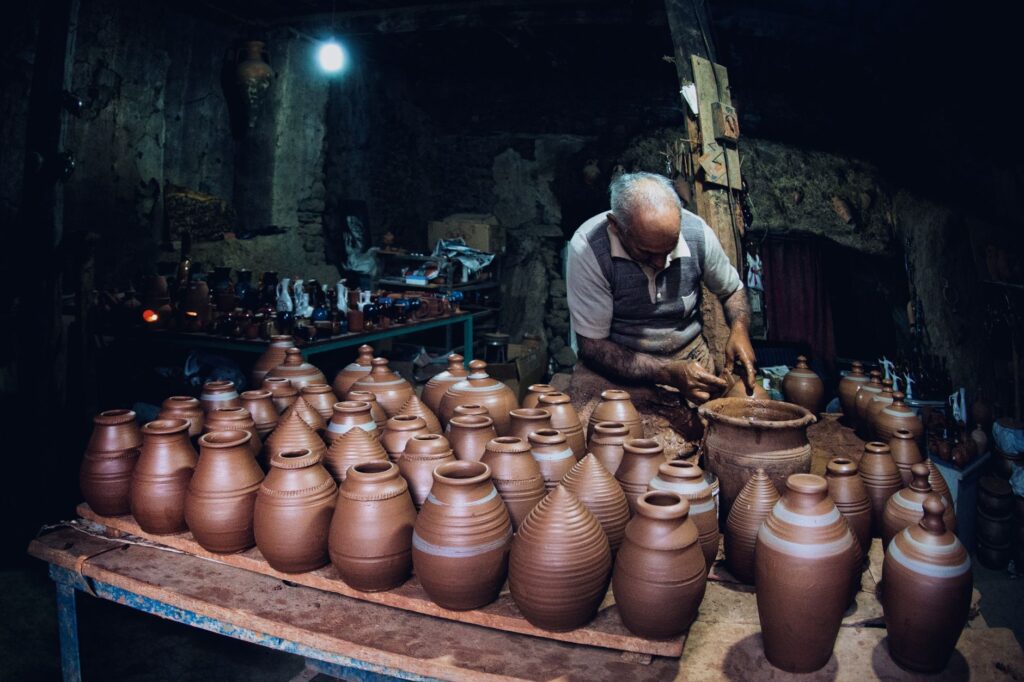
The production process begins long before the brush touches the clay biscuit tile. Selecting the clay sets the first quality filter: it must possess exact plasticity and adequate porosity to withstand thermal shock without cracking. Seville’s master ceramicists typically work with local earth blends that yield a characteristic reddish tone, an ideal base for subsequently heightening the vibrancy of glazed enamels. Once the base pieces are molded and air-dried, designs are applied using historic perforated templates or through the expert hand of draftspersons reproducing geometric patterns of Mudejar and Renaissance lineage.
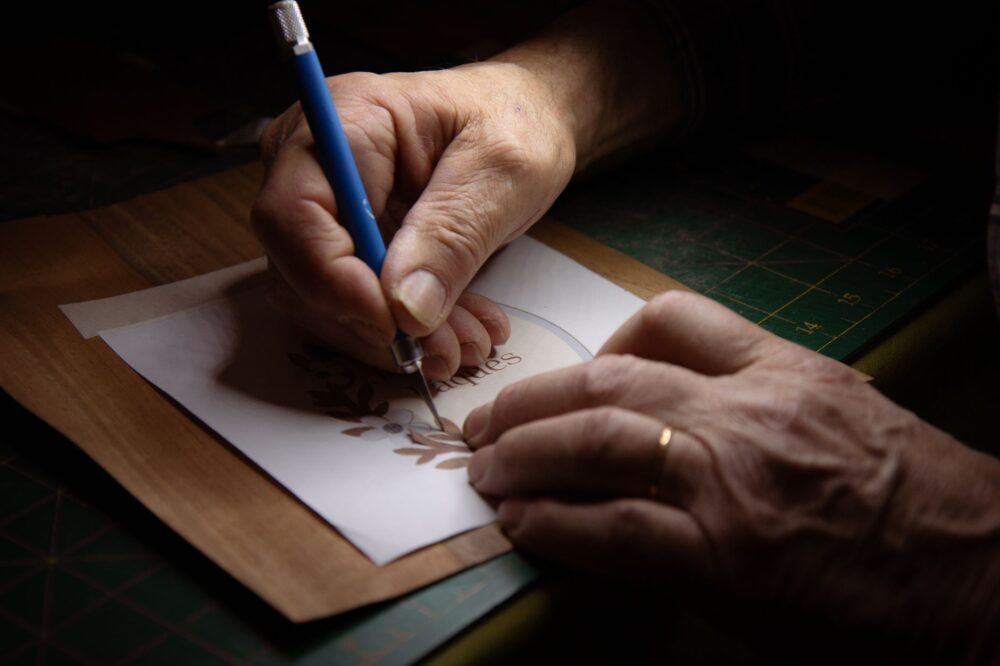
The defining element of the technique—the dark line from which it takes its name—requires extraordinary manual dexterity. The applicator, a traditional syringe or rubber bulb with a fine cannula, must deposit the greasy mixture at a constant, uniform speed. If the stroke is too thin, the glaze will overflow its compartment during firing, ruining the piece; if too thick, it robs the ornamental motif of elegance and definition. This preliminary step transforms the workshop into a space of absolute silence and extreme concentration, where each artisan breathes in rhythm with the pulse tracing the perimeter of the eight-pointed star, the Islamic strapwork, or the stylized floral motif.
Contemporary Workshops Facing the Sustainability Challenge
In the 21st century, Seville’s cuerda seca workshops face unprecedented challenges far surpassing mere competition with Asian industrial production. The scarcity of generational handover, rising energy costs to fuel ceramic kilns, and environmental regulations concerning heavy metals in glazes demand constant reinvention. Far from constituting a static museum, these workshops operate as laboratories for artisanal R&D, where young creators trained in fine arts collaborate closely with veteran throwers and glazers to adapt traditional formulas to current ecological standards without losing their original aesthetic purity.
This transition toward cleaner methods includes optimizing high-efficiency electric kilns and recycling clay waste for subsequent production cycles. Nevertheless, masters insist that the true sustainability of the craft lies in client education and the valorization of unique objects. Purchasing a certified, handmade cuerda seca panel in Seville entails accepting a waiting period that contrasts sharply with global consumption immediacy. Each tile is a fragment of applied history requiring days of manual labor, from raw material extraction to the final cooling ramp in the kiln.
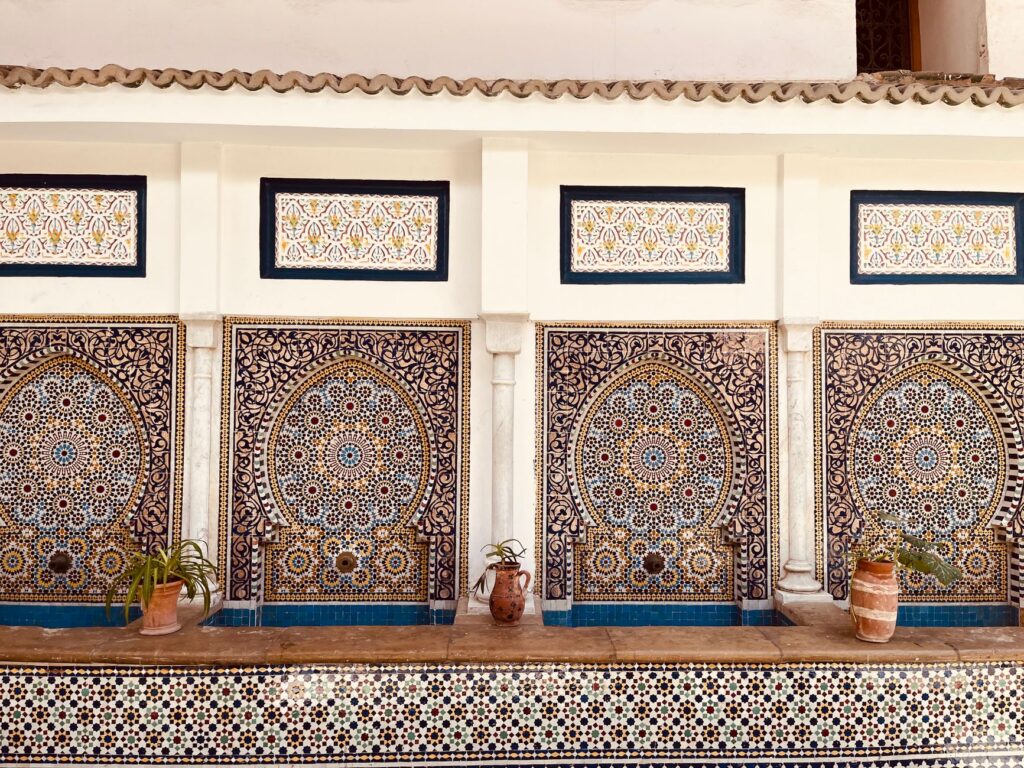
The true value of traditional ceramics lies not in industrial geometric perfection, but in the subtle vibration of the human stroke that fire permanently fixes in the memory of the wall.
Color as Structure: From the Palatial Palette to Modern Design
The chromatic repertoire of classical cuerda seca relied on a restricted yet intensely visual gamut: pure white, copper green, molasses yellow, manganese blue, and the black of the delimiting line itself. This chromatic limitation, far from impoverishing the result, compelled artisans to seek maximum expressiveness through contrast and the modulation of surfaces. Today, Sevillian design studios experiment with new enamel families introducing matte nuances, crackled textures, and subtle gradients, opening doors to collaborations with internationally acclaimed architects seeking custom ceramic cladding for contemporary interior design and ventilated facades.
This dialogue between monumental tradition—visible in the Real Alcázar or the Casa de Pilatos—and minimalist architectural trends demonstrates that cuerda seca possesses unexpected versatility. A ceramic panel executed with this technique radically transforms the atmosphere of an urban or domestic space, contributing tactile texture, optical depth, and durability unattainable by synthetic materials. Architects particularly appreciate how changing daylight interacts with the glazed relief of the pieces, generating interplay of shadows and glints that imbue vertical surfaces with a life of their own.
- Rigorous selection of local clays with low soluble salt content to prevent future efflorescence.
- Manual application of the manganese oxide and oil mixture using a millimetric precision cannula.
- Filling chromatic alveoli with precision syringes using aqueous suspensions of frits and metallic oxides.
- Firing in muffle kilns at controlled temperatures between 980 and 1020 degrees Celsius over a twenty-four-hour cycle.
- Individualized quality control, discarding pieces with air bubbles in the glaze or discontinuities in the black line.
The Secret Geography of Glazed Clay in Seville
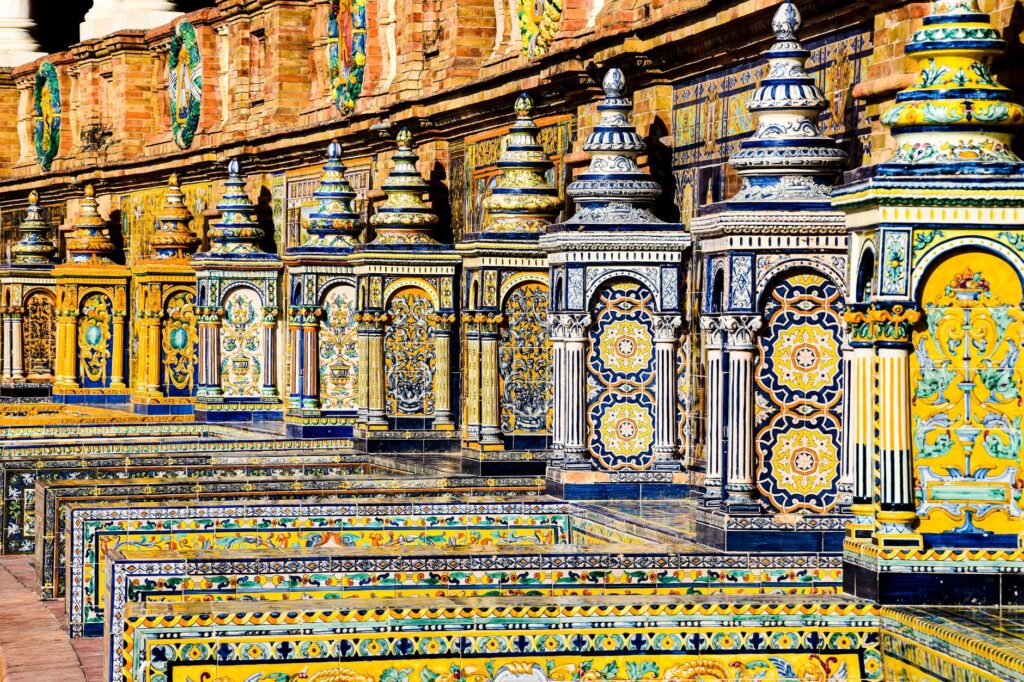
The map of Sevillian ceramics transcends physical workshop boundaries to integrate organically into the city’s historic urban fabric. Walking through the neighborhoods of Triana, Santa Cruz, or el Arenal is like reading an open art history textbook at street level and across the wainscots of historic street corners. Street name plaques, devotional altarpieces guarding street corners, and major advertising panels from the early 20th century executed by historic factories like La Cartuja de Sevilla form an open-air museum best explored with a slow, analytical gaze.
For travelers interested in cultural intrahistory, visiting these enclaves connects decorative objects to their original functions within traditional Andalusian architecture. Cuerda seca ceramics were never meant to be guarded behind museum glass, but rather to form an active part of the partition wall, protecting structures from dampness, thermally regulating interior courtyards, and beautifying citizens’ daily transit. Understanding this dual utilitarian and aesthetic vocation is key to truly valuing the titanic effort sustained today by the capital’s remaining artisanal workshops.
Practical guide
Planning a route through Seville’s ceramic workshops and points of interest requires attention to the schedules of active craft studios, many of which maintain intimate working dynamics rather than mass-tourism orientations.
Getting there and getting around: Seville Airport (SVQ) connects with major European capitals. To navigate the city and access traditional workshops in Triana and the historic center, walking or using the bike lane network (Sevici) is most efficient, complemented by light metro lines when necessary.
When to visit: Spring (March to May) and autumn (October to November) offer ideal thermal conditions for touring workshops without Seville’s extreme summer heat, also facilitating attendance at open-air live demonstrations.
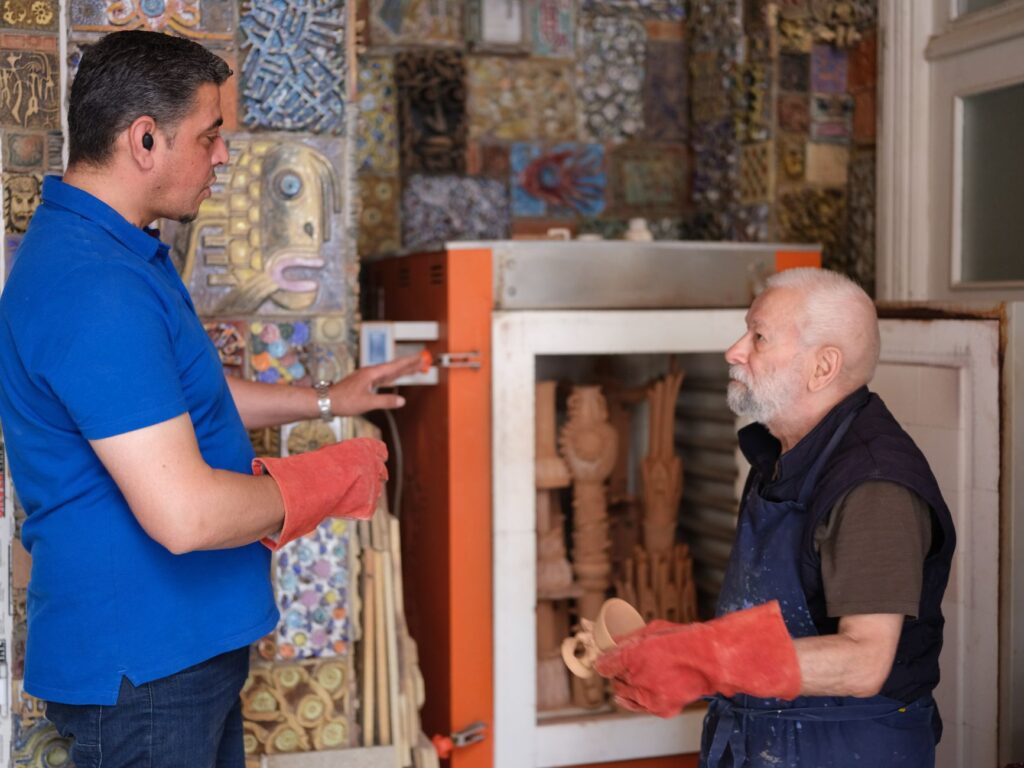
Recommended workshops and spaces: Advance appointments are essential for independent craft studios on Calle Alfarería and surrounding areas in Triana, alongside the Centro Cerámica Triana, which offers a rigorous museographic overview of the craft’s technological evolution.
Etiquette and purchasing rules: When visiting an active workshop, respect working areas housing kilns and heavy machinery. If commissioning custom pieces or bespoke panels, note that artisanal production timelines generally range from four to eight weeks due to drying and firing schedules.
The Echo of Fire in the Memory of Triana
At journey’s end, when the golden sunset light breaks over the waters of the Guadalquivir and bathes the rooftops of Triana, ceramics reveal themselves not as a vestige of the past, but as a living pulse beating deep within the city. In every tile fired at a thousand degrees survives the memory of generations of artisans who mastered fire and color, turning humble clay into a mirror of eternity. Pausing before an old cuerda seca wainscot in a convent courtyard or witnessing the birth of a new piece in the silence of a contemporary workshop is, ultimately, an act of reconnection with what is slow, tangible, and truly human amidst contemporary velocity.