
The industrial heartland of Western Europe beats to the rhythm of a railway network that, for over a century and a half, has defined the economic and social physiognomy of the Ruhr basin. Between the urban density of Essen and the fluvial port hub of Duisburg, the network of tracks does not merely constitute a means of transport; it is the circulatory system that fueled the continent’s coal and steel revolution. This territory, shaped by human labor and heavy engineering, represents a paradigmatic case study of how transport infrastructure can vertebrate an entire region, adapting to historical shifts and energy transitions without losing its trunk-line vocation.
Understanding the magnitude of this logistical artery requires looking beyond the hyper-connected present and tracing back to the second half of the 19th century, when the urgent demand for coking coal and iron ore transformed German agricultural fields into a sea of chimneys, blast furnaces, and classification yards. Today, travelers traversing this corridor discover a landscape where industrial archaeology dialogues with cutting-edge urban planning, demonstrating that rail mobility is the key to territorial resilience and metropolitan integration.
The Foundations of Coal and Steel: Genesis of a Vital Network
The genesis of the railway corridor between Essen and Duisburg is inextricably linked to the expansion of deep-coal mining and the consolidation of the steel industry led by dynasties such as Krupp. By 1850, existing cobbled roads and river canals proved insufficient to absorb the colossal volume of raw materials demanded by European markets. It was then that private railway companies, subsequently nationalized under the Prussian State Railways, laid down the first high-density lines designed to connect mine mouths with loading docks along the Rhine.
This initial construction phase was marked by monumental civil engineering. Engineers of the era had to design daring topographical solutions to overcome gradients generated by underground mining activity, which was already causing differential terrain subsidence. The railway did not merely haul heavy cargo; it operated as an integrated logistical platform coordinating imported ore with the massive distribution of coal to energy transformation centers across Central Europe.

Railway Architecture and Monumental Stations
Along the approximately thirty-five kilometers separating central Essen from Duisburg station, the architectural heritage of the railway stands as an eloquent testament to the technical and institutional ambition of the German Empire and the subsequent Weimar Republic. The principal terminals were conceived not only as functional exchange hubs, but as true secular cathedrals designed to project the modernity and industrial might of the State to citizens and foreign investors.
Original structures combined robust exposed-brick facades with large metal arched roof structures over the platforms, designed to withstand soot and intense operational activity. Although many of these facilities suffered catastrophic damage during World War II bombing raids, subsequent reconstruction efforts respected historical volumetry while incorporating the first electrical signaling systems and centralized mechanical interlocking.
Logistical Transformation: From Fossil Coal to Metropolitan Mobility
With the progressive decline of coal mining and the restructuring of heavy industry during the latter decades of the 20th century, the Ruhr railway corridor faced its greatest existential challenge. The loss of traditional bulk freight traffic forced public operators to completely redesign the infrastructure’s operational strategy, shifting from an extractive unimodal model to a high-frequency multimodal system focused on passenger mobility and light freight logistics.
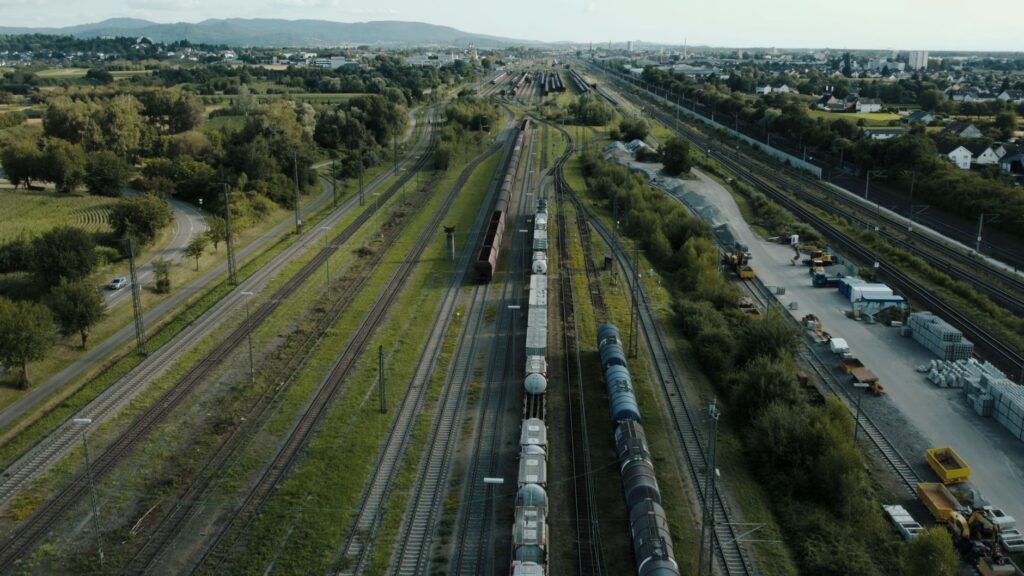
Today, this axis forms a backbone of North Rhine-Westphalia’s integrated transport system. Tracks that once carried hoppers filled with anthracite now host ICE high-speed formations, S-Bahn commuter trains, and intermodal container convoys connecting Germany’s interior with North Sea ports. This evolution demonstrates the intrinsic flexibility of robust infrastructure, capable of reinventing itself without losing its historical function as a connector of dynamic economies.
The railway in the Ruhr is not a monument to an industrial past, but a living infrastructure constantly reinterpreting its territorial purpose.
Topographic Challenges and Maintenance in a Densely Urbanized Environment
Operating a high-capacity railway network in one of Europe’s densest urban agglomerations poses extraordinary technical challenges. The phenomenon of mining subsidence—the progressive sinking of the terrain due to abandoned underground tunnels—demands continuous geotechnical monitoring and extremely precise track-leveling operations, typically executed during nighttime traffic-lull windows.
Likewise, the saturation of urban space has historically limited surface expansion possibilities, forcing operators to prioritize digital optimization of existing capacity through the European Rail Traffic Management System (ERTMS) and automated switchgear. Every kilometer of track between Essen and Duisburg is the result of a delicate balance between massive mobility demand and strict environmental regulations protecting urban green corridors that have emerged over former industrial zones.
The Human Pulse: Workers, Passengers, and the Memory of Metal
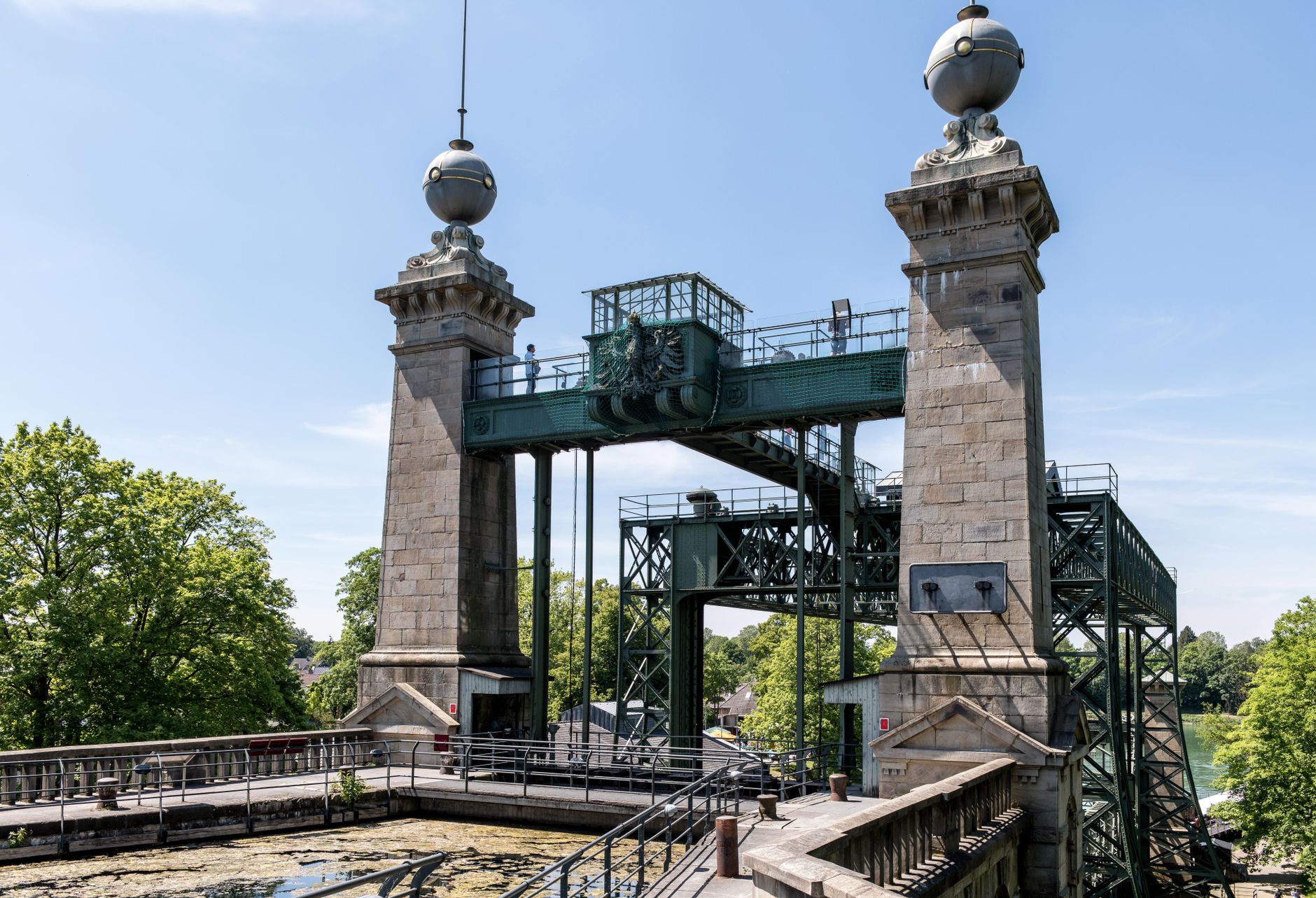
Beyond strictly technical and logistical aspects, the Ruhr railway is deeply embedded in the cultural identity of its inhabitants. Generations of working-class families have linked their life trajectories to the rhythm of commuter trains, maintenance workshop sirens, and the unmistakable silhouette of metal bridges crossing the Rhine-Herne Canal. This collective memory manifests today in open-air museums, cycling routes laid over former railway branches, and a social perception that values the train as the great democratic unifier of the territory.
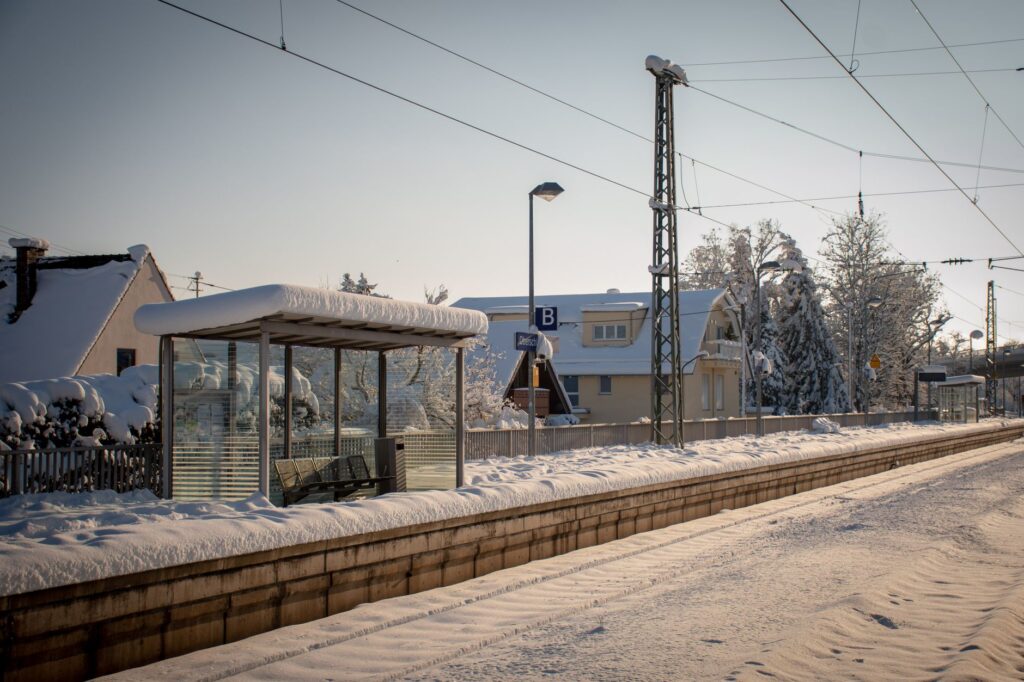
The daily interaction among thousands of commuter travelers—students, engineers, healthcare personnel, and emerging technology workers—endows the corridor with inexhaustible human vitality. Platforms converge with accents from around the world, reflecting successive migration waves that articulated postwar reconstruction and continue to enrich the region’s social fabric today.
Sustainability and Future: The Ruhr Green Corridor
Within the framework of European decarbonization and green transition policies, the Essen-Duisburg rail axis faces a new phase aimed at consolidating its role as the backbone of climate-neutral mobility. Current investments focus on the complete electrification of shunting tracks, noise reduction through state-of-the-art acoustic barriers, and the integration of stations with zero-emission local public transport networks, such as trams and electric bus fleets.
This commitment to sustainability aims not only to improve travel times and energy efficiency, but also to repair and enhance the surrounding landscape. Disused former railway classification yards have been converted into metropolitan parks and urban nature reserves, proving that transport infrastructure can harmoniously coexist with the ecological recovery of the territory.
Practical guide
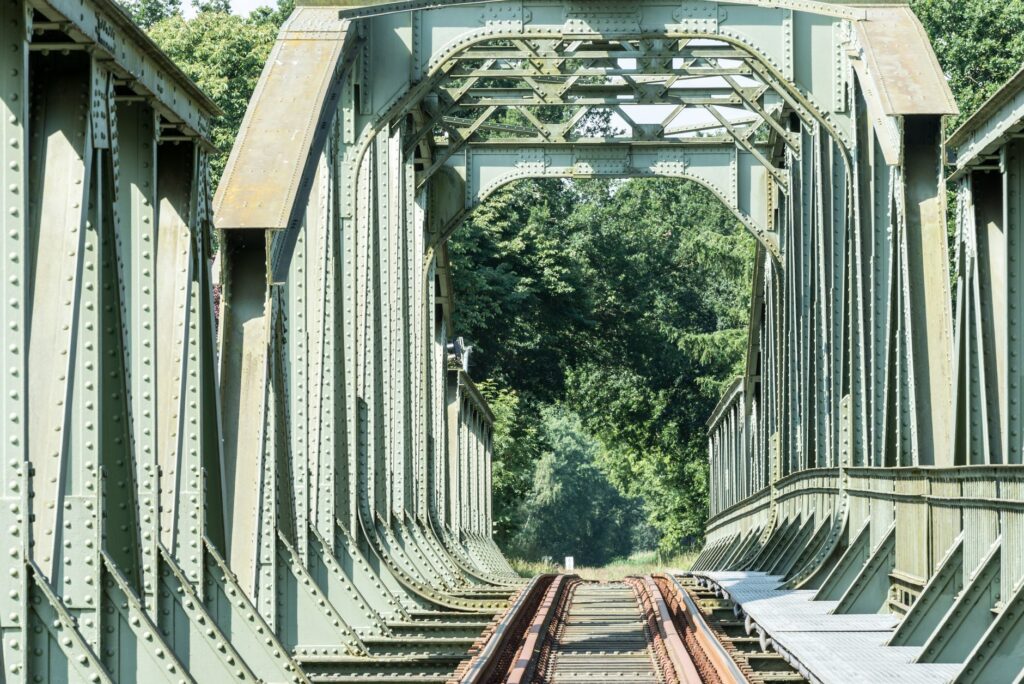
To explore and understand the Ruhr railway corridor with technical and historical rigor, planning the itinerary using regular commuter services (S-Bahn) and regional trains operated by DB Regio is strongly recommended, offering optimal frequency throughout the day.
- Getting there: Düsseldorf International Airport (DUS) is less than twenty minutes away by regional train from Duisburg and Essen, connecting directly to the German trunk network.
- Best time to visit: Spring months (May to June) and early autumn (September to October) offer stable weather conditions and optimal lighting for industrial architecture photography.
- Strategic accommodation: Essen offers an excellent hotel infrastructure linked to its historical and financial center, while Duisburg stands out for options near the interior port and fluvial dock area.
- Internal transit: The integrated fare system of the Verkehrsverbund Rhein-Ruhr (VRR) allows travel on all regional trains, S-Bahn networks, subways, and regional buses with a single daily or weekly ticket.
- Key recommendations: Visiting the Zeche Zollverein industrial complex in Essen and the Landschaftspark Duisburg-Nord is essential to appreciate the true scale of integration between industry, architecture, and communication routes.

The relative silence preceding the arrival of a high-speed train at Essen central station contrasts sharply with the roar of steam, iron, and coal that characterized the birth of this corridor over a century ago. Today, observing the silhouette of trains gliding smoothly over a landscape reclaimed for nature and culture reveals the true dimension of a masterpiece of European engineering: a network that not only unites cities, but carries the future of an entire industrial civilization.