
The Frontier Where Water Shapes Desert Geography
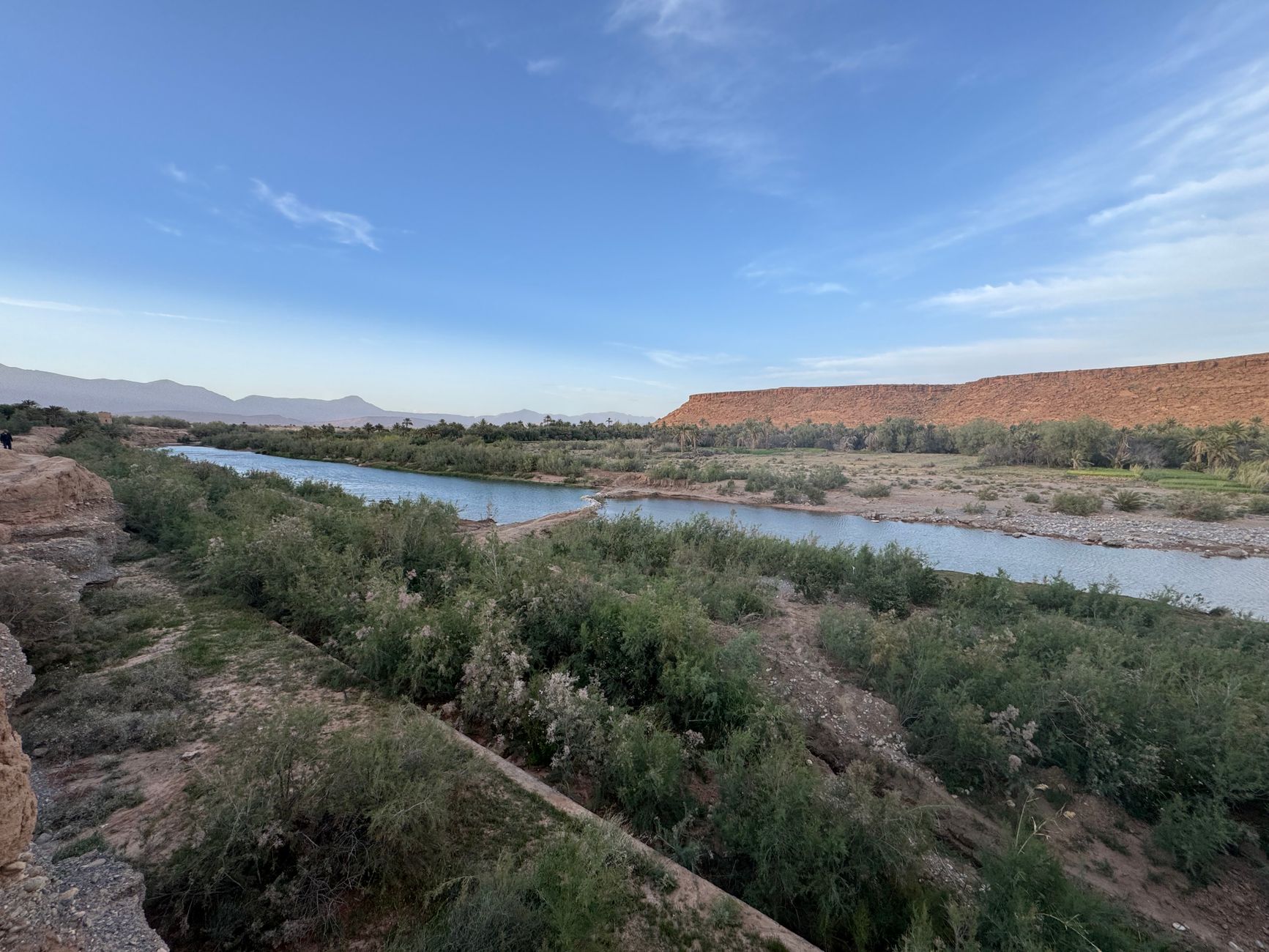
Southern Morocco is not an unchanging void, but a corridor sculpted by the discontinuous pulse of the Draa River. In this transition territory between the Atlas steppes and the vastness of the Sahara, underground and seasonal water has dictated the rules of human survival for millennia. The geography of the river valleys manifests through a dense network of chained oases, where the intense green of the palm trees contrasts sharply with the ocher aridity of the surrounding plateaus. Far from the monolithic image of virgin dunes, the Draa Valley reveals a deeply humanized cultural landscape, anchored by ancient caravan routes connecting sub-Saharan Africa with Mediterranean ports.
The compression of space within this river corridor responds to a logic of scarcity and precision. Every drop of water descending from the snowy peaks of the High Atlas is measured, channeled, and distributed through complex traditional engineering structures known as khettaras and gravity canals. These hydraulic solutions, passed down through generations, allow tiered terrace farming under the protective shade of millions of date palms. It is in this fragile balance that the true essence of traveling through the Draa resides: a territory that demands a slow, deliberate gaze from the visitor, capable of deciphering the overlapping layers of history, commerce, and climatic adaptation defining Morocco’s southernmost frontier.
Raw Earth Architecture and the Geometry of Ksour
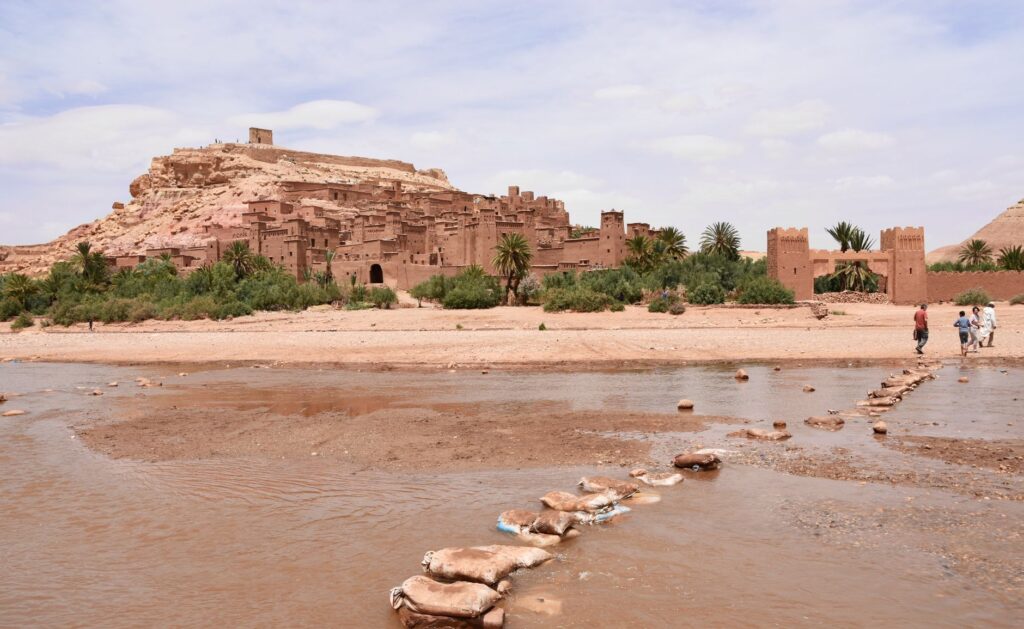
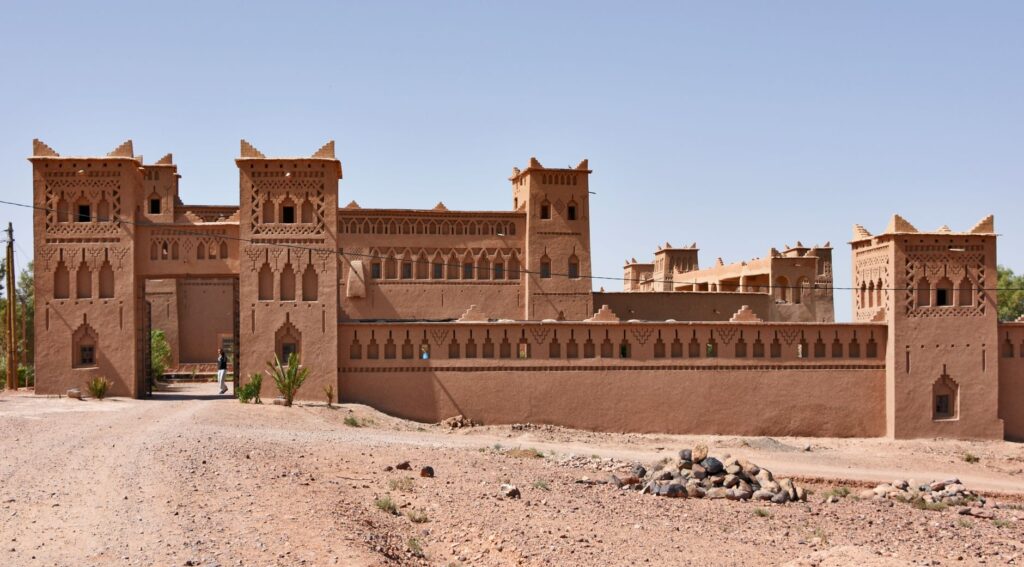
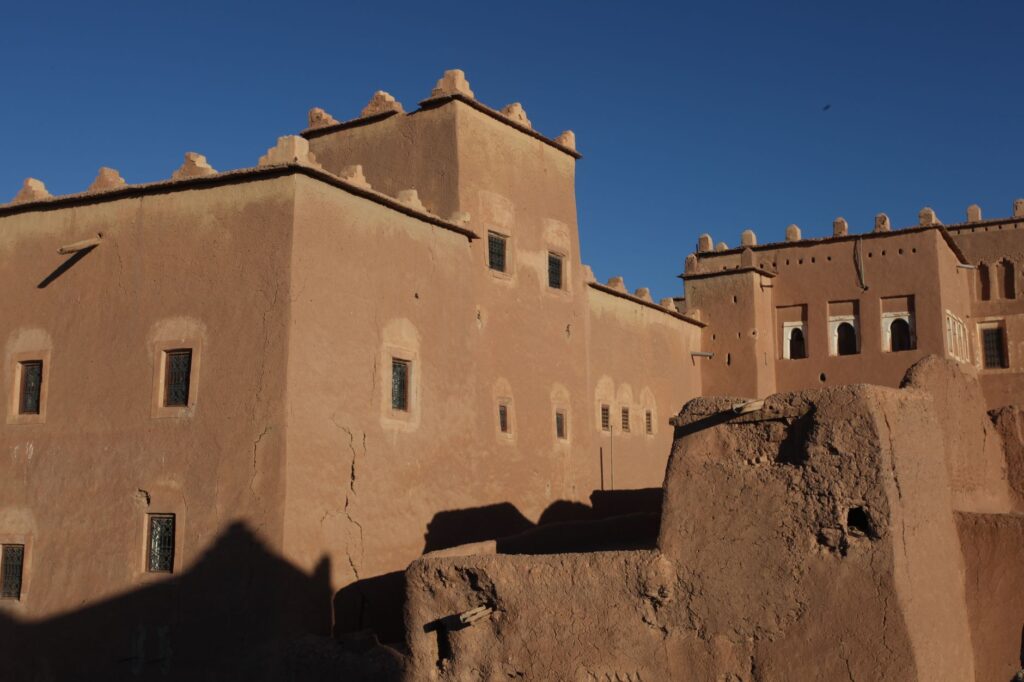
The materiality of the Draa Valley is inextricably linked to the earth. Along the more than two hundred kilometers separating Agdz from M’hamid El Ghizlane, local populations have built their homes using exclusively adobe, straw, and water. Ksour (fortified villages) and kasbahs (stately fortresses) emerge from the ground with the same mineral hue as the surrounding mountains, creating an astonishing visual continuity. These architectural complexes are not mere aesthetic testimonies, but high-efficiency bioclimatic responses: rammed-earth walls over half a meter thick act as natural thermal regulators, keeping interiors cool during scorching summer days and retaining accumulated warmth when nighttime temperatures drop.
The urban layout of these settlements responds to defensive and communal needs. Narrow, labyrinthine streets, covered in many sections by porches to generate permanent shade, protect inhabitants from sandstorms and the blazing sun. Watchtowers, crowned by Berber geometric motifs, cap the corners of the walls, recalling a past when the control of water and the commercial routes of salt and gold triggered regional geopolitical tensions. Today, the conservation of this vernacular architecture represents one of the greatest challenges for the valley’s communities, who struggle against progressive abandonment and damage caused by sudden river floods and prolonged droughts.
Adobe is not merely a building material in the Draa; it is the fossilized memory of the hands that have molded the valley for centuries, a testament to resilience against the relentless expansion of the desert.
Exploring the interior of these earthen citadels allows one to understand the social structure of the ancient families who controlled trans-Saharan trade. Porticoed interior courtyards, underground grain storehouses, and rooms decorated with palm wood beams evidence a remarkable level of constructive sophistication. However, the abandonment of numerous ksour following emigration toward northern urban centers has accelerated the erosion of this material heritage. Local restoration initiatives, driven by artisans and earth-architecture specialists, seek to revitalize these structures using ancestral techniques, ensuring that the Draa’s architectural legacy does not vanish beneath the dust of time.
The Agrarian Pulse of Palm Groves and Oasis Economy
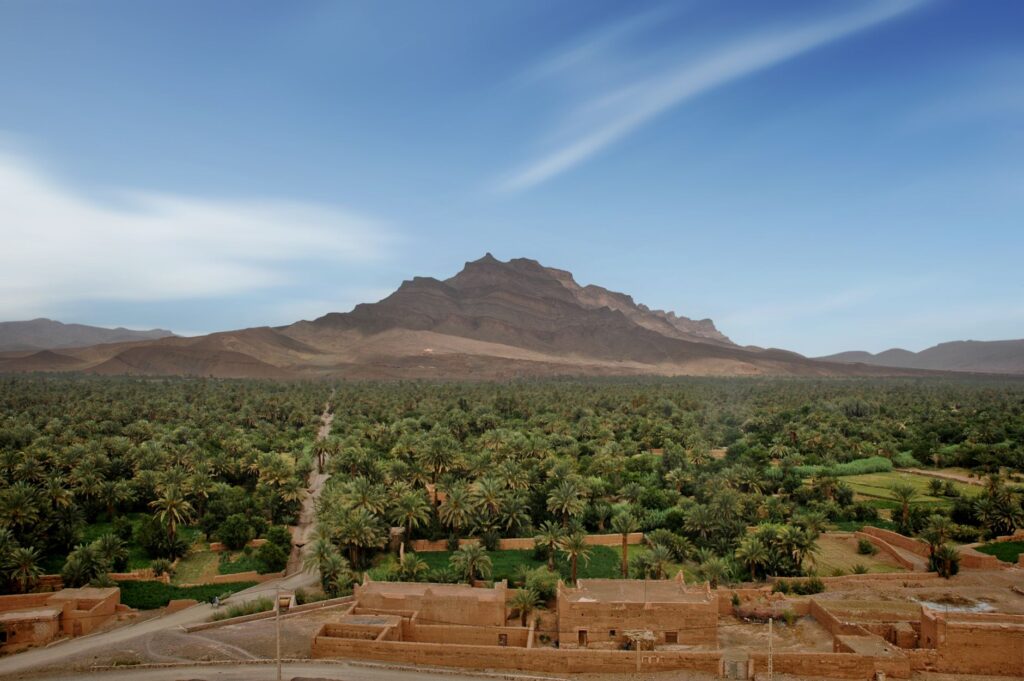
The agricultural system of the Draa Valley is based on polyculture beneath a forest canopy, a highly complex ecological agroforestry model. In the upper stratum, date palms provide essential shade to protect middle crops—such as pomegranates, olives, and figs—from direct solar radiation. On the lower level, family gardens produce vegetables and cereals essential for local subsistence. This three-tier system maximizes water efficiency in a region where rainfall scarcity is the norm, demonstrating an advanced empirical understanding of evapotranspiration and soil fertility.
The oasis economy has historically revolved around the harvest of dates, with the most prized varieties in the region being the firm, almond-flavored fruits locally known as Bouskri and Majhoul. During autumn months, the harvest mobilizes entire families in a collective effort that sets the rhythm of community life. However, this agrarian ecosystem faces severe structural threats today, notably the spread of bayoud disease (a fungus destroying palm trees), diminishing surface water flows, and increasing soil salinity caused by the overexploitation of artesian wells.
Ancestral Water Management and Resource Conflicts
Water distribution in the Draa has never been left to chance. For centuries, communities have organized irrigation through a council of elders and water guardians known as amghar n-targa, who allocate irrigation times to each plot according to strictly regulated historical rights. Each owner holds a time quota measured by sundials or through the exact flow running via stone sluice gates. This communal management has traditionally averted open conflicts over water resources, though in recent decades the pressure of intensive watermelon agriculture in peripheral desert zones has severely strained underground aquifers.
Caravan Routes and the Salt Trade
For centuries, the Draa Valley functioned as the primary artery of trans-Saharan trade. Camel caravans, composed of dozens of animals laden with salt blocks from the Taoudenni mines in northern Mali, gold, textiles, and spices, found in the Draa oases their first supply and rest station after crossing the most inhospitable stretches of the desert. This intense mercantile activity fostered cultural exchange among Arab, Amazigh, and sub-Saharan populations, coining a mixed identity that permeates the music, gastronomy, and oral traditions of the region.
Ancient weekly markets, known as souks, retain part of that atmosphere of ancestral exchange. In towns like Zagora or Tamegroute, Mondays and Thursdays turn into meeting places where nomadic herders from the surroundings trade livestock, forged iron tools, and leather crafts. The route transported not only tangible goods, but also currents of religious and mystical thought. Proof of this is the historic Koranic library of Tamegroute, founded in the 16th century, which houses manuscripts on astronomy, medicine, mathematics, and Islamic theology, written on gazelle skin with vegetable dyes.
The Spirituality of the Desert and Sufi Sanctuaries
The spiritual landscape of the Draa Valley is marked by the presence of Sufi brotherhoods and centers of mystical learning that have played a moderating and cohesive role in local society. The Zawiya of Tamegroute, belonging to the Nasiriyya order, served for centuries as a cultural and religious beacon throughout North Africa, controlling trade networks and offering asylum to travelers and pilgrims. The architecture of these religious complexes stands out for its unique white domes and centuries-old libraries, safeguarding texts of incalculable historical value that reflect the Draa’s role as an intellectual bridge between the Mediterranean and sub-Saharan Africa.
The experience of silence in the ergian expanses marking the end of the valley—especially the dunes of Tinfou and Chigaga—possesses an almost liturgical dimension that has historically attracted poets, mystics, and travelers seeking introspection. Unlike mass tourism frequenting other coastal regions of Morocco, venturing into the confines of the Draa invites active contemplation. Nights under the Saharan firmament, free from light pollution, offer one of the clearest natural astronomical observatories on the planet, a backdrop that has inspired legends about creation and the cosmos among the desert’s nomadic communities.

Practical guide
A practical guide for planning a rigorous journey through the Draa Valley, respecting local heritage and optimizing transportation and lodging logistics.
- How to get there: The natural starting point for entering the Draa Valley is the city of Ouarzazate, accessible via domestic flights from Casablanca or by rental car crossing the Tichka pass via the N9 highway. From Ouarzazate, the route descends toward Agdz, the formal beginning of the valley.
- Recommended transport: Renting a four-wheel-drive vehicle or a high-clearance car is advised, especially if you plan to leave the paved N13 highway to explore interior ksour, dirt tracks into the palm groves, or dune areas in M’hamid.
- Best time to visit: The months between October and April offer the most favorable weather conditions, with mild daytime temperatures ranging between 20 °C and 25 °C. Summer months (June to August) should be avoided, as thermometers regularly exceed 45 °C in the valley.
- Ethical lodging: Prioritize restored kasbahs and guesthouses managed by local cooperatives in places like Tamnougalt, Zagora, and M’hamid. These options ensure that the economic impact of the journey directly benefits resident families in the oases.
- Cultural respect guidelines: When visiting fortified villages (ksour) and religious spaces such as zawiyas, it is essential to dress modestly, ask permission before photographing local inhabitants, and avoid the informal distribution of candy or money to local children to prevent altering community dynamics.
The Final Echo of Caravans in the Oasis Twilight
As the sun descends over the Draa horizon, golden light bathes the rammed-earth walls, and the palm fronds acquire a coppery hue that seems to suspend time. In that crepuscular moment, the traveler understands that the true value of this river corridor lies not in superficial tourist attractions, but in its ability to keep alive a form of human resistance based on collective intelligence, austere management of natural resources, and respect for the unhurried rhythm of the earth. The Draa Valley thus bids farewell, not with fanfare, but with the steady murmur of underground water still flowing beneath the sand, reminding us that life at the desert’s edge is a pact renewed every dawn.