
Conquering the Alpine Summits on Rails
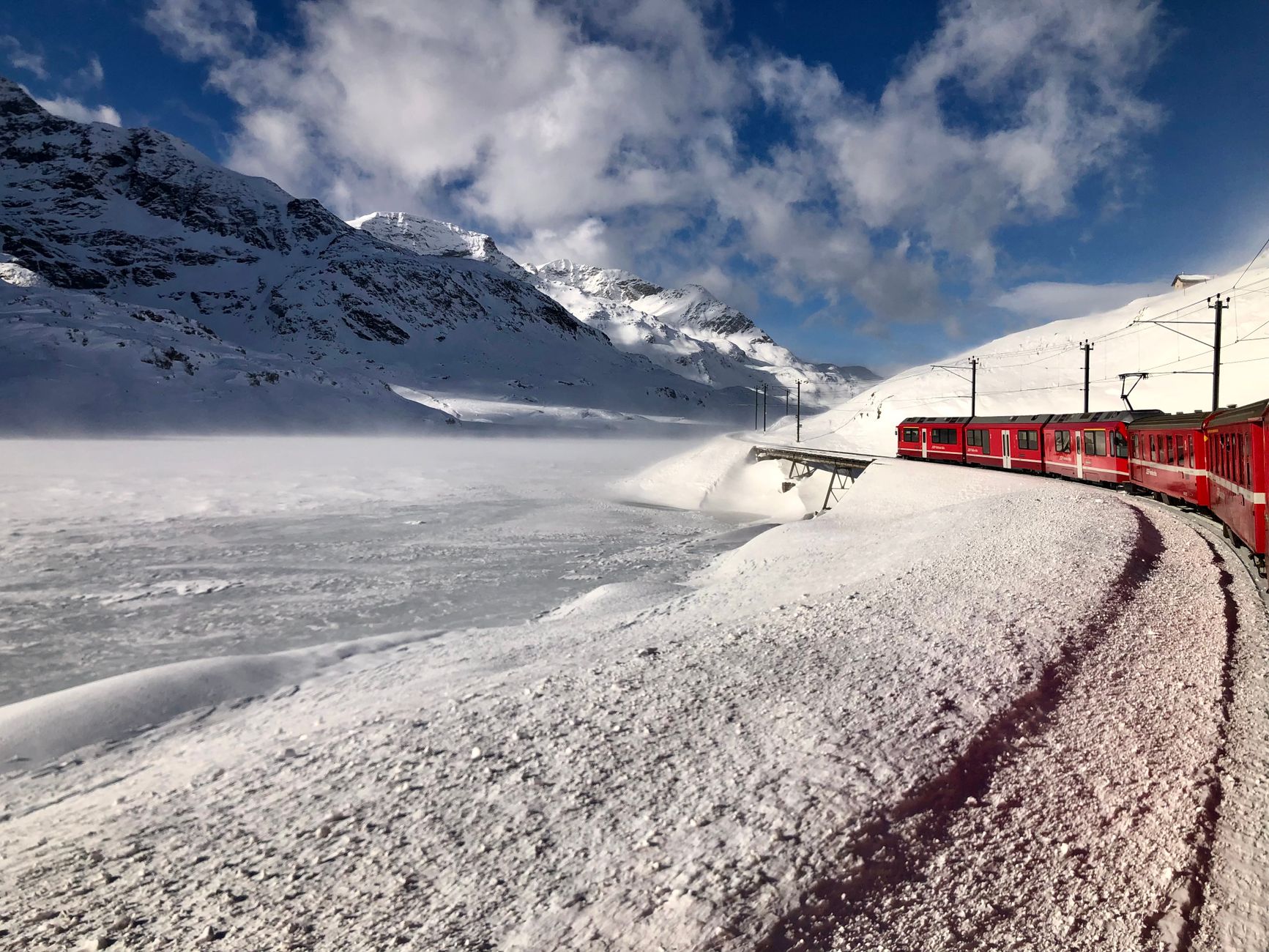
The Alpine territory has historically represented one of the most formidable natural barriers to transit and communication on the European continent. Amid deep valleys and inaccessible massifs, the pressing need to connect isolated communities drove late 19th- and early 20th-century engineers to challenge the physical limits of civil engineering. In this context, the route linking the high-society enclave of St. Moritz with the Mediterranean town of Tirano emerged not merely as a technical feat, but as a vital backbone for commercial and human flows that endures to this day.
The conception of this railway responded to an imperative economic and territorial urgency: overcoming the Bernina Pass without resorting to multi-kilometer base tunnels, a financially unattainable solution for the era. Planners opted for a strategy of landscape integration and pure mechanical adhesion, utilizing every fold of the rock face to gain elevation progressively. This approach kept construction costs under control and ensured consistent operability under extreme meteorological conditions, consolidating a strategic corridor between Central Europe and the Po Valley.
Extreme Topography and the Challenge of Alpine Permafrost
Building along the flanks of glacial mountains demands a millimetric understanding of local geology. At altitudes exceeding two thousand two hundred meters, the terrain is subjected to severe freeze-thaw cycles that threaten the stability of the rail platform. Engineers had to design deep foundations and sophisticated drainage systems to divert meltwater, preventing mudslides and rockfalls from compromising convoy safety during the summer months and frequent winter blizzards.
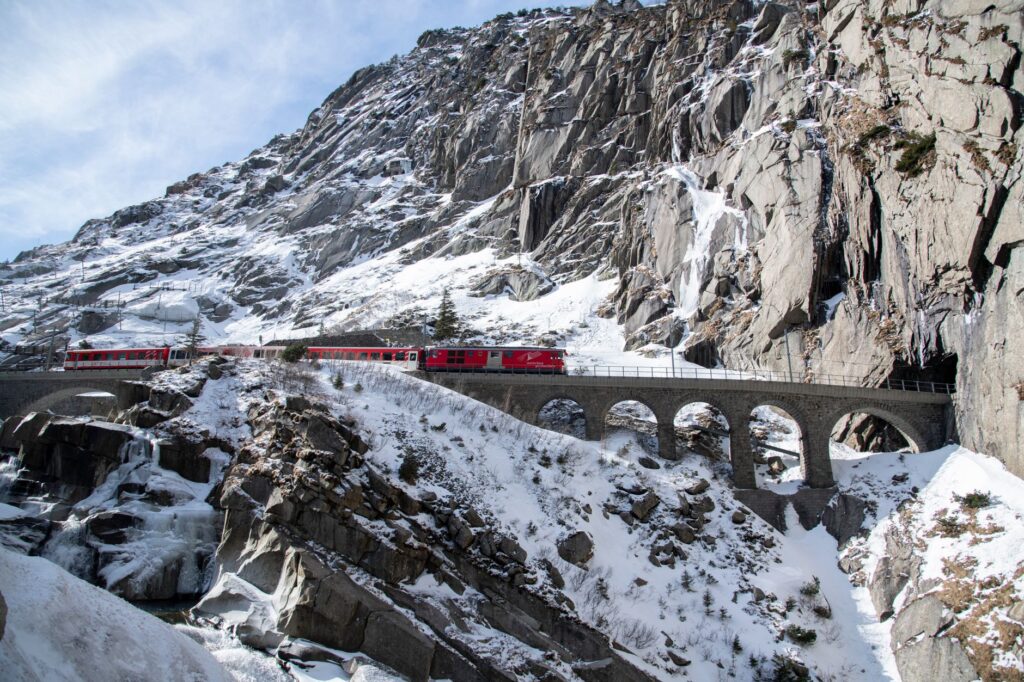
Managing steep gradients, which reach inclinations of up to seventy per thousand without the use of a rack-and-pinion system, constitutes one of the greatest achievements of railway civil engineering. To achieve this, advanced electric traction systems were implemented from the early 20th century, capable of harnessing energy generated during regenerative braking on descents. This innovation not only optimized overall energy consumption but drastically reduced mechanical wear on axles and tracks, setting a technical standard later replicated in other high-mountain routes.
Monumental Architecture on the Roof of Europe
The landscape along the line is dotted with engineering masterpieces that harmonize with a UNESCO-protected natural environment. Outstanding among them is the Brusio circular viaduct, a curved stone structure allowing trains to gain altitude within an extremely tight turning radius, avoiding excessive slopes. This spiral solution not only fulfills an indispensable technical function but has become a visual icon of the harmony between human intervention and alpine topography.
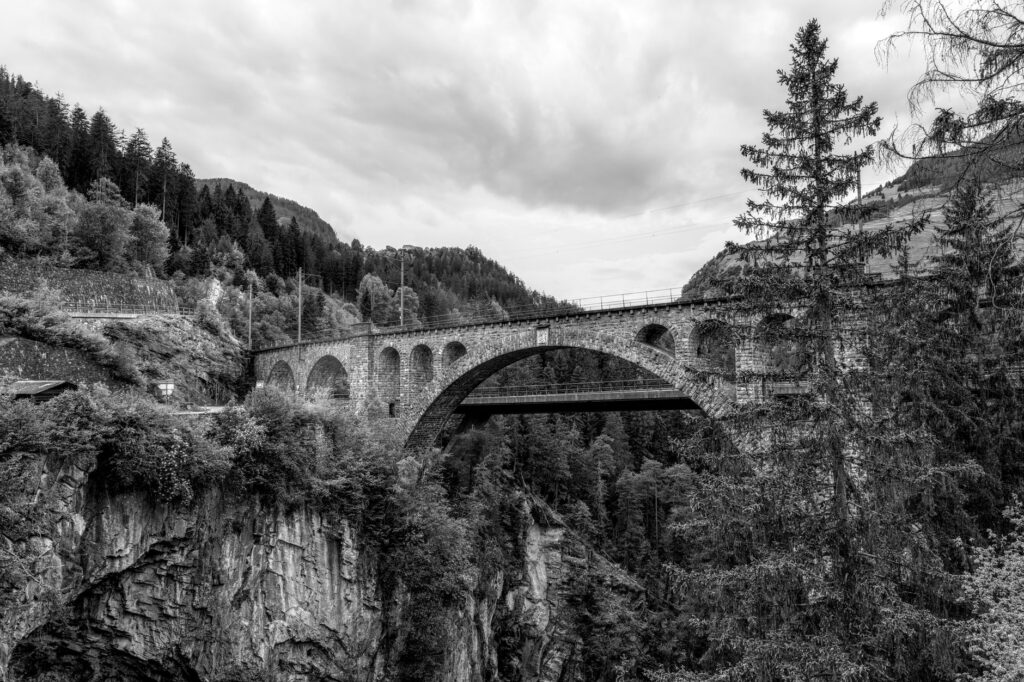
Likewise, the numerous masonry bridges and reinforced concrete and timber avalanche sheds reflect utilitarian architecture designed to withstand the onslaught of avalanches. Each structure has been adapted to the thermal and mechanical stresses of the environment, utilizing local materials to minimize visual impact in a region where landscape aesthetics hold incalculable patrimonial value. The durability of these century-old elements demonstrates the soundness of the original calculations and the skill of the period’s stonemasons and builders.
The railway is not a scar on the mountain, but a guiding thread revealing the capacity of human ingenuity to weave paths where nature seemed to have drawn a definitive prohibition.
Cross-Border Logistics and Alpine Interoperability
Operating an international line between Switzerland and Italy requires coordinating complex technical, customs, and security regulations. The infrastructure functions as a seamless logistical bridge connecting railway systems with standard track gauges but distinct operators, voltages, and operational protocols. Tirano station acts as the neuralgic node where the metric-gauge network of the Rhätische Bahn company converges with the standard-gauge network of Trenitalia, facilitating smooth passenger and regional freight transfers alike.
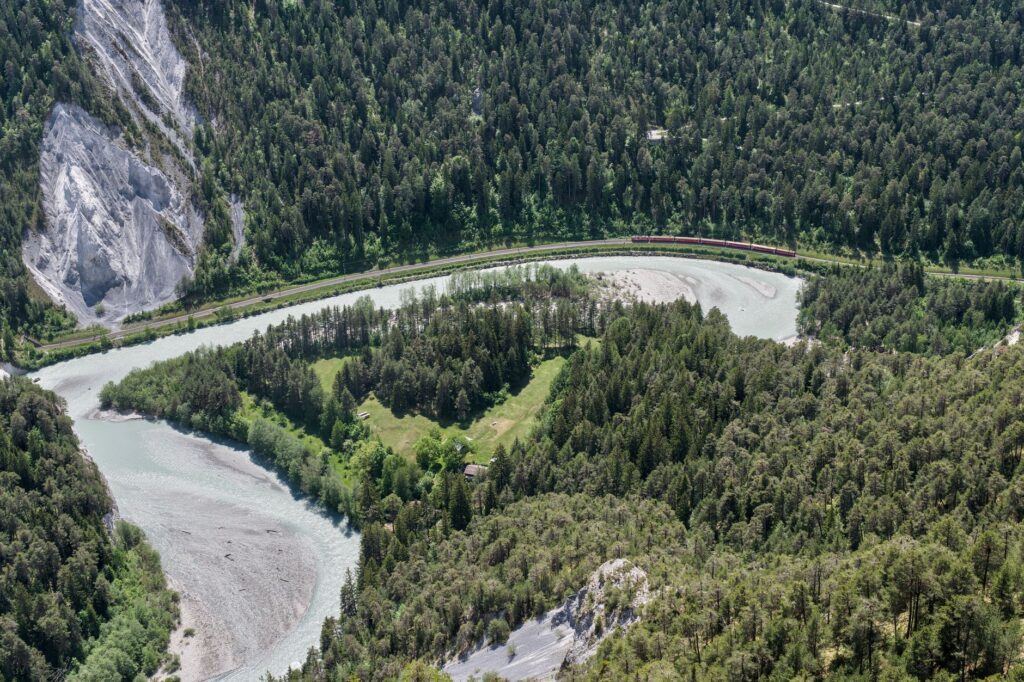
Traffic management along this route relies on a centralized control center monitoring the position of each unit in real time, adjusting schedules to weather variations and seasonal tourist influxes. Unlike high-speed mega-arteries, this corridor prioritizes operational flexibility and resilience against weather contingencies, ensuring that the winter isolation of high valleys is a circumstance of the past and securing a steady supply of essential goods for local communities.
Sustainability and Energy Transition in a Century-Old Network
Within the framework of European sustainable mobility policies, the Bernina railway corridor stands out for its comprehensive decarbonization model. All electrical energy used to propel the trains originates from local hydroelectric power plants situated within the Grisons valleys themselves, closing a local and renewable energy consumption loop. This self-sufficiency reduces direct greenhouse gas emissions to zero during daily operations, positioning alpine rail transport as a real and competitive alternative to road traffic.
Local authorities and rail operators collaborate closely to minimize the ecological footprint of maintenance tasks, utilizing hybrid service vehicles and optimizing waste management along the entire corridor. Furthermore, restricting private traffic in certain high-mountain access points enhances the train’s appeal as the sole mass-access medium respectful of the biosphere reserve’s biodiversity, protecting fragile alpine flora and fauna habitats.
Socioeconomic Impact on Mountain Communities
The continuous presence of the railway has prevented rural depopulation in small alpine enclaves that would otherwise have remained cut off during extended snow seasons. Farmers, artisans, and small business owners depend on this infrastructure to market their products in the regional hubs of Chur and Milan, keeping local economies based on high-mountain livestock and traditional dairy agroindustry alive.
On the other hand, the tourism framework generated by the route has transformed the regional economy without destroying it. Unlike mass real estate developments, tourism linked to this railway fosters a visitor profile respectful of architectural and natural heritage. Historic hotels, rural guesthouses, and local guide services operate in tune with train frequencies, distributing traveler flows evenly throughout the year and avoiding the seasonal overcrowding affecting other European destinations.
Practical guide
How to get there: Primary access to the route is achieved from Zurich or Milan via the national railway network until connecting with the terminal stations of Chur or Tirano.
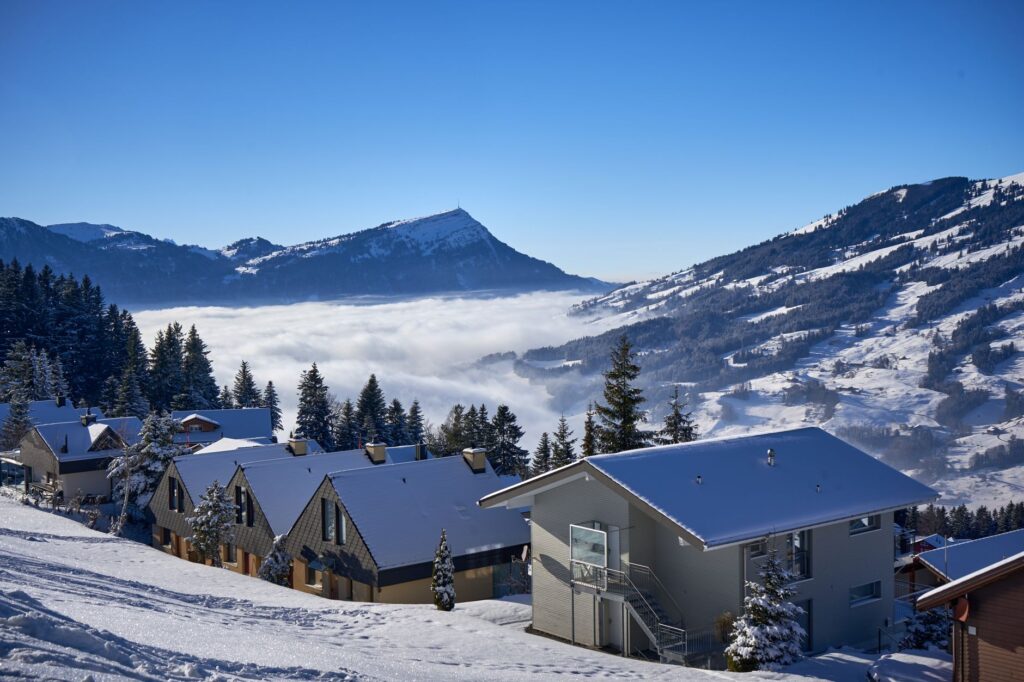
Best time to visit: The spring and autumn months offer an optimal balance between stable weather conditions and lower passenger density, while winter guarantees spectacular snowy landscapes.
Travel requirements: When crossing the border between Switzerland (a non-EU Schengen associated state) and Italy, carrying a valid passport or national identity document is mandatory.
Tickets and reservations: While regional trains permit travel with standard tickets without prior reservation, special panoramic carriages require mandatory seat reservations and a supplement.
Connections and luggage: Stations feature automated locker services and coordinated connections with Swiss postal buses to access secondary valleys not reached by the train.
Safety regulations: Opening carriage windows while the train is in motion outside designated areas is strictly prohibited, and safety signage on platforms and level crossings must be respected.
The Human Pulse on the Horizon of Glaciers
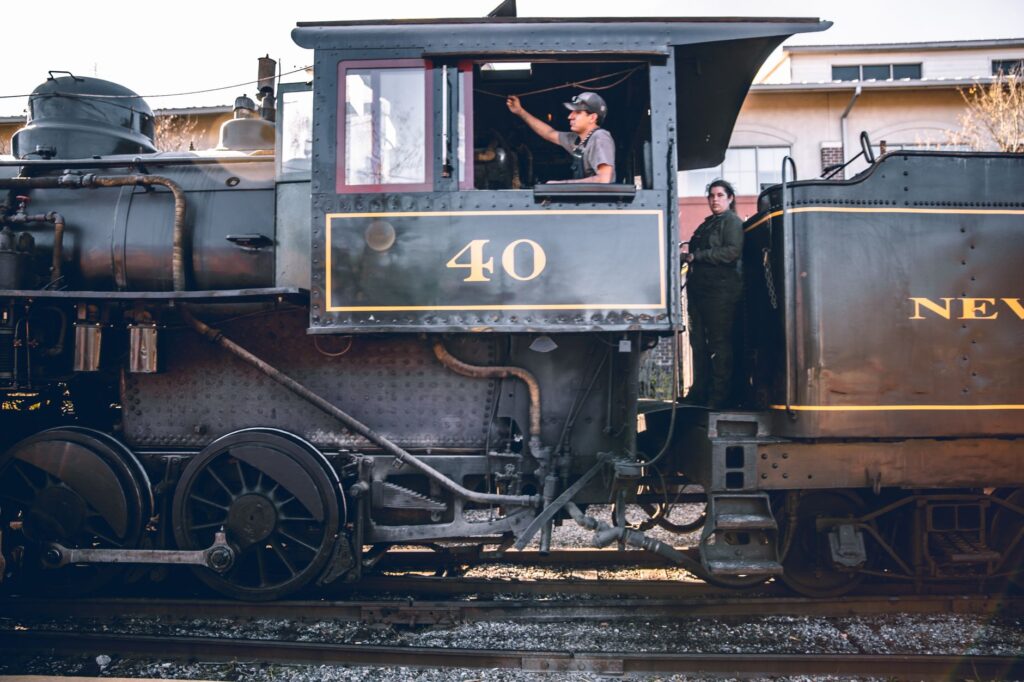
Beyond the statistics of freight tonnage and the chronometric precision of schedules, the true essence of this infrastructure lies in the people who make it possible day after day. Train drivers who know every curve by heart, station masters who greet local residents with familiarity, and maintenance crews braving nighttime blizzards form the invisible human fabric sustaining this rolling monument. Their faces reflect the dignity of a profession anchored in tradition yet adapted to the highest contemporary technological demands.
Witnessing the passage of the train from the solitude of an alpine pasture or from the wooden window of an old station is to experience a sense of permanence in an accelerated world. The Bernina not only unites two contrasting geographies between eternal glaciers and southern vineyards; it also links Europe’s industrial past with a future where slow, respectful mobility regains supreme value. At the end of the journey, when snow-capped peaks give way to Italian cypress trees, the certainty of having traveled through living history remains intact in the traveler’s memory.