Conquering the White and Mineral Emptiness
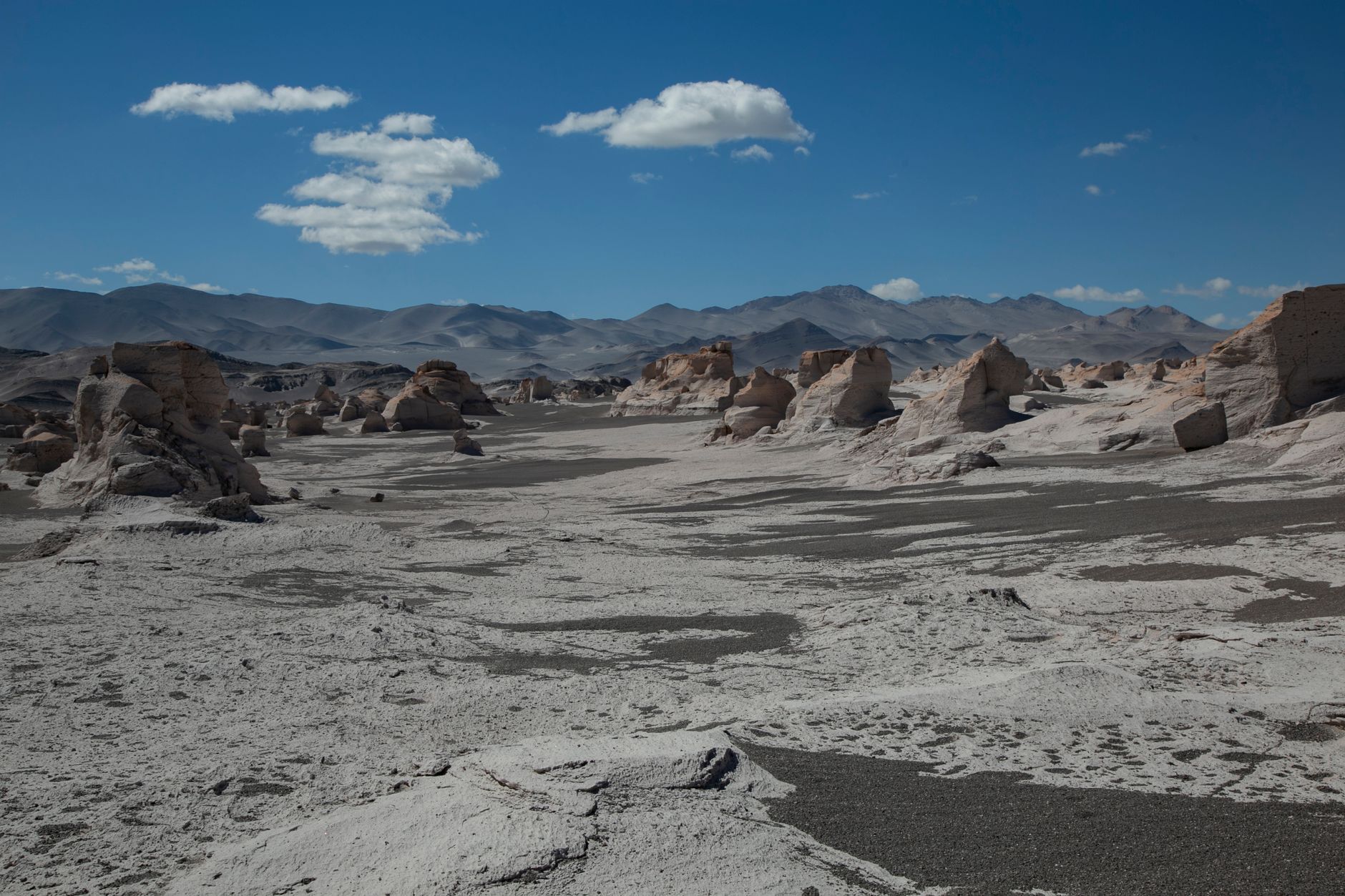
At over four thousand meters above sea level, air becomes a scarce commodity and the landscape narrows down to a mineral expanse of ochre tones, saline whites, and implacable blue skies. In this extreme territory of northwestern Argentina, where the Andes mountain range displays its most severe geography, the railway is not merely a means of transport: it constitutes a vital artery, a feat of nineteenth-century engineering, and the sole umbilical cord connecting isolated hamlets with valley urban centers. The Branch C-14 project, initially conceived by American engineer Richard Maury in the early 20th century, defied geographical logic through a daring layout that dispensed with costly helical tunnels in favor of a dizzying succession of viaducts, loops, and zigzags.
The advancement of the works demanded an unprecedented test of human and technical endurance. Thousands of workers, locally known as track chalchaleros, toiled under extreme weather conditions, enduring gale-force winds, scorching solar radiation, and sub-zero temperatures that cracked steel. The route had to overcome overwhelming elevation gains within kilometers, forcing the design of ingenious solutions such as the famous La Polvorilla Viaduct, a curved metallic structure over sixty meters high suspended over a desolate gorge. Today, examining this railway corridor allows us to understand how high-mountain mobility shapes subsistence economies, niche tourism, and Salta province’s territorial sovereignty.
High-Mountain Engineering and Route Design
The system’s backbone lies in its capacity to adapt to a topography that rejects human intervention. Unlike European railways designed to connect densely populated valleys, the C-14 branch was projected with a clear geopolitical purpose: to link northern Argentina with Pacific Ocean ports across the Andes. This ambition required a monumental technical deployment. The Puna’s steep gradients demanded formations with high-power diesel locomotives capable of generating necessary traction in an environment where oxygen loss drastically reduces engine performance.
The bridges and viaducts dotting the route are true masterpieces of early-century British metallurgy. Every piece of steel was first shipped to Buenos Aires, then carried by broad-gauge train to Salta city, and finally transported by mule pack or carts into the Andean abysses. Corrosion caused by the high salinity of the salt flats and extreme thermal amplitude demands constant and specialized maintenance. Track crews must replace red quebracho sleepers and tighten bolts under unpredictable weather conditions, proving that the line’s survival depends equally on technical rigor and the mystique of its operators.
The General Güemes Workshops: The Mechanical Heart
Far from the cordillera’s lunar landscapes, the town of General Güemes houses the nerve center sustaining the system’s operativity. These railway workshops, dating back to the golden era of state railways, preserve the scent of mineral grease, burnt oil, and cast iron characteristic of old-time heavy industry. Here, a small group of expert mechanics performs preventive and corrective maintenance tasks that anywhere else would be considered industrial archaeology. Century-old lathes, smoking forges, and pulley-driven overhead cranes coexist with electronic diagnostic tools adapted to modern demands.
The scarcity of original spare parts for locomotives forces metal artisans to manufacture their own components from original blueprints or through reverse engineering. This technical self-sufficiency is the railway’s true life insurance. Every repaired part in General Güemes undergoes rigorous pressure and tension tests before being mounted on formations ascending toward the summit. Without this industrial link, situated hundreds of kilometers from the country’s major metallurgical centers, train circulation in the Puna would be a factual impossibility.
Socioeconomic Impact on Puna Communities
For inhabitants of settlements like San Antonio de los Cobres, Olacapato, or Tolar Grande, the railway represents much more than a tourist postcard. Historically, the train operated as the sole vehicle capable of transporting local production—primarily camelid livestock, wool crafts, and minerals like borax or lithium—to consumer markets. Although heavy freight transport has mostly migrated to gravel roads today, the train maintains an irreplaceable social role by guaranteeing the supply of food, medicines, and construction materials to communities lacking paved road access.
The arrival of the tourist convoy generates a complex economic dynamic dividing local communities. On one hand, artisans and small producers find a direct market for their textiles and traditional gastronomy at the station. On the other, excessive dependence on seasonal tourism has created structural vulnerabilities in household economies. Analyzing passenger flow reveals that the system’s true wealth lies in its capacity to stimulate small-scale economies of scale, allowing entire families to maintain traditional lifestyles in a geographically hostile environment.
The Logistics Challenge Amid the Lithium Boom
In recent years, the Salar de Rincón basin and its surroundings have become the epicenter of South America’s lithium rush. The installation of multinational extraction plants has exponentially increased heavy traffic on Puna roads, generating accelerated wear on road infrastructure and latent conflict over water and land use. In this scenario, expert voices point to the urgent need to reactivate the railway branch for mass mineral transport, relieving pressure on roads and reducing the extractive industry’s carbon footprint.
However, the comprehensive reactivation of freight rail faces colossal financial and logistical challenges. Investments required to modernize track laying, install modern signaling systems, and acquire new rolling stock exceed provincial budgets, demanding complex public-private agreements. The tension between industrial development and the preservation of scenic heritage defines the current debate on the region’s transport future, placing the railway at the center of a geopolitical and environmental crossroad of global scale.
Practical guide
How to get there: The gateway to the corridor is Salta city, connected daily by regular flights from Buenos Aires and other national capitals. From the bus terminal or via authorized agencies, visitors can access the Train to the Clouds starting point at General Güemes station or directly reach the high-mountain stretch in San Antonio de los Cobres.
When to travel: The dry season, spanning from April to November, offers the clearest and most stable skies, though nighttime temperatures in the Puna drop drastically below freezing. Between December and marzo, regional summer rains—known as the Bolivian winter—can cause temporary track interruptions due to mudslides.
Acclimatization and health: Due to extreme altitude exceeding 4,000 meters at the highest point of the route, spending at least two previous days in Salta city (1,187 meters) is essential to favor acclimatization. Visitors should avoid heavy meals, consume abundant water, and consult a physician before undertaking the trip if suffering from respiratory or cardiac conditions.
Regulations and bookings: Tickets for the Train to the Clouds must be acquired weeks or months in advance through its official platform or authorized travel agencies in Salta. The service includes combined bus and train segments, featuring onboard medical assistance and guides specialized in local geology and history.
The Slow Heartbeat of the Track on the Andean Horizon
As the sun begins to retreat behind cordilleran peaks, the Puna recovers its ancestral silence, a dense and magnetic quiet broken only by the distant creaking of cooling metal. In Tolar Grande station, the silhouette of the old locomotive rests beneath a firmament where stars seem to shine with unusual, almost tactile sharpness. This Andean outpost, shaped by wind and human effort, proves that railway transport is not merely a matter of economic efficiency, but a form of cultural resistance against oblivion. Clinging to the tracks of Branch C-14 is, ultimately, keeping alive the memory of those who dared to trace an iron path where nature admitted only the flight of condors.