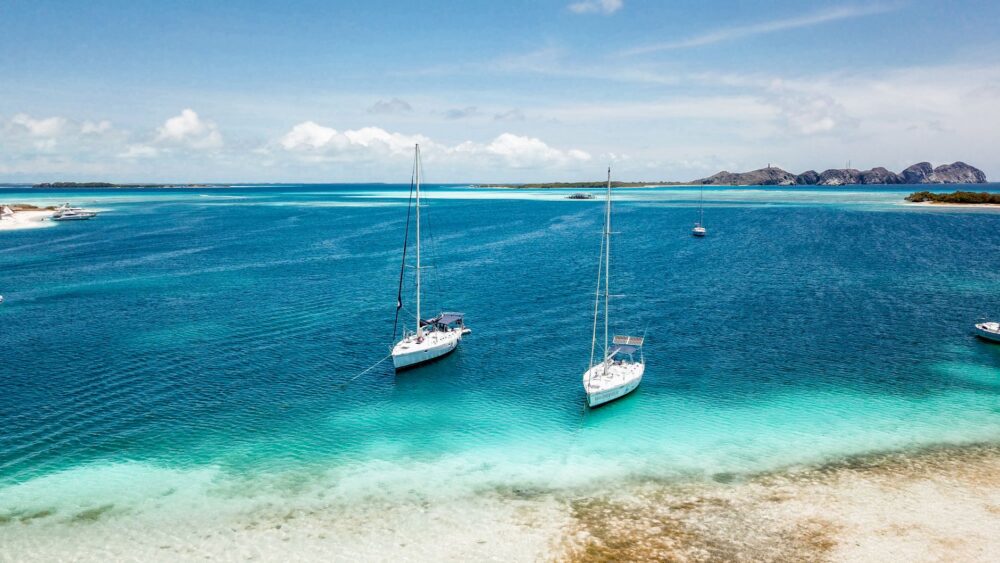

The silhouette of the Isle of Pines, etched against the azure horizon of the South Pacific, conceals a reality of geographic isolation that only human persistence has managed to temper. In this enclave of Polynesia, mobility is not conceived as a mere mechanical displacement, but as a delicate balance between tides, trade winds, and infrastructure that defies the relentless wear of salinity and tropical climate. Every journey between its rugged coastline and the surrounding smaller islands relies on an intermodal transport network where high aeronautical technology coexists with the most traditional boatbuilding craft.
Understanding the dynamics of this territory requires examining the invisible threads connecting its economy, communities, and visitors. Unlike major urban centers on the mainland, time here is dictated not by the clock, but by the draft of vessels and the firmness of landing strips. The following report explores in detail how this Melanesian archipelago manages its demanding connectivity, turning every voyage into a lesson in resilience and adaptation.
The gateway to the sky: laterite runways and regional aviation
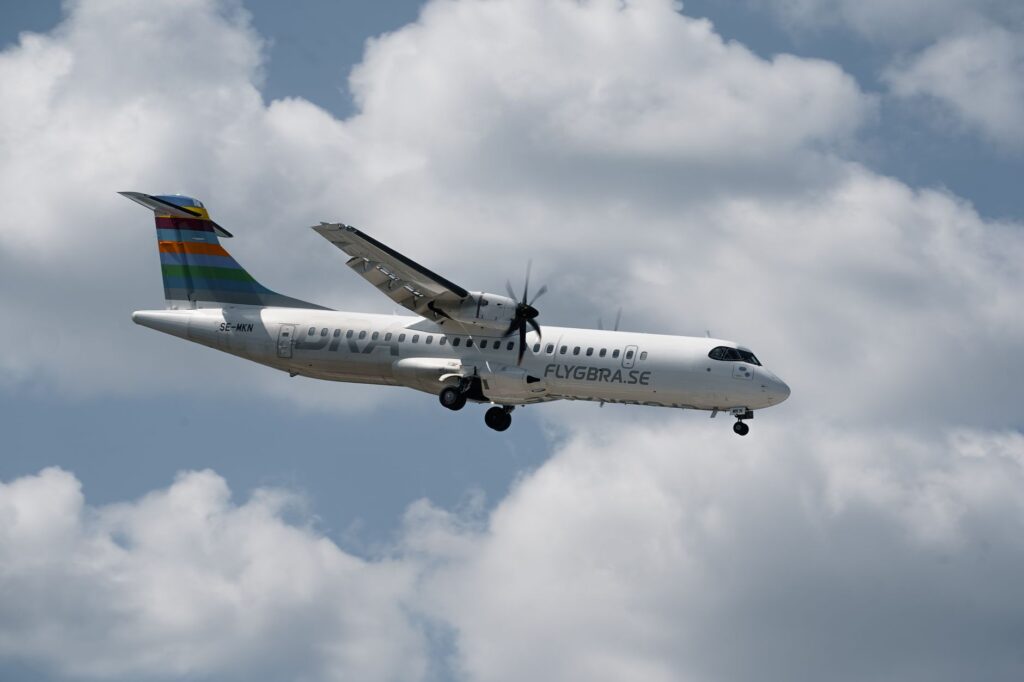
The first contact with the Isle of Pines usually occurs from the air, descending onto a landing strip whose most striking feature is its intense red color. Built upon a bed of laterite, this airfield supports the operations of short-haul turboprop aircraft linking the territory daily with the international airport in Noumea. The engineering of these facilities responds to criteria of extreme simplicity: a rudimentary yet exceptionally well-drained tarmac that prevents water accumulation during torrential summer downpours.
The regional airlines operating this route play a vital role. They not only transport travelers seeking the tranquility of its bays, but also serve as the primary artery for perishable goods and urgent medical supplies. The commanders of these aircraft must contend with unpredictable crosswinds and visibility that changes without warning due to oceanic fronts. Each landing on this strip of red earth is a demonstration of technical expertise and profound knowledge of local meteorology.
Logistics of spare parts and aeronautical maintenance
Maintaining an operational fleet in a remote island presents major logistical challenges. Given that specialized workshops are located hundreds of kilometers away, any minor mechanical failure in a turboprop engine forces the urgent coordination of replacement parts through available cargo flights. Local mechanics work in high-humidity conditions, applying rigorous protocols to combat marine corrosion that permanently threatens fuselages and avionics systems.
This daily effort ensures flight cancellation rates remain at minimum levels, safeguarding residents’ right to mobility. However, operational costs derived from insularity translate into fares requiring careful budgetary balancing for both airlines and frequent users.
The pulse of the sea: cargo schooners and coastal ferries
When weather conditions preclude air operations, the island’s umbilical cord shifts inexorably toward the port of Vao. There, cargo schooners and reinforced-hull ferries assume responsibility for moving tons of heavy goods, construction materials, and vehicles. These vessels, true floating laboratories of human tenacity, navigate channels escorted by coral reefs where cartography must be constantly updated due to shifting sandbanks.
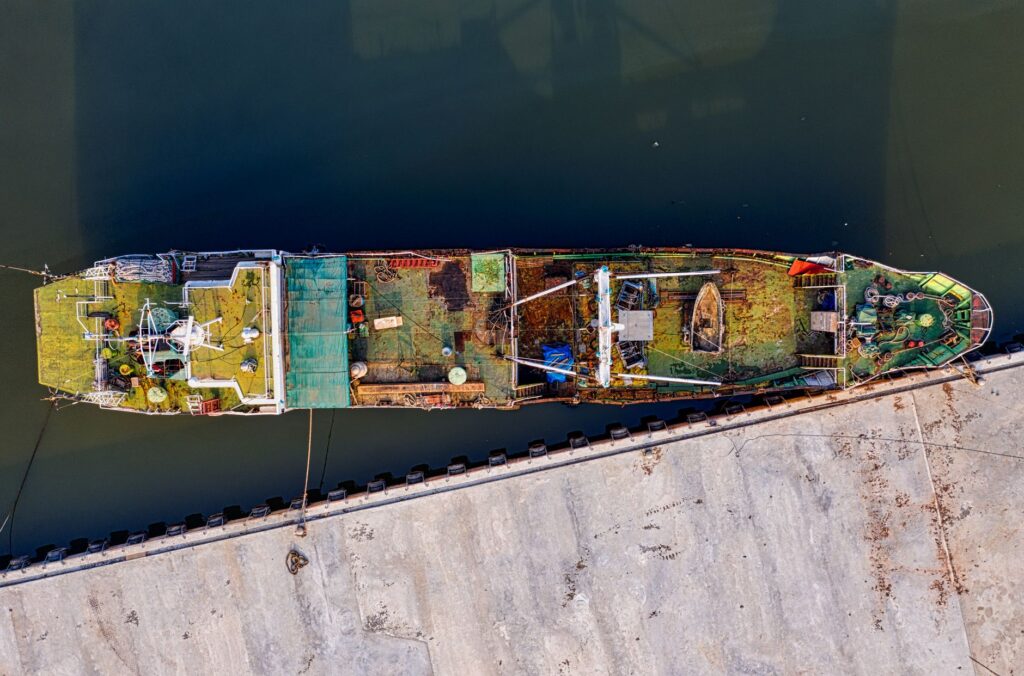
Port operations in this corner of the Pacific are dictated by spring tides. Docks, constructed from volcanic stone and reinforced concrete, withstand the onslaught of relentless swells. Captains of cargo barges combine visual water reading with satellite navigation systems—a blend of empirical knowledge and modern technology indispensable for avoiding submerged hazards lurking near the coast.
Transport in remote islands is not a conventional commercial service; it is the vital tissue preventing isolation from turning into oblivion.
Aboard these vessels, the separation between passengers and cargo blurs. Travelers share deck space with sacks of copra, fuel drums, and provision boxes, generating an atmosphere of insular camaraderie that contrasts sharply with the anonymity of mass transit in the West.
The terrestrial network: all-terrain vehicles and coral roads
Once ashore, internal connectivity depends on a secondary road network characterized by compacted dirt paths and coral gravel. Local buses and adapted all-terrain vehicles are the only means capable of navigating potholes and slippery clay during the rainy season. These terrestrial transport services operate under flexible schedules, always adjusting to the arrival of ships and planes to ensure no passenger is stranded at connection points.
The maintenance of these routes represents a considerable financial burden for local authorities. Erosion caused by tropical rains demands constant grading and aggregate replenishment. Despite these difficulties, the road network fulfills its purpose with notable efficacy, connecting coastal communities with administrative hubs and health centers located in the island’s interior.
The challenge of sustainable mobility in a fragile ecosystem
In recent years, rising road traffic has brought to the fore the need to rethink terrestrial mobility under environmental sustainability criteria. The deployment of electric or hybrid vehicles encounters difficulties in managing charging infrastructure within an insular electrical grid largely dependent on diesel generators. Nevertheless, pilot ride-sharing initiatives and the promotion of cycling among local residents are proving that carbon footprints can be contained without compromising mobility.
Transport planners insist any expansion of road infrastructure must respect the natural environment, avoiding the fragmentation of endemic habitats and protecting subterranean freshwater sources.
The human dimension: faces and routines of insular transit
Behind every printed timetable and port maneuver lies the human factor, represented by sailors, mechanics, pilots, and controllers who sustain the system with vocation and trade. For the inhabitants of the Isle of Pines, traveling to the main island for specialized medical care, administrative procedures, or higher education is a routine marked by logistical uncertainties requiring unwavering patience.
Conversations at bus shelters and docks invariably revolve around weather conditions and the punctuality of the next service. This shared-transport culture fosters intergenerational solidarity where younger generations learn to respect nature’s timing over the urgency imposed by globalized modernity.

The true measure of efficiency in insular transport is not top speed, but the reliability with which bonds are woven between distant communities.
This social fabric is what truly cohesions the archipelago, allowing cultural traditions and family ties to remain intact despite physical distance and geographical barriers.
Practical guide
How to get there: The fastest route is the scheduled flight from La Tontouta International Airport or Magenta Airfield in Noumea to the Isle of Pines Airfield, operated by Air Calédonie with a duration of approximately twenty-five minutes.
Maritime transport: The passenger and cargo catamaran Betico operates several weekly frequencies from the port of Noumea, strictly subject to weather conditions and sea states in the Pines Channel.

Internal travel: Renting all-terrain vehicles or using transfer services coordinated with local accommodations is strongly recommended due to the absence of a conventional urban public transport network.
Documentation and bookings: Advance booking of flight and ferry tickets during the southern high season (November to March) is essential, alongside carrying cash, as automated teller machines are scarce and data connectivity can be intermittent.
Horizons of salt and memory: the legacy of an archipelago in motion
At dusk, when the final engines of the ferries silence their metallic roar and the sea breeze stirs the crowns of columnar pines, the archipelago recovers its gentle stillness. The position lights of some distant schooner crossing the channel remind us that connection with the outside world never truly sleeps. This delicate pulse of arrivals and departures defines the profound identity of a territory that has made distance its greatest challenge and intermodal integration its daily victory.
Observing the horizon from these cliffs invites reflection on the true value of travel in the contemporary world. While global metropolises compete for hyper-velocity, the Isle of Pines teaches that the true sophistication of transport lies in its capacity to respect environmental rhythms, protect ecosystem fragility, and keep people united across the vast and relentless mirror of the ocean.