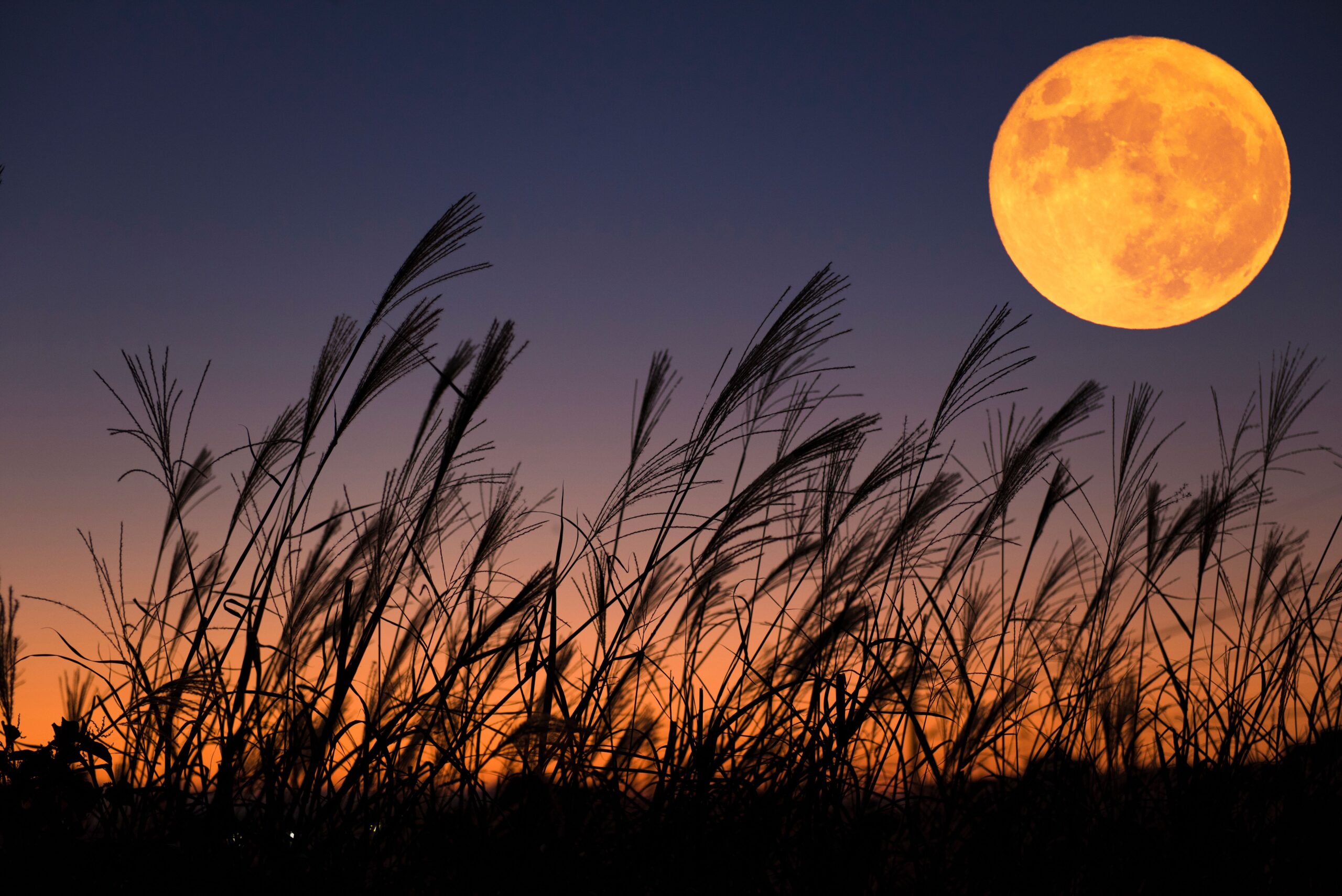
The night sky on September 26, 2026, will host one of the celestial spectacles most deeply rooted in humanity’s agricultural and cultural tradition: the Harvest Moon. This phenomenon, which coincides astronomically with the proximity of the autumn equinox, offers much more than a simple nighttime image of great visual beauty. It represents the turning point where the natural cycle of light and earth shifts its rhythm, marking the end of long summer days and the beginning of the gathering of fruits ripened under the summer sun. In an increasingly urbanized world, where artificial lights have blurred our connection to the firmament, witnessing this full moon is an exercise in reconnecting with the biological rhythms that for millennia dictated the survival and celebrations of rural communities across the northern hemisphere.
For travelers and curious observers, this date opens the door to a different form of astronomical and landscape tourism. Far from summer crowds, rural destinations, agricultural valleys, and coastal strips where tides align with the full moon transform into stages for silent contemplation. This report explores the science behind the phenomenon, the best locations to experience it with rigor, and a practical guide to turn the experience of welcoming autumn into a memorable journey toward calm, nature, and the memory of the earth.
The science behind the autumnal full moon
Understanding the uniqueness of the Harvest Moon requires looking beyond its size or apparent brightness, which often tricks the eye due to an optical illusion as it rises over the horizon. Unlike other months of the year, during the full moon closest to the autumn equinox, the angle formed by the lunar orbit with Earth’s horizontal plane is as small as possible. This astronomical event produces a very specific effect: the Moon rises in the east barely thirty minutes later than the previous night, rather than the usual fifty minutes.
This short time difference generates several consecutive nights of prolonged twilight, a vital historical resource that allowed farmers to continue harvesting cereals and fruits well into the evening, taking advantage of the silvery glow before the arrival of modern machinery. Astronomers remind us that this satellite is not physically larger or more intensely orange due to magical properties, but because of the density of the Earth’s atmosphere at low altitudes, which scatters shorter wavelengths and lets warm tones pass through.
Ancestral rituals and the agrarian calendar
The coincidence of the full moon with the equinox has led numerous cultures in the northern hemisphere to celebrate festivals of gratitude and transition for centuries. In East Asia, for example, the Mid-Autumn Festival shares the same chronological root, gathering families to contemplate the full moon and consume traditional pastries. In Europe, ancient rural communities lit bonfires in harvested fields to ward off bad omens and ask for fertility for the upcoming winter planting cycle.
These rituals were not mere superstitions, but social mechanisms to unite communities against the uncertainty of the approaching winter. Today, recovering the cultural value of the Harvest Moon means understanding the landscape as a living historical document. Every cultivated valley, every stone path between terraces, and every traditional granary preserves the footprint of generations who looked to the sky before making decisions about the land.
The best scenarios for observation
Choosing the right place to watch the Harvest Moon in 2026 requires seeking locations that combine clear eastern horizons, low light pollution, and a landscape environment that provides cultural or natural context. Great grain plains, river valleys nestled between mountains, and elevated coastal viewpoints rank among the best alternatives to appreciate the precise moment the satellite appears above the horizon line.
Spaces such as upland plateaus, Pyrenean valleys with oriented slopes, or protected marshes offer a privileged perspective where human intervention integrates harmoniously with nature. The key lies in avoiding dense urban centers and choosing starlight reserves or natural parks where nighttime darkness is protected by regulations, thus ensuring a clean and contrasted sky.
The night sky is not a static backdrop, but the first landscape humanity inhabited and the only one that remains unchanged in its infinite scale.
Night photography: technique and sensitivity
Capturing the essence of a full moon with these characteristics poses a considerable technical challenge for any photography enthusiast. The most common mistake is relying on mobile phone lenses, which tend to overexpose the satellite or turn it into a diffuse white dot. To obtain realistic results, it is advisable to use a camera with medium or long focal length lenses, a stable tripod, and manual settings that balance the ambient light of the landscape with the direct brightness of the satellite.
Experts recommend taking the main shots during the so-called blue hour, right after sunset, when the intensity of terrestrial light and moonlight are at an optimal equilibrium point. The presence of architectural or natural elements in the foreground, such as an isolated chapel, a centuries-old tree, or a mountain silhouette, provides the necessary scale for the viewer to perceive the true majesty of the celestial phenomenon without resorting to exaggerated perspective tricks.
The impact of seasonal change on biodiversity
The arrival of the equinox and the luminous influence of the Harvest Moon also trigger remarkable responses in wildlife and flora. With the progressive shortening of daylight hours, forests begin the process of chlorophyll reabsorption, giving way to the chromatic palette of ochres, reds, and browns characteristic of autumn. Animal species, in turn, adjust their migration and food storage cycles.
Migratory birds crossing territories toward warmer regions use full moon nights to orient themselves and maintain flight with greater security against nocturnal predators. Similarly, terrestrial mammals take advantage of the prolonged glow to intensify their search for nuts and acorns, preparing for months of scarcity. Observing this biological balance in silence adds an essential ecological dimension to the journey welcoming the new season.
Slow travel and digital disconnection
Celebrating the autumn equinox through astronomical observation naturally fits into the philosophy of slow travel. Faced with the fast pace of urban weekend getaways, this experience invites stopping at a rural accommodation, walking leisurely along traditional trails, and turning off electronic device screens during the central hours of the night.
This deliberate disconnection not only improves the quality of rest, but sharpens the senses: the crunch of dry leaves underfoot, the scent of damp earth after night dew, and the distant sound of wildlife acquire unusual prominence in the travel experience. True contemporary luxury lies in the ability to stop time and connect with the natural cycles that mark the health of our planet and ourselves.
Practical guide
Planning the observation of the Harvest Moon on September 26, 2026, requires taking into account several logistical and regulatory recommendations to guarantee a respectful and safe experience.
- Key date: The night of September 26, 2026, with the full moon reaching its peak splendor at dusk.
- Location: Prioritize protected natural spaces, starlight reserves, or open agricultural valleys facing east without visual obstacles.
- Recommended equipment: Appropriate warm clothing for the nocturnal temperature drop, mountain footwear, a flashlight with a red light filter to preserve night vision, and binoculars or a camera with a tripod.
- Environmental regulations: Respect the rules of natural areas, avoid excessive noise that disturbs wildlife, and leave no waste.
- Accommodation: Select rural houses or small hotels with sustainability certification and a commitment to reducing light pollution.
Contemplating the firmament and seasonal changes constitutes one of the oldest and most accessible intangible heritages at our disposal. The 2026 Harvest Moon is not just a milestone in the astronomical calendar, but an open invitation to look upward with renewed attention, to value the accumulated wisdom of the communities that preceded us, and to understand that each season brings a singular way of inhabiting the world. By turning off artificial lights and letting the silvery clarity of the full moon illuminate the fields, we remember that we remain an indissoluble part of nature’s grand cycles, a reminder as simple as it is transformative to begin autumn.
Source in EN: Condé Nast Traveler Spain (https://www.traveler.es/articulos/luna-de-la-cosecha-septiembre)