
Stone as a Living Document of the Pampean Landscape
In the southwesternmost corner of the province of Buenos Aires, where the flatlands break abruptly to give way to the primary elevations of the Sierra de la Ventana, history is not merely recorded on archival paper; it is carved directly into the bedrock. This territory, characterized by quartzitic formations in ochre and reddish hues, has been a silent witness to a craft deeply rooted in the arrival of the first European builders and the subsequent shaping of a unique architectural identity in the humid pampas. Far from the uniformity of adobe or industrial brick, the region’s historic buildings, railway bridges, and estancias owe their solidity to a geological resource extracted with a steady pulse and manual tools.
The guiding question behind this analysis is how traditional stonemasonry has managed to survive the onslaught of industrialization and concrete prefabrication, transforming itself into a bastion of heritage resistance. The thesis supporting this report posits that the value of carved stone in the Sierra de la Ventana lies not solely in its structural durability, but in its capacity to act as a geological and cultural archive, where each ashlar encapsulates the physical memory of the workers who shaped them under extreme weather conditions. To understand this phenomenon, it is essential to delve into the extraction fronts and converse with the last heirs of a know-how passed down from generation to generation.
Geology and Origin: The Awakening of Quartzites
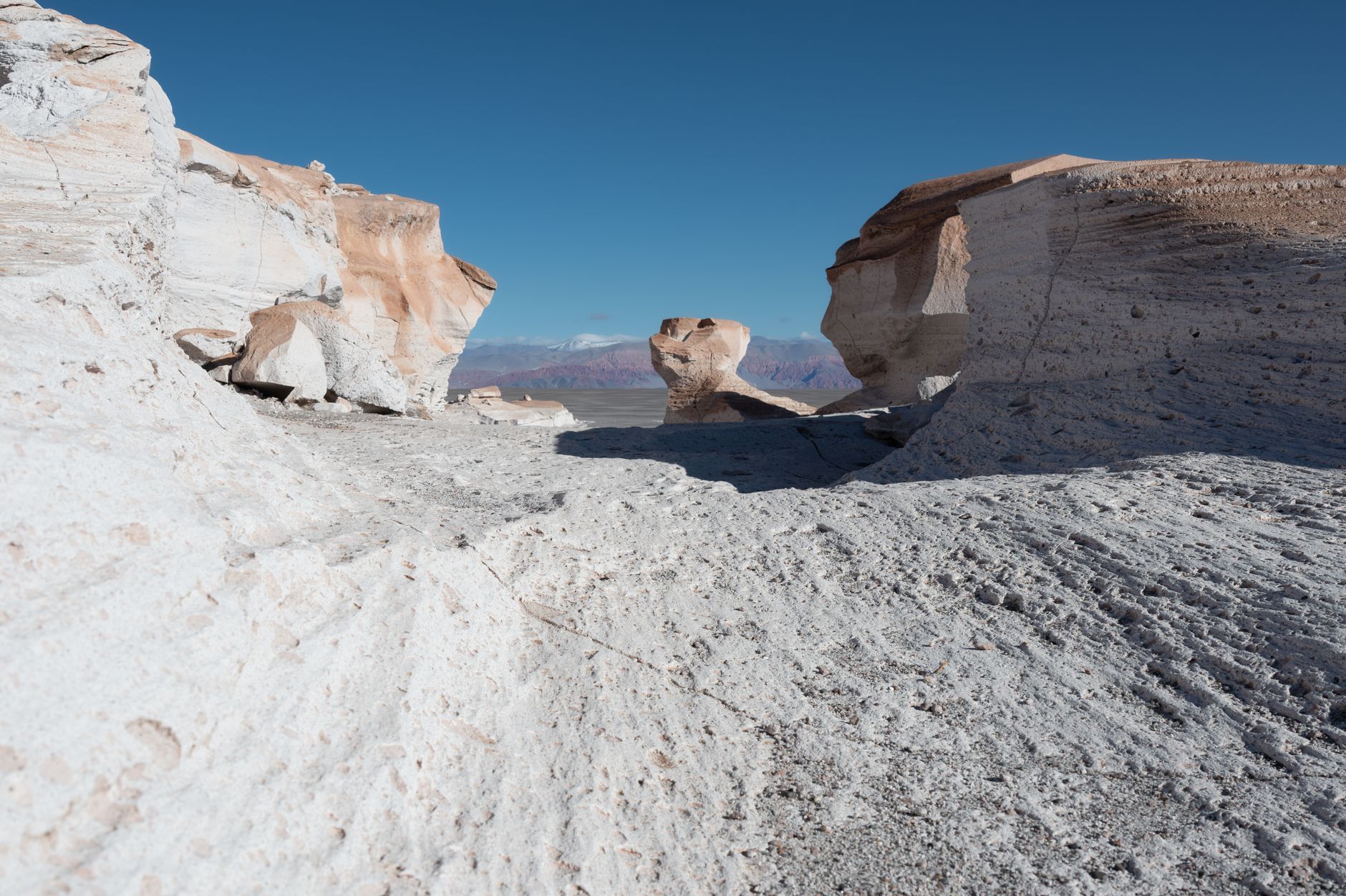
The geological substrate of the southern Buenos Aires hills belongs to the Ventania System, whose formations date back to the Paleozoic era. The quartzites found here, locally known as *piedra crespa*, stand out for their extraordinary hardness and resistance to erosion. This resistance, which in the past posed a major challenge for artisans, is today the primary guarantee for the conservation of the architectural heritage in towns such as Tornquist and Saldungaray. Geologists agree that the genesis of these rocks responds to sedimentation and metamorphism processes occurring hundreds of millions of years ago, endowing the material with a rough texture and a chromatic palette ranging from pearl gray to pale pink and tones oxidized by natural iron weathering.
Access to these natural deposits was historically conditioned by abrupt topography and a scarcity of paved roads. By the late 19th century, with the expansion of the Southern Railway, stone extraction gained strategic momentum. Railway ties and tracks required monumental engineering works—culverts, bridges, and stations—that demanded a steady supply of perfectly squared ashlar blocks. In this context, the quarries became the economic and demographic engine of the valley, attracting Italian and Spanish immigrants who brought with them the millenary mastery of stone carving, a knowledge they quickly adapted to the mineral hardness of the South American hills.
The Master’s Toolkit: Mallet, Chisel, and Square
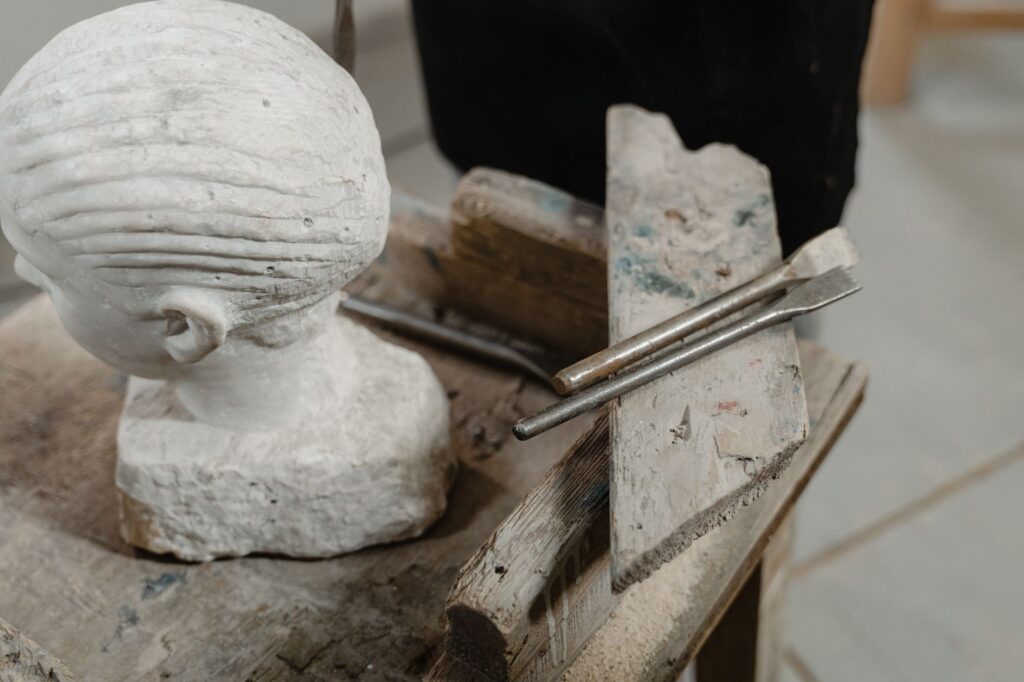
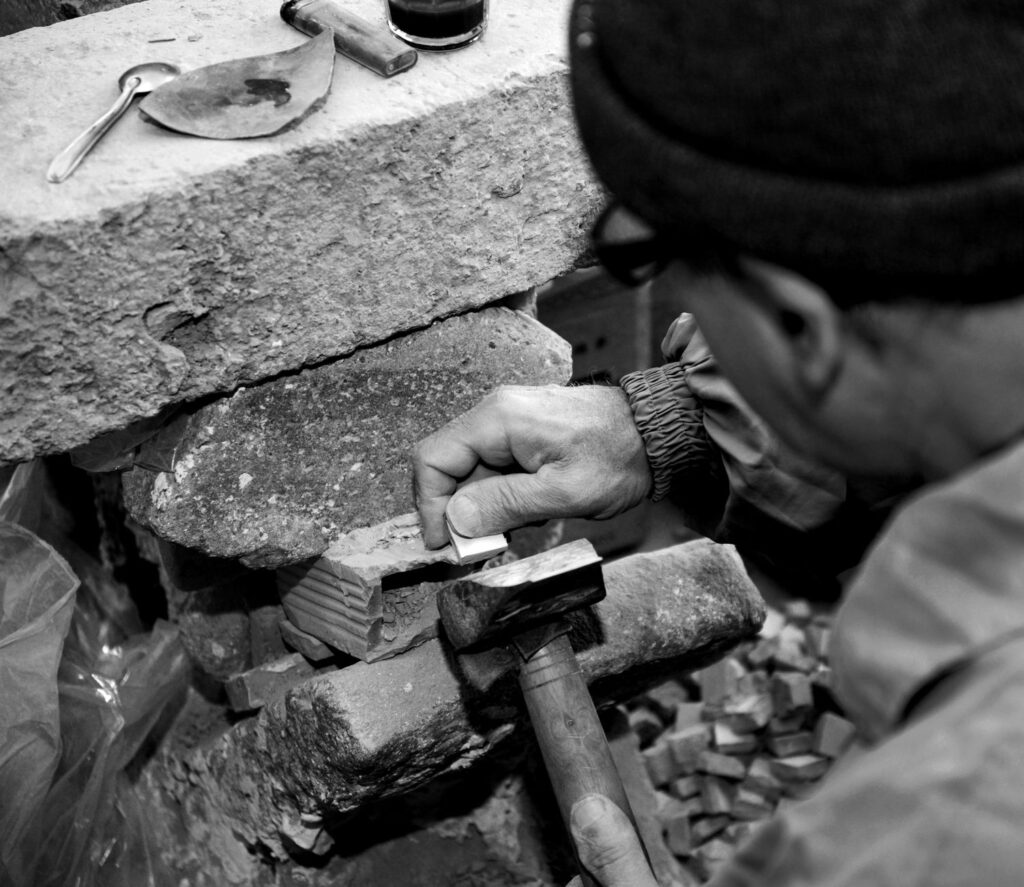
Stepping into a traditional workshop in the Sierra de la Ventana is entering a space where time seems to operate under different rules. Here, the deafening noise of industrial diamond saws gives way to the rhythmic, percussive beat of the mallet striking the head of the chisel. The process of transforming a raw block of quartzite into an architectural ashlar requires profound knowledge of the stone’s natural grain. The master mason observes the piece with near-surgical attention, searching for fracture lines invisible to the untrained eye, before tracing guidelines with chalk and beginning the rough-hewn shaping.
The fundamental tools have scarcely changed over the past centuries. The hardwood mallet, the tempered steel point for removing surplus material, the pickaxe for smoothing planes, and the metal square constitute the natural extension of the artisan’s hands. Every blow must be measured with micrometric precision; excessive force can irreparably fracture the quartzite, ruining hours of patient labor. This precision is the result of decades of practice, an empirical apprenticeship taught not in university lecture halls, but on the job, enduring the Pampean winds and summer heat in open-air cutting yards.
Architecture and Identity: The Imprint of Visionary Designers
The impact of stonemasonry on the region’s urban landscape reached its zenith during the first decades of the 20th century, driven by large-scale tourism projects and the work of emblematic architects such as agronomist and landscape designer Carlos Thays, or architect Francisco Salamone, whose monumental interventions in the province of Buenos Aires redefined the aesthetic of the territory. In Saldungaray, for instance, the imposing cemetery portal designed by Salamone combines reinforced concrete with local stone masonry, generating a visual contrast of profound expressive force that dialogues directly with the surrounding hills.
Likewise, the foundational buildings of the Ventana region—ranging from old cattle-ranch homesteads to alpine-style chalets built for early visitors seeking the benefits of pure mountain air—exhibit rusticated facades and ashlar basements that reveal the expert craftsmanship of those pioneer stonemasons. These constructions not only withstand the passage of time with unshakeable dignity, but establish an unbroken aesthetic continuity between the rugged nature of the sierra and human intervention, proving that vernacular architecture can harmonize without altering the landscape balance.
Contemporary Challenges: Generational Turnover and Conservation
Today, the outlook for traditional crafts in the Sierra de la Ventana faces complex crossroads. On one hand, the demand for skilled labor in historic building restoration has grown noticeably, driven by public and private heritage preservation policies. On the other hand, generational turnover presents the greatest obstacle to the craft’s continuity. Local youth show decreasing interest in physically demanding labor that requires years of silent apprenticeship and offers modest economic incentives compared to other service or technology sectors.
Faced with this scenario, various cultural organizations and municipalities in the region have begun promoting training workshops in heritage trades, seeking to spark vocations and document construction techniques before they are lost to time. These initiatives not only aim to preserve technical knowledge, but to foster civic awareness regarding the importance of conserving built heritage not as a static stage set, but as a living, dynamic element that provides a sense of belonging to the communities of southern Buenos Aires.
Heritage in stone is not a relic of the past locked away under key, but the language with which the landscape converses with those who choose to inhabit it with respect and memory.
Sustainability and Cultural Tourism in the Mountain Setting
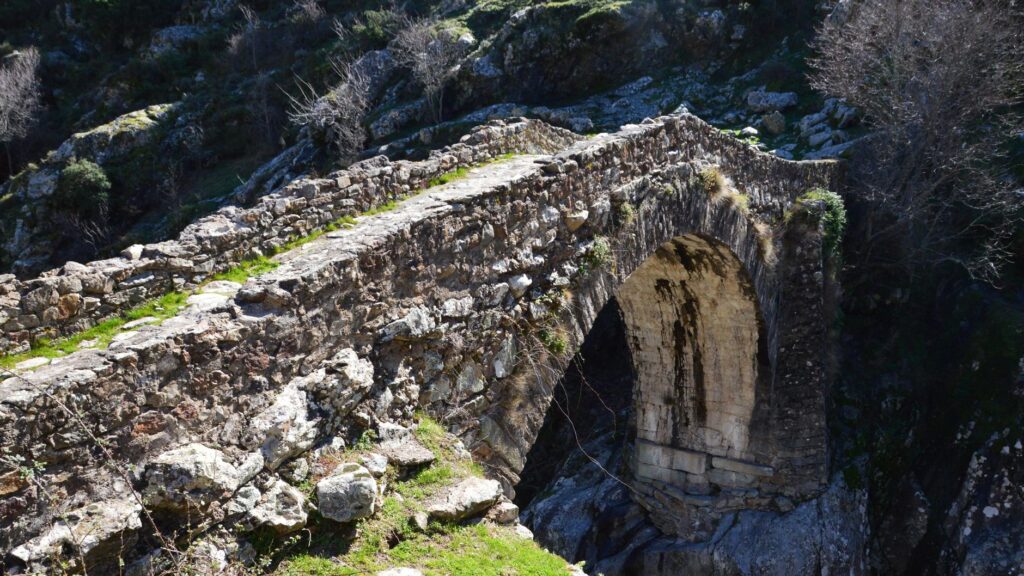
The rise of cultural and nature tourism in the mountain region has revalorized the role of historic architecture as a premier attraction. Visitors exploring the trails of Tornquist, Villa Ventana, or Saldungaray no longer seek solely relaxation amidst the hills, but demand authentic narratives about local history. In this context, heritage routes integrating abandoned quarries, century-old railway bridges, and active workshops have become valuable educational tools for promoting responsible and conscious tourism.
The sustainability of this model lies in balancing visitor influx with the protection of natural and cultural resources. Local authorities and tourism operators promote low-impact tours that allow observation of contemporary stonemasons at work without interfering with their production dynamics. Thus, travelers come to understand that the mountain stone is neither an inexhaustible resource nor a simple building material, but a non-renewable cultural resource requiring specific protection measures and explicit recognition of the artisans keeping the tradition alive.
Practical guide
How to get there: The Sierra de la Ventana region is located about 580 kilometers southwest of the Autonomous City of Buenos Aires. The main driving route is via National Route 3 to Azul and then Provincial Route 51. By public transport, daily long-distance bus services operate from Buenos Aires to the Tornquist terminal, alongside regional rail connections.
Best time to visit: Autumn (March to May) and spring (September to November) offer mild temperatures ideal for exploring quarry fronts and hiking mountain trails. Summer can experience high temperatures, while winter brings cold mornings and frequent frosts.
Recommended accommodations: The region features a wide selection of historic guesthouses, mountain cabins, and rural tourism estancias that have preserved stone architectural elements in their original structures, integrating modern comfort with traditional design.
Points of heritage interest: Essential visits include the historic center of Saldungaray, works by architect Francisco Salamone, the century-old railway bridges of the mountain trails, and local artisan workshops where visitors can still observe direct work with quartzite.

Traveler recommendations: Hiring authorized local guides is advised for accessing old quarry areas, and visitors must strictly adhere to environmental and heritage conservation regulations, avoiding unauthorized removal of mineral fragments from historical sites.
Epilogue in the Quarry: The Echo of the Mallet at Dusk
When the sun begins to dip behind the peaks of the Sierra de la Ventana, tinting the rock faces in a deep amber hue, the stonemasonry workshop enters an almost sacred pause. It is the moment when the fine quartzite dust suspended in the air seems to shimmer like an ephemeral constellation, reflecting the accumulated effort of the workday. In that evening silence, the final blow of the mallet against the chisel rings out with resolute clarity, reminding us that certain crafts withstand the overwhelming rush of modernity thanks to the silent perseverance of men and women who choose to dialogue with raw material in its purest state.
Observing the master mason trace the freshly squared surface of an ashlar with their fingertips is witnessing an act of communion between human beings and the territory’s geology. That stone, extracted from the bowels of the sierra and shaped with micrometric patience, is destined to sustain roofs, raise walls, and protect collective memories for centuries to come. In every carved block beats the promise that the history of the pampas is not swept away by the wind, but built upon the unyielding strength of well-cut stone.