

The Blue Twilight of the Visayan Sea and the Enigma of the Pelagics
At a depth of thirty meters, before the first rays of the sun pierce the liquid mass with clarity, the water adopts a deep, almost black indigo hue. In this remote corner of the Visayan Sea, located at the northern tip of Cebu Island, marine currents collide against submarine slopes, creating an upwelling phenomenon that revitalizes the entire trophic chain. This dynamic environment not only sustains a rich benthic biodiversity but acts as the permanent home of one of the planet’s most fascinating and vulnerable shark species: the pelagic thresher shark (Alopias pelagicus).
The Philippine archipelago, recognized as one of the global epicenters of marine biodiversity, guards an exceptional ecological rarity in these insular waters. Unlike other sharks that prefer the darkness of the abysses or open oceanic routes, the thresher shark arrives punctually every dawn at the cleaning stations located on the shallow reefs of Malapascua Island. This behavior, documented extensively by marine biologists over the past two decades, has turned this tiny spot on the map into a living laboratory for the study of elasmobranch behavior.
Understanding the ecology of these animals involves delving into the complexities of their anatomy and their unique way of interacting with the environment. Their most distinctive feature, the hyper-developed caudal fin that can equal the length of their own body, is not a mere evolutionary ornament, but a cinematic weapon of lethal precision. They use this cartilaginous whip to strike and stun schools of pelagic fish such as sardines and squid before devouring them, a unique hunting technique in the marine realm that requires enormous amounts of energy and, consequently, a clean and protected habitat.

Anatomy of a Cleaning Station: The Role of Cleaner Wrasses
The morning ritual at the submerged rocky pinnacles of Monad Shoal is a perfect example of marine symbiosis. As the first lights penetrate the water column, thresher sharks emerge from the abyssal depths to approach the coral formations where various species of cleaner fish operate, primarily the bluestreak cleaner wrasse (Labroides bicolor) and several species of shrimp.
During this process, the sharks reduce their swimming speed and adopt almost vertical body postures, slightly opening their gills and mouth to allow small organisms to remove parasites attached to their skin and gills. This peaceful interaction between an apex predator and tiny organisms demonstrates the delicate balance governing reef ecosystems. The alteration of these cleaning stations, whether through acoustic pollution, unregulated boat anchoring, or excessive tourism pressure, destabilizes the sharks’ migratory routes, causing them to abandon critical areas for their health and reproduction.
Scientific research in the area has recorded seasonal and daily presence patterns, revealing that pregnant females use these shallow waters as transit areas before seeking protected grounds for gestation. Acoustic monitoring via underwater receivers has uncovered that many individuals show high site fidelity, returning to the same cleaning stations year after year, which increases their vulnerability to any anthropogenic disturbance in their immediate environment.
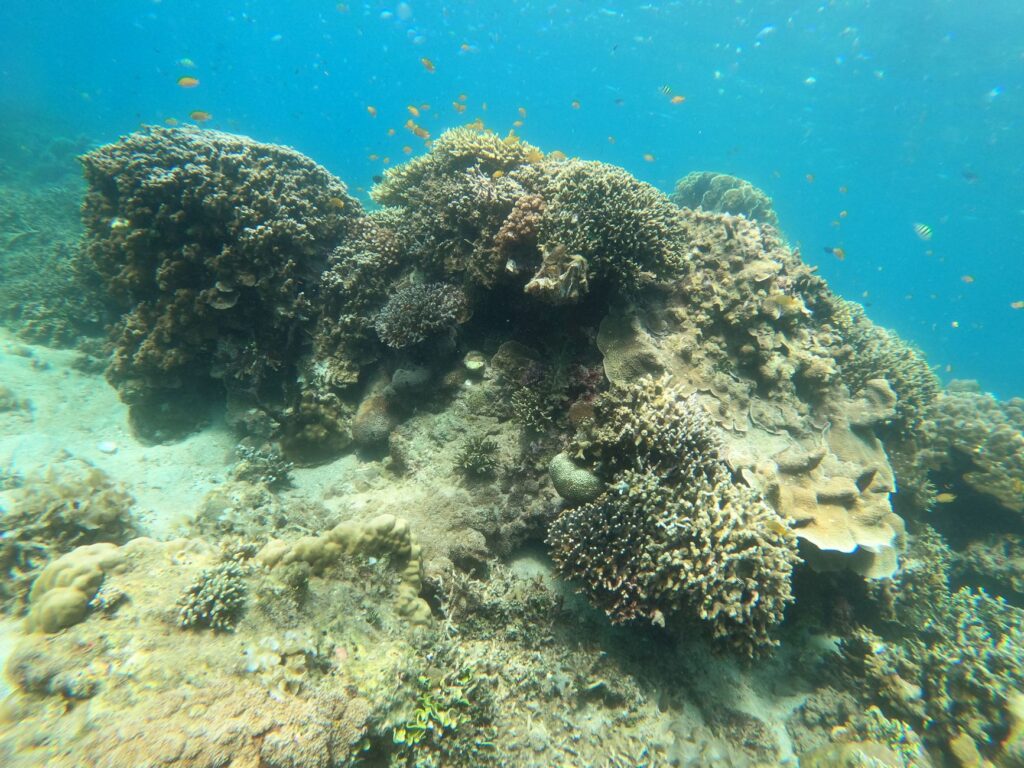
Protecting the thresher shark is not merely preserving an icon of Philippine marine biodiversity, but ensuring the functional health of the complex trophic chains that sustain the balance of tropical oceans.
Global Threats to the Long-Tailed Colossus
Despite its status as an international attraction for sustainable scuba diving, Alopias pelagicus faces relentless fishing pressure along its dispersal routes throughout Southeast Asia. Classified as Endangered by the International Union for Conservation of Nature (IUCN), the thresher shark suffers the consequences of commercial longline fishing and gillnets, driven primarily by the high international demand for shark fins.
The species’ reproductive biology exacerbates its population fragility. Thresher sharks have extremely low fecundity rates: females reach sexual maturity late, around eight or nine years of age, and produce small litters of just two pups after a long gestation period that can exceed twelve months. This low demographic replacement capacity means that any excessive removal of adult individuals rapidly collapses local populations, making stock recovery an exceptionally slow process.
In addition to direct extractive pressure, global warming and ocean acidification are altering the upwelling currents that regulate temperature and oxygen availability in the Visayan Sea. These oceanographic shifts modify the spatial distribution of the sharks’ prey, forcing them to undertake longer and energetically costlier journeys to find food, thereby reducing their reproductive success and weakening their immunity against parasitic diseases.

Community Conservation Strategies on Malapascua Island
Faced with the destructive inertia of overfishing, the local response on Malapascua Island has evolved from extractive dependence toward a management model based on regulated marine ecotourism. Artisanal fishers who once caught sharks for subsistence and the illegal fin trade have been retrained as dive boat captains, underwater guides, and environmental wardens who actively patrol the reefs.
This economic paradigm shift has proven that a live shark generates exponentially more revenue over its lifetime through scientific and recreational tourism than a dead one in the local market. Local non-governmental organizations work closely with municipal authorities to establish marine protected areas (MPAs) where extractive fishing is completely banned, creating net-free sanctuaries where sharks can feed and receive cleaning services without human interference.

However, the governance of these marine spaces faces colossal challenges. The lack of financial resources for nighttime surveillance, the porosity of maritime borders against illegal industrial fishing fleets, and the tension between short-term tourism interests and long-term ecological preservation demand continuous community awareness and enforcement efforts.
Environmental Education and the Future of Elasmobranchs
Sensitizing the new generations of Filipinos is the fundamental pillar upon which the long-term viability of marine conservation in the Visayas rests. Educational programs implemented in local schools across Cebu and surrounding islands demystify the shark as a dangerous predator, presenting it instead as a key indicator of the health and vitality of the seas.
Through practical marine biology workshops, citizen science, and ecological diving, youth from coastal communities learn to collect data on shark presence, identify individuals using natural markings on their fins, and understand the importance of keeping reefs plastic-free. This pedagogical immersion fosters a sense of pride and ownership toward their archipelago’s natural heritage.
International collaboration with academic institutions and underwater research centers has also equipped local managers with advanced technological tools, such as satellite tracking systems and side-scan sonars, optimizing response capacity against unforeseen environmental threats and improving precision in delimiting protected migratory corridors.
Rigorous scientific knowledge and the active participation of local communities constitute the only real barrier against the collapse of the planet’s most fragile pelagic ecosystems.
Practical guide
- How to get there: The primary access is by flying into Mactan-Cebu International Airport. From there, take a three-to-four-hour land transport journey north to the port of Maya, followed by a thirty-minute ride on a traditional outrigger boat (banca) to Malapascua Island.
- When to go: The dry season, spanning from November to May, offers the most stable weather conditions and the best underwater visibility, although the Visayan Sea allows diving year-round with local wave variations.
- Diving requirements: Due to the depth of the cleaning stations (30 meters or deeper) and frequent currents, holding an Advanced Open Water certification and prior experience in current diving are strictly required.
- Conservation regulations: It is strictly prohibited to touch, chase, use direct underwater photography flash, or alter in any way the natural behavior of thresher sharks during observation dives.
Final Reflections Amidst the Blue Immensity
Observing the thresher shark in its natural habitat requires a meditative pause, an exercise of absolute stillness in the water column as the aerodynamic silhouette of the elasmobranch glides silently among the shadows of the deep blue. There is neither shrillness nor urgency in its movement; its presence conveys an ancient calmness that contrasts sharply with the dizzying haste with which human societies alter oceanic balances.
As the sun ascends and divers slowly leave the waters of Monad Shoal, the sharks return to the safety of the abysses, oblivious to the complex geopolitical and economic dynamics that decide their fate at the surface. Their survival in the Visayan Sea hangs by an extremely fragile thread, sustained solely by the collective will of scientists, conservationists, and local communities who have understood that the true wealth of the oceans lies in their capacity to remain wild, complex, and untamed.