
Introduction to the Iron Myth in the Infinite Steppe
The most imposing railway horizon in the world does not respond to the logic of modern speed, but to the geometric persistence of iron across the continental crust of Eurasia. Spanning more than nine thousand kilometers, the Trans-Siberian traces a geometric scar linking Moscow with Vladivostok, crossing time zones that test the very human notion of time. This route is not conceived for dizzying leisure, but as a monumental lesson in civil engineering designed in the late nineteenth century to stitch together an empire fragmented by tundra, rushing rivers, and impenetrable taiga.
Analyzing this route means understanding how extreme topography conditioned every wooden sleeper, every tunnel carved into living rock, and every metal bridge erected over titanic watercourses like the Ob or the Yenisey. Far from superficial tourism folklore, the railway track operates as a living organism that sustains isolated communities, regulates the traffic of strategic goods, and poses a constant challenge to the changing geology of Siberia. The traveler entering this corridor experiences a transformation in their perception of space: the landscape ceases to be a mere backdrop and becomes the absolute protagonist of the journey.
Imperial Genesis and the Conquest of Distance
The decision to undertake the construction of the Great Siberian Railway in 1891, under the impetus of Tsarevich Nicholas, answered an inescapable geopolitical necessity: connecting European Russia with its Pacific possessions in the face of commercial pressure from rival powers. Imperial engineers faced a titanic obstacle known as permafrost, permanently frozen soil that forced the development of unprecedented foundation techniques to prevent rails from warping during summer thaw cycles.
Technical chronicles of the era record the superhuman effort of thousands of workers, convicts, and soldiers who labored with rudimentary tools in extreme weather conditions. Overcoming the swampy terrain of Baraba and excavating tunnels in the cliffs of Lake Baikal demonstrated a technical adaptability that still amazes transport infrastructure specialists today. Every kilometer won from nature required complex logistical solutions, from transporting materials across frozen rivers to designing locomotives capable of operating at temperatures forty degrees below zero.
Monumental Engineering Across Siberia’s Great Rivers
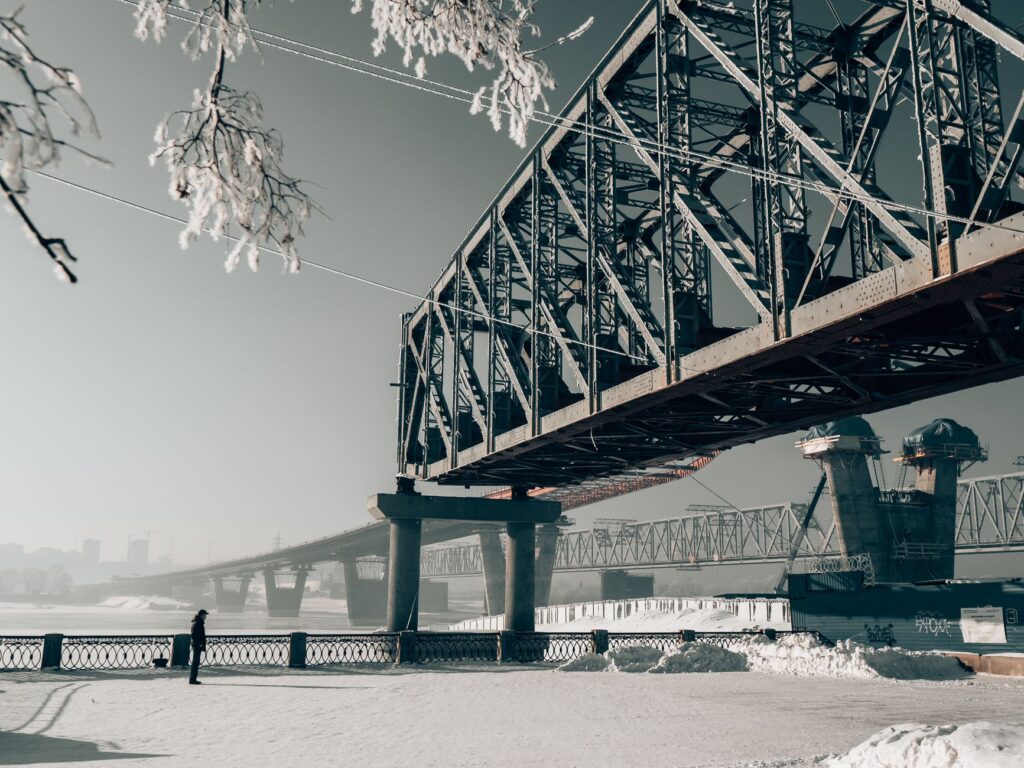
The Siberian hydrographic system constitutes the greatest technical challenge of the line. The bridges built over the Irtysh, Ob, Yenisey, and Amur rivers are not mere crossing structures, but milestones in iron and reinforced concrete architecture. The bridge over the Ob River in Novosibirsk, designed by engineer Nikolai Beleliubsky, revolutionized the calculation of large-span metal structures thanks to its articulated parabolic trusses.
During winter months, when waters turn into a slab of ice over a meter thick, the railway infrastructure must support not only the dynamic weight of the convoys, but the thermal stresses of the rolling stock. The structural rigidity of steel is tested by thermal variations exceeding seventy degrees between summer and winter, requiring millimetric expansion joints and continuous maintenance performed by armies of workers stationed at remote outposts along the entire route.

The Rock and Water Trench of Lake Baikal
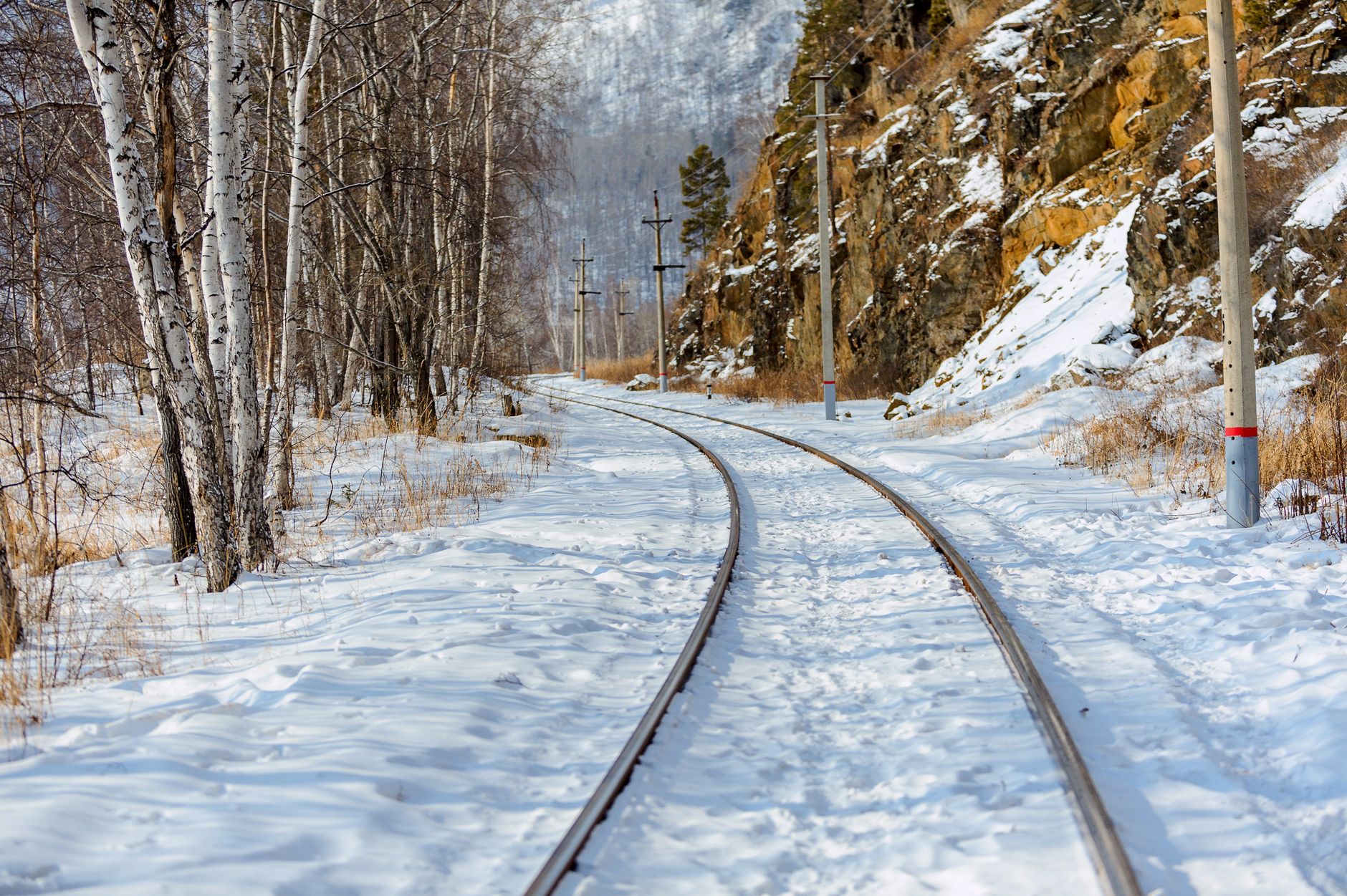
No section of the line concentrates as much technical complexity and geological beauty as the Circum-Baikal, the original section winding through the steep cliffs south of the world’s deepest lake. Before the construction of the modern tunnel system, trains had to be loaded onto icebreaking ferries during winter, an unsustainable solution for projected traffic volumes.
The subsequent adaptation of the route through the systematic blasting of forty tunnels across barely eighty kilometers of rocky coastline was a masterpiece of mountain engineering. Dry-masonry retaining walls, built with local stone to withstand wave impacts and snow avalanches, still stand as testimony to uncommon constructive solidity. Blockquote: The track does not dominate the territory; it permanently negotiates its right of way with a boundless nature that threatens to devour it in every seasonal cycle.
Railway Architecture and Station Typologies
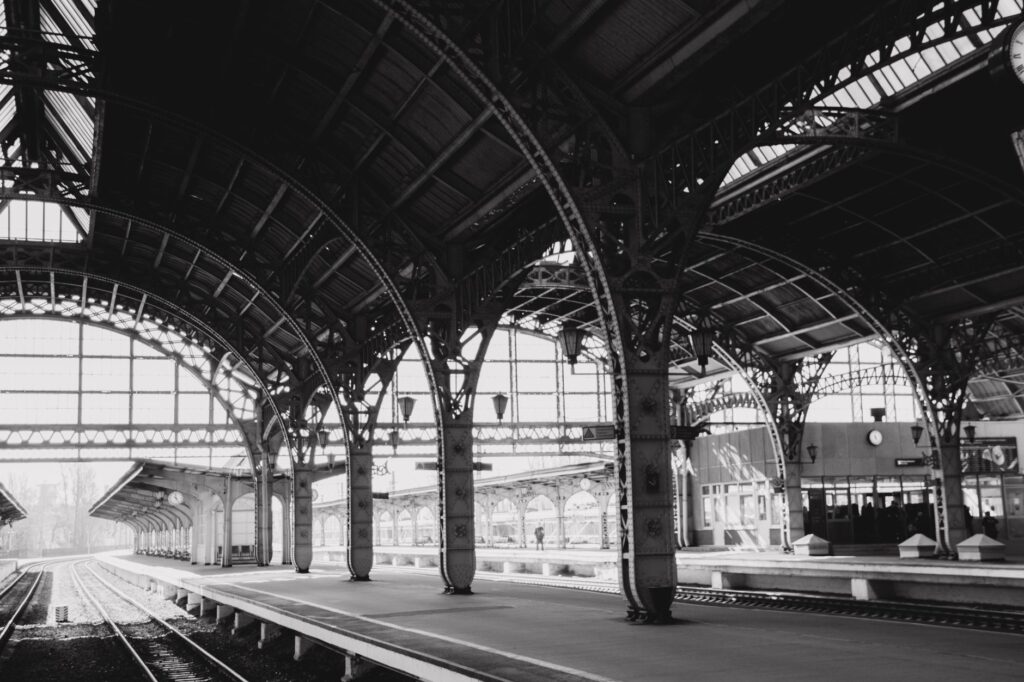
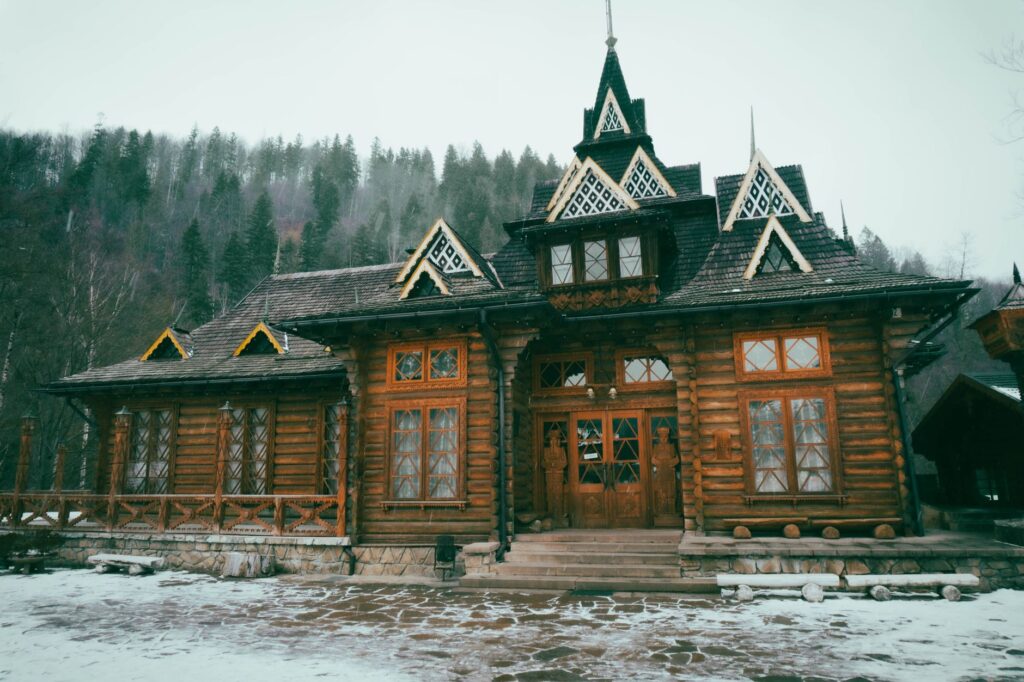
Trans-Siberian stations act as urban landmarks amid forest immensity. From wooden buildings with Siberian-style decorative filigree to rationalist terminals of the Soviet era, each stop reflects the ideology and technological possibilities of its historical moment. Sludyanka station, built entirely of local white marble, is a unique example of how civil architecture was subordinated to transport functionality without renouncing monumentality.
These facilities not only served for water and coal refueling, but operated as self-sufficient micro-worlds equipped with centralized heating systems, repair shops, and housing for railway workers. The management of energy and water supply in places where the ground prohibits conventional piping forced engineers to devise decentralized solutions that now inspire infrastructure design in extreme climatic environments.
Life Aboard: The Syncopated Rhythm of the Convoy
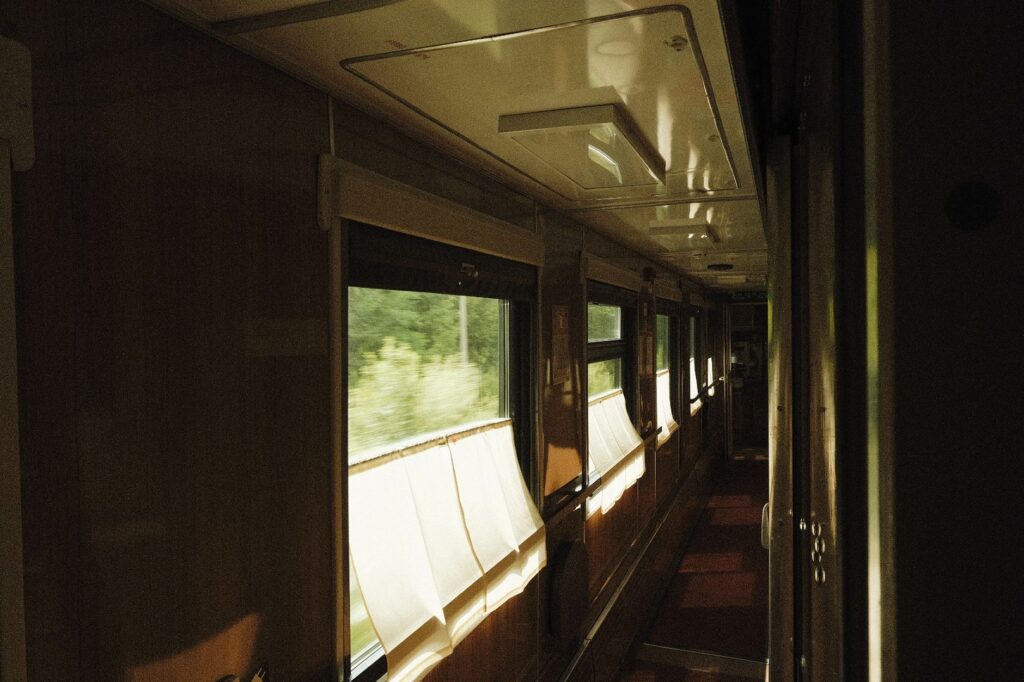
The operational and human heart of the experience lies inside the carriages, designed to guarantee autonomy during weeks of continuous travel. The coal-fired boiler heating system, known as the titan, maintains a constant supply of boiling water, the axis around which passenger coexistence and daily survival revolve. Train managers, figures of unquestionable authority, coordinate internal logistics with military precision.
In this rolling microcosm, time loses its urban convention and is measured by passing kilometer posts and the succession of major industrial centers dotting the steppe. The interaction between local travelers, merchants, and railway technicians generates a temporary community atmosphere where social distances dissolve to the rhythmic beat of the bogie over rail joints. The journey thus becomes an exercise in social anthropology in motion.
Contemporary Pulse and Track Maintenance
In the twenty-first century, the Trans-Siberian faces constant modernization to adapt to the demands of global freight logistics between Asia and Europe. The comprehensive electrification of the route, completed in the late twentieth century, doubled freight capacity and reduced transit times, though single-track sections in eastern mountainous areas still require millimetric traffic regulation via satellite digital signaling systems.
Maintenance teams operate in harsh weather conditions using specialized workshop trains capable of replacing entire track sections in hours during low-traffic windows. This rapid response capacity is vital to prevent the collapse of the main artery supplying raw materials nationwide. Blockquote: Technological modernity has not eliminated the harshness of the environment; it has simply provided humanity with more precise tools to converse with the cold.
Practical guide
How to get there and plan the trip: The traditional starting point is Yaroslavsky Station in Moscow. Booking tickets months in advance via authorized agencies or the official Russian railways platform is essential, carefully selecting carriage categories (Platskartny or open sleeper, Kupe or four-berth closed cabin, and Spalny Vagon or two-berth cabin).
When to travel and equipment: The optimal months for engineering and landscape observation span from June to September, when temperatures are moderate and mountain passes are free of heavy snow. For the extreme experience of the Siberian winter, between January and March, high-quality multi-layer technical clothing and footwear with reinforced thermal insulation are mandatory.
Recommended strategic stops: Yekaterinburg (natural border between Europe and Asia), Kazan (crossroads of architectural cultures), Irkutsk and Lake Baikal (natural and technical jewel of the route), and Ulan-Ude (gateway to the Mongolian variant).
Onboard etiquette: Respecting quiet hours, sharing common spaces, and self-sufficiency in acquiring fresh provisions from vendors on station platforms during brief stops are essential unwritten rules for a harmonious journey.
Epilogue: The Echo of Iron in Continental Memory
When the convoy finally reaches the terminal station of Vladivostok, after crossing the final bridge over the Amur River and leaving behind thousands of kilometers of birch trees and taiga, the traveler understands that the true destination was never a geographic point on a map. The experience leaves an indelible mark defined by the certainty that human will, channeled through engineering science and collective tenacity, is capable of articulating an entire continent through a simple, perfect line of steel parallel to infinity.