
The Architecture of the Catalan Larder and Its Morning Pulse
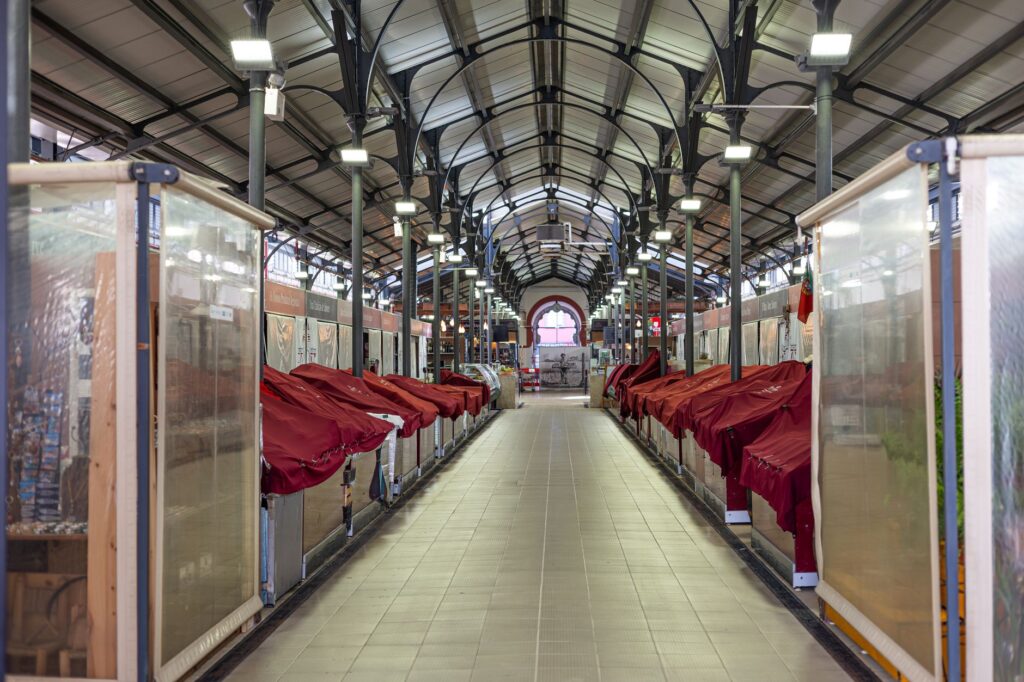
Morning in Reus does not begin with the first ray of sunlight striking the baroque bell towers, but with the muffled clatter of metal shutters rolling up inside its modernist enclosure. The Reus Central Market, inaugurated in the mid-twentieth century yet rooted in a mercantile tradition dating back to the Middle Ages, is far more than a simple provisioning hub. It is the civic heartbeat of Baix Camp, a county that has successfully transformed the water scarcity of its drylands into a larder of concentrated virtues. Here, noble stone and wrought iron do not merely support an imposing architectural structure; they shelter a social ecosystem where producer and buyer maintain a daily dialogue built on trust and respect for seasonal produce.
Crossing the main threshold, the air shifts in temperature and becomes infused with an unmistakable olfactory symphony: the earthy aroma of freshly unloaded potatoes from the Prades mountains, the toasted sweetness of Marcona almonds, and the sharp trace of aromatic herbs hanging from the stalls of veteran vendors. In this setting, the routine of grocery shopping is elevated to a ceremony. The voices of the market stallholders echo beneath the vaulted ceilings with the cadence of an ancient score, announcing the virtues of vegetables harvested in the southern orchards of Catalonia. There is no shrillness or unnecessary haste; every gesture responds to accumulated knowledge passed down through generations that understands the land not as an inexhaustible resource, but as a fragile legacy.
The Guardians of the Orchard and Dryland Farming
Just meters from the eastern entrance, local farmers’ stalls display the true geological and climatic essence of Baix Camp. Here, vegetables do not shine from an excess of water or artificial fertilizers, but from their sheer density of flavor. Swiss chard, sugar snap peas, and globe artichokes—cultivated on transitional plots sloping toward the coast—compete on the counters with Valls calçots and indigenous tomato varieties that mature only beneath the unforgiving Mediterranean sun. Proximity agriculture is not a contemporary marketing label here, but a historical necessity born from local topography.
Conversing with the vendors reveals stories of agrarian resilience. Many of them work inherited plots where drip irrigation is a science of precision. “Dryland earth yields less, but what it yields tastes the way it is supposed to taste,” remarks Montserrat, a farmer who has occupied the same space in the northern wing of the market for over forty years. Her hands, calloused by hoeing and harvesting, handle bunches of wild greens and spring onions that just hours before slept beneath the clay soil of Riudoms with extreme delicacy.

White and Toasted Gold: The Aristocracy of the Almond
If there is one product that defines the economic and gastronomic identity of Reus above all others, it is the tree nut, with the Marcona almond reigning supreme. Historically, Reus was the global epicentre of the almond and hazelnut trade, setting prices that rippled through international commodity exchanges in London and New York. Today, although the global trade volume has transformed, the market’s specialty stalls keep this commercial vocation alive with a selection of nuts that impresses both the casual visitor and the most demanding chef.
In the shell-fruit corners, almonds are sold raw, lightly salted and roasted, or integrated into traditional preparations such as panellets and turrón. The artisan roasting process, carried out in small family-run workshops in the surrounding area, aims to preserve the fruit’s essential oils without masking its natural sweetness. It is an exercise in patience that contrasts with the velocity of the modern world. Every Marcona almond purchased at the market bears the unmistakable stamp of calcareous soil, granting it that rounded, fleshy, and slightly oily texture that sets it apart from any other variety on earth.
From the Lonja to the Bakery: The Confectionery of Baix Camp
The influence of this white gold inevitably extends into local pastry-making. The historic bakeries of Reus’s old town, many of them regular suppliers to the central market’s stalls, craft specialties where almonds and hazelnuts serve as absolute pillars. From menjablanc—a delicate almond cream flavored with lemon peel and cinnamon whose recipe dates back to medieval cookbooks—to crispy almond tiles, the sweet cuisine of the city is a treatise on simple alchemy.

The flavor of Reus is not found in the loudness of grand fusions, but in an unwavering fidelity to an almond that has weathered droughts, pests, and the indifference of modern times.
This respect for pastry tradition does not preclude contemporary reinterpretation. Young artisans within the local guild are recovering nearly forgotten recipe books, introducing low-temperature techniques to extract more complex toasted nuances in their artisanal pralines and nougats. The market acts as a thermometer for this evolution: what is sold there on Saturday morning appears transformed into haute cuisine on Saturday night across the region’s restaurant tables.
The Liquid Liturgy: Reus Vermouth and Its Rituals
No visit to the gastronomic universe of Reus would be complete without addressing its most universal contribution to the aperitif world: vermouth. Although aromatized wine has ancient roots across the Mediterranean, it was in this Catalan city that it was industrialized and perfected in the late nineteenth century, achieving levels of sophistication that now rival Europe’s finest wines. Surrounding the market and along the pedestrian streets of the historic center, the vermouth hour is an unnegotiable sociological institution.
The market stalls and nearby century-old cellars offer a wide array of vermouths crafted from local white wine bases, macerated with dozens of secret botanicals—wormwood, gentian, bitter orange peel, cardamom, and cinnamon—that vary according to each producer’s closely guarded formula. Served ice-cold, garnished with an orange slice, a stuffed green olive, and a splash of seltzer, Reus vermouth embodies the perfect pause before the main meal. It is the social glue uniting entire families around the café terraces of Plaça del Mercadal.

The Secrets of Botanical Maceration
Visiting a historic distillery in the outskirts of Reus provides insight into the complexity hidden behind this seemingly simple aperitif. Master vermouth makers select plant extracts through independent hydro-alcoholic infusions that are subsequently blended with meticulous precision. The balance between wormwood’s characteristic bitterness and the sweetness of toasted caramel defines the quality of the brew.
- Rigorous selection of neutral base wines from the Tarragona Designation of Origin.
- Cold maceration of herbs and spices foraged from the Prades and Montsant mountains.
- Aging in ancient oak casks to round out tannins and unify aromatic profiles.
- Natural filtration and manual bottling in limited editions for specialized shops.
The Invisible Territory: Extra Virgin Olive Oils with Character
Beyond tree nuts and vermouth, the backbone of Baix Camp cuisine lies in its extra virgin olive oils, protected under the stringent Siurana Protected Designation of Origin. The Arbequina olive groves, planted on terraces that defy gravity along mountain slopes, produce an olive juice distinguished by its finesse, green apple fruitiness, and a final almond-like note that connects directly with the landscape.
At the market, local oil vendors offer impromptu tastings straight from metal jugs or dark glass bottles. Explaining the origin of each oil means talking about the stone retaining walls, the maritime breeze blowing in from the coast, and winter frosts that cleanse the trees of pests. This oil is not a mere condiment; it is the cooking medium, the preservative, and the absolute enhancer of a cuisine that shuns artifice in favor of ingredient purity.
Casserole Cooking and Slow-Fire Cuisine
The combination of Siurana olive oil with market vegetables and local meats results in domestic cooking of exceptional depth. Dishes such as coca de recapte—a thin bread dough topped with roasted Mediterranean vegetables and sardines or pork sausage—or sepia stews with meatballs (mar i muntanya) demonstrate that Reus’s cuisine is the definitive bridge between the Costa Dorada sea and the interior mountains.
Baix Camp restaurants that stock their larders at the central market keep this flame alive. They do not chase flashy avant-garde trends, but rather perfection in cooking times, respect for the soffritto—which in many homes simmers for hours over very low heat—and the recovery of seasonal recipes that urban pacing threatens to erase from the map.
Practical guide
How to Get There
Reus enjoys excellent rail connections from Barcelona via regional trains (R15 and R16) and medium-distance services, keeping the journey just over an hour. For private vehicle travel, the AP-7 highway and A-7 dual carriageway allow direct access from the north and south of the peninsula, with underground public parking lots located just meters from the Central Market.

When to Visit
The optimal time to visit the Reus Central Market is between October and May, coinciding with the peak almond harvesting season, the launch of the new vermouth vintage, and the height of winter vegetables such as calçots and globe artichokes. Tuesday through Saturday mornings, between 8:00 AM and 1:30 PM, experience the highest commercial activity and the most genuine anthropological atmosphere.
Shopping and Tasting Tips
For a truly immersive experience, booking a guided tour with veteran market stallholders through local gastronomic routes is highly recommended. When purchasing nuts, always ask for the native Marcona variety and request same-day roasting. To enjoy vermouth authentically, avoid the main commercial avenues and seek out traditional taverns around Plaça de les Basses or the immediate surroundings of the modernist building.
The Echo of Drylands in Memory
As evening falls, when the market’s hustle ceases entirely and metal shutters roll down until dawn, the streets of Reus recover an almost monastic stillness. It is then that the city reveals its true nature: a sanctuary where time is not measured by the accumulation of novelties, but by the persistence of essential flavors. In every toasted almond, every glass of amber vermouth, and every stone tile polished by the passage of centuries lies a lesson in cultural resilience. Baix Camp and its market are not relics of the past, but living proof that authenticity, when cultivated with patience and rigor, is the only luxury that truly matters in contemporary travel.