
Crossing the Pasig River to enter Binondo is crossing an invisible border where the accelerated pulse of modern Philippine life gives way to a denser rhythm, marked by church bells and the constant sizzle of woks. Founded in 1594 by Spanish governor Luis Pérez Dasmariñas as a settlement for Catholic Chinese merchants, this labyrinth of narrow streets and tangled wires is not only the oldest Chinatown on the planet: it is the living archive of the cultural and economic miscegenation that shaped Manila’s identity.
Far from being a mere tourist showcase, Binondo functions as an autonomous organism where culinary tradition is passed down from generation to generation with near-devotional rigor. Here, every dumpling and every bowl of noodles tells a story of adaptation, endurance, and dialogue between Luzon’s native pantry and the ancient techniques of Fujian and Canton. This report explores its alleys to untangle how street food and secular eateries continue to dictate the vital rhythm of the community.
The Origin of Mestizo Flavors in Chinatown
Binondo’s gastronomic history is inseparable from its colonial geopolitical condition. Strategically located opposite the walled city of Intramuros, the enclave became since the 16th century the primary point of commercial and human exchange between the sangleys (overseas Chinese merchants) and the Spanish administration. This forced coexistence gave rise to a cuisine of subsistence and ingenuity that made the most of local ingredients—such as pork, rice, and seafood from the archipelago—adapting them to oriental palates.
Early fusion was not an exercise in haute cuisine, but a necessity for cultural survival. Chinese bakers and cooks began using native rice flour and cane sugar to replicate traditional sweets, giving birth to an amphibious repertoire that today constitutes the backbone of the district’s gustatory identity. Over the centuries, this exchange consolidated into recipes that today seem unchangeable, yet conceal a constant, silent evolution.
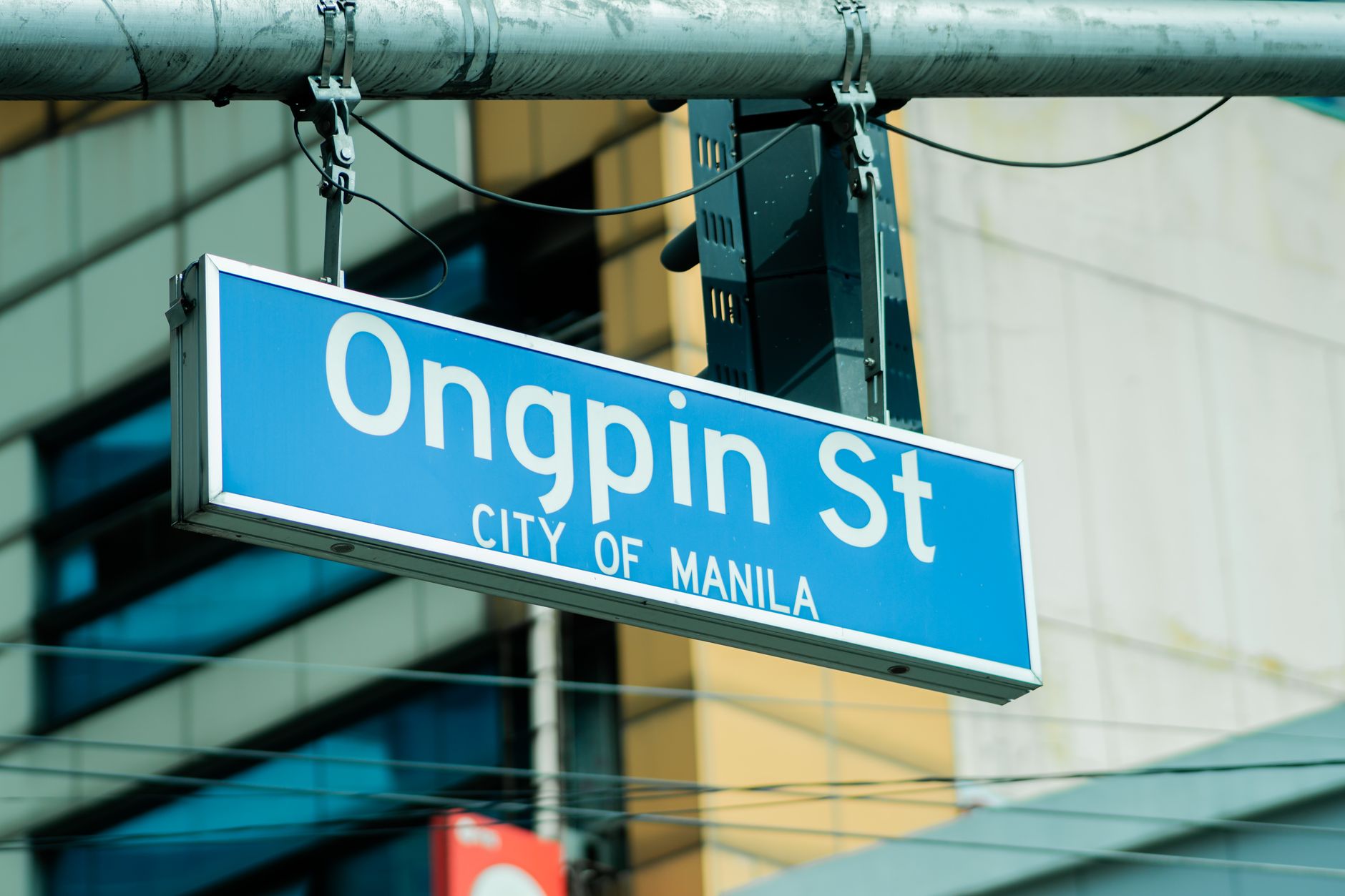
Ongpin Street: The Backbone of the Manileño Palate
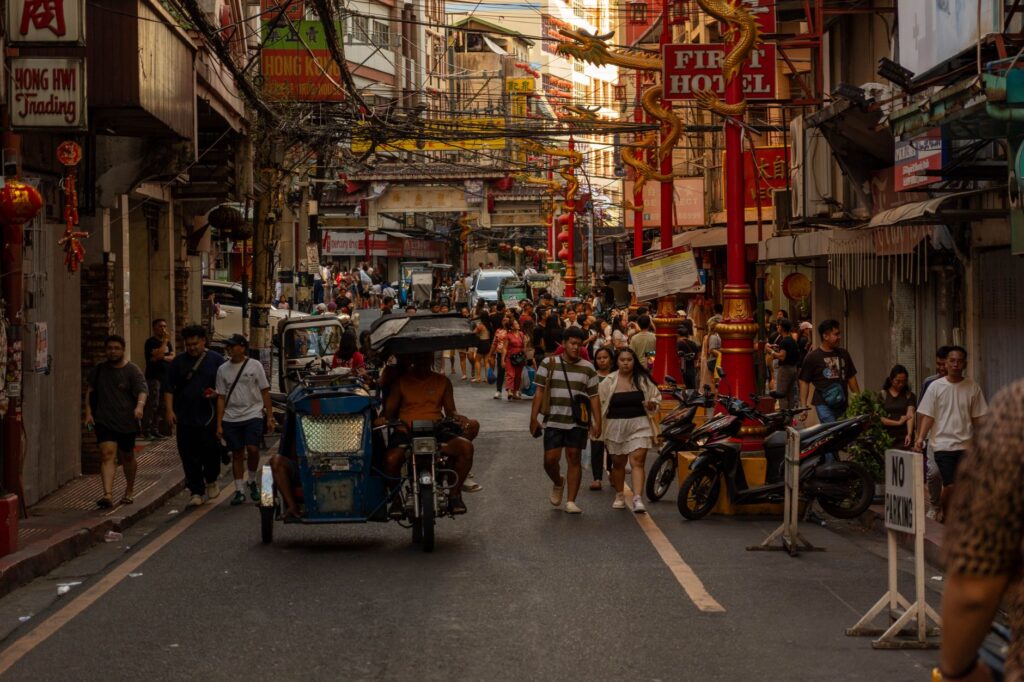
Any route through Binondo inevitably begins on Ongpin Street, the main artery cutting the neighborhood from north to south. Beneath a dense atmosphere of smoke, incense, and aromas of achuote and sesame, this street concentrates the highest density of historical establishments per square meter. Unlike other globalized Chinatowns, signs in traditional characters coexist here with Tagalog in a visual harmony reflecting the deep integration of the community.
Walking down Ongpin demands patience and sensory sharpness. Storefronts display everything from gleaming hanging roast ducks to mountains of mooncakes and winter melon pastries. It is in this stretch that visitors face the traveler’s first great dilemma: choosing between the infinite small eateries promising the best steamed dumpling or the most comforting noodle soup in the capital.
Dong Bei Dumplings: The Ancient Art of Manual Pleating
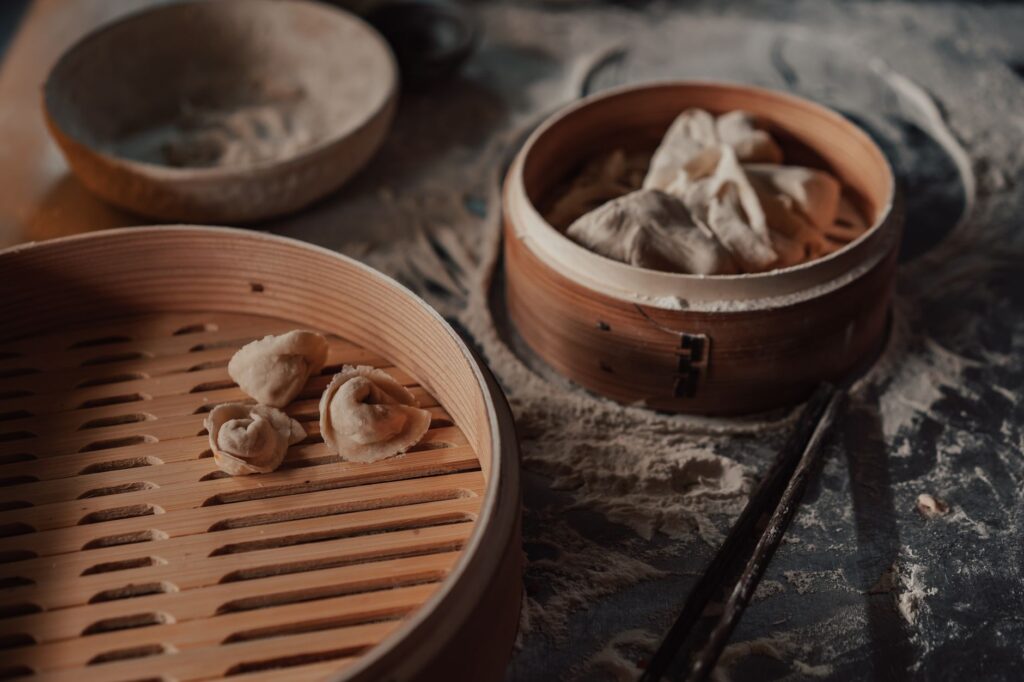
One of the indisputable epicenters of this route is Dong Bei Dumplings, a tiny venue where culinary mastery is displayed without artifice on the street level. Through a large glass window, passersby can watch as a group of women knead, roll, and stuff hundreds of Chinese dumplings with hypnotic speed before dropping them into boiling water or onto a hot griddle.
The star product is the chive and pork dumpling, characterized by a thin yet elastic dough holding intense juices. The simplicity of the recipe conceals ancient precision in the proportion of fats and seasonings. Eating them right there, standing or crowded around communal tables while steam fogs the windows, constitutes one of the most genuine anthropological and gastronomic experiences in all of Southeast Asia.
Wai Ying Fastfood: The Cantonese Institution on Benavidez Street
A few steps from Ongpin, on Benavidez Street, sits Wai Ying Fastfood, an informal temple of Cantonese gastronomy functioning as the unofficial dining room of residents and expats. The bustle is constant, laminated menus pile up on Formica tables, and the service defies any notion of Western pause.
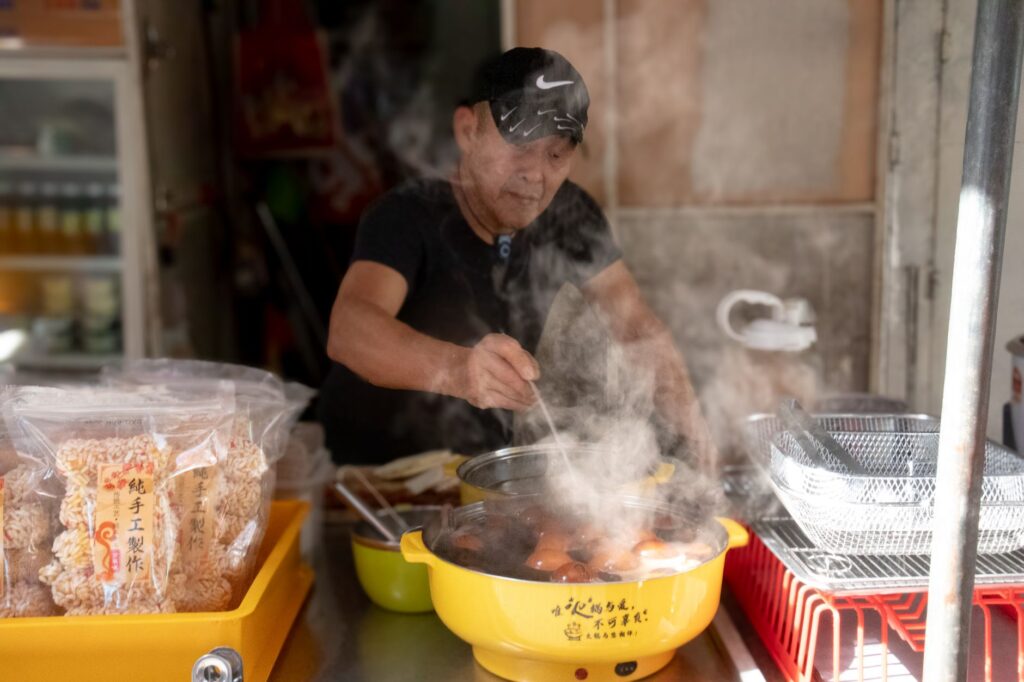
The specialty here is artisanal dim sum, highlighting hakka siomai and fried pork intestine rolls, alongside traditional rice dishes with hanging roast meats. Far from seeking aesthetic sophistication, Wai Ying bets on flavor punch and ingredient freshness, cementing itself as a fundamental link for understanding the evolution of quality fast food in Manila.
Eng Bee Tin and the Reinvention of Lotus Sweet
No tour of the neighborhood would be complete without exploring its confectionery tradition, where Eng Bee Tin stands as the undisputed king of hopia, a flaky pastry traditionally filled with sweet mung bean paste. Founded in the 1910s as a small family business, this brand has successfully modernized without losing its historical roots.
The innovation introduced by the house by incorporating ube paste (Filipino purple yam) into classic hopia represents a perfect synthesis of local miscegenation. This sweet crossroad demonstrates how Binondo’s pastry making has integrated indigenous Filipino elements into its traditional recipe book. Queues outside its stores to buy freshly baked boxes are a daily sight in the district.
Colonial Architecture as a Stone Witness
Binondo’s value transcends the plate of food; it extends to its architecture, narrating Manila’s complex urban history. Surviving among the alleys are art déco style buildings and Spanish colonial constructions with thick walls and wrought-iron balconies, many weathered by the tropical climate and the passage of time, yet imbued with melancholic dignity.
Binondo Church, formally known as the Minor Basilica of Saint Lorenzo Ruiz, dominates the central square with its imposing octagonal granite bell tower. This temple, witness to revolts, earthquakes, and the brutal destruction suffered by Manila during World War II, remains the spiritual anchor of a community that merges its Catholic faith with ancestral cultural heritage.
Binondo is not a tourist film set; it is an open-air community kitchen where time is measured by the constant boiling of stocks and family memory.
Practical guide
Planning a visit to Binondo requires factoring in the logistical and climatic particularities of the Philippine capital to make the most of the gastronomic day.
- How to get there: The most efficient way to access the neighborhood is via the Pasig River Ferry system or by using traditional jeepneys from central districts like Ermita or Malate. It is also accessible by taxi or ride-sharing apps, though traffic in the surroundings is typically heavy.
- Best time to visit: It is recommended to start the tour early in the morning (between 8:00 AM and 10:00 AM) to avoid the day’s peak temperatures and witness the opening of markets and artisanal workshops.
- Monetary tips: The vast majority of street stalls and small traditional eateries operate exclusively in cash (Philippine pesos), making it essential to carry small denominations.
- Safety and respect: As in any area of high commercial density, it is crucial to keep an eye on personal belongings and maintain a respectful attitude when photographing vendors and locals hard at work.
The Human Pulse Surviving in the Alleys
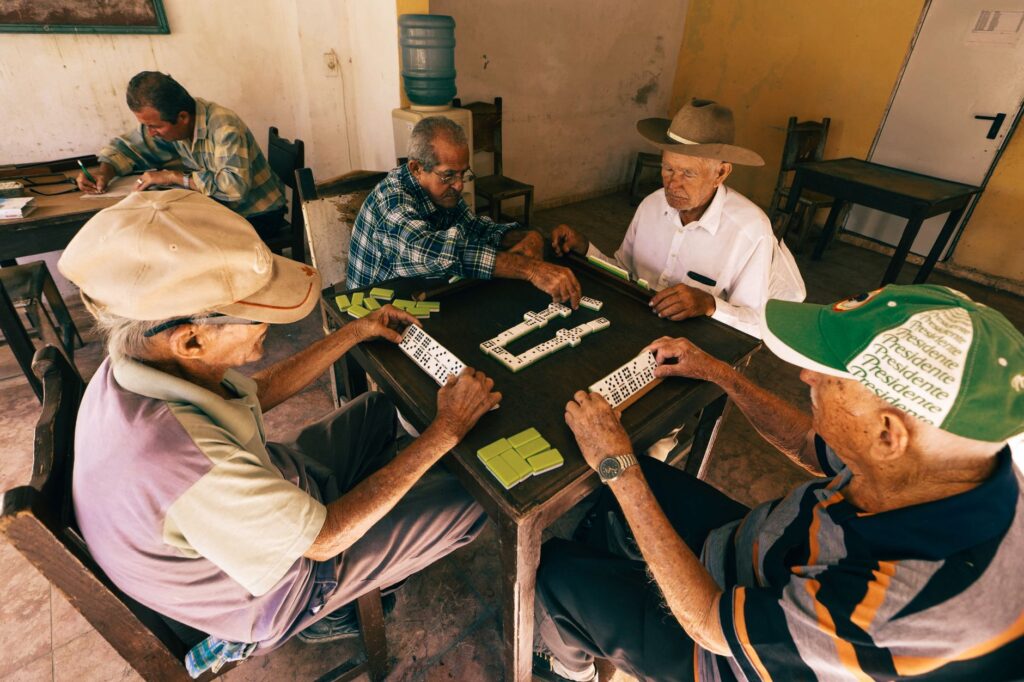
As evening falls, when neon lights flicker over moisture-drenched streets and delivery runners begin to slow down, Binondo reveals its most intimate face. In side alleys, elderly residents gather around folding tables to play mahjong under the dim light of hanging bulbs, while the aroma of bone broth and ginger lingers in the cool night air.
This communal persistence is what truly grants value to the district. In a globalized world tending to homogenize urban landscapes, Manila’s Chinatown holds tightly to its singularity through the hands of its cooks, bakers, and artisans. Binondo’s true wealth does not lie in its exotic ingredients, but in the unwavering will to preserve its memory through the daily act of feeding one’s neighbor. Every dish served across these century-old counters is a victory against oblivion, a tangible reminder that human history is also chewed, shared, and celebrated around a common table.
Source in English: Out of Town Blog (https://outoftownblog.com/binondo-food-trip-guide-best-places-to-eat-in-manilas-chinatown/)