
The Early Morning Penumbra of Stone
At six in the morning, when the Galician city still yawns beneath a persistent drizzle and the profile of port cranes cuts against a slate-gray sky, the iron doors of Vigo’s Central Market begin to slide open with a metallic echo. Inside, beneath concrete and granite vaults that have witnessed three generations of wholesalers, the air smells unmistakably of fresh iodine, brackish water, and the chill of refrigeration units. This is not a space designed for leisurely tourism, but rather a working-class cathedral where the bounty brought in by inshore and deep-sea vessels during the night is handled with surgical precision.
Walking through the ground-floor aisles demands attention and respect for the unwritten codes of the fish market. There is no room here for idle contemplation; metal carts rush down the corridors at breakneck speed, and fishmongers shout out the day’s prices with the urgency of those who know their produce has an imminent expiration date. The granite sales tables, continuously washed with pressurized water, gleam under overhead lighting that highlights the pearlescent sheen of scallops and the cobalt blue of sardines just unloaded at the O Berbés dock.
This market is far more than a mere commercial exchange point; it constitutes the anthropological heart of a city forged to the rhythm of the tides. The relationship between the people of Vigo and their market is founded on a pact of blind trust. Shoppers come seeking the advice of the placeira, that matriarchal figure who masters cooking times and the exact origin of every mollusk with the authority of someone who has spent a lifetime behind the counter.
The Invisible Geography of the Tides
To grasp the magnitude of what is displayed in Vigo’s glass cases, one must look up and mentally retrace the map of the Rías Baixas, a geographical feature where the land fractures to let the ocean in through deep, sheltered estuaries. In this unique ecosystem, the convergence of cold northern currents with nutrient-rich deep-water upwellings generates an exceptional biological larder. The wooden mussel rafts dotting the surface of the Arousa and Vigo estuaries are nothing less than the visible testimony of a traditional aquaculture perfected over decades.
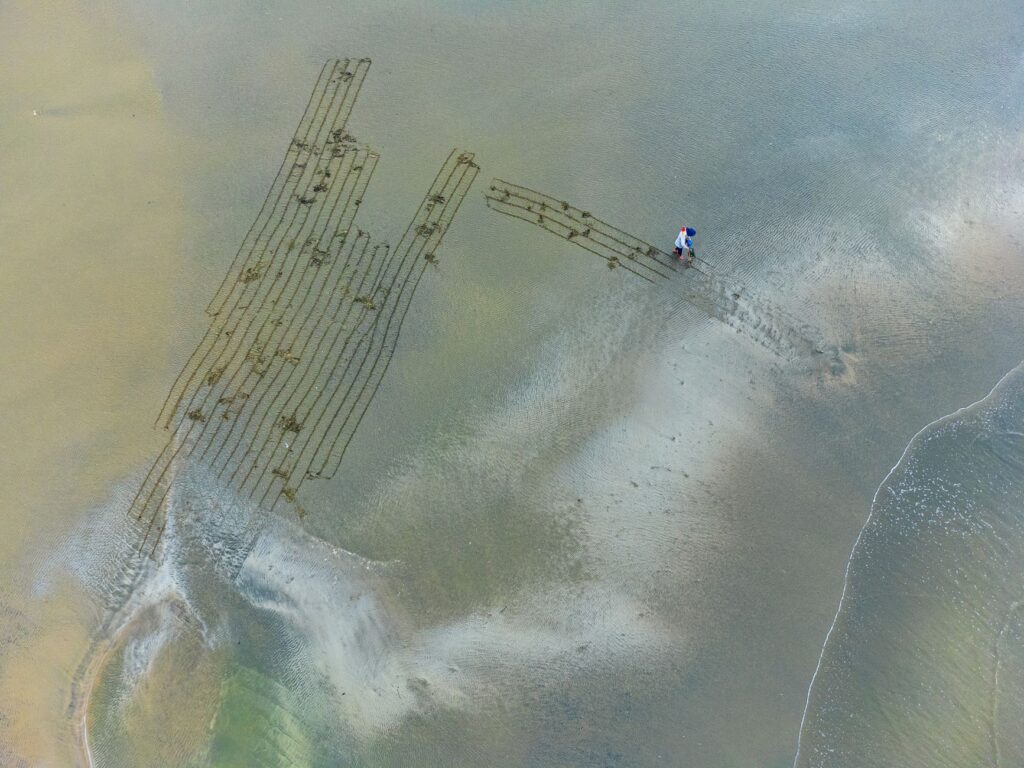
In the bivalve stalls, produce is classified with near-scientific rigor. Clams share space in hardwood crates, sorted by origin: the fine clam, with its perfect silhouette and resilience; the carpet shell clam, capable of surviving hours out of water; and the yellow clam, which imparts a smoother texture to seafood stews. Each tells the story of a specific sandy shore, of a harvesting ground where women gather shellfish by hand in knee-deep freezing water, respecting quotas and minimum sizes established by the guild.
The rhythm of the estuary imposes its own law on the market calendar. When winter Atlantic storms prevent the inshore fleet from setting sail, prices skyrocket and the most coveted species vanish from the displays, reminding us that humans remain at the mercy of weather whims. It is precisely then that the fish market’s value multiplies, transforming into a sanctuary for rock and deep-water species that better withstand the fury of gales.
The Ritual of Crustacean and Scale
As the morning advances, the hustle of wholesalers gives way to domestic shoppers and representatives of Galician haute cuisine seeking excellence for their menus. In the crustacean section, barnacles harvested from the wildest breakers of the Cíes Islands or Cape Silleiro assert their presence with an almost prehistoric aesthetic. Their high price reflects the extreme risk assumed by gatherers as they rip them from rocks battered by violent surf.
A few meters away, spider crabs and lobsters tied with hemp rope move sluggishly in large tanks of oxygenated seawater. Here, exact weight, shell hardness, and the sex of the animal are valued—details explained with infinite patience by merchants to novice buyers. The weighing ritual is invariably accompanied by a strict culinary recommendation: live estuary seafood requires barely a brief boil in salted water with a few bay leaves, without artifice masking the purity of the briny flavor.
blockquote>Vigo’s market does not merely sell fish; it commercializes the liquid memory of an indomable ocean that defines the identity of an entire people from foundations to table.
At the opposite end of the central aisle, line-caught hake, reeled in one by one to prevent the fish from struggling and losing firmness, line up with the elegance of minimalist sculpture. Their iridescent skin and clear, bulging eyes are the authenticity certificates most sought after by local restaurants. Surrounding them are black-mouth monkfish, mud flounders, and generous-sized horse mackerel, proving that the variety of species available in these waters far exceeds any industrial commercial standard.
The Atlantic Kitchen Garden and Local Markets
Although absolute prominence falls to marine species, it would be a grave error to ignore the fundamental role played by agricultural goods descending from interior valleys to meet the sea. On the upper floor of the market, the atmosphere shifts in tone. The salty aroma yields to the earthy perfumes of potatoes from the A Limia region, tender turnip tops announcing winter, and cabbages grown in nearby family gardens.

Local female farmers display their surplus on wooden tables with the same dignity sailors show their catches. Here, white garlic of the local variety, Carril onions, and pumpkins destined to thicken seafood broths are acquired. This duality between land and sea defines Vigo’s gastronomy, based on the perfect balance between the vegetal fat of broths and the marine protein of blue fish.
Among the vegetable stalls, small-scale productions of cheeses protected under Galician designations of origin, such as Arzúa-Ulloa or San Simón da Costa, stand out alongside artisanal fresh cheeses consumed with mountain honey. This secondary larder demonstrates that the estuary’s gastronomy rests upon a complementary agrarian ecosystem that has successfully resisted urban pressure and kept traditional small-scale farming alive.
The Backroom of Flavor: Taverns and Wines
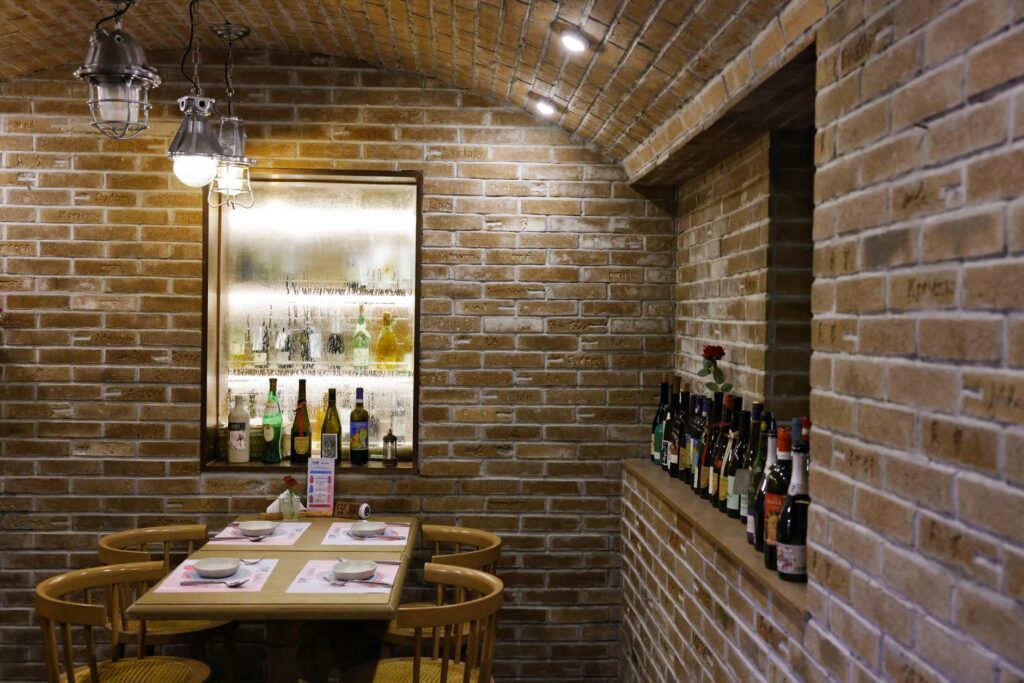
Leaving Vigo’s Central Market without stepping into its immediate surroundings means missing half the anthropological experience. In adjacent streets, such as the famous Rúa da Pescadería, small establishments with deep roots and antique pewter bars pick up the baton of what happens in the municipal halls. This is the moment to order a white wine with the Rías Baixas designation of origin, a young and vibrant Albariño acting as the perfect counterpoint to seafood fat.
In these low-ceilinged taverns lined with traditional tiles, portions of Galician-style octopus, corn empanadas filled with small scallops, and estuary squid in their own ink are served. The clientele is intergenerational: veterans analyzing fish market news share space with young chefs seeking inspiration to reinterpret popular recipes under contemporary premises.

blockquote>Albariño wine, with its sharp acidity and unmistakable minerality, functions as the master key unlocking all the gastronomic secrets of the Galician coast.
This ecosystem of market bars and century-old grocery stores forms a cultural safety net preventing gastronomic homogenization. Here recipes are not written in textbooks, but transmitted from memory to memory, ensuring the estuary’s culinary heritage remains unaltered against passing trends.
Practical guide
How to get there: Vigo is served by Peinador Airport, located about fifteen minutes by car from the city center. It also features excellent high-speed rail connections (AVE/Alvia) linking Urzaiz station to Madrid and the rest of the peninsula in highly competitive travel times.
Location and hours: Vigo’s Central Market is situated at Praza do Berbés and Rúa da Piedra, right in the historic center and very close to the fishing port. It opens Monday through Saturday from 07:00 to 14:00 hours, with early morning hours being the peak period of commercial activity.
Recommended accommodation: For a complete immersion in urban and historical architecture, Hotel Nagari Spa & Wellness offers contemporary luxury within a rehabilitated 20th-century building. Another maritime-themed option is Hotel Pazo los Escudos, located by Alcabre beach with direct views of the Cíes Islands.
Shopping and tasting tips: If you wish to purchase fresh produce to take away, ask vendors to vacuum-pack it for air or land transport; most fishmongers offer this service professionally. For dining nearby, book in advance at benchmark locations like Maruja Limón restaurant or opt for traditional taverns in the historic district.
The Final Pulse Before the Atlantic Expanse
When activity in the market begins to wind down and workers pack the last plastic boxes onto delivery trucks, the city of Vigo recovers a gentle calm that invites contemplation. Walking to the promenade and observing the hazy silhouette of the Cíes Islands wrapped in marine mist reveals that this entire mercantile choreography is merely the orderly reflection of an indomable nature. The granite streets, the perpetual humidity in the air, and the salty flavor impregnating the skin of its inhabitants shape a way of being in the world where respect for the ocean remains the only unnegotiable dogma. At the end of the day, seated before a glass of Albariño and a plate of seafood fresh from the stone, one understands that the true wealth of this Atlantic corner lies in its capacity to keep the dignity of its most ancient traditions entirely intact.