The Persistence of Steam on Alpine Water Mirrors
In an era dominated by digital speed, port automation, and carbon-fiber hulls driven by high-pressure diesel engines, the lakes of northern Italy preserve an anomalous and fascinating technological sanctuary: steam navigation. In the deep, glacial waters of Como, Garda, and Maggiore, several century-old steamships continue to operate regular routes and special services. These are neither floating museum pieces nor ephemeral tourist attractions designed merely for summer leisure; they are complex machines of puddled iron, oak wood, and bronze that form an integral part of the interregional public transport system, defying the laws of contemporary efficiency with their unhurried rhythm.
The presence of these fluvial colossi stems from a tradition of naval engineering consolidated in the mid-19th century, when European industrialization began to demand stable passenger and commercial routes across pre-alpine basins. The topography of these lakes—hemmed in by steep mountain walls where modern roads frequently collapse under rockfalls or seasonal congestion—made surface navigation an indispensable umbilical cord for dozens of isolated communities. Today, examining the entrails of these vessels reveals a fundamental chapter of industrial technology applied to civil transport.
Unlike modern ferries, whose architecture prioritizes the maximization of wheeled cargo volume and the reduction of turnaround times via hydraulic ramps, historic steamships demand a meticulous operational choreography. Each journey between the piers of Bellagio, Desenzano, or Stresa requires a specialized crew capable of interpreting the thermal variations of the boilers, the steam pressure in the expansion cylinders, and the invisible currents descending from snow-capped peaks. This symbiosis between heavy machinery and the alpine environment shapes a unique visual and soundscape, where the characteristic rhythmic heartbeat of the pistons sets the tempo of local life.
Boiler Architecture and Classical Thermodynamics
The beating heart of any operational steamship lies in its thermal energy generation system. In the historic vessels still plying Italian lakes, such as the historic steamer Lombardia or the Concordia, Scotch-type or Cornwall-pattern fire-tube boilers remain the masterworks of propulsion. These cylindrical structures of riveted steel operate under thermodynamic principles that have changed little since the Victorian era, demanding constant manual control of combustion and water levels to prevent overheating catastrophes.

Historically, stokers fed these massive chambers with imported mineral coal, a Herculean task performed in confined spaces where temperatures easily exceeded forty degrees Celsius. Today, for logistical efficiency and local environmental regulations, some units have adapted their systems to operate with refined biofuels or controlled fuel blends, though the operational ritual remains intact. The operator must constantly monitor pressure gauges, ensuring the boiler maintains the optimal levels required to drive double-expansion steam engines.
These driving engines, often visible through armored glass bulkheads for the delight of technically curious passengers, transform thermal energy into linear mechanical motion via large-diameter pistons. Forged steel connecting rods transmit this force directly to the side paddle wheel shafts. Unlike submerged propellers, which concentrate thrust at an aft point and generate underwater turbulence, side wheels distribute displacement evenly across the water’s surface, offering exceptionally smooth navigation characterized by the absence of high-frequency vibrations in the hull.
Ribarian Carpentry and the Anatomy of Century-Old Hulls
Keeping these veterans afloat is not merely an exercise in mechanical engineering, but an endeavor of living industrial archaeology resting in the hands of specialized riparian carpenters. The historic shipyards situated along the lake shores, such as the workshops in Dervio on Lake Como, preserve wood and iron naval construction techniques that are virtually extinct in modern commercial shipbuilding. The structure of these vessels combines hot-rolled iron frames with an outer lining of hardwood planks, typically Slavonian oak or alpine larch, selected for their exceptional resistance to constant humidity and freeze-thaw cycles.

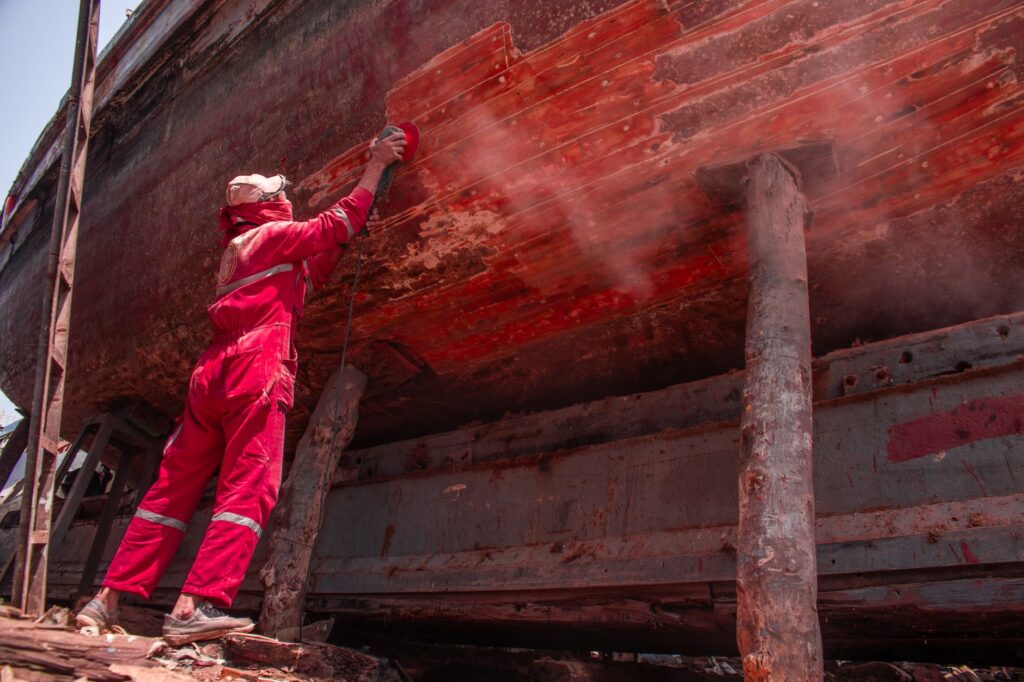
The annual maintenance process involves dry-docking the vessels on inclined slips to inspect every centimeter of the rivets and the caulking of the joints. When wood shows signs of fatigue or accumulated moisture, artisans must manually extract the damaged piece and carve an exact replacement using traditional hand tools, respecting the original millimetric tolerances of the 19th-century shipyard blueprints. This ongoing restoration labor ensures hulls maintain structural flexibility and buoyancy, properties essential for crossing crosswinds and local swells like the *Ora* or *Tivano*.
Furthermore, passenger salons on these steamers constitute true floating works of art, decorated with Liberty and Art Nouveau marquetry, bevelled glass, and carved mahogany furniture. Preserving these interiors requires cabinet-making workshops dedicated to restoring oil varnishes and original moldings. Each decorative element serves not only an aesthetic function but forms part of the distributed weight balancing the vessel’s center of gravity, proving that classical naval architecture and aesthetics went hand in hand in Milanese and Zürich workshops.
The Invisible Logistics of Coal, Water, and Docks
Operating a fleet of historic steamers within a modern public transit network requires a supply chain as precise as that of any international airport. Unlike waterbuses driven by compact diesel engines that can refuel at standard port service stations, steamers depend on highly specific supply infrastructure. Fuel provisioning and boiler feedwater treatment are critical operations scheduled for nighttime hours to avoid interfering with commercial timetables.
Water fed into boilers must be rigorously demineralized and chemically treated to prevent calcium and magnesium scale formation, an endogenous problem in mineral-rich alpine basin waters. Scaled boilers lose thermal conductivity, increasing fuel consumption and raising metal fatigue risks under pressure. Consequently, major piers feature special intake valves connected to local water purification plants, ensuring every liter entering the system meets required purity standards.
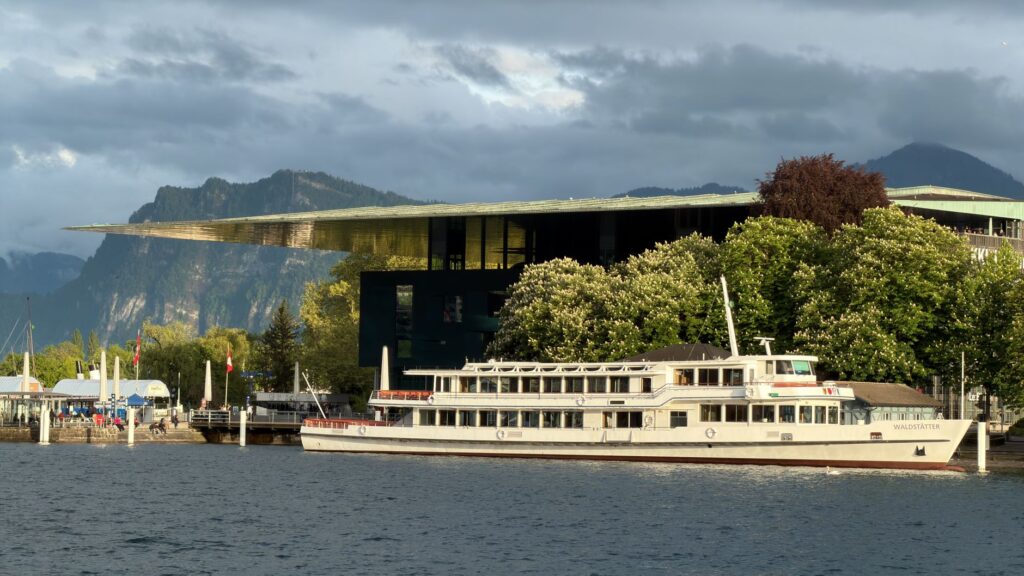
Docking maneuvers present another considerable technical challenge. Due to high inertia, considerable beam (maximum width due to paddle wheels), and the absence of bow thrusters, docking a paddle steamer demands anticipation and absolute mastery of current and wind. Captains must calculate the exact stopping point meters before reaching the dock, utilizing combinations of reverse on one wheel and forward on the other to pivot the vessel on its own axis. This differential maneuverability, characteristic of paddle craft, continues to fascinate contemporary sailors for its elegance and complexity.
Steam navigation on alpine lakes is not an exercise in aesthetic nostalgia, but a living demonstration that technical durability and artisanal maintenance can outlast the planned obsolescence cycles of modern industry.
Conservation Practices and Generational Turnover
Securing the operational survival of these vessels into the future faces a critical hurdle: the scarcity of skilled labor in traditional trades. Driving a marine steam engine or restoring a riveted wooden hull does not figure in contemporary nautical school curricula, which focus almost exclusively on electronic navigation and diesel-electric propulsion. To mitigate this gap, operators on Lakes Como and Garda have established dual training programs in partnership with technical vocational centers in Lombardy and Veneto.
These programs allow young engineers and carpenters to work side by side with retiring machinists and artisans, transmitting practical knowledge absent from theoretical manuals. Learning to listen to the metallic tone of a bronze bearing to detect early excessive friction or knowing how to adjust wooden paddle tension using oak wedges requires empirical skills gained through years of direct immersion in the shipyard and engine room.

Investing in the digitization of certain safety systems—such as telemetric monitoring of boiler temperatures and automated fire-suppression systems—has also enabled compliance with strict European Union commercial navigation regulations without altering the exterior aesthetics or mechanical integrity of the vessels. This subtle integration of 21st-century technology with 19th-century machinery ensures steamers continue plying alpine waters with full safety guarantees for decades to come.
Practical guide
How to get there: The lake region features excellent rail connections from Milan. The line to Como San Giovanni connects with the central station in just 40 minutes, while trains to Desenzano del Garda provide direct access to the southern shore of the namesake lake.
When to travel: Although limited winter services operate, the peak season for the historic steam fleet runs from May through September, coinciding with maximum frequency timetables for circular routes.
Tickets and reservations: Tickets for historic steamers can be purchased at Navigazione Laghi ticket offices or online. Advance booking is strongly recommended for scenic cruises featuring onboard restaurant services.
Onboard etiquette: Respect restricted engine room areas when visual access is permitted. Rubber-soled footwear is highly advisable due to moisture on wooden decks.
Fluvial Epilogue in the Alpine Lake Mists
As the sun begins to dip behind pre-alpine peaks and evening mists blanket the tranquil waters of Lake Maggiore, the dark silhouette of a paddle steamer slowly emerges on the horizon like a tangible reminder of another industrial era. In that moment of shared silence on the teak deck, where the only perceptible sound is the gentle, rhythmic splash of wooden wheels striking water and the distant whisper of pistons, travel transcends mere physical displacement between two geographical points.
The experience of navigating aboard these century-old vessels invites deep reflection on our relationship with time and technology. It teaches us that old does not always equal obsolescence, and that durability, artisanal care, and unhurried pacing possess intrinsic, irreplaceable value in a world saturated with immediacy. The steamers of the Italian lakes continue to sail driven not only by steam power, but by the firm human will to preserve the living memory of ingenuity and beauty in motion.