
The Rail Route Defying the Andean Abyss
Accessing the historic sanctuary of Machu Picchu is far more than a routine tourist journey; it stands as a masterpiece of high-mountain logistics and modern railway engineering adapted to an extreme vertical geography. From the station of Ollantaytambo, nestled in the heart of the Sacred Valley of the Incas, to the bustling town of Aguas Calientes —officially known as Machu Picchu Pueblo—, trains operated primarily by companies like PeruRail and Inca Rail wind their way along a deep canyon carved by the Urubamba River. This narrow corridor, hemmed in between granite walls covered in subtropical vegetation, represents the sole mechanized land link connecting the core of the Peruvian Andes with the base of the sacred mountain. Unlike sprawling continental rail networks, this section operates under severe topographic constraints, where rockfalls, seasonal river floods, and unstable slopes demand daily maintenance and minute-by-minute surveillance by engineers and track crews.
The history of this layout dates back to the early 20th century, when the need to transport minerals and connect remote agricultural enclaves drove the construction of a railway line that today, paradoxically, carries almost exclusively global travelers. Clockwork scheduling is the invisible heartbeat that allows thousands of people to travel daily through this gorge without overwhelming the infrastructure. Each train departs under strict operational windows to avoid bottlenecks on single tracks, a system where radio communication and calculated sidings guarantee passenger safety. This steady flow not only feeds the tourism industry but acts as the umbilical cord supplying food, gas, building materials, and mail to a local population living entirely isolated from the nation’s road network.
Adhesion Engineering and Climatic Transition
As the train leaves behind the cornfields of the Sacred Valley and enters the high jungle fringe, the landscape undergoes a radical metamorphosis that tests railway technology. Locomotives must navigate steep inclines and tight radius curves using mixed traction systems and high-power diesel engines specifically designed to respond effectively under extreme humidity conditions. The railway track, originally built on hardwood sleepers and now modernized in many sections with reinforced concrete blocks, absorbs the constant stress of convoys that must brake with pinpoint accuracy at intermediate stations like Km 104, the celebrated starting point for hikers undertaking the short stretch of the Inca Trail.
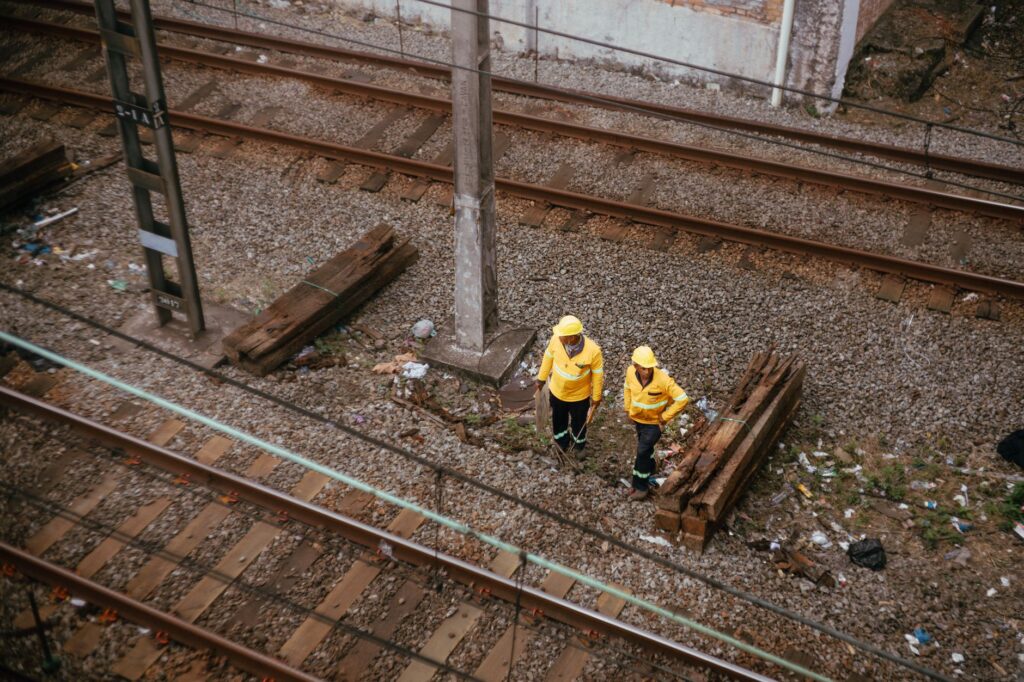
The technical challenge lies not only in the gradient but in water management. Torrential rains during the austral summer turn secondary streams into torrents capable of sweeping away tons of mud and rock. To mitigate this constant risk, railway companies and Peru’s Ministry of Transport have implemented early warning systems with hydrological sensors and gabion retaining walls along the canyon. The resilience capacity of this railway line is demonstrated by its swiftness in restoring service after adverse weather events. Emergency teams operate under strict protocols to clear the tracks within hours, minimizing economic impact in a region whose economy depends almost entirely on the predictability of this transport.
Invisible Logistics: Supply Chains and Waste Management in the Canyon
Behind the idyllic postcard of the train crossing the Andes lies a colossal logistical operation racing against the clock. Aguas Calientes is practically an insular locality in functional terms; it features no access roads for automobiles or trucks. Everything consumed by its permanent population and thousands of daily visitors —from propane gas cylinders and fresh vegetables to spare parts for hotel machinery— arrives exclusively on freight cars coupled to passenger trains or dedicated cargo formations. This absolute reliance on the railway demands meticulous planning where delays on the main trunk line can trigger shortages within days.
The railway is not merely a mode of transport; it is the circulatory system sustaining daily life and the economy of an inaccessible gorge.
Equally complex is the reverse flow: solid waste management. Since no road exists to evacuate garbage generated by mass tourism, every kilogram of waste must be compacted, sorted, and loaded back onto the train toward treatment plants located outside the valley. Local authorities, in collaboration with railway concessionaires, have optimized this process using special containers and nighttime loading schedules to avoid interfering with passenger traffic. This delicate balance between tourist pressure and the environmental fragility of the natural sanctuary proves that Machu Picchu’s sustainability depends as much on citadel restrictions as on the logistical efficiency of its transport.
Socioeconomic Impact on Rural Communities Along the Route
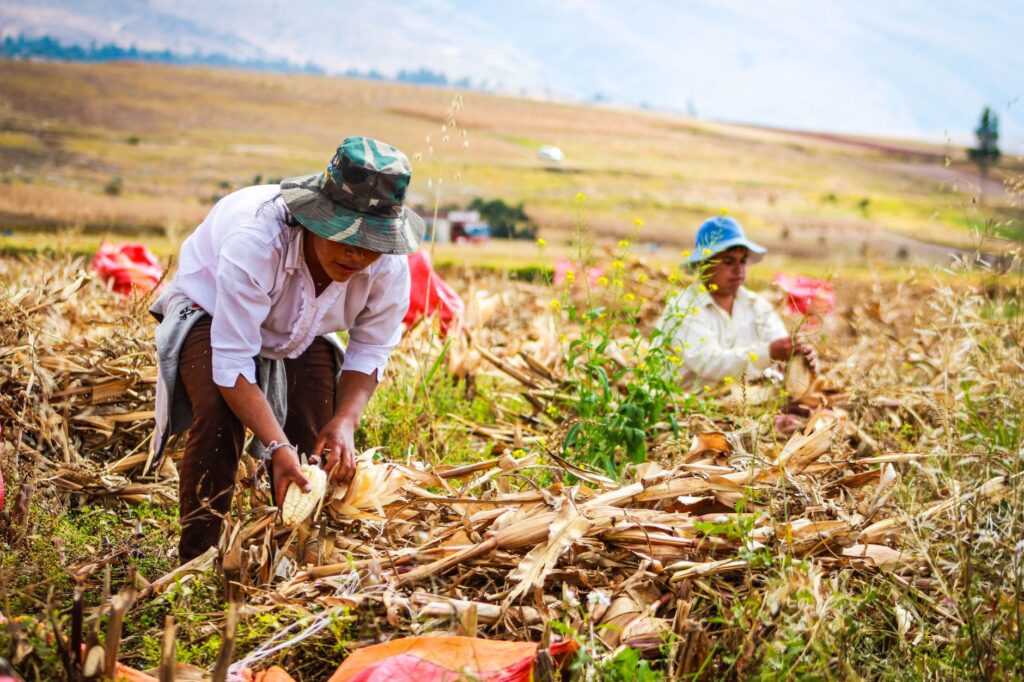
The daily passage of the train profoundly transforms the social dynamics of small hamlets and peasant communities situated along the track. For inhabitants of settlements like Chilca or Pachar, the railway functions as an essential public service. Facultative stops allow local farmers to ship their harvests directly to markets in Ollantaytambo and Cuzco without costly intermediaries. However, this economic integration process has also sparked tensions regarding local ticket costs versus international tourist fares, a recurring debate concerning sovereignty over public infrastructure use.
Differentiated fare policies seek to protect the mobility rights of indigenous populations, guaranteeing specific cars for residents at subsidized prices. Despite these measures, global tourism market pressures have reshaped the valley’s social fabric, turning many former farmers into tourism service providers, guides, or artisans. This labor transition raises questions about the preservation of ancestral agricultural traditions on cultivation terraces flanking the track, where the pace of railway modernity starkly contrasts with ancient terrace-farming techniques.
The Future of Connectivity: Innovation and Sustainability on the Rails
Faced with growing global demand, Peruvian authorities and private operators constantly evaluate system modernization to increase transport capacity without compromising safety or the natural environment. Proposals are being studied to incorporate lower carbon footprint locomotives, optimize digital signaling systems, and improve terminal station infrastructure to streamline passenger boarding and alighting. Nevertheless, any massive expansion runs up against biological and conservation limits imposed by UNESCO to protect the Machu Picchu Historic Sanctuary, forcing operational efficiency to be prioritized over mere frequency increases.
The integration of satellite monitoring technologies for early detection of slope movements charts the course for modern risk management in the corridor. Engineers trust that combining real-time meteorological data with automated railway sidings will further reduce unexpected disruptions. The primary objective is to consolidate an alpine transport model where technology serves to shield the fragile balance between human connectivity and the conservation of the sacred landscape.
Practical guide
- How to get there: The mandatory starting point is the city of Cuzco. From there, take a bus or private vehicle to Ollantaytambo station (approximately 1 hour and 30 minutes), where you board the train to Aguas Calientes.
- Types of rail services: Different categories are operated by PeruRail and Inca Rail, ranging from panoramic tourist trains with glass roofs to exclusive local services for Peruvian residents. Booking months in advance is essential due to high global demand.
- Allowed luggage: Railway operators enforce a strict hand luggage policy, permitting a single suitcase or backpack weighing a maximum of 5 kilograms per passenger. Bulky luggage must be left at hotels in Cuzco or Ollantaytambo.
- Climate and seasonality: The dry season runs from May to September, offering clear skies but high visitor numbers. The rainy season extends from November to March, a period when temporary track restrictions due to landslides may occur.
- Mandatory documentation: To board the train and access the sanctuary, presenting your original passport or valid identity document used at the time of ticket purchase is indispensable.
When the first train of the day crosses the bridge over the Urubamba River before dawn, the metallic sound of wheels on rails merges with the steady murmur of the current and birdsong in the thick cloud forest. For the traveler contemplating this landscape from the window, the journey ceases to be a mere logistical hurdle and becomes a sensory introduction to the mystery of the Andes. The pinpoint precision of the engineers, the constant effort of maintenance crews watching every meter of slope, and the silent resilience of residents inhabiting this gorge configure a human symphony where modern engineering and ancestral geography converse in perfect harmony. In this corner of the world, every arrival at the Aguas Calientes station stands as tangible proof that human will, when aligned with respect for the environment, can weave invisible bridges over the most inaccessible chasms on the planet.