The Kanto region, the economic and social heart of Japan, usually beats with a precision that rivals atomic clocks. However, when nature unleashes its power in the form of a typhoon, this perfectly oiled machinery is forced to a halt in an act of technical prudence and respect for human life. The recent meteorological threat has challenged the busiest railway network on the planet, transforming Tokyo’s bustling terminals into scenes of a tense and expectant calm.
This phenomenon is not merely a matter of rain and wind; it is a duel between cutting-edge engineering and the unpredictability of the climate. As skies darken over Tokyo Bay, the transport system prepares for a choreography of planned suspensions—a strategy that prioritizes passenger safety over absolute punctuality, reminding us that even in the age of high speed, the land dictates its own rules.
The Anatomy of a Planned Suspension
The concept of Keikaku Unyu, or planned suspension, has become the cornerstone of disaster management in the Japanese railway system. Unlike the reactive cancellations of the past, operators such as JR East and JR Central now act 24 to 48 hours in advance. This decision is not made lightly; it involves a comprehensive analysis of wind speeds, soil saturation, and storm surge projections. When a typhoon threatens Kanto, the operations control center in Tokyo turns into a war room where meteorologists and engineers decide the fate of millions of commutes.

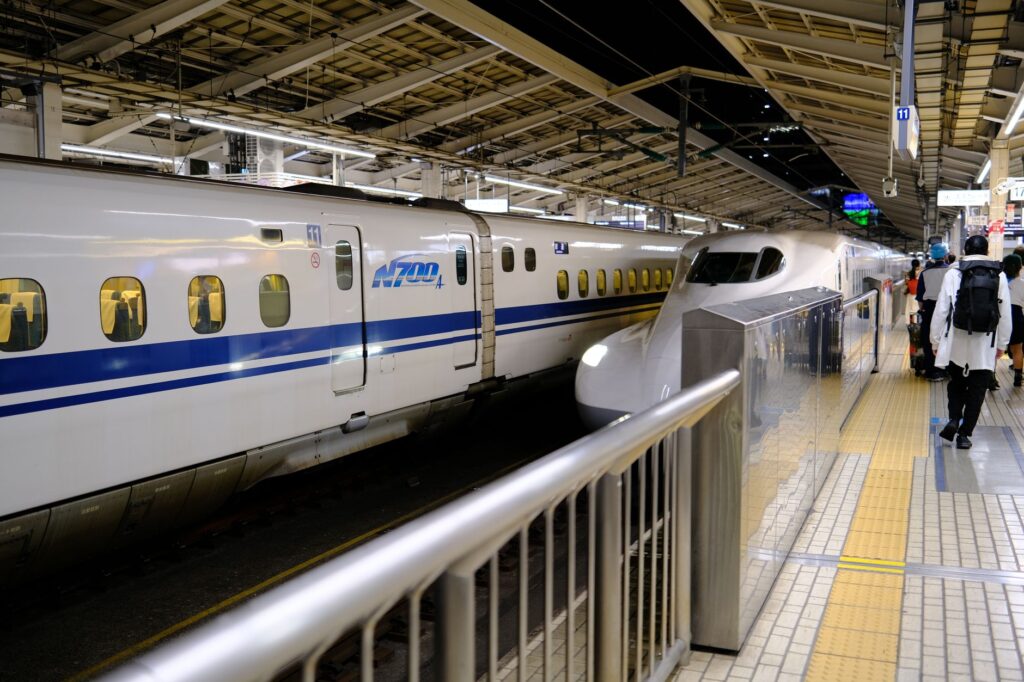
Suspending services is not a sign of system weakness, but rather of its maturity. By stopping trains before conditions become critical, the risk of trains being stranded between stations—where rescue would be infinitely more complex—is eliminated. High-speed lines, such as the Tokaido Shinkansen, are particularly sensitive to crosswinds. Their aerodynamic structures, designed to slice through the air at 300 km/h, can become vulnerable to erratic gusts that exceed the safety thresholds established by ministerial regulations.
Railway safety in Japan is not an objective; it is a non-negotiable condition that precedes any economic profit or logistics concern.
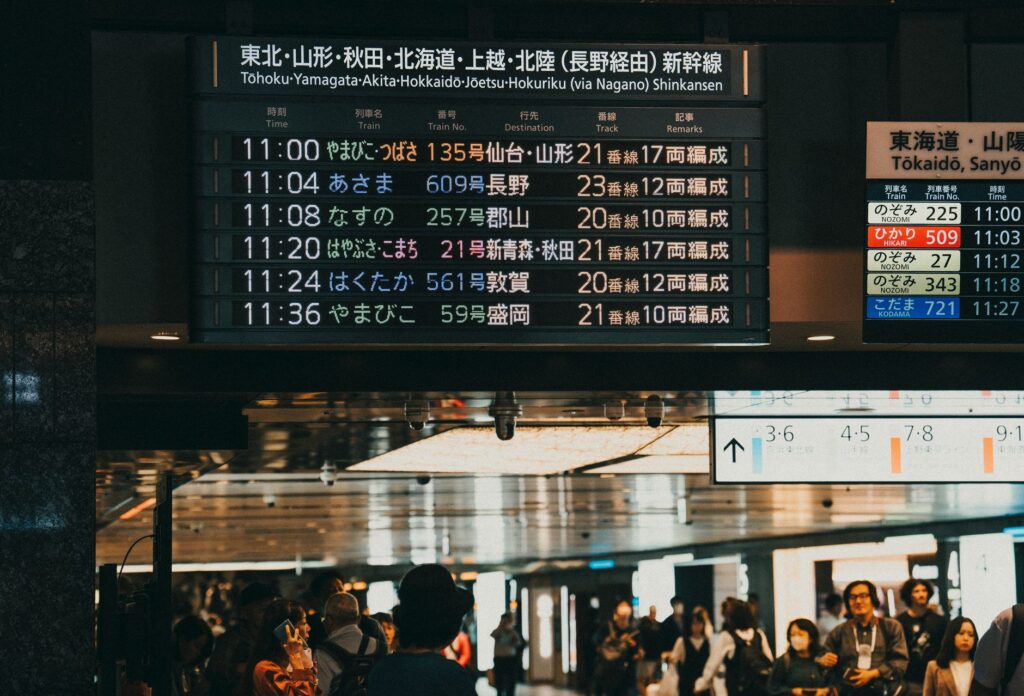
During these periods, the silence at Tokyo Station is deafening. The information boards, usually a mosaic of constantly changing schedules, display a monotonous warning message in red. It is a visual reminder that technology, no matter how advanced, must know when to retreat before the power of the elements.
The Shinkansen: A Vital Artery Under Pressure
The Tokaido Shinkansen is arguably the most important railway line in the world, connecting Tokyo to Osaka. When this artery is severed due to a typhoon threat in the Kanto region, the economic impact is felt nationwide. Businesses rely on this constant flow of people, and its interruption poses an unprecedented logistical challenge. Engineers constantly monitor anemometers placed along the tracks, which feed real-time data into automatic braking systems.
The primary risk is not just derailment from wind, but flying debris and landslides in the more rural areas of Kanagawa or Shizuoka prefectures. The torrential rains accompanying these weather systems can soften the embankments that support the tracks. Therefore, even after the wind dies down, service does not resume immediately. Inspection patrols must traverse every kilometer of track to ensure there are no obstacles or structural damage to the overhead lines.
The Passenger Experience in the Eye of the Storm
For international tourists, news of a typhoon can cause anxiety, but for Kanto residents, it is a ritual of preparation. Stations are filled with an organized calm. There are no scenes of panic; instead, there are orderly lines at refund windows and constant checking of mobile apps. Communication is key: operators use social media and multilingual public address systems to explain not only which trains are cancelled but the technical reasoning behind the decision.
The human impact extends to railway workers. Thousands of drivers, conductors, and maintenance staff must remain on standby, often staying overnight at stations or logistics centers to be ready the moment the restart order is given. It is an invisible labor that sustains the resilience of Japanese transport. Hospitality, or Omotenashi, manifests even in crisis, with staff distributing water or blankets if the closure catches long-distance travelers far from home.
Engineering Against Wind and Tide
Japan has invested decades in infrastructure designed to withstand natural disasters. Shinkansen viaducts are reinforced with anti-seismic systems that also help stabilize the structure against extreme vibrations caused by wind. However, modern typhoons present more intense rainfall patterns due to climate change, forcing a reconsideration of drainage systems and tunnel flood protection.
On Kanto’s local lines, such as the Yamanote or Chuo, the challenge is different. These tracks are often surrounded by vegetation and dense urban areas. A single fallen branch on a high-voltage cable can paralyze an entire line. Consequently, preventive maintenance during typhoon season includes intensive pruning and reinforcement of catenary poles. Electrical system redundancy allows power to be diverted through alternative routes in many cases, keeping stations operational even if trains are not running.
The true success of Japanese engineering lies not in its speed, but in its ability to stop in time to save a single life.
Impact on Logistics and Supply Chains
Passenger transport is only one side of the coin. Rail freight, vital for the supply of fresh produce and industrial components to Tokyo, also suffers the consequences. Freight trains are usually the first to stop and the last to resume, as their greater weight and length require absolutely stable track conditions. This creates a domino effect in Kanto’s distribution centers, forcing companies to activate contingency plans via road transport, which is also often limited by highway closures due to zero visibility.
The Science Behind the Alert
The Japan Meteorological Agency (JMA) works closely with railway companies. The use of supercomputers to model the typhoon’s path allows for precise predictions of where the impact will be strongest. This symbiosis between science and transport is what allows Kanto to return to normalcy in record time. Just hours after the eye of the typhoon moves out into the Pacific, JR’s army of workers begins the task of cleaning and verification.

Practical Guide
- Consult Official Sources: Always use official JR East apps (JR-EAST Train Info) or Navitime’s Japan Travel for real-time updates on cancellations.
- Refunds and Changes: In the event of a planned suspension, Shinkansen tickets are usually refundable without penalty. Visit the green ticket windows (Midori no Madoguchi) or manage the process online if you purchased through Smart EX.
- Transit Emergency Kit: If you find yourself traveling during an alert, ensure you have a charged power bank, some dry food, and water. Station shops may close during the peak of the storm.
- Avoid Unnecessary Travel: If a planned suspension is announced, do not try to reach the station to «see if you get lucky.» The Japanese system is strict, and closures are final until danger passes.
- Travel Insurance: Check that your insurance covers delays or cancellations due to natural weather phenomena, especially if you have connections with international flights at Narita or Haneda.
- Accommodation Communication: If you cannot reach your destination, notify your hotel as soon as possible. Most establishments in Japan are understanding of delays caused by documented typhoons.
The Return of Motion
When the sky finally clears and the first test train runs along the tracks, a collective sense of relief washes over the Kanto region. It is not just a return to routine; it is confirmation that the system worked, that safety prevailed, and that the infrastructure has once again held firm. Resilience is not measured by the absence of interruptions, but by the ability to manage chaos with order and return stronger.
The image of a Shinkansen gliding under a rainbow after the storm is more than a postcard; it is a symbol of a nation that has learned to live with the fury of nature without losing its way. The next time a typhoon threatens Kanto, the tracks will fall silent again, but it will be a protective silence—the necessary pause of a giant that knows that to keep running, sometimes you must know how to stop.
Source: News On Japan