Introduction to the Atlantic Corridor and Its Steel Pulse
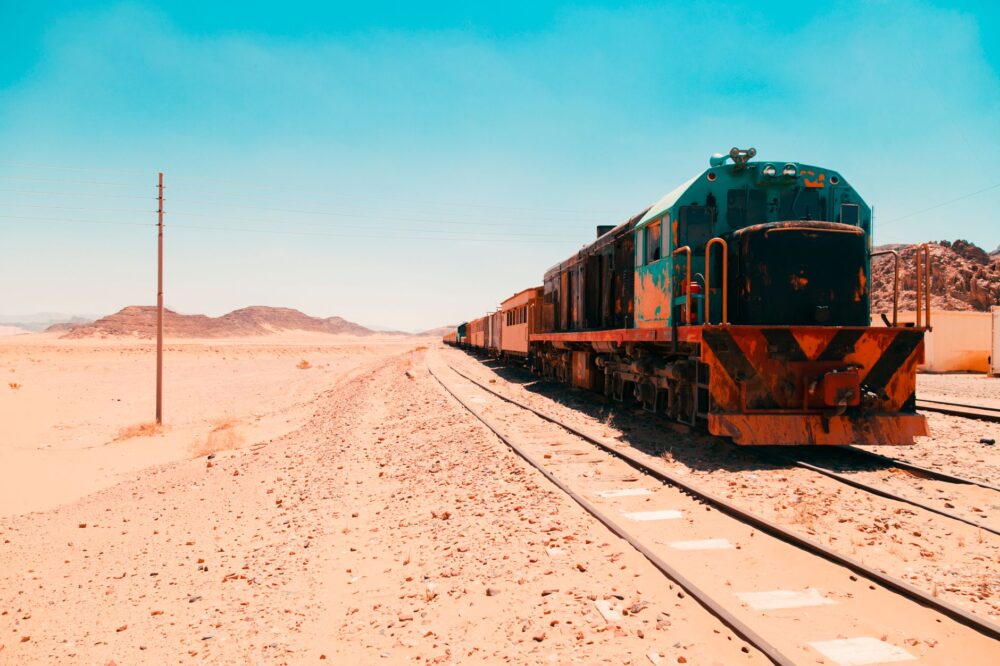
At the western edge of the African continent, where the waters of the Atlantic Ocean crash powerfully against the sandy peninsula of Lobito, begins one of the most ambitious engineering feats in Africa’s colonial and modern history: the Benguela Railway. This meter-gauge artery is not merely a communication route intended for freight transport; it is a geopolitical backbone cutting across Angola from west to east, connecting the coastal ports with the rich mineral deposits of the Democratic Republic of Congo and Zambia. Understanding its current operation requires delving into a complex web of heavy logistics, infrastructure maintenance in extreme climatic environments, and a century-old history marked by conflict, reconstruction, and the hope of fluid transcontinental trade.
The strategic relevance of this railway lies in its capacity to offer a direct outlet to the sea for the African Copperbelt, drastically reducing transport times compared to land routes ending in the Indian Ocean or South African ports. However, maintaining this corridor demands constant technical effort. From marine corrosion on the coast to geotechnical stability challenges on the interior plateaus, every kilometer of track tells a story of human resilience and adaptation to a vast and demanding territory.

Historical Genesis: From Colonial Dream to Regional Backbone
The Benguela Railway project was conceived in the early 20th century, driven by the vision of British businessman Robert Williams and authorized by the Portuguese Crown. The initial goal was ambitious: to connect the Katanga mines with the Atlantic coast through thousands of kilometers of railway tracks designed to overcome cliffs, rushing rivers, and the immensity of the Angolan central plateau. Construction began in 1902, lasted for decades, and posed a titanic challenge for engineers and thousands of local workers who faced tropical diseases, supply shortages, and an unforgiving topography.
During the colonial era, the line functioned as the undisputed economic motor of the region, facilitating both mineral exports and the transport of passengers and agricultural products. However, decades of armed conflict following Angola’s independence in 1975 reduced much of this infrastructure to rubble. Dynamited stations, collapsed bridges, and ripped-up tracks silenced the whistle of locomotives for years, isolating numerous rural communities that depended exclusively on the train for survival and connection with urban centers.
Modern Reconstruction and the Resurgence of the Gauge
Following the end of the civil war at the turn of the century, the rehabilitation of the Benguela Railway became a national and international priority. With financial and technical support from foreign partners, predominantly of Asian origin, the comprehensive reconstruction of over thirteen hundred kilometers of track was undertaken. Damaged rails were replaced, signaling systems modernized, and maintenance workshops equipped with state-of-the-art technology to guarantee the safety and operational efficiency of the line.
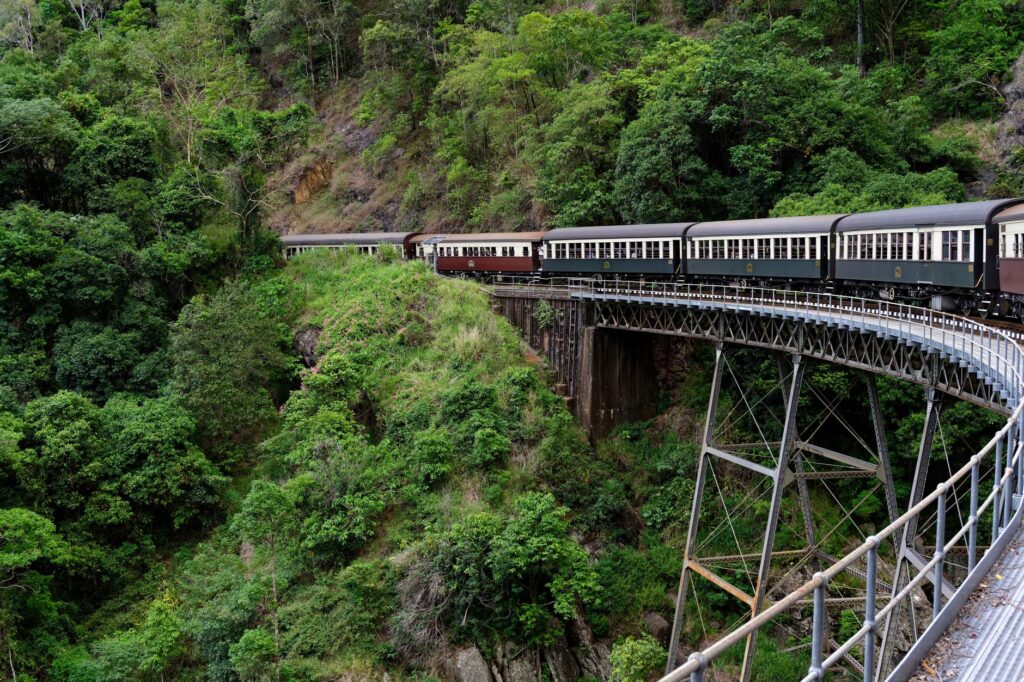
The railway is not merely iron over ties; it is the invisible thread that weaves territorial cohesion and restores the future to entire communities forgotten by official cartography.
This modernization not only restored freight capacity for strategic minerals but also reinstated long-distance passenger services. The express trains periodically running the route between Lobito and the eastern border have established themselves as vital infrastructure for social mobility. For thousands of inhabitants in isolated rural localities, the passage of the convoy represents the only accessible route for commercial exchange, access to healthcare services, and family reunions across the vast Angolan territory.
Engineering and Geographical Challenges: From Coastal Desert to Plateau
The layout of the Benguela Railway stands out for its landscape diversity and the corresponding engineering challenges imposed by each geographic zone. In its initial section, the track departs from sea level at the port of Lobito, winding through arid plains and transition zones before beginning the steep ascent toward the central plateau, locally known as the Planalto. This climb requires powerful locomotives capable of overcoming steep slopes and tight curves, where friction and mechanical wear demand rigorous inspections and constant preventive maintenance.

As the train gains altitude, the climate changes radically, transitioning from coastal aridity to a humid, forested savanna regime crossed by numerous watercourses requiring a continuous network of bridges and culverts. The tropical rainy season introduces the risk of landslides and flooding of the railway platform, forcing engineering teams and track workers to maintain permanent guards and rapid response protocols to prevent prolonged interruptions of rail traffic.
Multimodal Logistics and Impact on the Regional Economy
The operability of the Lobito corridor relies on close multimodal integration where the railway acts as the central axis connecting deep-water maritime ports with local road networks and freight consolidation centers. At the port of Lobito, specialized terminals allow rapid transshipment of bulk minerals, containers, and general cargo directly from train wagons to merchant vessels bound for international markets in Europe, Asia, and the Americas.

This continuous logistical flow generates a direct economic impact across the regions it traverses, stimulating the creation of small service businesses around railway stations and facilitating the commercialization of surplus agricultural products grown in the fertile lands of the plateau. Nevertheless, experts point out that the full potential of the corridor will only be achieved through the continuous digitization of customs processes, optimization of transit times, and expansion of storage capacity at key logistical nodes.
Life Along the Track: Communities and Railway Culture
Along more than a thousand kilometers of route, the presence of the train has shaped the cultural and social identity of dozens of rural communities. Railway stations are not mere technical stops; they act as true nerve centers of community life, where farmers, itinerant merchants, and travelers converge in a bustling exchange of goods, news, and local traditions.
The arrival of the convoy marks the daily rhythm of these settlements. Spontaneous markets for fresh food, crafts, and textiles unfold around the tracks, allowing passengers to acquire typical products during brief technical stops. This subsistence economy linked to the passage of the train reflects the deep interdependence between modern infrastructure and traditional social fabric, demonstrating that the railway is, above all, a dynamic agent of human life in the heart of Africa.

Practical guide
Planning a trip or logistical analysis around the Benguela Railway requires detailed knowledge of its operational and safety conditions. The essential aspects for researchers, transport professionals, and travelers interested in the corridor are detailed below:
- Main Route: The layout connects the Atlantic port of Lobito with the city of Luau, located on the eastern border with the Democratic Republic of Congo, spanning a total length of approximately 1,344 kilometers.
- Passenger Services: Regular long-distance passenger train services are operated by the managing company, with weekly frequencies connecting major provincial capitals such as Huambo and Kuito with the coast.
- Formalities and Permits: Professionals wishing to document railway operations or access port and industrial facilities must process the relevant permits well in advance with ministerial authorities and the railway operator.
- Support Infrastructure: Major cities along the route have basic hotel services and health centers, although self-sufficiency is essential for any prolonged travel in intermediate rural areas.
- Climate and Seasonality: The best time to tour the region comprises the dry season, between the months of May and September, avoiding heavy tropical rains that can hinder road travel parallel to the track.
The Golden Sunset Over the Tracks: Memory and Horizon in the Savanna
When the sun begins to descend over the horizon of the Angolan savanna, dyeing the sky in shades of ochre and violet, the silhouette of a locomotive advancing heavily over the rails acquires an almost poetic dimension. It is the rolling testimony of a story of collective effort, where technique and geography intertwine in perpetual equilibrium. In every wooden tie and hardened steel bolt echoes the echo of a continent in constant motion, finding in the railway not only a tool for material progress, but the tangible symbol of its own integration and its firm gaze toward the future.