
In the foothills of the Cantabrian Mountains, where the moisture from the Bay of Biscay nourishes dense deciduous forests, chestnut wood is not merely a forestry resource, but the primordial alphabet with which rural communities have written their relationship with the environment for centuries. Far from being a mere ethnographic relic, traditional Asturian basketry is undergoing a profound aesthetic and functional reevaluation. In workshops scattered across regions such as Los Oscos or the Narcea Valley, a new generation of artisans engages in dialogue with contemporary design, proving that the rigorous modulation of stave and rib holds highly relevant answers to current debates on sustainability, local materiality, and productive sovereignty.
This report investigates the backstage of this artisanal renaissance, examining how tree selection at the optimal lifecycle stage, manual splitting using wooden wedges, and millimeter-precise weaving configure a portable architecture that challenges planned obsolescence. Through interviews with master basketmakers, interior architects, and heritage conservators, we unravel the complex economic and cultural ecosystem that sustains one of the most refined carpentry traditions in Atlantic Europe.
The geography of chestnut and the biological cycle of the forest
Understanding Asturian basketry inevitably begins in the forest. Not just any specimen or time of year is suitable for extracting the raw material that will give life to these vessels. The most veteran artisans insist that chestnut (Castanea sativa) must be harvested during the waning moon in the winter months, when sap descends and woody tissues present minimal levels of moisture and sugars. This practice, rooted in empirical observation accumulated over generations, prevents wood-boring insect attacks and guarantees the dimensional stability of the worked strips.
In the communal forests of western Asturias, forest management has historically been tied to the coppice management of chestnut trees. Trunks are selected seeking young specimens, free of knots and of straight growth, capable of offering rectilinear boles ideal for splitting. The symbiotic relationship between the countryman and the forest defines a cultural landscape where selective felling fosters the natural regeneration of chestnut groves, ensuring the long-term survival of a unique plant biodiversity in southern Europe.
The art of splitting: wood transformed into flexible ribbon
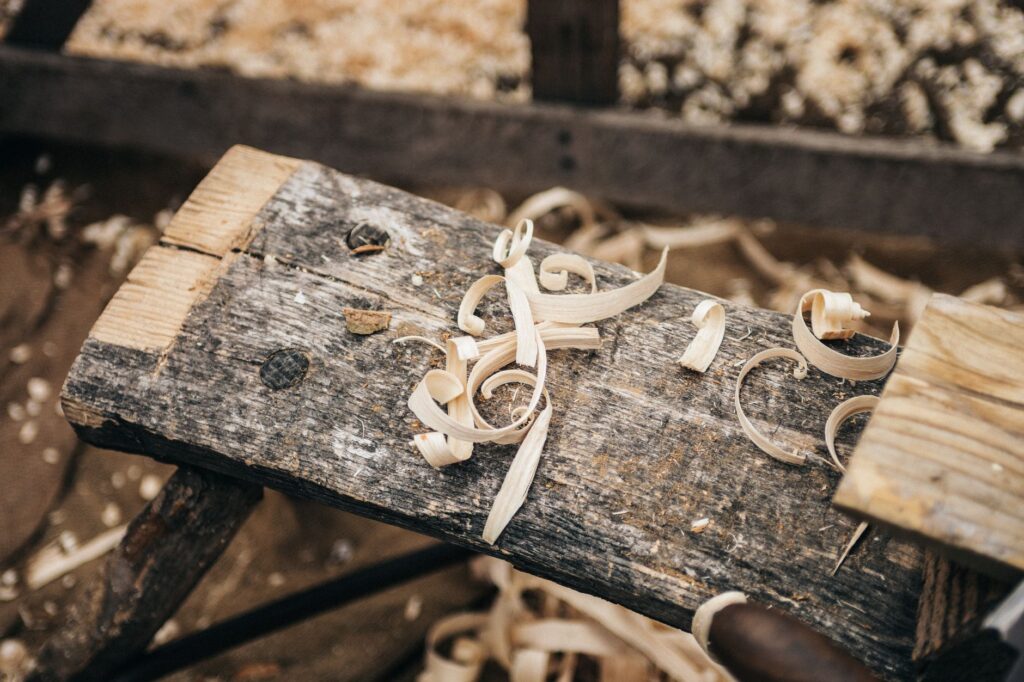
Once selected and transported to the workshop, the process enters a phase where material physics meets artisanal intuition. Using balanced axes and hardwood wedges, the log is radially divided into halves, quarters, and eighths, always seeking the geometric center of the heartwood to release internal tensions. This successive fractioning produces staves, longitudinal laths that form the structural skeleton of the pieces.
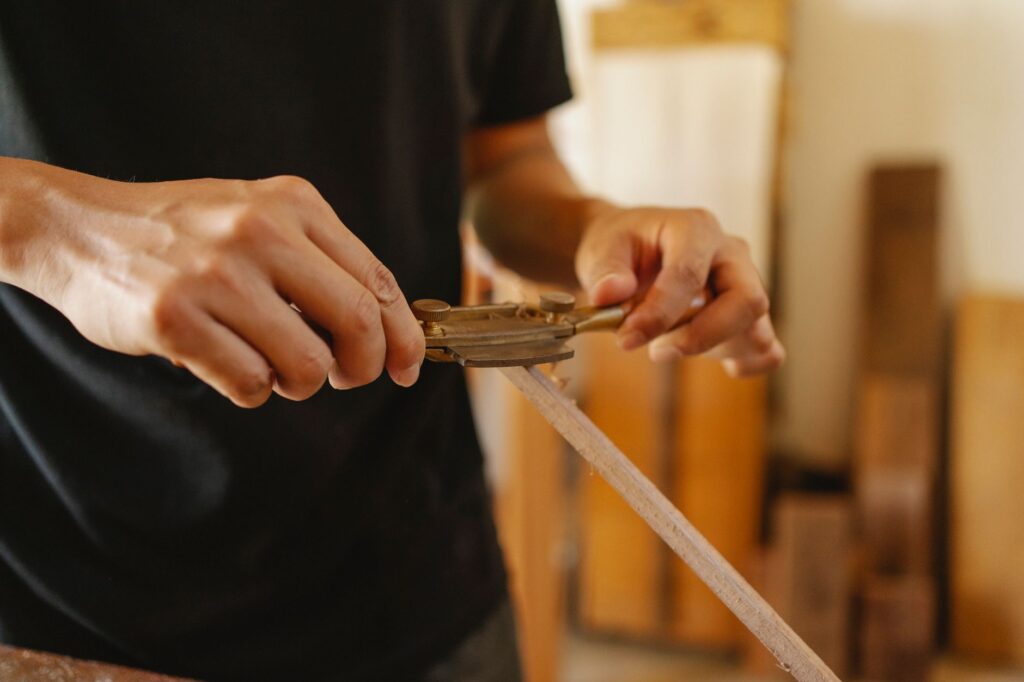
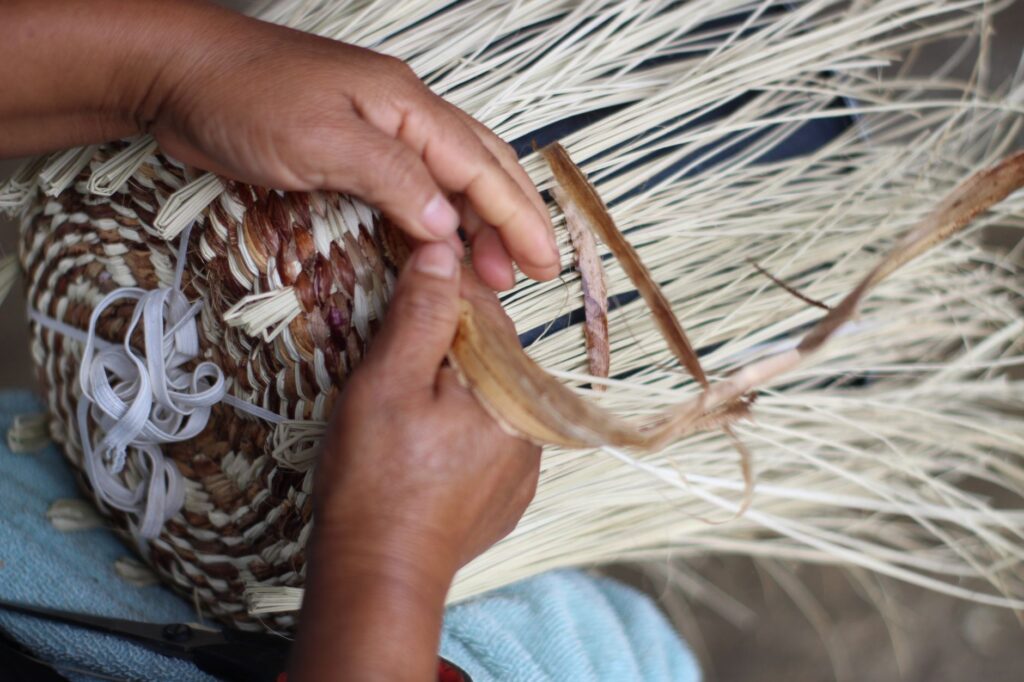
Transforming rigid wood into flexible ribbons—locally known as flejes or cintas—requires extraordinary manual dexterity. With the help of a shaving horse or a two-handled drawknife, the artisan delaminates the chestnut following its annual growth rings. Millimetric precision in the thickness of each strip determines the success or failure of subsequent weaving, demanding a tactile sensitivity acquired only after decades of uninterrupted workshop practice.

Functional typologies: from grain stores to interior design
The formal wealth of Asturian basketry directly responds to the diverse agricultural and domestic uses for which it was conceived. There are typologies as specific as the cesto d’aguar, designed for transporting cider apples with a reinforced base that withstands continuous impacts, or circular sieves intended for cereal winnowing in traditional raised granaries known as paneras and hórreos.
Today, this rich utilitarian taxonomy has captured the attention of interior design studios and contemporary furniture brands. Architects and creators find in these pieces an organic alternative to synthetic materials, integrating large-format baskets as space-dividing elements, acoustic screens, or sculptural luminaires. The transition from strictly agricultural use to high-end habitat design demonstrates the intrinsic versatility of a millenary constructive technique.
Basketry is not a relic of the past to be preserved in formaldehyde, but a sophisticated material language that teaches us how to build with what the territory offers in a regenerative way.
Ergonomics and geometry: the invisible architecture of the basket
Unlike ceramic or metallic vessels, a chestnut basket is a tensioned structure where each element exerts opposing forces that balance one another. The base, usually built through an orthogonal crossing of main staves, acts as the foundation of a building, while the vertical ribs define the tridimensional volume and ergonomic curvature designed to facilitate bodily transport.
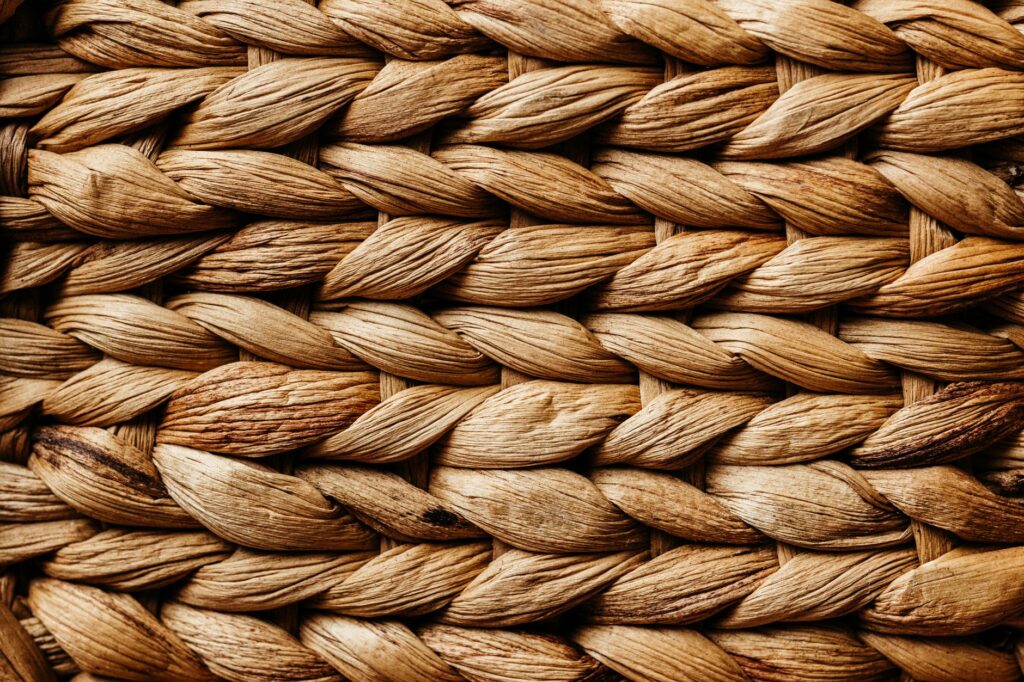
The weaving process—employing techniques such as twill, simple interlacing, or rim twisting—requires calculating the exact shrinkage of green wood as it dries. Master basketmakers handle a complex proportional system based on bodily modules and standardized volumetric capacities, an empirical knowledge that anticipates modern principles of ergonomics applied to the design of everyday objects.
The challenges of generational handover and raw material
Despite the renewed aesthetic interest in traditional basketry, the sector faces severe structural challenges. The demographic aging of rural Asturian areas places generational handover in a state of extreme vulnerability. Very few active masters remain capable of mastering the complete cycle, from forest management of the grove to the final rim binding, a process requiring years of tutored apprenticeship.
Added to this depletion of human capital is the logistical difficulty of accessing optimal-quality chestnut trees due to the abandonment of traditional harvesting practices and the proliferation of forestry regulations often disconnected from the needs of small-scale craft. Guarantees for the future of this trade demand public policy support that values territorial stewardship and facilitates the direct transmission of knowledge between generations.
Material innovation and dialogue with contemporary art
Faced with the risk of stagnation, a few independent workshops are exploring bold hybridization paths, combining traditional chestnut strips with lightweight metals, recycled synthetic fibers, or natural mineral pigments. These investigations do not seek to subvert ancestral technique, but to push its formal limits to engage with international circuits of designer collections and art-object galleries.
Recent exhibitions in cultural centers in Oviedo and Gijón have shown how monumental basketry pieces can function as site-specific installations, reinterpreting architectural space through the shadow and texture of woven wood. This dialogue between ethnographic roots and plastic avant-garde consolidates Asturian basketry as a premier aesthetic experimentation territory.
Practical guide
For those interested in delving deeper into the knowledge of Asturian basketry and visiting traditional workshops in their geographical context, essential logistical and cultural recommendations are detailed below:
- Getting there: Access to the western valleys of Narcea and Oscos is best made by rental vehicle from the airports of Asturias (OVD) or León (LEN), traveling along regional roads that meander through mountain passes.
- Workshop route: It is essential to schedule an appointment with active master artisans before visiting locations such as Tineo, Cangas del Narcea, or San Martín de Oscos, as most of their time is spent on forestry harvesting and material preparation in the woods.
- Interpretation centers: The Ethnographic Museum of Grandas de Salime and the Wine and Palloza Interpretation Center in Cangas del Narcea house exceptional collections of agricultural tools and historical basketry pieces that contextualize the visit.
- Accommodation and dining: Rehabilitated rural stone houses in the interior valleys offer stays connected to the forest landscape, where visitors can also taste local gastronomy based on seasonal products and game.
- Responsible acquisition: Buying pieces directly in the workshops directly supports the circular economy of local artisans and contributes to the active preservation of Asturian intangible heritage.
True luxury in the contemporary era does not lie in the accumulation of impersonal objects, but in the capacity to surround ourselves with pieces that tell the complete story of the territory and the hands that made them possible.
At dusk, when the mist begins to descend along the chestnut-covered slopes of western Asturias, time in the workshops seems to slow down to the leisurely pace of the drawknife against wood. In that laborious silence, where each strip of chestnut finds its precise tension and each basket encloses the accumulated memory of the mountains, the most subtle and powerful resistance is ciphered: the capacity to continue building the future from the root, respecting the immutable laws of the forest and the patient intelligence of the human hand.