Introduction to the Canadian Atlantic Labyrinth
The southwestern margin of Vancouver Island hides one of the most demanding pedestrian corridors on the American continent. The West Coast Trail is not a mere recreational path, but a historic maritime rescue vestige transformed into a long-distance trekking route. Originally laid out in the nineteenth century to rescue survivors of the countless shipwrecks marking this dreaded Pacific graveyard, today this seventy-five-kilometer route challenges both the physical endurance and logistical capacity of any experienced hiker. Perpetual humidity in the temperate rainforest, combined with relentless ocean dynamics, demands mental and technical preparation far exceeding the average mid-mountain trail.
Immersing oneself in this coastal strip means accepting the rules of an ecosystem where humans are temporary, fragile visitors. Every day combines sections of slippery roots, decaying wooden boardwalks, and mandatory passages conditioned by strict tidal tables. Planning this expedition requires understanding that the marching pace is set not by the clock, but by the interaction between coastal geography, self-sufficiency backpack weight, and the unpredictable weather of the Pacific Northwest. Throughout this report, we will meticulously analyze the technical, geographical, and survival aspects required to successfully complete one of the world’s most beautiful and wild traverses.
Historical Origins and the Backdrop of Shipwrecks
To understand the nature of the West Coast Trail, it is essential to travel back in time and examine the causes that motivated its opening. During the second half of the nineteenth century, the increase in maritime traffic toward British Columbia ports collided with an unforgiving natural barrier: the rugged western coast of Vancouver Island, battered by constant storms, persistent fog banks, and treacherous currents. Steamships and cargo schooners met their end against submerged reefs, creating a tragic statistic of human and material loss that forced the colonial government to act.
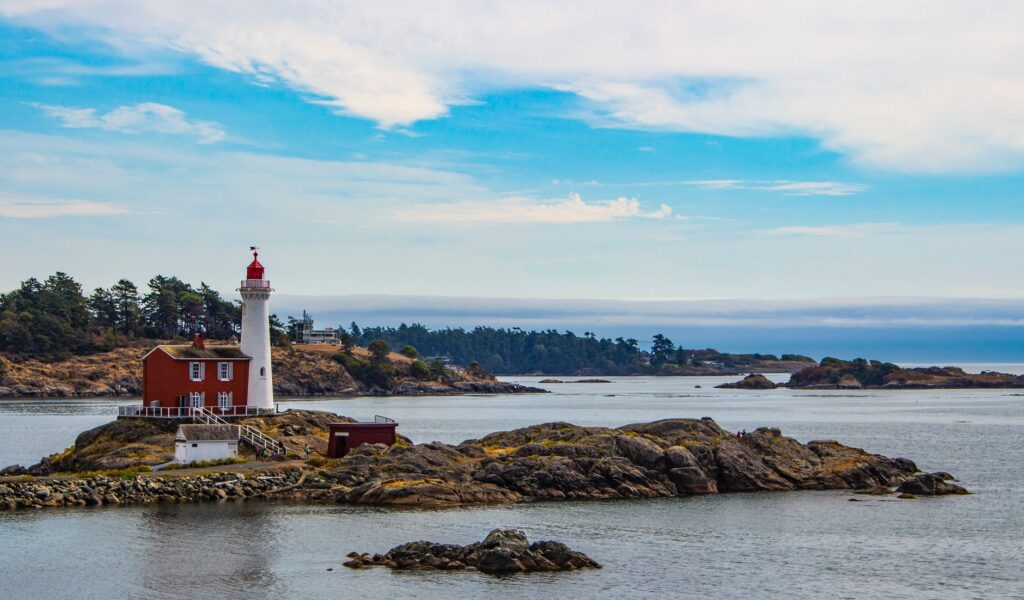
The initial response consisted of establishing an emergency telegraph line and setting up rudimentary shelters along the coast, connected by rough trails cleared by rescue teams. The most famous wreck, the SS Valencia, which sank in 1906 with the loss of over a hundred lives, accelerated the modernization of life-saving infrastructure, including strategic lighthouses and a patrol path that now forms the backbone of the current trail. A survival pathway in its genesis, the route retains that aura of isolation, where every wooden structure recalls the titanic effort to connect the indomitable shore with civilization.

The Geography of Pacific Rim National Park Reserve and Its Microclimates
The terrain through which the route runs is part of the Pacific Rim National Park Reserve, a territory where the temperate rain forest merges directly with the open ocean. The topography is characterized by a constant alternation between boulder-strewn beaches, sedimentary rock cliffs, and forested inlets dominated by century-old specimens of Douglas fir, western hemlock, and giant red cedar. These colossal trees grow in moisture-saturated soils, fed by annual precipitation exceeding three thousand millimeters.
This extreme rainfall regime generates local microclimates where morning mist can turn into torrential rain within minutes. Hikers must face a permanently muddy substrate, where exposed roots act as genuine slippery traps. Footwear management and the choice of breathable waterproof membranes are crucial to prevent hypothermia or skin infections resulting from continuous immersion in water and mud.
Access Logistics, Permits, and Limited Quotas
Due to the ecological fragility of the environment and the need to guarantee expeditionary safety, access to the West Coast Trail is strictly regulated by Parks Canada. The official opening season runs from May 1 to September 30, during which all temporary bridges and river ferry services are operational. Attempting the traverse outside these dates not only implies the absence of essential infrastructure but exponentially increases meteorological risk.
Camping permit reservations are managed through an online booking system that usually opens at the beginning of the year, selling out within hours. In addition to park registration fees, travelers must pay the costs for the barge transits required to cross the Gordon and Nitinat rivers. Rigorous planning is the only way to secure a spot, and travelers must mandatory attend a safety briefing given by park wardens at the Gordon River or Pachena Bay trailheads before starting the trek.

Advanced Progression Techniques Over Mud, Rocks, and Ladders
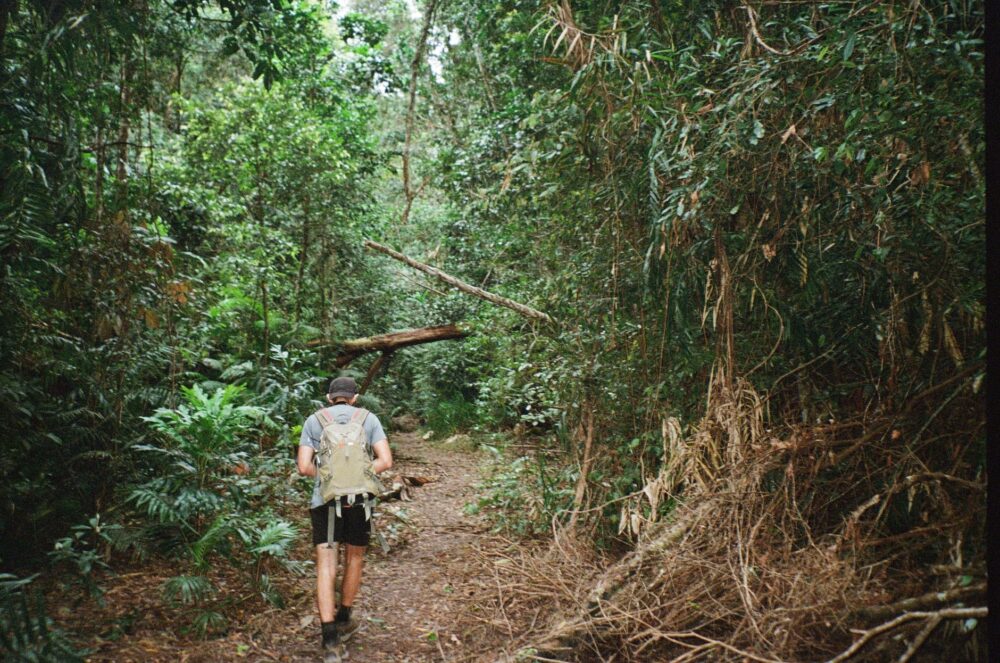
Advancing along the West Coast Trail requires mastering multiple marching techniques adapted to changing surfaces. In interior forest sections, deep mud can cover ankles, requiring trekking poles with wide baskets to maintain balance and avoid joint twists. The numerous wooden ladders built to overcome steep slopes accumulate a patina of moss and moisture, making them as slippery as ice; stepping exclusively on metal rungs or non-slip strips is a golden rule.
When the trail descends to the coast, the challenge changes radically. Walkers must overcome kilometers of rocky platforms covered in slippery algae, locally known as surge channels, or trudge laboriously over accumulations of driftwood swept in by tides. Average progression speed often drops below two kilometers per hour in the most technical sections, a critical factor that must be factored into daily calculations to reach campsites before nightfall.
Managing River Crossings and the Tide Table
One of the most critical aspects of route safety is synchronization with ocean tides. Several coastal sections of the trail are impassable during high tide, forcing hikers to use alternative interior forest routes or wait patiently on the shore for water levels to drop. Consulting the official Pacific Tides table and keeping it handy at all times is an absolute obligation for any expeditionary.
Likewise, crossings of estuaries and rias, such as the Nitinat River, depend on boat services operated by local concessionaires. If bad weather interrupts these connections or if travelers arrive outside established schedules, isolation can be prolonged indefinitely. Food autonomy and a prudent margin of emergency rations in the backpack are essential to face potential logistical blockades stemming from maritime fury.

Wildlife and Protocols for Coexistence with Bears and Wolves
The territory crossed by the trail is the natural habitat of significant populations of black bears, coastal wolves, and cougars. Although encounters with large mammals are not daily occurrences, the possibility of sightings requires strict adherence to safety protocols to prevent incidents. All food gear, as well as scented personal hygiene products, must be rigorously stored in bear-resistant rigid containers or suspended at height using cable systems installed in authorized campgrounds.
During the march, it is advisable to remain attentive to the surroundings, make noise when approaching dense vegetation areas, and avoid wearing headphones that isolate from forest sounds. In case of a close sighting, the official guideline is to remain calm, raise arms to appear larger, speak with a firm voice, and back away slowly without ever turning your back or running, as the predatory instinct of these animals can be triggered by sudden flight.
Expedition Equipment: The Self-Sufficiency Backpack
Equipment selection for the West Coast Trail must balance weather protection needs against the imperative to limit total carried weight. An excessively heavy backpack increases the risk of falls on slippery jungle terrain and accelerates physical exhaustion. The base of the clothing system should rely on synthetic fibers or merino wool, entirely discarding cotton due to its inability to retain body heat once damp.
Essential items include a three-layer waterproof jacket with a high hydrostatic head, quick-drying trekking pants, high gaiters to keep mud out of boots, a reliable water purification system (membrane filters or chemical tablets), an advanced first aid kit with elastic bandages and blister care material, and a satellite communication device (such as an InReach or PLB), given that mobile phone coverage is virtually nonexistent along the entire route.
Practical guide
How to get there: The northern trailhead is located at Pachena Bay, near the town of Bamfield, accessible via passenger ferry from Port Alberni or gravel logging roads requiring four-wheel-drive vehicles. The southern trailhead is at Gordon River, near Port Renfrew, connected by a paved highway to Victoria, the provincial capital.
When to go: The official season runs from May 1 to September 30. July and August offer the highest meteorological stability indexes, although September offers clearer days and fewer expeditionary crowds.
Permits and fees: Advance reservations through the Parks Canada portal are essential. Fees include the trail registration fee, use of equipped campsites, and national park conservation dues.

Accommodation and camping: There are no hotel infrastructures along the route. Camping is restricted exclusively to designated sites along the path, which feature composting toilets, freshwater sources, and food-hanging cables.
Local gastronomy: The route is completed under complete food self-sufficiency using freeze-dried or dehydrated meals. However, at key points like Nitinat Narrows, local communities operate temporary stalls where freshly cooked seafood can be purchased on the spot.
The Echo of the Pacific and the Value of Vulnerability
Upon reaching the final milestone of the traverse, after crossing the last suspension bridge or descending the final metal ladder, the prevailing feeling is not euphoric triumph, but profound quietude. The constant roar of crashing waves against rocky headlands becomes an internal soundtrack accompanying the traveler long after leaving Vancouver Island. This extreme route teaches a valuable lesson about human humility in the face of the indomitable majesty of wild nature.
Completing the West Coast Trail transforms the perception of time and effort. Every drop of rain overcome, every kilometer gained inch by inch in the mud, and every sunset contemplated in solitude against the vastness of the Pacific Ocean shape a transformative experience. It is not merely a test of physical endurance, but a deep immersion into one of the planet’s last truly wild strongholds, an enduring reminder that the most beautiful natural spaces demand absolute respect, rigorous preparation, and the willingness to accept our own vulnerability.