The Geography of the Void and the Conquest of the High Desert
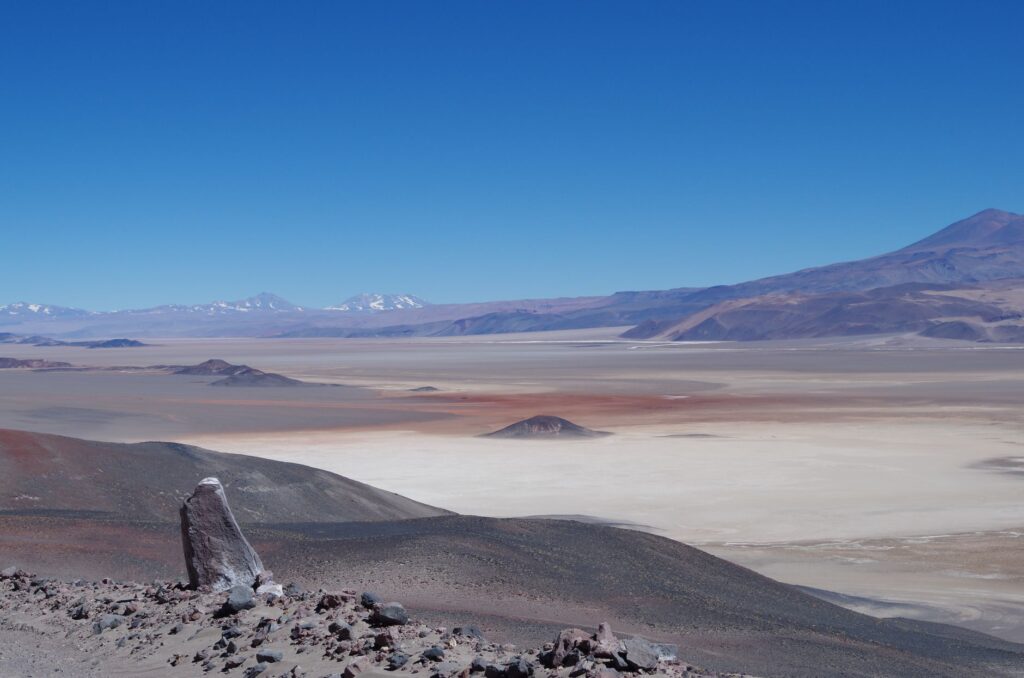
Northern Chile unfolds as a territory where geographic scale imposes its own rules on human activity. As the terrain rises from the Pacific coastal strip up to the Andes mountain range, the landscape transforms into a vast expanse of salt flats, volcanic ash plains, and summits easily exceeding four thousand meters of altitude. In this region, broadly known as the Atacama Puna, distance is measured not merely in linear kilometers, but in thermal gradients, oxygen scarcity, and a geological isolation that has defined the history of its sparse human settlements.
For centuries, this arid altiplano functioned as an almost impassable natural barrier. Pre-Hispanic routes, traced with millimeter precision by drovers guiding llama caravans, depended on scarce water sources and mountain passes exposed to gale-force winds. However, the economic ambitions of the late 19th and early 20th centuries radically altered this relationship with the territory. The discovery of immense nitrate and metallic mineral deposits in the heart of the puna demanded an unprecedented technological response: the construction of railways capable of defying gravity and the laws of physics at altitudes above four thousand meters.
Today, the connectivity of this extreme region no longer responds exclusively to the extractive fever of the past, but to a complex logistical network where large-scale mining, international scientific research, and the survival of indigenous communities inhabiting high-altitude oases converge. Understanding how goods, workers, and basic supplies move across this vertical desert is equivalent to deciphering the invisible mechanisms that enable life in one of the planet’s most unforgiving environments.
Adhesion Engineering and the Pulse of the Antofagasta Railway
The most overlooked yet striking testament to this transportation epic is the Antofagasta and Bolivia Railway (FCAB). Originally conceived to transport mineral wealth to Pacific ports, its route represents a masterpiece of 19th-century engineering adapted to a hostile geography. Unlike European rack systems designed for short alpine gradients, the Andean system had to resolve monumental elevation changes through long stretches of pure adhesion, tight-radius curves, and a series of metal viaducts that appear suspended over basaltic rock abysses.

Traveling or tracing the logistics of this railway implies delving into an operational universe where every mechanical component suffers the wear and tear of extreme weathering. Modern diesel locomotives operating on these routes require special supercharging systems to compensate for the drastic drop in atmospheric pressure and air density, which severely reduces the power of internal combustion engines. Maintenance workshops located in the Andean foothills operate under a nearly surgical regime; a failure in a pneumatic braking system at four thousand meters of altitude can compromise not only a heavy freight convoy, but the safety of the entire line.
The railway in the Atacama Puna is not a simple transportation infrastructure; it is a metallic umbilical cord that oxygenates the regional economy and defies the relentless erosion of the desert.
In addition to mineral cargo, these trains play a crucial logistical role in supplying fuel, food, and heavy equipment to astronomical observatories located on neighboring peaks. Coordination between coastal control centers and high-altitude stations relies on redundant communication systems, where satellite technology coexists with analog backup methods due to signal instability in enclosed valleys.
The Secondary Road Network and Heavy-Duty Haulage
If the railway constitutes the heavy backbone of the altiplano, the secondary road network and private mining roads represent the capillary circulatory system reaching every corner of the puna. Paved routes connecting major urban centers rapidly transform, upon exceeding three thousand meters, into compacted gravel tracks where airborne dust reduces visibility to mere meters during windy afternoon storms.
The management of these transport arteries demands ongoing effort from state road maintenance agencies and private mining corporations. Extraction trucks and chemical supply transports operate under strict safety protocols including telemetry-based speed limits, mandatory supplemental oxygen for drivers on long hauls, and exhaustive mechanical checks prior to each ascent. The abrasiveness of desert dust, laden with salts and silica particles, destroys filters and transmission systems at an unusual rate compared to other geographic contexts.
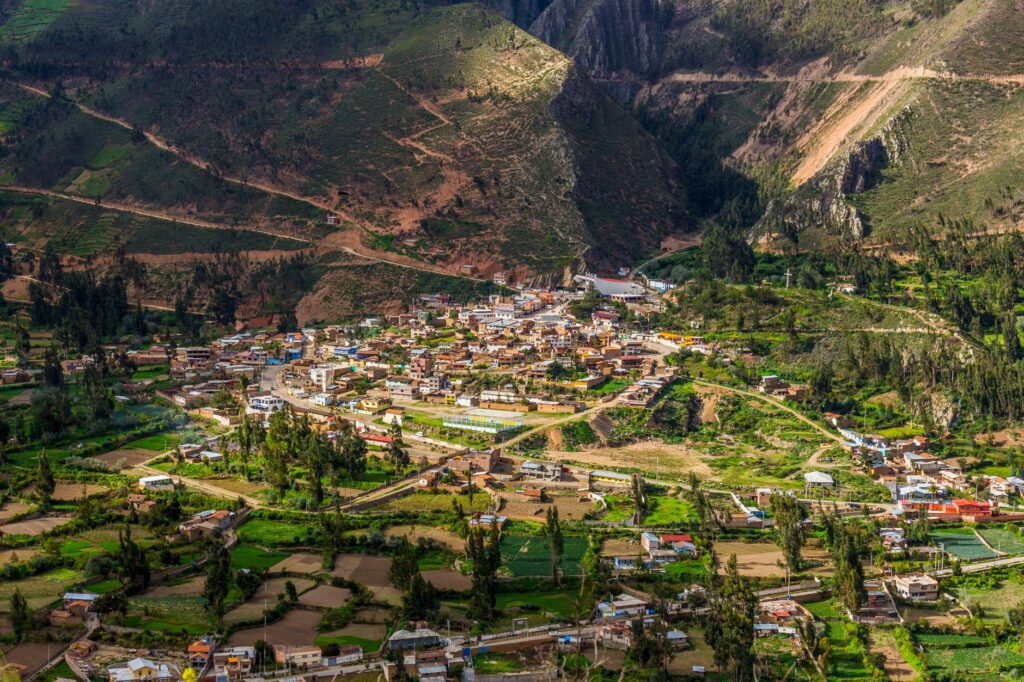
In this scenario, road connectivity also fulfills an indispensable social function. Atacameño communities and residents living in remote settlements like Ollagüe or Toconao depend on this network to receive mobile medical services, educational assistance, and basic supplies that cannot be produced locally due to extreme soil aridity. Supply trucks thus function as the sole regular link to coastal service centers.
The Human Factor: Adaptability and Resilience on the Altiplano
Behind every railway convoy, tanker truck, and automated weather station lies the human factor: workers, engineers, and local residents who have developed exceptional physiology and adaptation culture. Labor life in the Atacama Puna is governed by strict shift regimes, commonly known as 7×7 work schedules, where operators alternate weeks of total isolation at high altitude with rest periods in their regular places of residence, often located over a thousand kilometers away.

The effects of altitude sickness, or puna, affect not only unsuspecting visitors but present a constant challenge for occupational health. Medical protocols in mining and railway camps include blood oxygen saturation checks before permitting entry into higher operational zones. Despite process automation, psychological isolation remains one of the most complex variables to manage; the monotonous immensity of the landscape and the absence of vegetation generate a very particular sensory load that requires decompression spaces and emotional support for crews.
On the other hand, indigenous communities act as involuntary guardians of this logistical corridor. Their deep understanding of water cycles, wind currents, and natural shelters complements modern technical cartography, establishing a symbiotic relationship between industrial modernity and ancestral traditions of herding and high-altitude terrace agriculture.
The Science of Altitude and Observatory Logistics
In recent decades, the Atacama Puna has established itself as one of the planet’s premier scientific hubs due to the purity and dryness of its atmosphere. Sites such as the Chajnantor plateau host international astronomical complexes of incalculable value, whose daily operation relies on a logistical chain as sophisticated as it is fragile. Transporting primary telescope mirrors or cryosensitive components to over five thousand meters of altitude requires meticulous planning combining low-platform heavy transports with high-capacity cranes adapted to operate with reduced hydraulic performance.
Scientific personnel and technicians operating these instruments face logistical constraints similar to those of polar expeditions. Energy dependence is absolute; since the national power grid does not reach these confines, each observatory functions as a self-sufficient island equipped with high-efficiency power generation plants and battery storage systems ensuring uninterrupted astronomical observations even during Andean snowstorms.

Practical guide
How to get to the Andean corridor
The natural starting point for exploring the logistics and geography of the Atacama Puna is the city of Antofagasta or Calama, both connected via daily flights from Santiago de Chile. From Calama, access to the mountain zone is strictly conducted via Route 21-CH or secondary mining roads.
Best time for travel
The months between October and April offer the most stable meteorological conditions in terms of temperature, although the summer period can be affected by the so-called altiplanic winter, characterized by afternoon electrical storms and occasional high-altitude rainfall.
Health and acclimatization requirements
It is strongly recommended to allocate at least 48 hours for acclimatization in intermediate towns such as San Pedro de Atacama (2,400 meters) before attempting ascents to operational zones exceeding 4,000 meters. Constant water intake and moderate eating habits are basic measures to prevent altitude sickness symptoms.
Safety and transport regulations
When traveling by private vehicle, four-wheel drive (4×4) is mandatory, alongside spare tires in optimal condition, additional fuel jerrycans, and satellite or VHF communication equipment, as cellular coverage is nonexistent across most of the altiplano.
The Echo of Metal in the Ultimate Silence
When night falls over the Atacama Puna, the landscape undergoes a radical mutation. Daytime heat gives way to severe freezes that cause rock and wooden railway sleepers to crack under the strain. In that absolute silence, broken only by the whistling wind against metal structures, human presence is reduced to its bare minimum. The blinking lights of a locomotive winding along the salt flat’s edge remind us that connectivity in this vertical desert is not a luxury, but a daily victory against the vastness of the void.
At the end of the journey, the Puna reveals its true nature: a space that tolerates no improvisation yet rewards those who manage to decode its secrets with a unique perspective on human endurance and engineering’s capacity to unite the world’s extremes.